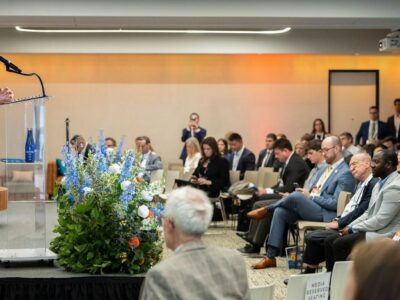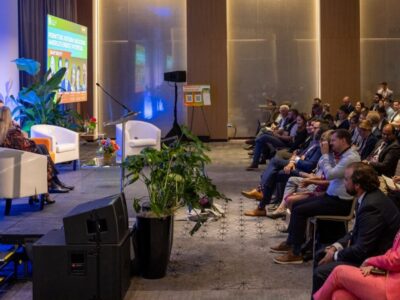
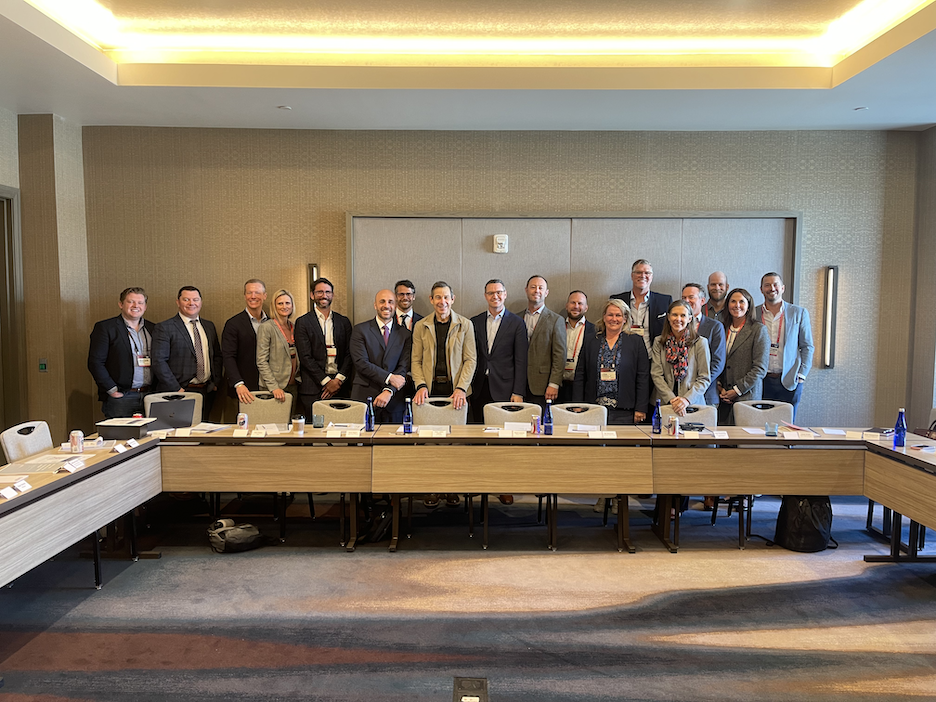
On Friday, May 22, U.S. Senator John Curtis (R-UT) participated in a roundtable event at Governor Spencer Cox’s Operation Gigawatt Summit in Park City, Utah. At the event, Sen. Curtis spoke with energy industry representatives and state thought leaders about how Utah is leading the country in clean energy generation and energy security, particularly as highlighted in the findings of a recent Atlas Public Policy issue brief, Advancing the Future of Energy in Utah. Among the representatives from energy companies in attendance were Theresa Foxley, chief of staff at rPlus Energies, Ben Serrurier, director of government affairs and policy at Fervo Energy, and Peter Colussy, executive director of Western region regulatory and political affairs at NextEra Energy Resources.
Building on years of championing energy independence, Utah further solidified its regional leadership in 2024 when Gov. Cox announced Operation Gigawatt, an initiative to double Utah’s power production over the following decade by expanding energy generation, increasing transmission capacity, advancing energy-friendly policies, and investing in innovation and research. The state decided to focus on its energy future amid a growing population, the increasing electrification of transportation and appliances, the growth of energy-intensive industries such as artificial intelligence, and the projected retirement of 67% of baseload capacity within two decades. Those problems are already driving up energy prices and threatening the supply of stable, reliable electricity on which Utahns depend. Fortunately, Utah’s energy buildout is swiftly addressing those issues while driving local investment and creating local jobs.
At the roundtable event, Sen. Curtis discussed clean energy in terms of its contributions to both the nation’s economy and its national security. Based on Atlas’s report, more than 93,000 Utahns worked in the energy industry by the end of 2024. Sen. Curtis noted that there were 55,000 Utahns working in clean energy, grid, or transmission roles, leaving only about 38,000 in traditional energy roles. He said he expected the trend of clean energy jobs to continue outpacing those in traditional energy, given the state’s pipeline, with 4.5 GW of clean power generation queued to join the existing 8.5 GW of capacity. Solar and battery storage, which account for about 75% of this pipeline through 2030, will support 15,000 construction jobs and 350 operational jobs.
Sen. Curtis added that he looks forward to sharing this type of data with other elected officials in Utah, in hopes of changing local perceptions of clean energy to emphasize its growing role in Utah’s economy.
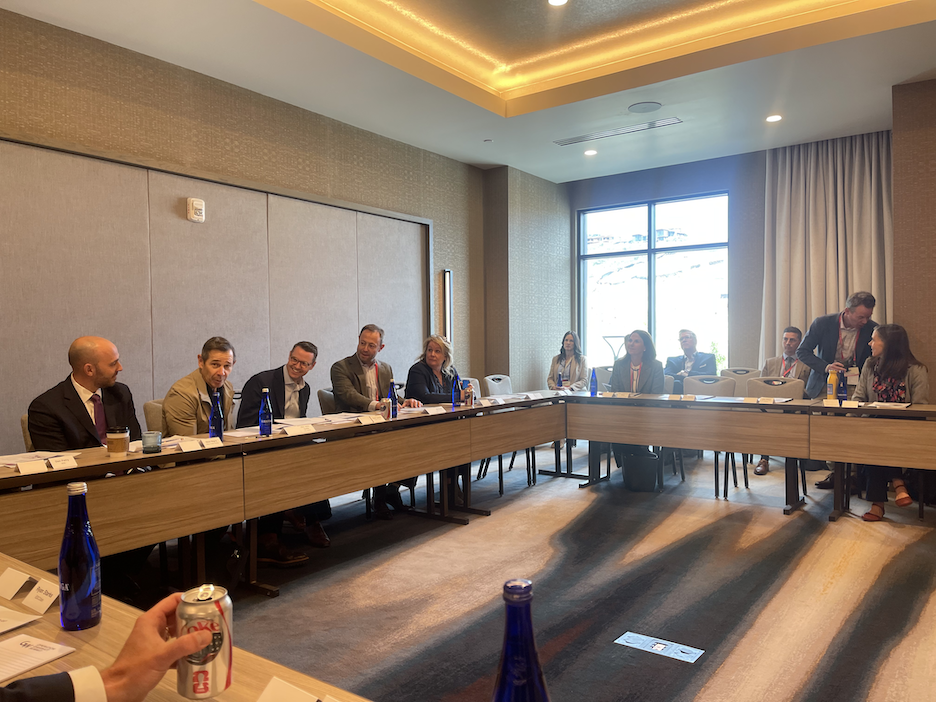
Photo Courtesy Grayson Massey, Sugarhouse Strategies
Sen. Curtis acknowledged, however, that the state has a history of reliance on coal, and therefore, there is still an uphill path to promoting an all-of-the-above energy approach in the state legislature. However, coal has been declining in the state, falling from 75% of generation in 2015 to 48% in 2025.
Plus, the state is beginning to scale enhanced geothermal systems and commercialize small modular reactors, which it expects to help keep energy affordable and reliable for Utahns in the longer term. In fact, Utah is the third-largest state for uranium production, while two new geothermal generators coming online in the next two years will triple the state’s geothermal capacity.
“We will build upon Utah’s ‘any of the above’ energy policy with a ‘more of the above’ approach,” Gov. Cox promised at 2024’s One Utah Summit when announcing Project Gigawatt. “It puts Utah in a position to lead the country in energy development, secure our energy future, and remain a net energy exporter while diversifying and expanding our energy resources.”
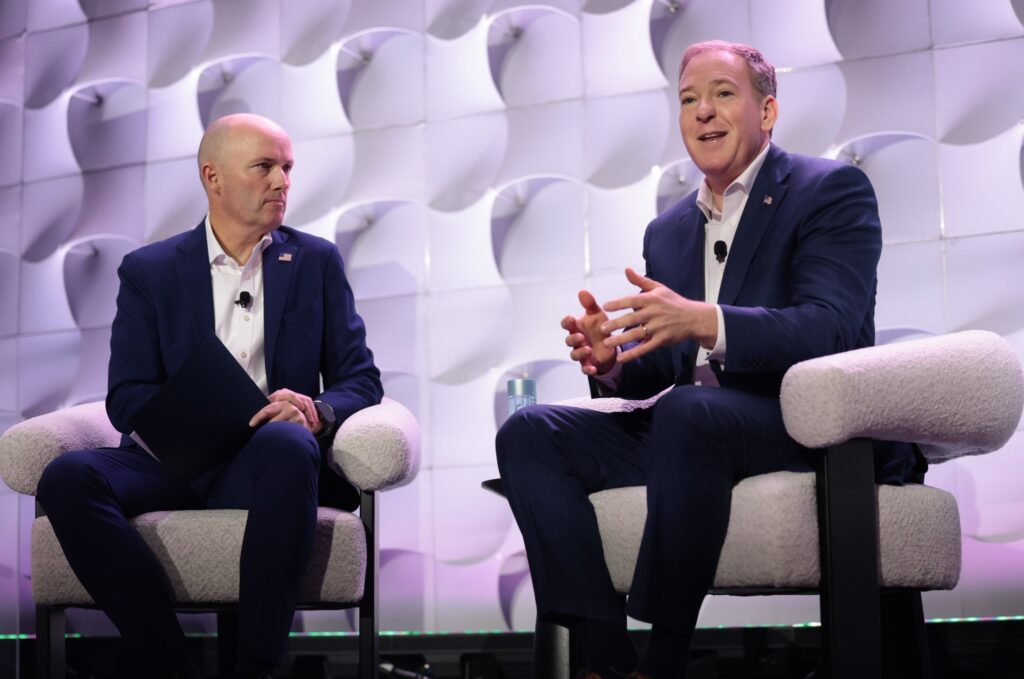
Photo Courtesy Gov. Spencer J. Cox
However, such energy security is not guaranteed, as Sen. Curtis explained during last year’s National Clean Energy Week, “We’re now in a world where we need every electron we can get, and we’re not quite sure where we’re going to get all of our electrons and where they’re going to come from.”
To promote energy security, Sen. Curtis said at the Operation Gigawatt Summit that Congress needs to provide regulatory certainty. In the face of project cancellations across the country, energy developers and producers need assurances to attract and retain the private capital necessary to get these projects off the ground. That being said, Utah has been impacted by such cancellations far less than other states. According to Atlas, only 4% of proposed new clean power capacity has been canceled in Utah since 2015, compared to 8% nationally. Plus, 92% of clean energy manufacturing investments through March 2026 are under construction or operational, with only one such investment being canceled since 2000.
To demonstrate the scale, Utah has attracted $1.6 billion in clean energy manufacturing investments corresponding to 8 commercial-scale operational facilities and another 10 planned or under construction, with 3,600 announced manufacturing jobs between them. $902 million was committed in 2025 alone, as last year marked the “largest surge in clean energy manufacturing investment in Utah since at least 2000,” says Atlas.
Even once regulatory certainty is in place, Sen. Curtis said that permitting reform will also be essential for the state to meet its energy goals. As he wrote in the press release for the ePermit Act, which he co-introduced in February, “Outdated, paper-based permitting systems slow down projects, frustrate communities, and make it harder for agencies to do their jobs.”
Hand in hand with energy security concerns come national security ones. Sen. Curtis added that it is vital that the U.S. not rely on other countries for the critical minerals it needs to produce energy. Utah is naturally blessed with the geography and resources to compete with these foreign powers, with land available for energy and transmission projects and rich mineral deposits, including more than 28 federally designated critical minerals. Plus, most of the state’s announced clean energy manufacturing investment – $1.3 billion – is in the critical minerals sector.
A week before the summit, in fact, Sen. Curtis attended the announcement of a new antimony processing facility, which he said: “is both a testament to our state’s preeminent capabilities and an important, exciting step toward securing a safe and reliable critical mineral supply chain.” Looking to the future, Atlas wrote, “With large-scale lithium, uranium, and rare earth projects advancing toward production between 2027 and 2028, Utah is well positioned to contribute to U.S. critical minerals supply chains.”
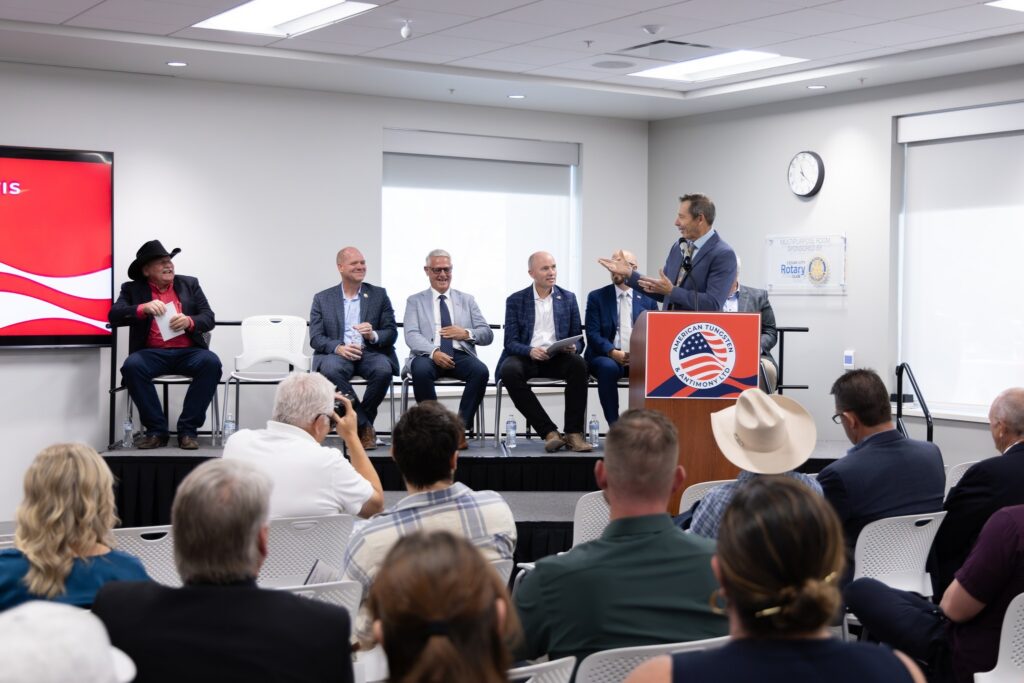
Photo Courtesy Senator John Curtis
As Sen. Curtis expressed after his Annual Conservative Climate Summit, in 2024, “I believe that there is a solution for energy needs that’s affordable, reliable and clean, doesn’t leave us dependent on another country for fuel, and is right in harmony with conservative values.” At the 4th annual event last year, he added, “We need every electron we can get.”