
In 1989, the Exxon Valdez ran aground in Prince William Sound, and the town of Cordova, Alaska, learned something about itself that it has never forgotten. The spill wrecked the fishery the town lives on, killed billions of salmon and herring eggs, and upended the commercial fishing and processing industries that rely on the Copper River red salmon. Cordova sits on the east shore of the Sound, with the Chugach Mountains behind it and no road in or out, so disaster response was slow and incomplete. The community rebuilt its economy and infrastructure largely on its own, and drew a conclusion from the experience: relying on anything that arrives from elsewhere is risky.
At the time, the town’s electricity came from burning diesel that was barged in. Cordova Electric Cooperative (CEC), the member-owned utility that has been the town’s sole power provider since 1978, accelerated its transition away from that fuel as part of the recovery, according to Hitachi Energy, which later supplied equipment for the system. Imported diesel was hazardous and expensive, and all the more so when there were global price spikes or supply chain disruptions beyond the community’s control. Both of those facts had just been demonstrated up close. Thirty-some years later, the results are on the meter.
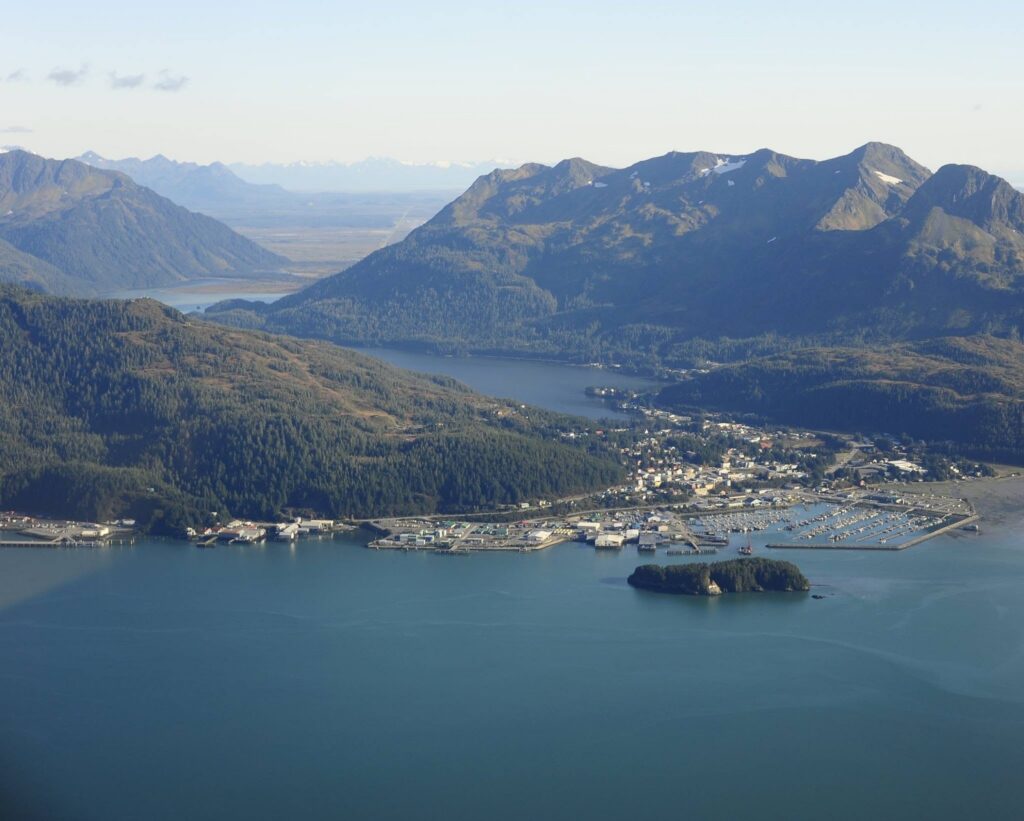
Photo Courtesy Cordova Electric Cooperative
Hydropower now supplies around 75% of Cordova’s electricity at roughly $0.07 per kilowatt-hour, instead of about $0.60 per kilowatt-hour for diesel, CEC told The Cordova Times this month. In 2024, the cooperative set a record at 80% hydro for the year.
Diesel-fired power costs roughly nine times as much as water. Nobody in Cordova needed an environmental argument to find that persuasive. “We are looking at every opportunity to use hydro and not use diesel,” Leif Stavig, executive assistant to CEO Clay Koplin, told the Cordova Times in 2024. As Koplin recently said to the publication, “We’ve been able to make small, low-cost modifications to keep increasing our percentage of hydropower, outstripping our load to get more and more production out of them, with the same amount of water.”
The power comes from two plants: Power Creek, seven miles east of town with 6 megawatts of installed capacity, and Humpback Creek, seven miles north with 1.25 megawatts, according to CEC. The Orca Power Plant, with 10.8 megawatts of diesel capacity, fills in where the creeks fall short.
The Power Creek plant also settled the question of whether any of this pays for itself. The State of Alaska put $12 million into the project through a debt reimbursement in 2002. Cheap electricity brought the seafood processors, and the processors brought the fish tax: the state has since collected $15 million in new raw fish tax revenue. CEC reports the same plant has offset over $50 million in diesel fuel costs in Cordova and cut electricity rates by 20%. CEC is also a “a pretty respected employer and are able to hire some good crews,” according to Stavig.
Koplin is blunt about the conditions the system has to survive. “It’s a very extreme climate,” he said. “Just in the last three years, we’ve had two earthquakes over 7.0, a large volcanic eruption, super storms that topped over 100 mile-an-hour winds, and several feet of snow in a period of two or three days.”
The demand side is just as unforgiving. Cordova has the state’s largest fishing fleet, and half of all households are tied to the industry. Each spring, when the Copper River salmon season opens and the processing plants ramp up, peak electricity demand more than doubles from the winter peak.
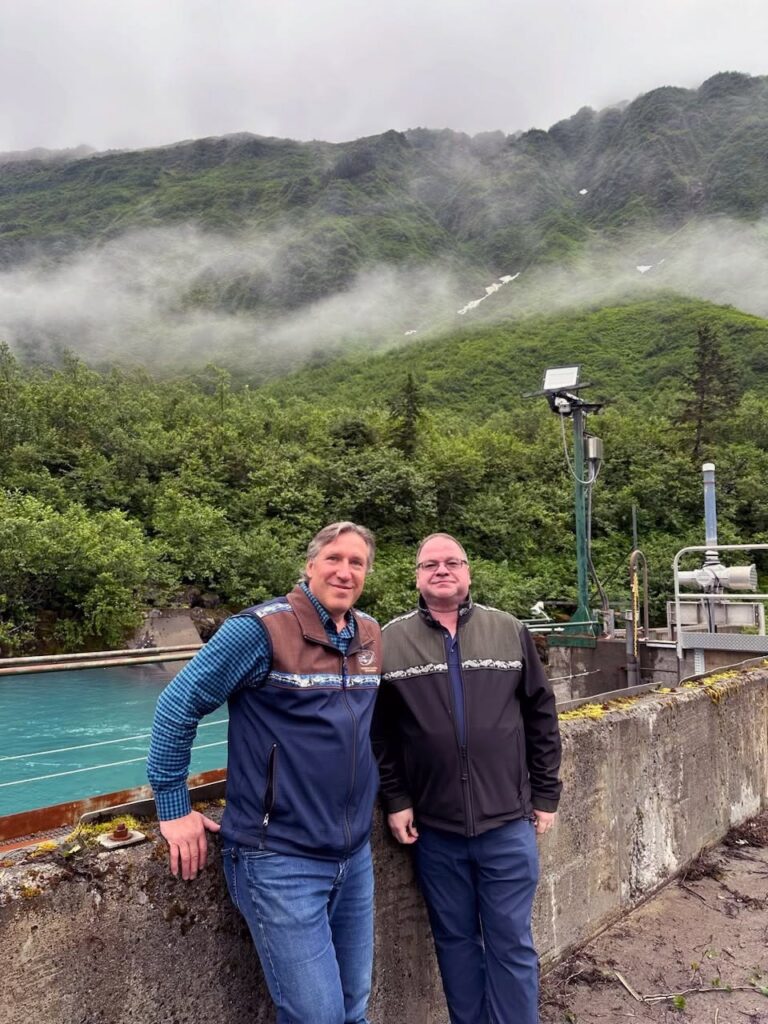
Photo Courtesy Alaska Energy Authority
Hydropower solved the fuel problem and created a new one. Cordova’s plants are run-of-river, which means the water that turns the turbines is the water the creek happens to be carrying that day. “They don’t store any energy at all,” Koplin explained. “There’s no dam to store the water, so we needed a way to balance our system loads.”
Without storage, hydropower gets lost every time the system transitions between generation sources. The cooperative’s answer was a battery energy storage system, which came online in 2019 and was built with Hitachi Energy. It worked immediately. In November 2019, CEC ran 95% hydro. The battery saved an estimated 50,000 gallons of diesel in its first year. Diesel consumption has been cut in half, down to 327,000 gallons in 2025.
None of it arrived in a straight line. CEC had been investing in hydropower and energy storage for years. “When many people look at Cordova, they see the success story of a town being run entirely on hydropower, with incredibly efficient power plants and a massive reduction in diesel use. But there have been many times we had to back up and realize we weren’t on the right technology path,” Koplin explained. “It’s been critical to avoid the mindset that once renewables are added to the grid, you can kind of forget about them. We’re constantly trying to improve our efficiency and output at the lowest possible cost.”
That discipline showed again at the end of last year. CEC had been weighing a proposed Crater Lake project alongside an upgrade at Humpback Creek. On Nov. 25, 2025, the cooperative decided to drop Crater Lake and put its money into Humpback Creek instead. That upgrade will raise the plant’s output by 36% and eventually cut diesel use by roughly 85,000 gallons per year. “Basically, it is an efficiency upgrade. We will get a lot more energy with the same water by upgrading the valves and hydro turbines. We are also upgrading the electrical generators to handle the additional output,” Koplin said. In fact, they expect the upgrades to increase peak plant output from 1.25 MW to about 2.0 MW and to ultimately generate an additional 1 million kilowatt-hours of hydropower.
Most of the work on turbines, generators and switchgear will be done in-house and completed by next year. It is funded by a $4.9 million federal grant awarded by the U.S. Environmental Protection Agency (EPA) to the Native Village of Eyak, the federally recognized tribe based in Cordova.
The upgraded plant will do one more thing. CEC says its added storage will double as the water supply for the Shepard Point oil spill response facility now under construction. The system built in the aftermath of one spill is being expanded to help the town handle the next one.
Video Courtesy Hitachi Energy
There is a final wrinkle in run-of-river power. In summer, the creeks run hard, and the plants make more electricity than the town can burn. The extra is simply spilled. “We spill excess hydropower a lot of the time,” Koplin told Alaska Business Magazine. “We’re now, as we talk, spilling over a megawatt of excess power. We’d rather sell that to someone.”
Someone came. Greensparc, an edge computing firm founded by Sam Enoka, who grew up in North Pole, Alaska, installed a 150-kilowatt modular data center directly inside the Humpback Creek powerhouse in 2024. It runs completely on hydropower. CEC became its first customer, now able to host its own administrative software in town instead of on a server in Seattle – the biggest draw for Koplin. A second Greensparc data center is projected to raise CEC’s revenue by roughly 15%, with construction planned for this summer. The town that could not get a fuel barge in on time is now selling surplus power to the computing economy. “This is attracting partnerships and attention, and we’re part of it, here in Cordova, Alaska,” Koplin summarized.
For businesses in Cordova, the payoff is plainer. Jennifer Park founded Copper River Fleece in the town in 1995, and the company still sews all of its garments in the U.S. She remembers when unreliable power and high fuel prices were costs she had to plan around. Now, she said, business owners “no longer have to factor the high cost of outages into their plans, making the decision to invest in our community much easier.”
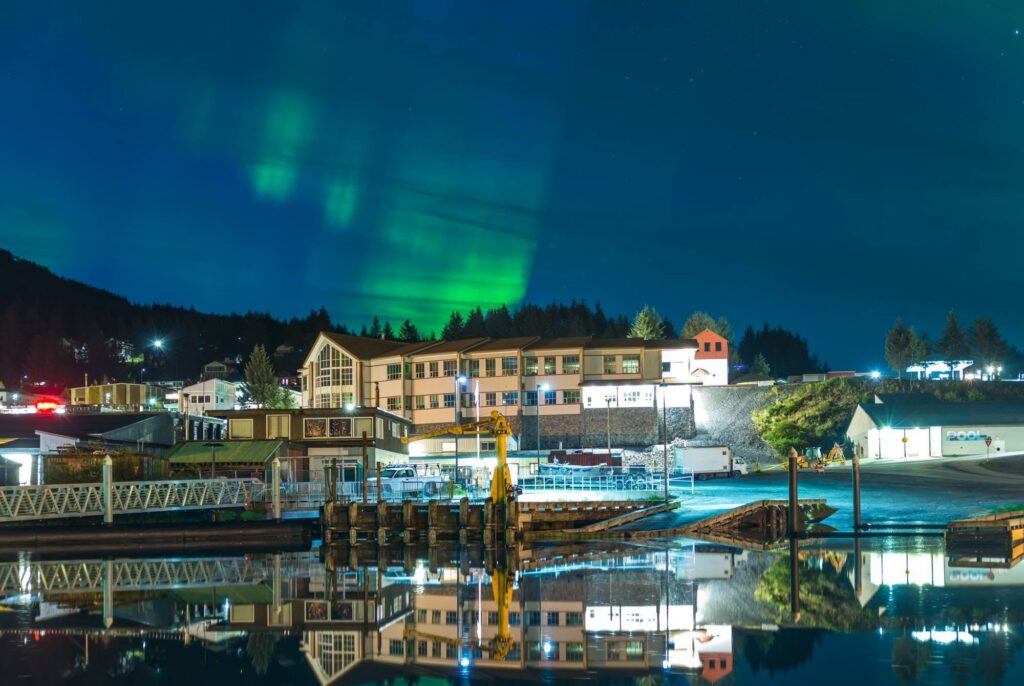
Photo Courtesy Cordova Electric Cooperative
Koplin now chairs the Alaska Energy Authority, and in February 2026, he was selected for induction into the Alaska Innovators Hall of Fame. CEC crews have helped utilities across the state, including diesel plant upgrades at Kotzebue Electric Association. Koplin himself has provided advice on hydroelectric projects for Old Harbor on Kodiak Island, the Nushagak Electric Cooperative, and even some small mining companies.
Seward is the clearest case. City officials came to Cordova, toured Humpback Creek, and left with a plan. “Our visit to Cordova and four of their facilities was particularly impactful. We left energized and inspired, with a clearer picture of what a resilient, forward-thinking generation portfolio can look like for a coastal community like ours. One of the big takeaways for our team was the importance of diversifying energy production, both for reliability and long-term cost stability,” Seward City Manager Kat Sorensen said. “That conversation directly influenced our decision to restart the Mount Marathon hydro plant, which had been out of service for decades.”
Koplin does not tell any of this as a story about clean energy. He tells it as a story about a town that got burned once and decided it would not be caught again. “In general, it is the story of a small, isolated community trying to use every tool in the kit to have reliable, locally-sourced energy,” he said. “That’s energy security.”