Bob and Carmen Garver faced a problem familiar to many Maine business owners. As they prepared to move their coffee company into a larger building, they wanted to install solar panels, but they were not sure how the math would add up. Given Maine’s northern latitude, heavy snowfall, and short winter days, the couple worried an investment in solar energy might cost more than it returned, according to a U.S. Climate Resilience Toolkit case study on the project. They did not guess. They went looking for data.
The company, Wicked Joe, was founded in 2003 and now roasts out of Topsham, Maine. Bob Garver’s interest in coffee began while he was stationed in Turkey with the Army, where “a lot of time out in the community and coffee, as a ritual, was a big part of his experience there,” chief operating officer John Rohn told Fresh Cup. Carmen was a clinical psychologist, and she reminisced to MaineBiz, “Sharing many cups of coffee with patients was frequently an opportunity to break down barriers.” Two decades later, the couple’s operation roasts 2 million pounds a year and reaches more than 8,000 grocery stores nationwide.
The economics of running a roastery in Maine are unforgiving. Commercial customers in the state paid an average of 18.22 cents per kilowatt hour for electricity in 2024, roughly 43% higher than the national average of 12.75 cents, according to the U.S. Energy Information Administration (EIA). Heating is still the bigger line item. “Being up here in Maine, one of our largest expenses and consumers of natural gas would be heating that building, and so [solar] offsets the heating requirements,” Rohn said.
Wicked Joe operates in a 20,000-square-foot coffee processing space, a former commissary at Topsham’s old Navy Annex that the Garvers converted with a team of local energy specialists, according to the American Solar Energy Society.
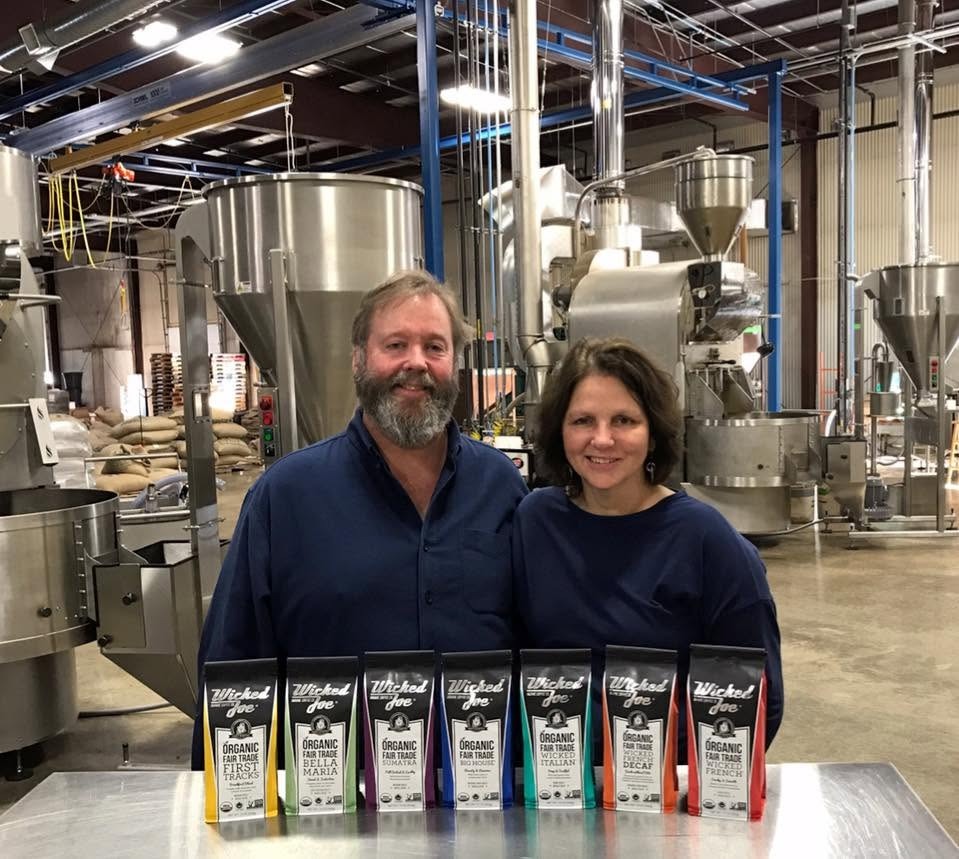
Photo Courtesy Wicked Joe Organic Coffees
As the Garvers looked to predict Wicked Joe’s operating cost with solar panels, they needed a better understanding of local sunlight measurements; however, they had a coffee company to run. Fortunately, the heavy lifting was already done. The National Aeronautics and Space Administration (NASA)’s Prediction of Worldwide Energy Resources (POWER) project has processed and archived solar radiation data from satellite missions since 1983. Natural Resources Canada distributes it through a free screening tool called RETScreen (Renewable Energy Technologies Screening Tool), whose stated purpose is to evaluate the cost-effectiveness of renewable projects. According to NASA, Wicked Joe ran irradiance, wind, temperature, and precipitation figures through the tool’s feasibility module when evaluating whether to install a solar wall.
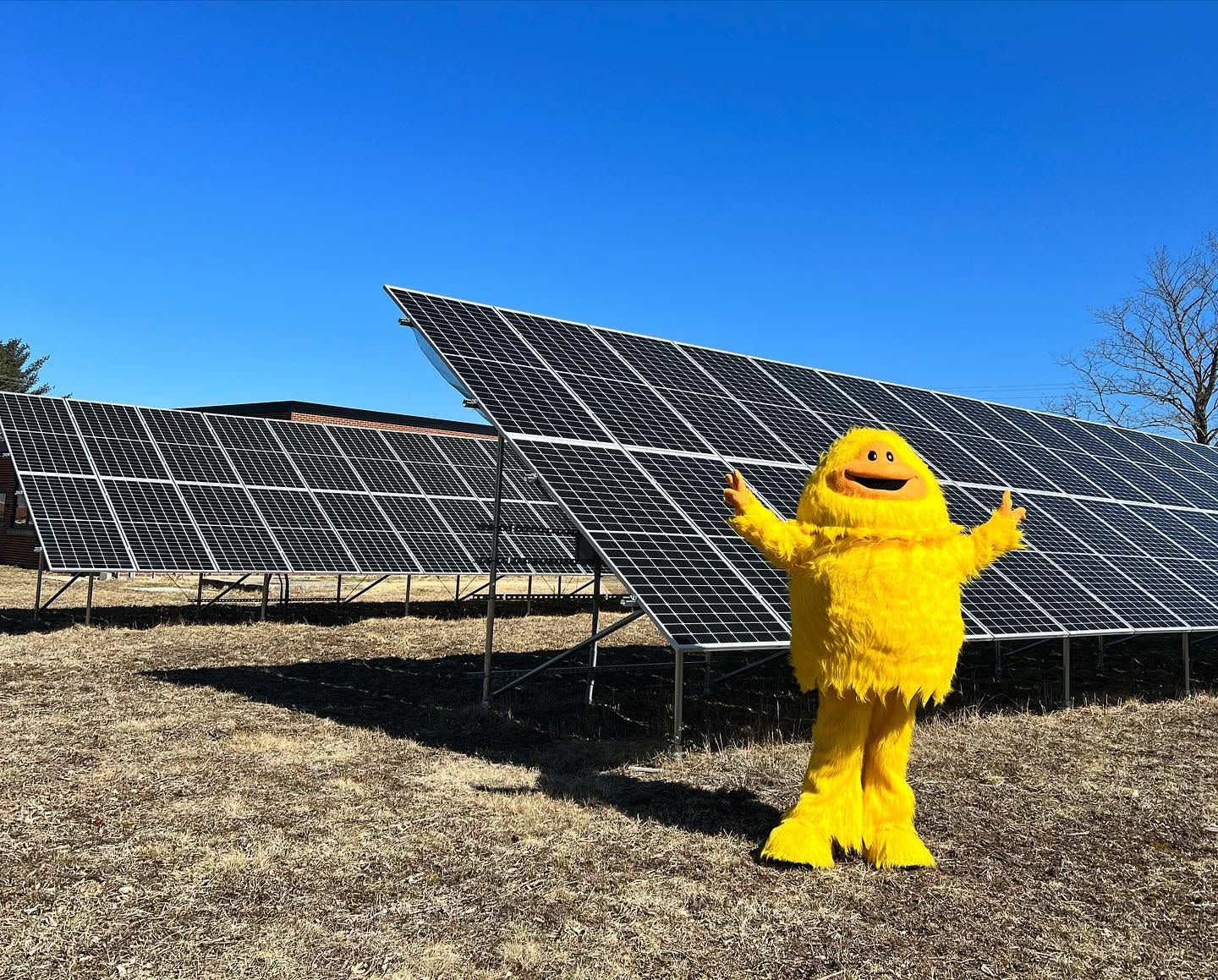
To adapt the technology to Maine’s harsh winters, the Garvers teamed up with local energy expert Michael Mayhew, then of Heliotropic Technologies in Boothbay Harbor, and Conserval Engineering, who modified a standard unglazed SolarWall design into a glazed solar air heater, capturing 40% more heat. A solar wall essentially uses solar power to warm outside air before it is pulled into an HVAC and circulated back into the space. Mounted on Wicked Joe’s facility’s southern face, one large solar collector warms in the sun, until an automatic thermostat triggers fans to pull the heated air inside, per a case study from Spark Applied Efficiency in South Portland.
The modeling projected that with the glazed solar wall running all winter from October through May and partially during the summer months, it would save Wicked Joe more than 4,240 therms of natural gas a year. Then reality intervened, in the company’s favor. The roasting equipment threw off so much heat that the building did not need the solar wall in heating mode until late October. Mayhew was candid about the miss. “If I had known how much heat the roaster throws off, I would have modeled the heating season as November through April, and the SolarWall would contribute about 3,100 therms,” he told Solar Today.
Even with a shorter season than modeled, the system pays for itself in under five years at roughly a 25 percent return on investment, according to the American Solar Energy Society. The company estimates the wall now saves about 40% on heat, or approximately $10,000 a year, savings that help hold down the price of the coffee on the shelf, “so people save when they buy from their local grocery store,” NASA wrote.

Photo Courtesy Wicked Joe Organic Coffees
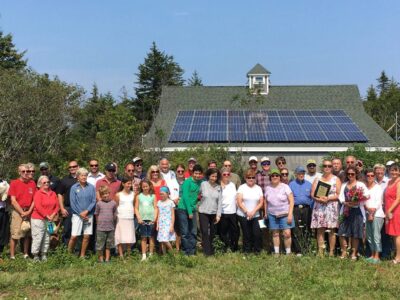
The solar wall was just the beginning. Additionally, a grid-connected rooftop array generates 4,521 kilowatt-hours per year, with every kilowatt-hour sent to the grid credited back on the monthly bill, according to Spark Applied Efficiency. In 2020, the company added another 36-kilowatt array alongside its tea building, installed with ReVision Energy. It generates 45,900 kilowatt hours annually, which the company equates to 48,562 pounds of carbon offset each year.
The savings move beyond the facility’s operation costs. Additionally, “sunlight provides much of the energy that flows into the battery of a vehicle being charged at Wicked Joe” via a charging station for electric vehicles on the side of the roasting facility, Spark says. The station has been free and open to the public around the clock since 2014. It delivers 7.7 kilowatts and is available to any driver who pulls in when a company vehicle is not using it.

Photo Courtesy Wicked Joe Organic Coffees
Wicked Joe aggressively hunts down energy savings across every corner of its operation. Energy advisors Fred Horch and Pat Coon of Spark Applied Efficiency helped the Garvers select LED lighting and install motion sensors on high bay light fixtures, cutting lighting energy use by up to 80 percent. Heat pump water heaters, more than twice as efficient as standard electric units, harvest energy from indoor air. Spark notes that this is a particularly sensible move in a roastery because it turns unavoidable waste heat into hot water and that it has led to energy savings of up to 50%.
Wicked Joe extended the same scrutiny to its roasters. The company uses Loring machines, which market themselves as using far less fuel than conventional equipment, and Wicked Joe tested the claim rather than taking it. “The claim is that they use 80% less fossil fuels,” Rohn said. “We did some studies early on, and that seemed to line up.” Conventional roasters burn natural gas twice, once for the roast and again for an afterburner that cleans the smoke. Rohn noted that the Loring machines enclose that process and skip the afterburner entirely, features he said have been a “tremendous advantage when it comes to reducing our natural gas consumption.”

Photo Courtesy Wicked Joe Organic Coffees
The same instinct shows up in what the company does with its byproducts. Chaff, the dried skin that peels off beans during roasting, gets collected by local composting company, Agricycle, and Wicked Joe reports diverting more than 40,000 pounds of it from the waste stream every year. The burlap sacks that green coffee beans arrive in are recycled and reused locally, including by partners at Maine’s Department of Inland Fisheries and Wildlife who use them to capture fish eggs for stocking lakes and ponds across the state. The company’s coffee is also organic, grown without artificial chemical substances and with a sustainable crop rotation plan.
Beyond what it generates on site, the company purchases renewable energy credits and carbon offsets equal to all of its production facility’s electrical use, according to its B Corporation profile. Wicked Joe has been certified since June 2016, and its current B Impact score of 105.7 sits against a median of 50.9 for ordinary businesses that complete the assessment. Bob Garver frames the certification as confirmation rather than conversion. “We wanted to be a mission-based company long before B Corp started,” he said. “We always strive to be a better company, and this certification quantifies our efforts by a third party.”
Two decades on, the sun over Topsham is doing steady work: heating a roastery through Maine winters, filling a coffee bag, and holding a price on a grocery shelf.