Angela Lacy has driven a city bus in Davenport, Iowa, for more than thirteen years, long enough to know exactly what a diesel engine sounds like when it turns over on a cold morning. So the first time she started one of the city’s new electric buses, the silence caught her off guard. “Starting it up, it’s just like, was this started? It’s really, really quiet. You can barely hear it,” Lacy told KWQC.
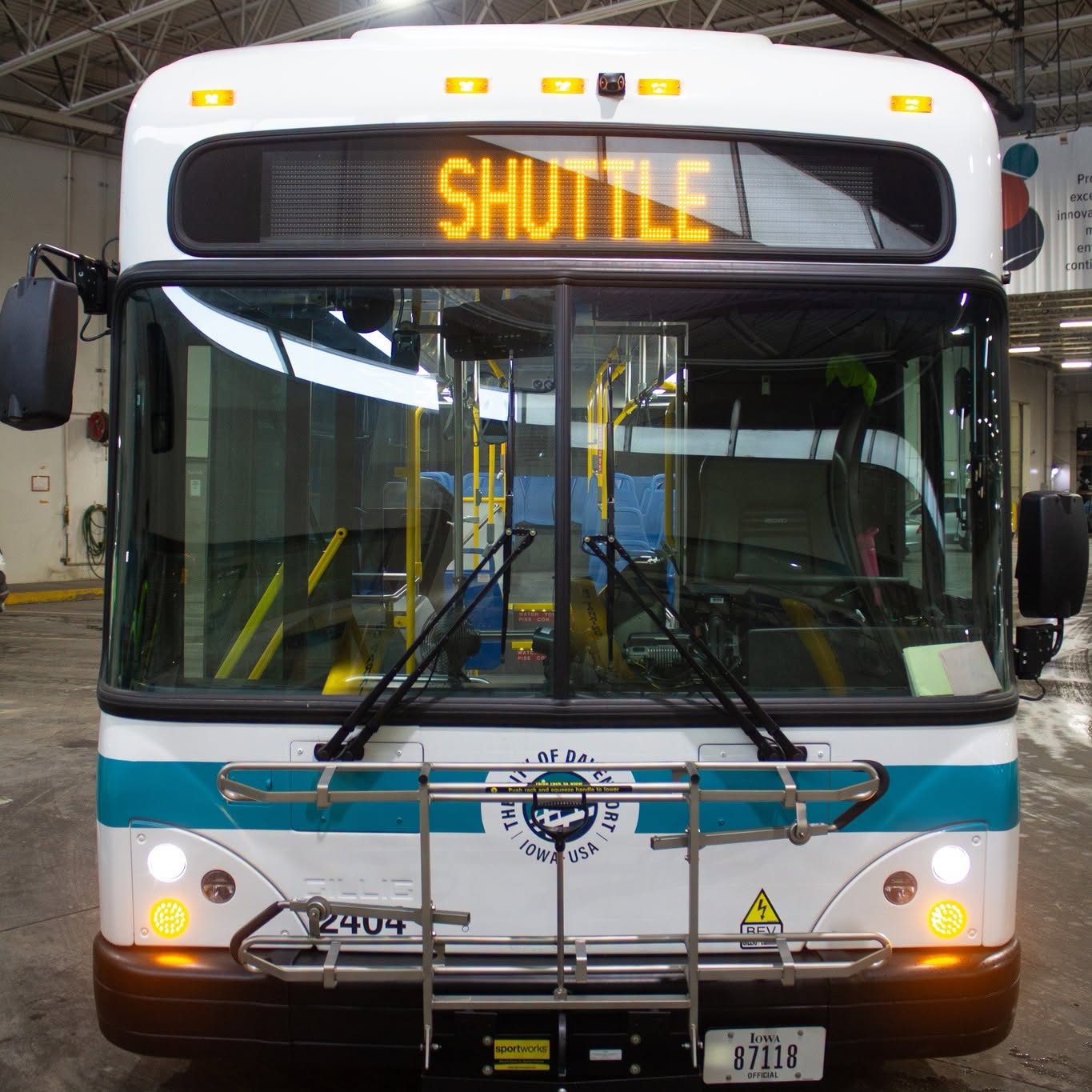
That quiet is the clearest sign of a decades-long transformation for the City of Davenport’s transportation. After persistent noise complaints from the old buses, four battery-electric buses made by Gillig entered service on the eleven CitiBus routes that span the city in December 2025. These new electric buses phased out diesel buses that had been running for two decades, which cost the city more money and emitted more carbon. For passengers, they look almost identical to the old ones, except taller, with a “cap” on top where one of the batteries is housed. Underneath, they represent the largest single upgrade the city’s transit system has made in years.
Getting to this point required persistence. The transit system applied for these buses four times (in 2019, 2020, 2021, and 2022) before it was finally selected for a competitive federal grant in August 2022. The $4.8 million award came through the Federal Transit Administration (FTA) Low or No Emission program, which offers funding for state and local governments buying low- and no-emission transit buses. The program covers r the acquisition, construction, or leasing of the supporting facilities the buses require.
In total, the project cost the city $6.25 million, with each electric bus running about $1.5 million, compared with roughly $900,000 for a diesel, a premium the grant was designed to offset. In fact, federal dollars covered most of it: 85% of the cost for the buses, 90% of the charging stations, and 80% of remaining expenses, such as training for mechanics, operators, and fire department staff. Drivers were provided with both classroom and hands-on training to ensure they understood how the buses work and learned to operate them. The city closed the remaining gap locally, combining about $895,000 in city funds with a $160,000 grant from MidAmerican Energy and a $25,000 grant from the Regional Development Authority, a Davenport nonprofit that funds community projects across Scott County.
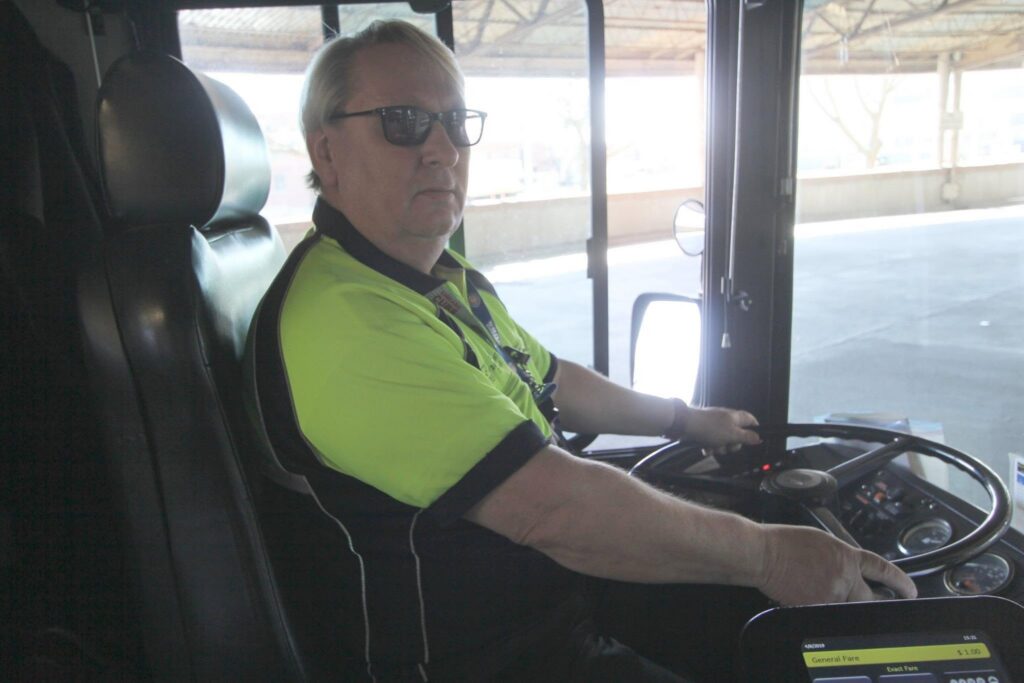
Photo Courtesy City of Davenport Government
For a city weighing an investment like this, the case comes down to the buses’ operating costs once they are on the road. The city estimates the four electric buses will save between $11,000 and $43,000 annually, with electric power and maintenance running $0.23 to $0.40 per mile against $0.31 to $0.71 per mile for diesel fuel and upkeep. The electric buses also need no oil changes. Jeff Wolf, transit division manager for Davenport Public Works, told the Quad-City Times that the lower cost of operation and lower cost of fuel will “help provide a more efficient use of taxpayer dollars.”
What tilts the math in Iowa’s favor is the price of electricity. Wolf said the city pays about $0.06 per kilowatt-hour, a rate that startles peers from other parts of the country. “When you tell people from across the nation what we spend on electricity here, it’s about six cents a kilowatt-hour. They just sort of drop their jaw,” Wolf said. Cheap power turns a modest per-mile edge into real money on a bus covering 40,000 miles a year.
Nicole Gleason, the city’s public works director, said that the city had considered costs and environmental impacts. “Just from a long-term cost perspective, obviously, fuel is expensive for one,” she told WQAD. “Two, it’s a much greener way to go, so part of it’s improving air quality.” The new city expects the new buses will prevent 920,000 pounds of greenhouse gas emissions annually. She added that it was also a matter of “looking forward as technology changes to make sure we’re staying with current technology trends,” following in the footsteps of Illinois Quad Cities MetroLINK public transit system, which first rolled out electric buses in 2018, now boasts a fleet that is 30% electric, and in 2024 was awarded $10 million to expand charging infrastructure for its expanding fleet.

Photo Courtesy Davenport Public Works
The obvious question in a state that regularly drops below zero is whether the batteries can handle the temperature. The city first tested battery life using sand-filled garbage cans that were meant to stand in for actual people on a bus. Each bus carries six battery packs, stored on top, underneath, and at the rear, and charges overnight to power a full 12-hour shift. Cold weather reduces battery performance, so every bus is fitted with a heater to keep the cabin warm, and the city expects the buses to complete full days. In practice, the buses should run up to 15 hours on a single charge, enough to finish a route before returning to recharge.
For Lacy, the everyday difference is in the driving. “They’re much smoother, the transition from stopping and going,” she described, and their regenerative braking means “we don’t have to use our brakes as much,” with the bus slowing itself as it coasts. “There won’t be as much jerkiness due to the internal combustion engine,” Wolf added to the Quad-City Times.
Now comes the part Davenport has been waiting four years to reach. Over the coming year, the city will track downtime, operating costs, and maintenance on the new buses and compare them against the diesel fleet, using the results to shape its ongoing bus replacement schedule. Meanwhile, a study of local transit services for Davenport, Bettendorf, Eldridge and LeClaire residents, with $125,000 in funding from the state combined with funds from each city, will be the first transit study in the area since 2016. The study will inform future route expansions. Wolf explained, “For Davenport, we know that means the northwest area — Kraft, Amazon, Sterilite, Fair Oaks area — where there’s lots of jobs that people need to get to; the Ridgeview area that we don’t have a ton of service to as well. Bettendorf knows that they need more service out to their TBK Bank area. Both those areas didn’t exist 10 years ago, so this is a great time for us to start planning toward the future.”
The four buses are as much a test as an upgrade, and it is part of a comprehensive public transit overhaul. The drivers running them every day will be among the first to know how the experiment turns out. Marla Miller, the transit operations manager for Davenport, has already made up her mind: “Adding new buses to the fleet is huge, not to mention lowering the volume of energy (and costs) consumed while providing a valuable service to the community.”