To see where his car gets its power, Jim Macovjak took a walk. The longtime Gustavus resident and former mayor hiked three miles and about 700 vertical feet to Falls Creek, the stream that powers his community’s hydroelectric plant. Standing above the dam, he described the connection plainly to KTOO: “You know, looking at the water above the dam here, and realizing that’s what is powering my car right now.” Macovjak co-owns an electric car, and he belongs to a small group of residents who keep watch over the community’s hydropower. He told the station they are known around town as “the power rangers.”
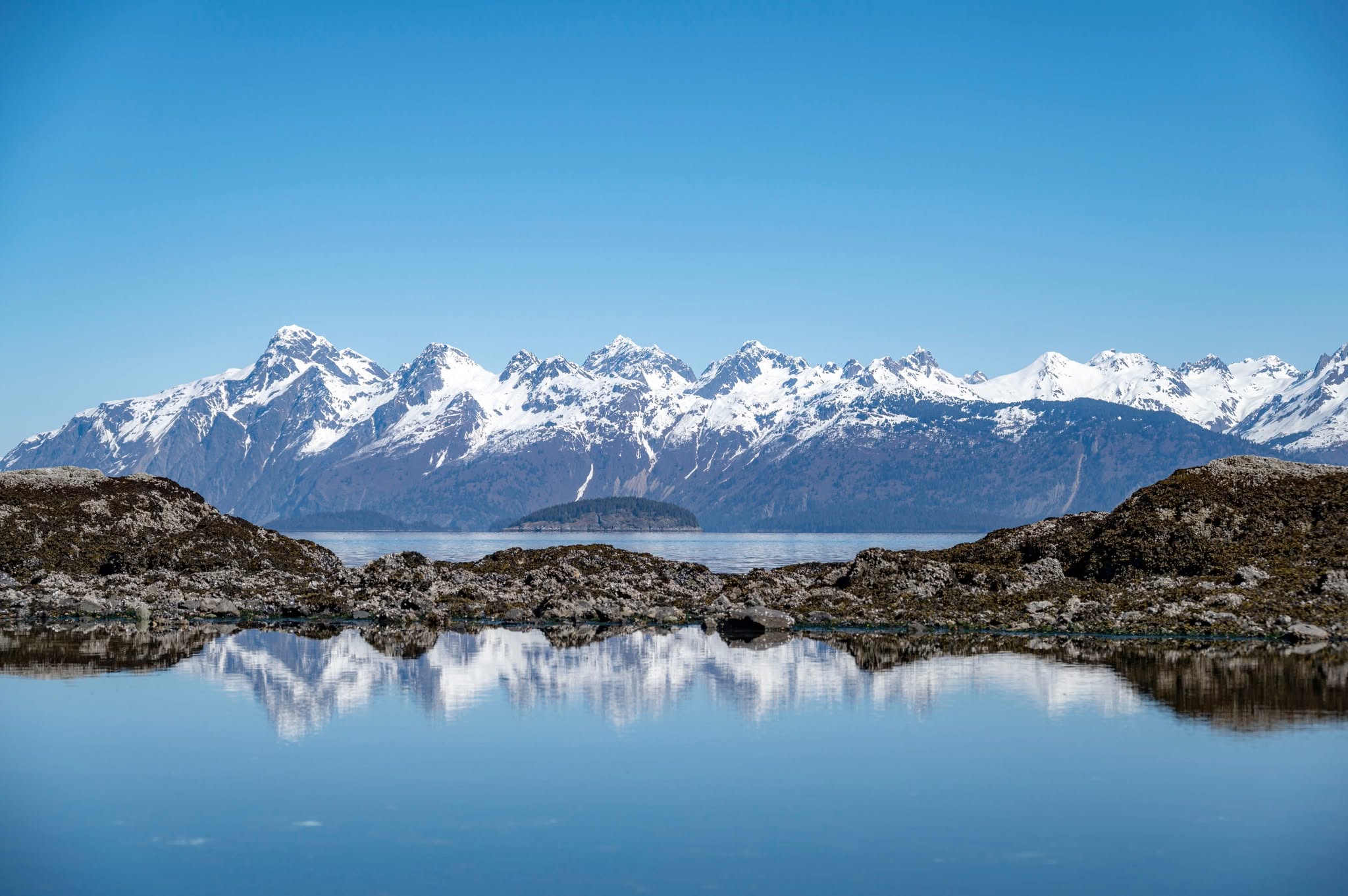
That kind of hands-on relationship with electricity is possible in Gustavus in a way it is almost nowhere else. Home to about 600 people, Gustavus sits at the mouth of Glacier Bay in Southeast Alaska, surrounded by national park on three sides and the ocean on the fourth. It is not connected to any highway. Located 48 air miles west of Juneau, Gustavus is accessible only by ferry or by plane. Its paved road runs about 10 miles between the airport and Glacier Bay National Park headquarters.
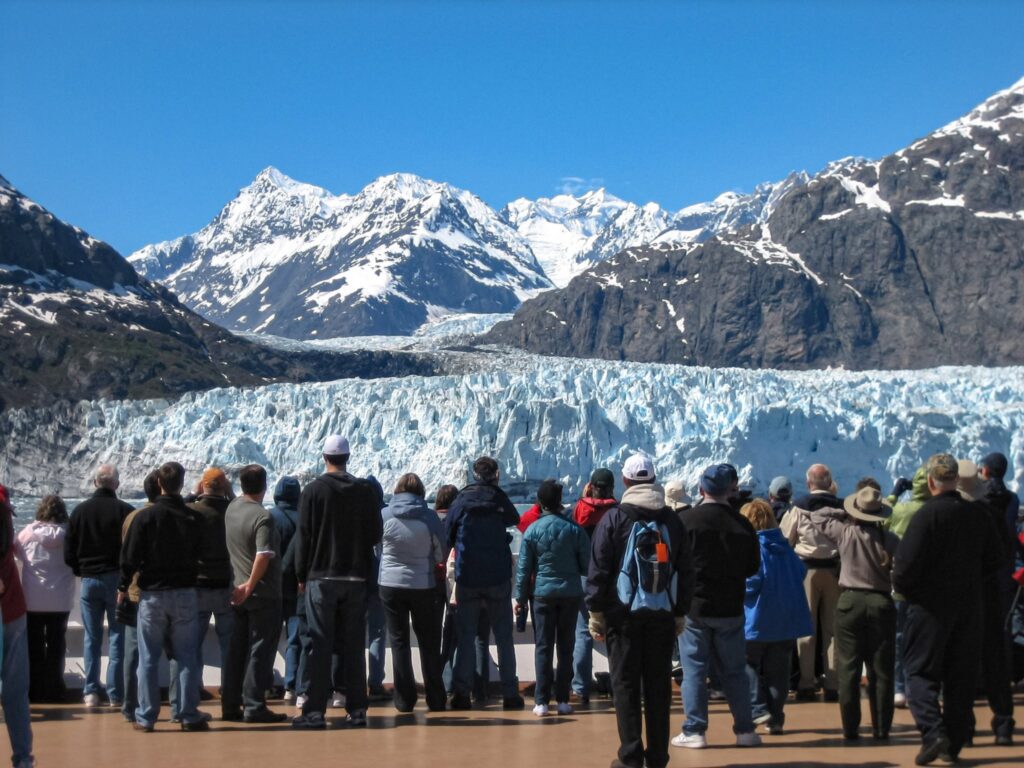
Photo Courtesy Glacier Bay National Park and Preserve
That compact road network changes the equation for electric vehicles. Range anxiety, the fear of running out of charge before reaching a charger, ranks among the leading reasons Americans hesitate to buy one. A 2025 survey from AAA found that 55% of adults who were unlikely to buy an EV cited fear of running out of charge while driving. In a town where the longest drive is a few miles to the airport or the park, that worry disappears. Steve Behnke of the nonprofit Renewable Juneau has watched electric vehicles catch on across Southeast Alaska, and when he considers which community might go fully electric first, he named the small town down the coast: “Gustavus could beat us to it because it’s so small.”
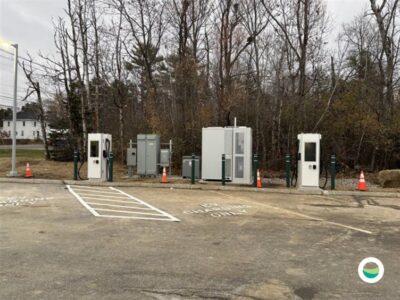
The town has a head start. In a presentation to the Gustavus city council, local utility Alaska Power & Telephone (AP&T) reported that Gustavus has the highest rate of participation in its AMP-UP electric vehicle incentive program of any community it serves, both by total number of vehicles and as a share of residents. AP&T offers its customers a $500 incentive toward both new and used electric vehicles, along with a separate $1,000 incentive for charging equipment installed by tribes and municipalities.

Photo Courtesy Alaska Power & Telephone
What makes the math work is the creek. Completed in 2009, the 800-kilowatt Falls Creek Hydroelectric Project now supplies about 90% of Gustavus’ electricity. The plant eliminates the need to import an estimated 300,000 gallons of diesel to the community’s islanded microgrid each year. “Gustavus was a community that was being powered 100% by diesel generation,” Sen. Lisa Murkowski (R-AK) said to KTUU. “You’ve got great hydro potential, you’ve got a world-class national park, and — why are we using diesel?” Now, every car and heat pump that runs on that hydropower runs on local water instead of imported fuel.
The clearest sign of how far the local grid has come sits at the edge of town. For more than 80 years, Glacier Bay National Park powered its Bartlett Cove headquarters with diesel generators, even after Gustavus had largely switched to hydropower. That changed when AP&T collaborated with the National Park Service (NPS) to complete the Gustavus intertie, an 8.5-mile buried line connecting the park to hydropower from Falls Creek. The federally funded project, long championed by Senator Murkowski, was finished at the end of 2021, and the park formally switched to primarily hydropower in December 2022. The park also said it planned to electrify more of its heating, land vehicles, and marine vessels to use the plant’s full capacity.
AP&T estimates the connection saves roughly 38,000 gallons of diesel and avoids 600 tons of carbon emissions per year, the amount sequestered by 707 acres of U.S. forest in one year or the equivalent of taking about 128 cars off the road. Over 30 years, the project is expected to save 1.15 million gallons of fuel, leaving more than 27,000 barrels of oil in the ground, and avoid 18,000 tons of carbon emissions, the equivalent of 44,117,647 miles not driven by passenger vehicles. That is 1,771 trips around the world. The route was also chosen to avoid wetlands and other sensitive areas and to minimize impacts on vegetation and on surface and groundwater quality.
The savings are not abstract in a place where energy arrives by barge. The National Park Service’s electricity purchases help spread fixed utility costs across more customers, lowering costs for the rest of the community. In fact, the press release notes that “all of the benefit of purchases by the NPS flows to energy consumers through a credit applied to the community’s Cost of Power Account,” and that decreases could reach $0.11-$0.12 per kilowatt-hour for residential consumers. AP&T CEO Michael Garrett praised the benefits of the intertie, “most notably lowering energy costs to the National Park Service and flowing financial benefits directly to the local Gustavus customers.”
The intertie also makes Gustavus’ grid more resilient and reliable. “The park is basically its own little small town, where we have our own housing, administrative buildings, and Glacier Bay Lodge, so it’s fairly complicated infrastructure just of the park. And then Gustavus, of course, has its own system. So this would allow the two systems to be merged into one, more efficient system,” Jake Ohlson, Superintendent at Glacier Bay National Park, noted. “Working in tandem, not only will it, you know, help with efficiency, it helps with backup, in case they have an issue with one, the other could power.”
“Supplying clean, cost-efficient energy in Alaska has long been a challenge, and one that I’ve been proud to work alongside my constituents to help address—this includes support for the Gustavus intertie project,” Senator Murkowski reacted. “Finally seeing this renewable intertie complete, and knowing the economic and environmental benefits it will provide, is a big milestone.” Gustavus City Councilman Mike Taylor said, “AP&T and the National Park Service have worked hard to achieve something that has not been done before.”
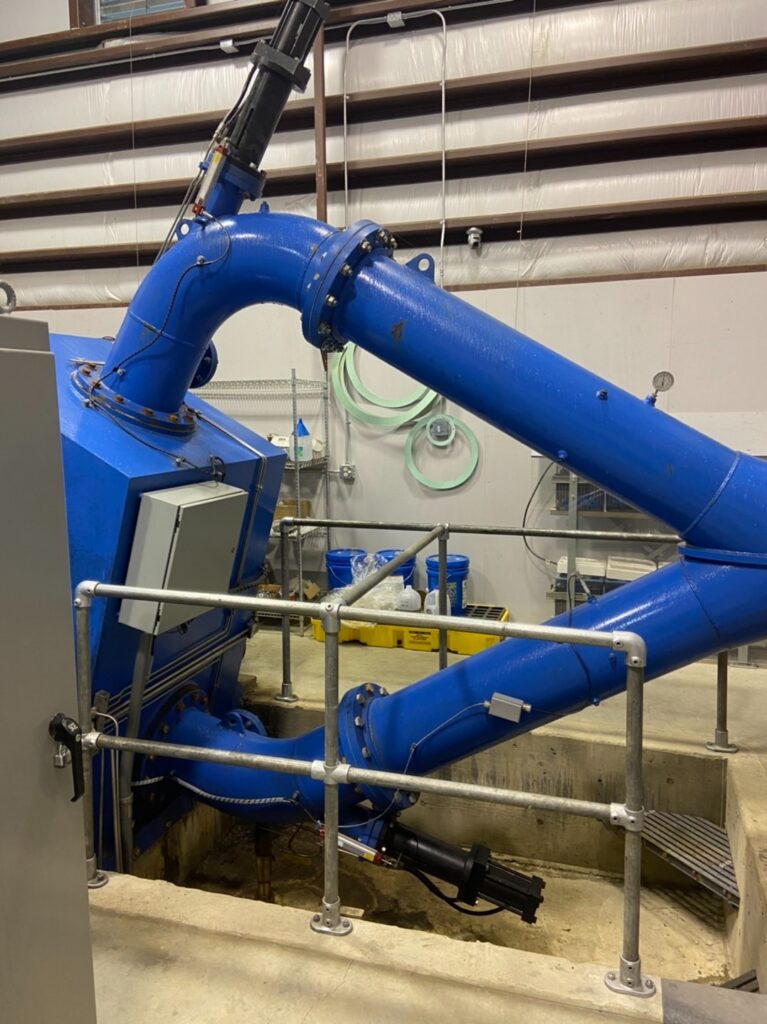
Photo Courtesy Business Wire
Savings are also showing up in residents’ homes. Heating oil in Gustavus can cost as much as $6 a gallon, so residents have increasingly installed electric heat pumps powered by the town’s hydropower. Taylor, who installed a heat pump at his home and helped install one at City Hall, secured a $20,000 grant from the National League of Cities to launch a local incentive program in 2024. The city offered $500 per heat pump, which residents could stack with another $500 from AP&T. “We’re a community that really cares about the environment and thinks about climate change and the role of carbon emissions,” Taylor told Alaska Public Media.
None of this arrived through mandate. It came through a small, self-reliant town making practical choices, one electric vehicle and one heat pump at a time, and a group of volunteers who can hike up to the source of it all and see the water moving. Whether Gustavus officially becomes Alaska’s first all-electric town is almost beside the point. For the ‘power rangers’ who keep watch over Falls Creek, the future is already running on water they can walk up and see.