A few summers ago, Mark Wiggin was two hours north of Anchorage on a family road trip when his Tesla flashed a warning to turn around and head home. There were no known charging stations nearby. Wiggin, a former deputy commissioner at the Alaska Department of Natural Resources and the Chair of the Board of Directors for the Chugach Electric Association, found a campground outlet, begged someone to let him park beside their camper for a slow charge, and plugged in while his family hiked. “I was literally sweating,” he told the Anchorage Daily News.
That kind of white-knuckle math has long been the reality of driving electric on Alaska’s main road system. The trip from the Kenai Peninsula through Anchorage to Healy or Fairbanks takes a gas-powered vehicle a single day, but for years, it was barely an option in an electric vehicle (EV). The chargers were too few and too far apart.
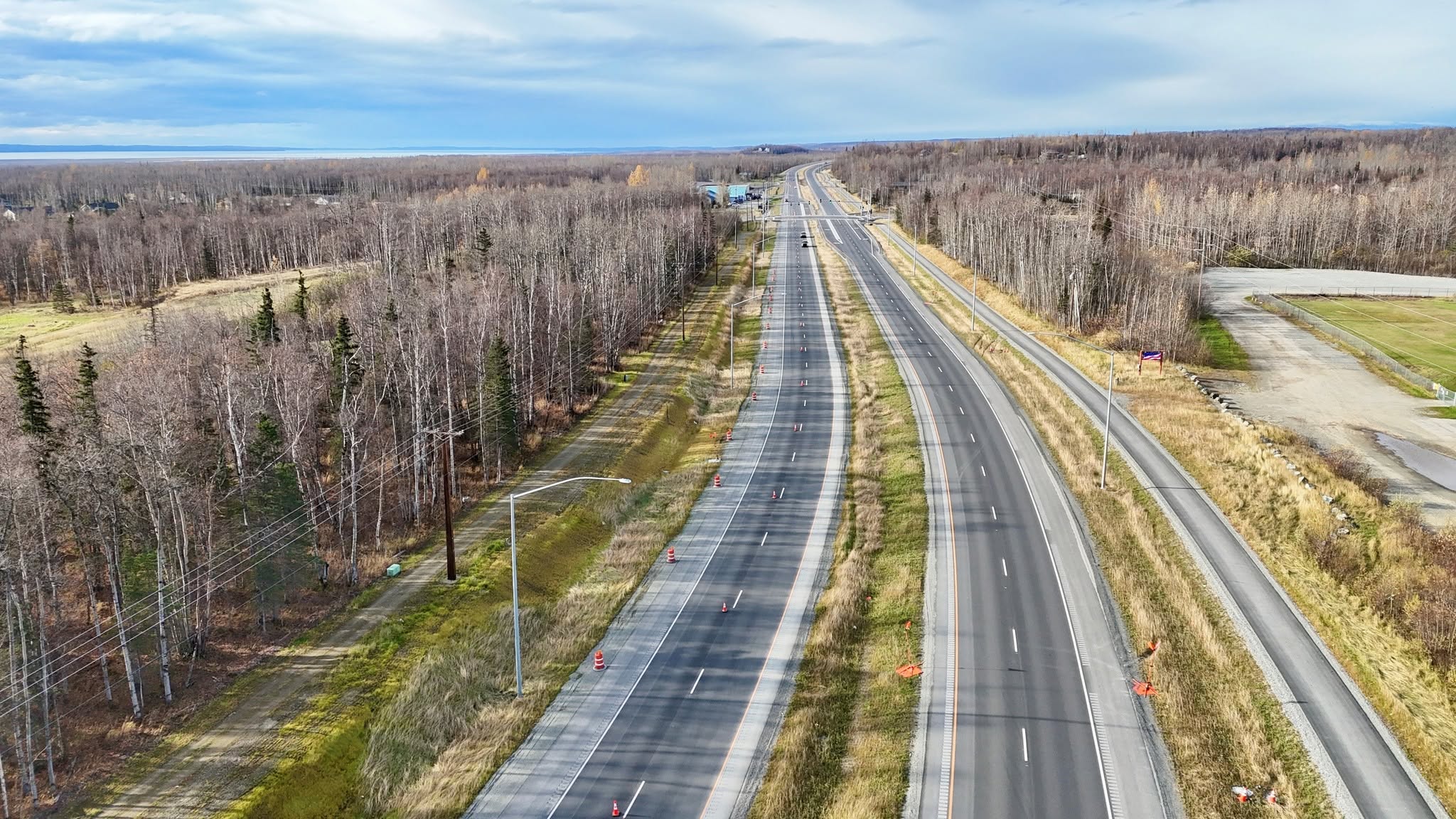
That has since changed. In March, the Federal Highway Administration (FHWA) certified Alaska’s Anchorage-to-Fairbanks corridor as fully built out under the National Electric Vehicle Infrastructure (NEVI) program, meaning no gap between fast chargers along the route exceeds 100 miles. For the first time, drivers can travel between the state’s two largest cities with dependable places to plug in along the way.
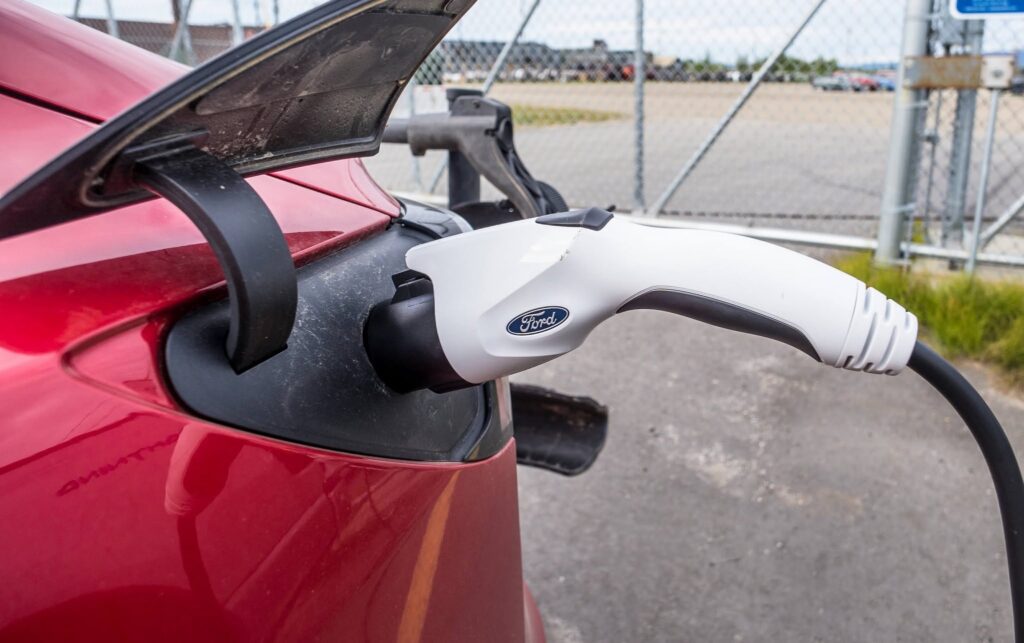
Photo Courtesy Alaska Center for Energy and Power
The corridor that earned the federal sign-off is Alaska’s Alternative Fuel Corridor (AFC), a 358-mile stretch covering the Parks Highway and Glenn Highways, according to the FY26 plan from the Alaska Energy Authority (AEA) and the Alaska Department of Transportation and Public Facilities (DOT&PF). The FHWA distributed $41 million to Alaska from 2022 through 2024, with a total of $50 million allocated, to help the two agencies develop charging stations that meet federal standards. Certification required that the sites be publicly accessible, meet federal charging speed, and be located no more than 100 miles apart. Phase 1 includes between four and eight Combined Charging System (CCS) ports, each capable of delivering up to 150 kilowatts of power.
The groundwork was laid years earlier. The state used roughly $1 million from the Volkswagen diesel emissions settlement to seed a first run of nine fast chargers from Homer and Seward to Healy, with private businesses hosting stations and contributing about $500,000. The first of these stations went up in Homer at AJ’s OldTown Steakhouse and Tavern in September 2021, and each can add a substantial charge in just 30 minutes to an hour. “It’s just another means to help Alaskans out and bring business into the store and provide a service,” said Jim Kolb, marketing director for Three Bears Alaska, which hosts three stations in Birchwood, Talkeetna, and Healy. “It’s the wave of the future, in a sense,” AEA Executive Director Curtis Thayer said at the time. “And if we can play a role in encouraging it, providing a safety margin as far as charging goes, that’s what we want to do.”
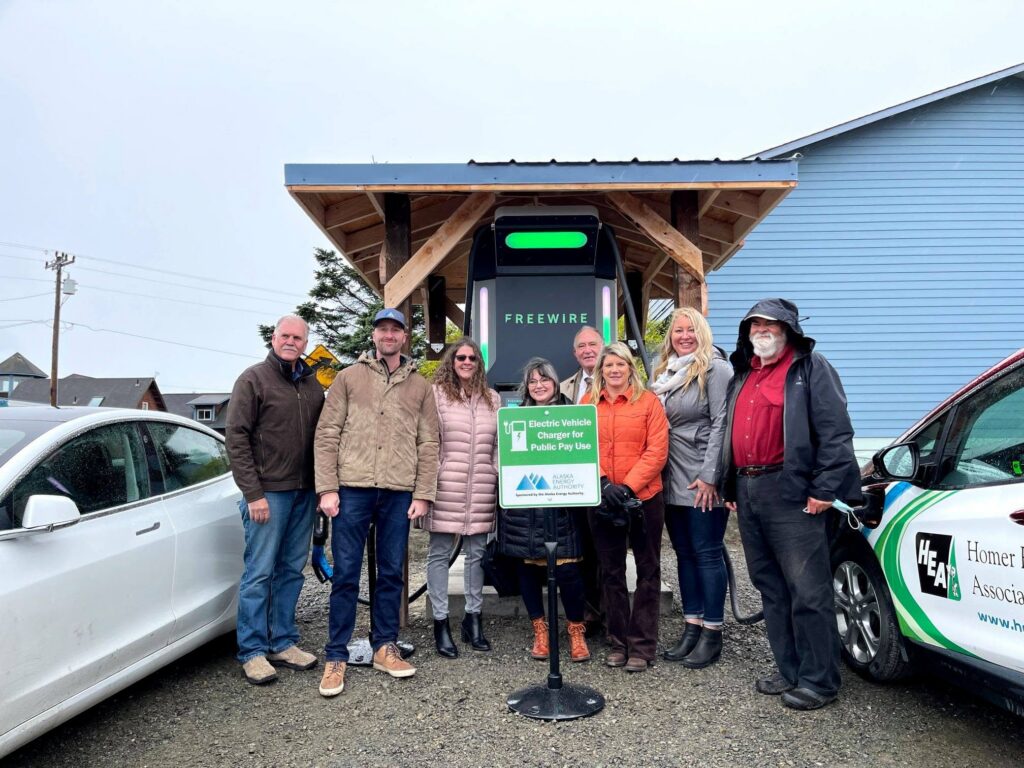
Photo Courtesy Alaska Energy Authority
The greater federal effort did not run smoothly, though. The U.S. Department of Transportation paused the NEVI program in February 2025 for review, freezing the money Alaska was counting on. Funding resumed that August, and FHWA approved Alaska’s updated plan that October. “We’ve got a whole new life for electric vehicles,” Thayer said when the program restarted. “The program is back on.”
During the pause, Tesla informed the state that it would build its four awarded sites in Nenana, Cantwell, Trapper Creek, and Fairbanks, with the latter marking North America’s northernmost Supercharger, without federal money. Once those Superchargers were operational, Alaska asked the FHWA to count them toward the built-out requirement, and with them in place, no gap between Anchorage and Fairbanks topped 100 miles. The revised federal guidance also dropped an earlier requirement that stations sit within 50 miles of one another, a target that had proven unworkable across Alaska’s long, empty stretches.
The buildout also exposed shortcomings in earlier charging efforts. Dimitri Shein, who heads the Alaska Electric Vehicle Association, welcomed the renewed funding but said the state needs to do better than it did with the earlier Railbelt network, where many stations had become obsolete due to outdated or broken equipment and charging companies that went out of business. Thayer added, “We gave them funds and said, ‘Here’s your grant. You’re responsible for the location, you’re responsible for the installation, you’re responsible for the vendor.’” Lessons have been learned, and the new corridor will clear that bar with higher-powered, federally standardized equipment.
Alaska is an unlikely early mover, and the numbers show why the work matters. As of May 2025, the state had 3,916 registered EVs, up 27% from a year earlier, with plug-in hybrids climbing 34% to 1,345. The statewide EV penetration rate sits at 0.69%, below the national average but rising steadily. The vehicle mix is distinctly Alaskan: sport-utility vehicles and pickups account for about 80% of new vehicles purchased in the state, and as battery-electric trucks enter the market, the agency expects EV adoption to climb. Back in 2021, Thayer had predicted that a new wave of electric trucks would lead to more interest in the state, noting, “We like our trucks and SUVs.”
For the drivers already on the road, the corridor is about confidence more than ideology. Wiggin swore by his electric car for saving him money over a gas model: “It just makes economic sense.” Tim Leach, Deputy Director of Transportation at Launch Alaska, told KUAC last year that despite a need for continued infrastructure buildouts, he saves about $1,300 per year on fuel costs by owning an EV. He also noted the value of being able to power his home with his car in the case of an emergency: “The benefit that that can bring for folks who are in a remote cabin is that when the grid goes down — and, of course, we have plenty of experience with that this winter — is that you can then use your electric vehicle battery to sustain the loads in your home, or perhaps the loads in your small business.”
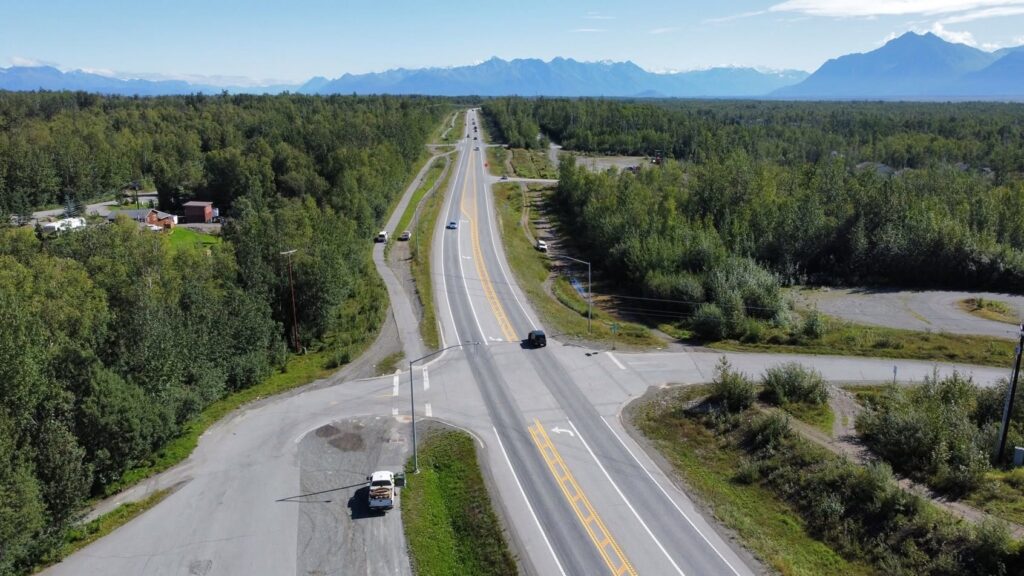
Photo Courtesy Alaska Energy Authority
With the main corridor certified, the state can now turn to Phase 2, which extends charging beyond the Anchorage-Fairbanks AFC route to secondary highways, including along the Alaska Marine Highway System and in the eastern Interior near the Canadian border, thereby adding even more reliability and resiliency. Urban “destination” locations and rural hubs will follow. Thayer has pointed to places like Valdez and Delta Junction along the highway system, and Kodiak and Juneau on the coast, as candidates.
For now, the achievement is simpler and closer to home: a driver leaving Anchorage for Fairbanks no longer has to map every outlet in advance or beg for a spot beside someone’s camper. The chargers are there, roughly an hour’s fast-charge apart.