For nearly four decades, the coal-fired Intermountain Power Plant outside Delta, Utah, anchored Millard County: a steady employer, a reliable neighbor, and a workhorse that, as recently as 2024, supplied 11 percent of the electricity used in Los Angeles, according to the city’s Department of Water and Power (LADWP). The day before Thanksgiving in 2025, its coal generators stopped producing power. In many coal towns, that day marks the beginning of decline. In Delta, it marked a handoff, as the coal units had already been running at reduced capacity for years, and the lights stayed on
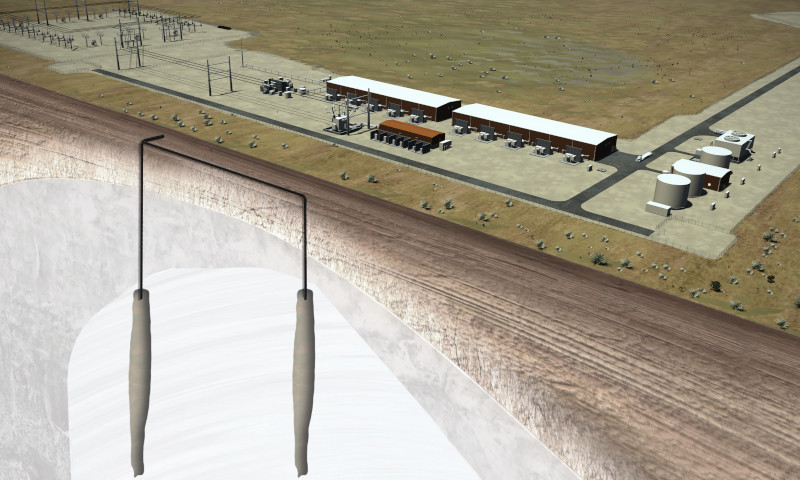
Right next to the old plant, on a patch of high desert most people would drive past without a second look, a joint venture between Mitsubishi Power and Chevron U.S.A. Inc.’s New Energies Company, called ACES Delta, has been building what the U.S. Department of Energy describes as a first-of-its-kind hydrogen and energy storage facility “capable of providing long-term, seasonal energy storage.” It is one of the largest green hydrogen projects in the United States, and the reason it landed here comes down to something buried beneath the sagebrush: a salt dome that turns out to be nearly perfect for storing energy.
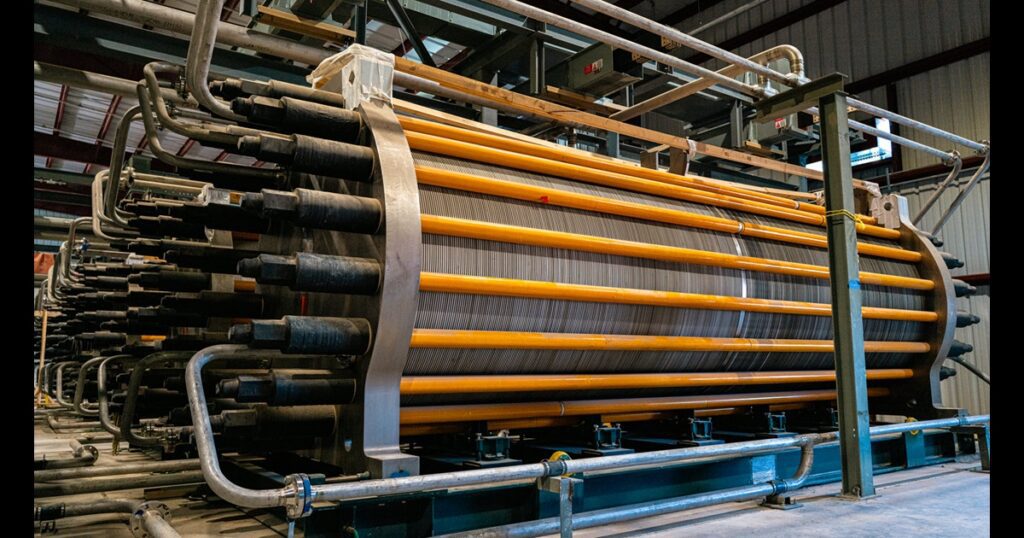
Photo Courtesy Chevron
The problem ACES Delta was built to solve is a practical one. Renewable energy is becoming cheaper and more plentiful, but it cannot always be produced when demand is highest. Wind and solar produce the most excess power in spring, when demand is low, and the least in the depths of summer, when demand peaks. Batteries can hold that surplus for hours. They cannot hold it for months. Hydrogen can. Run electricity through water, and it splits into hydrogen and oxygen, a process called electrolysis. Capture cheap surplus renewable power to make hydrogen when it is abundant, store the hydrogen, and burn it later, and the seasonal mismatch starts to close. The challenge has always been storing enough hydrogen to make a meaningful difference.
That is where Delta’s geology comes in. Oil and gas crews drilling for oil and gas first discovered the salt dome beneath the site during the energy crisis of the 1970s, according to Mitsubishi Power Americas. “While they weren’t able to find oil and gas at the time, the site’s potential for energy storage was thoroughly documented,” and Mitsubishi describes it as the only major geologic salt dome formation in the western United States. Dense underground salt of this kind can be hollowed into enormous, leak-resistant caverns. Magnum Development, which owned the formation before becoming a Chevron subsidiary, was founded in 2008 to build an energy hub around it.
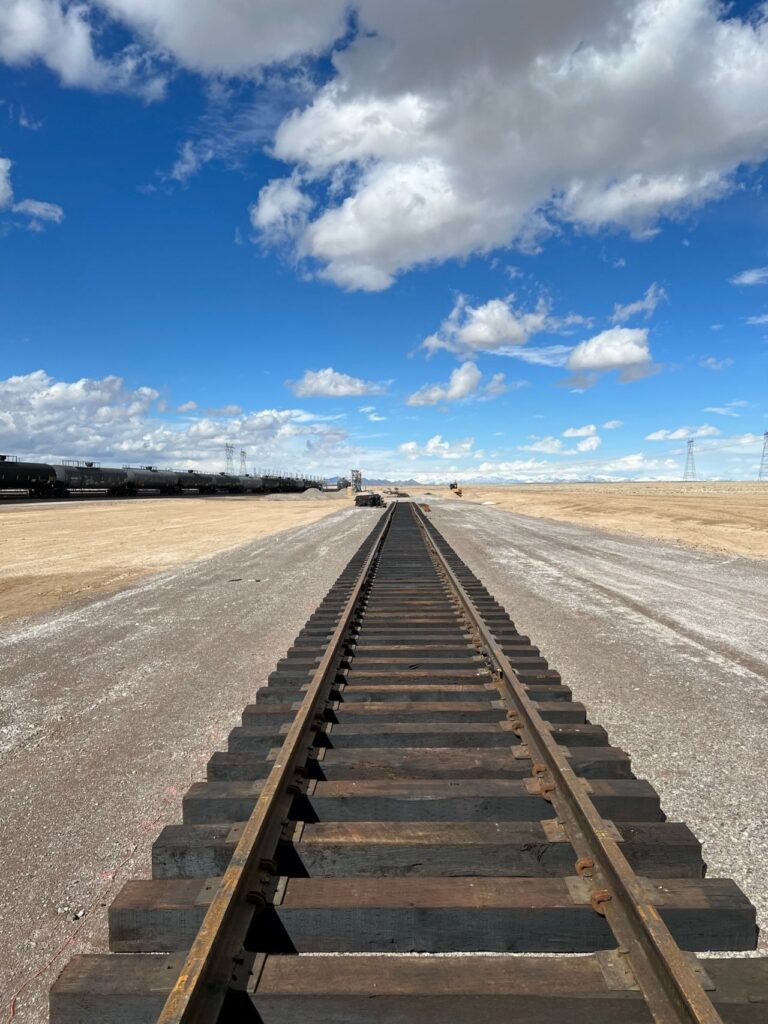
Photo Courtesy Sawtooth Caverns, LLC
The Department of Energy reports that the facility uses 220 megawatts of electrolyzers to convert excess renewable electricity from off-peak hours and seasons into as much as 100 metric tons of green hydrogen a day. “Representing one of the world’s largest orders for electrolysis equipment,” the company notes, “the Advanced Clean Energy Storage Site will nearly double the global installed capacity for electrolysis.” The hydrogen is then pumped into two underground 4.5 million-barrel salt caverns. Each can store 5,500 metric tonnes of working capacity, and the pair can together hold more than 300 gigawatt-hours of dispatchable energy. Storing the equivalent in lithium-ion batteries of just one of those salt caverns would require more than 40,000 shipping containers.
The stored hydrogen feeds the plant next door, the Intermountain Power Agency‘s IPP Renewed project, an 840-megawatt hydrogen-capable combined cycle plant built to replace the retiring 1,800-megawatt coal facility. Its two Mitsubishi turbines run on a blend of 30 percent hydrogen and 70 percent natural gas, with plans to increase the hydrogen share over time until the turbines operate on 100 percent clean hydrogen by 2045. The emissions reductions are substantial: LADWP reports that the coal plant averaged 11.2 million metric tons of carbon dioxide per year, while the new units are expected to average 1.5 million, cutting emissions per megawatt-hour from 2,035 pounds to 630 pounds. The DOE expects the shift from 100% natural gas to 70% to avoid 126,517 metric tons of carbon emissions per year.
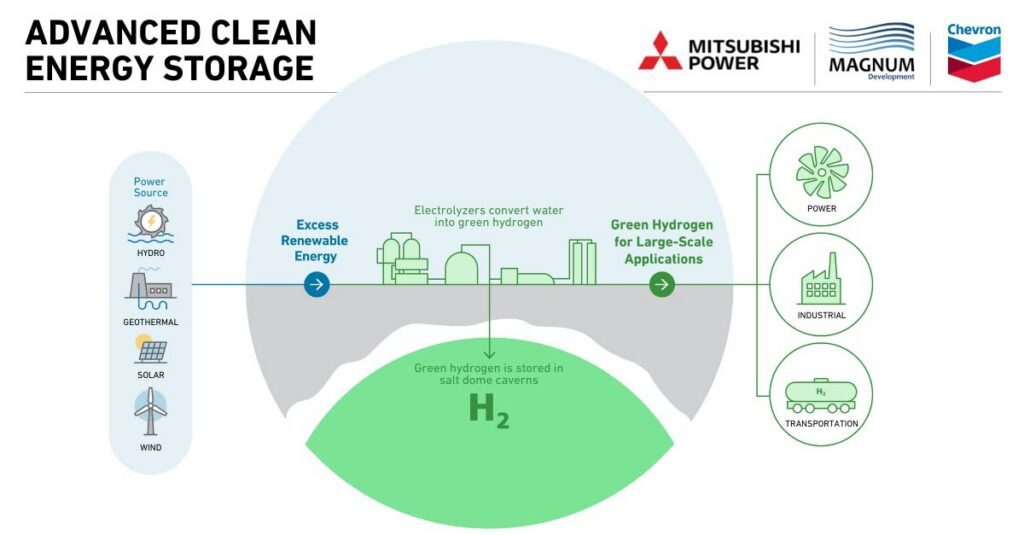
Photo Courtesy Chevron
The vision is to deploy this “previously unattainable utility and industrial scale storage” to “move the boundaries of renewable energy to achieve safe, reliable lower carbon solutions.” The result will be stored power for year-round use in the power generation, industrial, and transportation sectors operating in the western United States, with the oxygen by-product also stored for industrial applications. The long-duration storage will reduce costs by capturing excess renewable power when it is abundant and therefore cheaper. Because the hydrogen can remain underground for months, the stored energy is available when demand peaks rather than only when the wind blows or the sun shines. The site also sits near two existing high-voltage transmission systems, along with highway and rail connections through which liquefied hydrogen can be shipped to industrial customers.
As of early 2026, nearly every piece was in place. Trade publication Turbomachinery Magazine reported from an industry session at POWERGEN 2026 that the turbines are already generating power commercially, and that the conversion facility and storage caverns are mechanically complete, with hydrogen injection planned. HydrogenPro, the Norwegian firm supplying the electrolyzers, confirmed in February that all 40 units had been installed and run at full load.
The expansion potential is substantial. Bill Myers, Chief Operating Officer of ACES Delta at Chevron, told Turbomachinery Magazine that there is potential to add 50 to 70 more salt caverns, more electrolyzers, and increase storage and generation capacity.
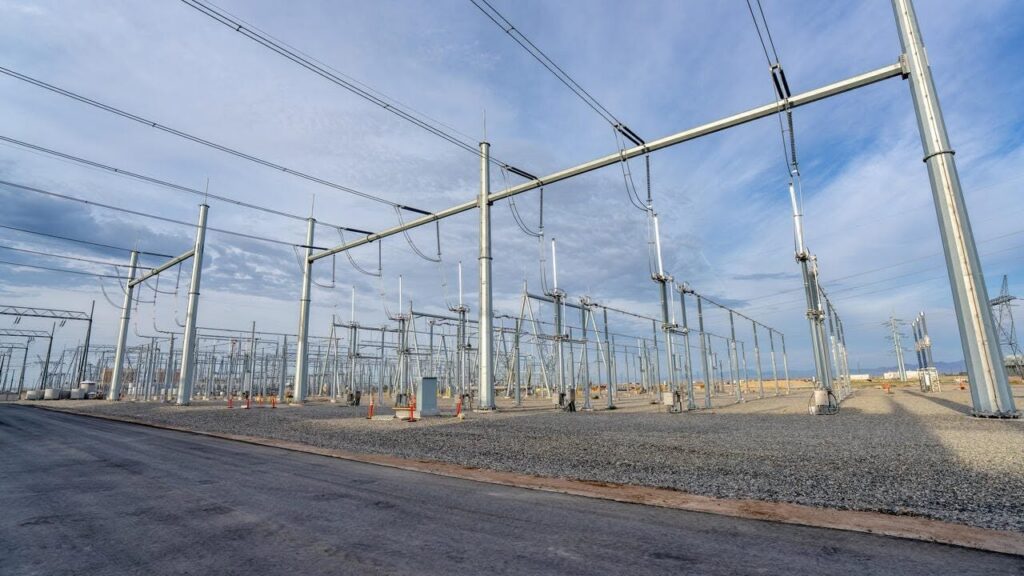
Photo Courtesy Power System Operation
Getting a project this novel to the finish line took patience. “We were paving new territory,” said Mike Ducker, former president and chief executive of MHI Hydrogen Infrastructure, a Mitsubishi Power Americas subsidiary. “It did take humility and also collaborative spirit to work together to get a project like this to the finish line.” Along the way, Chevron acquired a majority stake in the venture in 2023, and a $504.4 million federal loan guarantee, closed in 2022, helped make it real. It was the Energy Department’s first loan guarantee for a clean energy project in roughly a decade.
For Millard County, the payoff is concrete. The company projects up to 400 construction jobs and 25 permanent positions. It also estimates roughly $180 million in state property taxes, and about $100 million benefiting Utah schools. Ducker summarized the project’s local importance simply: “We take that as a great responsibility.” Craig Broussard, CEO of Magnum Development and former CEO of ACES Delta, estimated, “Over the next three decades, significant taxes and royalties will flow from this initial phase of green hydrogen development at our site.”
The clearest sign of the handoff may be the smallest. In December 2025, ACES Delta donated $100,000 to Utah State University and gave another $100,000 to Snow College, both for scholarships in STEM and trade specializations tied to the county’s new energy economy. Jay Olsen, vice president for technical education and workforce development at Snow College, reacted, “By supporting technical and STEM education, ACES is helping ensure that students from Millard and Juab counties can gain the skills needed to thrive in emerging energy industries.” David Vernon, senior associate vice president for the USU Wasatch and Southwest Regions, added, “These scholarships will amplify that impact by helping students advance their careers while better providing for their families. At its heart, education is about hope for a better future.”
“Delivering reliable, affordable, and cleaner energy will require new ways of thinking,” Jonathan Perry, ACES Delta’s president, chief executive, and board chair, told the Daily Herald, “and that begins with investing in rural Utah’s workforce.” In Delta, many of the students who will one day fill those jobs are already growing up down the road.
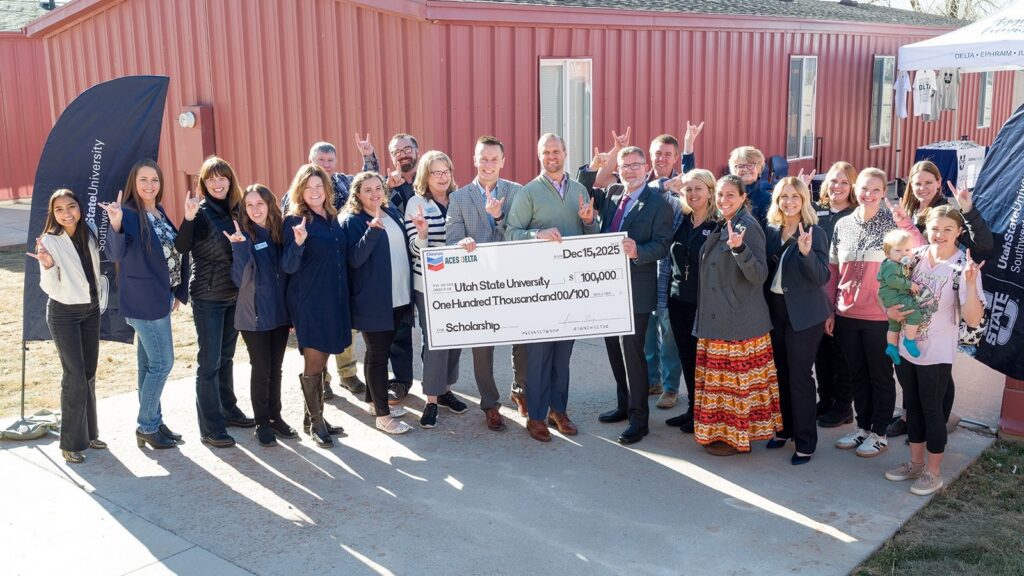
Photo Courtesy Levi Sim/USU