
One month after Elijah Jackson was sworn in as mayor of Ouzinkie, the lights went out. It was November 2019, and the small hydroelectric plant that had powered this village on Spruce Island since the 1980s had failed. Jackson, who had just learned that being mayor of Ouzinkie also made him the town’s utilities manager, would spend the following years trying to get it running again.
Ouzinkie sits on Spruce Island in the Kodiak Archipelago, 245 miles from Anchorage and reachable only by boat or floatplane. It runs on an isolated grid connected to nothing else. When the hydro system went down, the village fell back on three aging diesel generators running around the clock. The fuel arrived by barge, and the bills were brutal. As Jackson later described the swing, the town spent $22,000 per month on fuel when the hydro turbine was offline, and only $5,000 per month when it was running. At one point, the village owed $109,000 to the Ouzinkie Native Corporation just for fuel it had already burned.
The village kept paying the higher number for years while it searched for a fix. COVID-19 stalled the effort, with parts and workers hard to find. Ouzinkie secured a $2.8 million grant to replace the plant’s penstock, the mile-long pipe that feeds water to the turbine, and it took out a 40-year loan of $464,000 with the U.S. Department of Agriculture (USDA) for that single part. The hope is that lower energy rates will help cover the village’s debts.
Tyler Kornelis of the Kodiak Area Native Association, who helped Ouzinkie pursue the grants, said the hardest part was simply assembling the right people: “There’s supply chain challenges, there’s engineers that are overworked and under-available in the state. So, just lining up the right people to get the job done has been a challenge.”
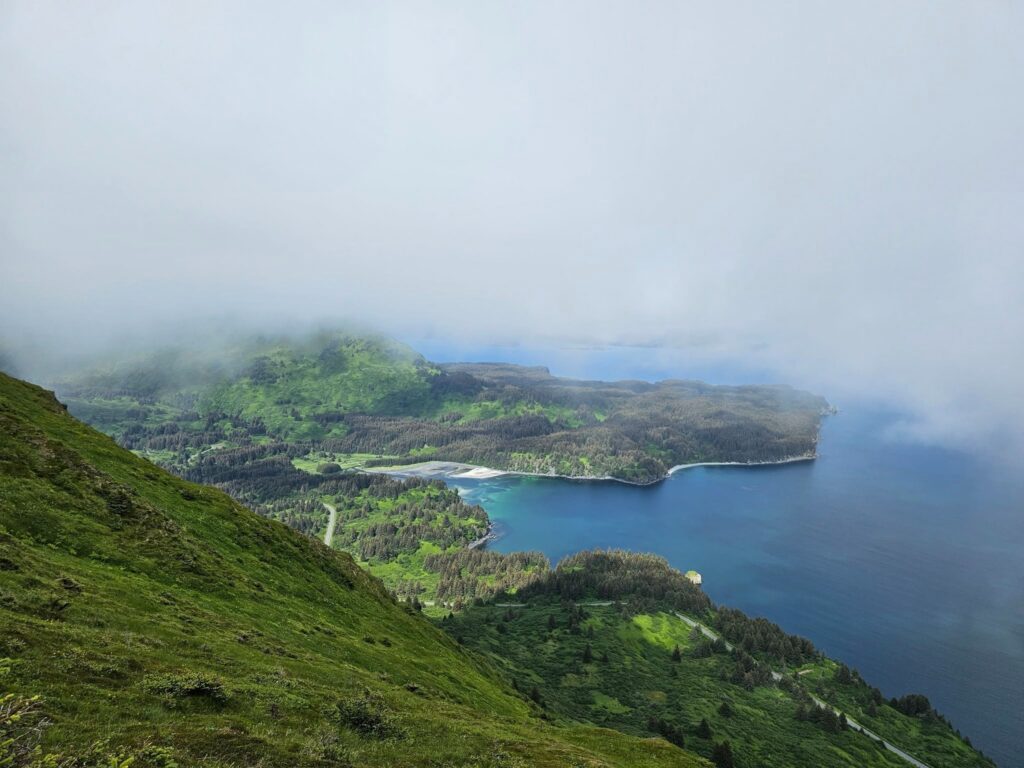
Photo Courtesy Spruce Island Development Corporation
The Mahoona Lake hydro plant finally returned to service in late January 2023. But hydro alone was not enough because the reservoir behind the dam is also the community’s drinking water. In a hard freeze, the village has to choose between the two. “Our lake is both our drinking water and our power,” Jackson explained. “Last winter we had to run it lower than we wanted because everything was freezing up. We needed power, but we couldn’t run the community out of drinking water. We were in a world of hurt.”
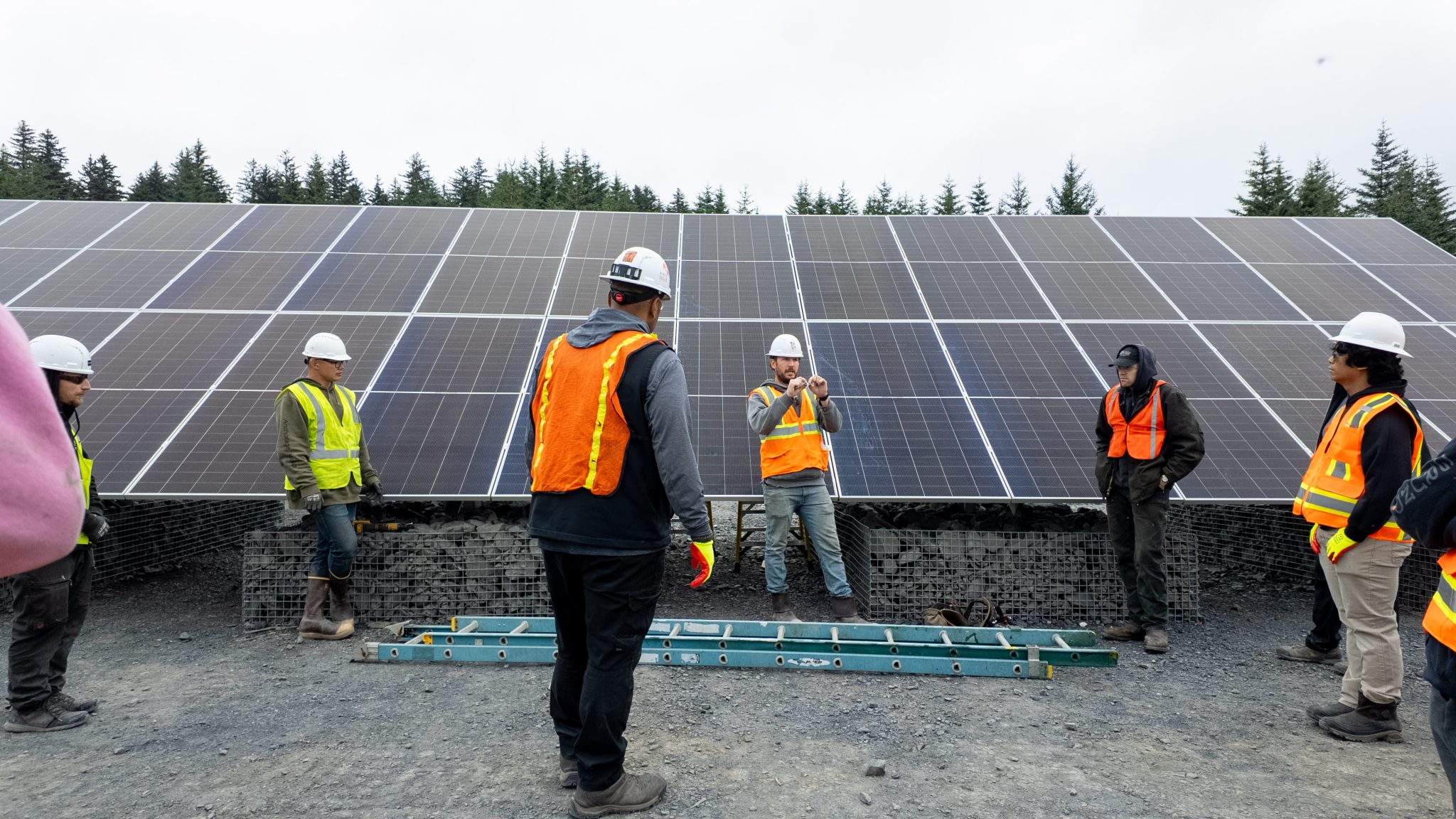
That is why Ouzinkie looked for a third source of power. On a gravel section of the village’s decommissioned airstrip, a crew of local residents and workers from Anchorage installer Alaska Solar spent the summer of 2026 installing 480 solar panels. Jackson was one of them, fastening the 70-pound panels into place. He was also one of 13 residents who were trained to maintain and repair the array once the crews left. Asked whether he felt ready to keep it running, he said, “Seeing how easy it is to replace the panels and all that stuff with the crew we have and knowing who they are and how they work, I’m very confident.”
The finished array will generate up to 297 kilowatts on summer days, more than twice Ouzinkie’s peak demand of 140 kilowatts, according to the city. Paired with a one-megawatt-hour battery energy storage system, it can carry the village’s critical loads for roughly 17 hours during an outage. Kipp Wilkinson, a lead project manager with Alaska Solar, said the point is balance across the seasons: “Between the hydro and the solar, obviously solar doesn’t produce as much in the winter. Year-round, it’s nice to have a balance. And so with this and the megawatt battery, they’ll be at least on either solar or hydro for part of the year.”
The $3.6 million project is expected to be fully operational by October, with most of it paid for by a $2.3 million grant awarded by the U.S. Department of Energy’s Office of Clean Energy Demonstrations in 2024, with the rest coming from the nonprofit Tribal Energy Alternatives and the Ouzinkie Native Corporation.
Video Courtesy Alaska Native Tribal Health Consortium
What makes the arrangement unusual is who will own the array. The array will belong to the Native Village of Ouzinkie, a federally recognized tribe, which will sell the power to the city-run utility as an independent power producer (IPP) and use the revenue for local water and sewer infrastructure. “Becoming an IPP gives the Tribe additional energy sovereignty and strengthens us in the long term,” Tribal Administrator Kerry Ivory said. “We have a grid that isn’t connected to anything else, so we want to be sure we’re able to maintain it ourselves.” The Alaska Native Tribal Health Consortium (ANTHC), which managed the grant and the build, estimates the array will save the community more than $100,000 a year in diesel.
For Ivory, reliable power must come before anything else the village wants. She said the community has weathered at least 10 outages a year, some lasting for days, since she returned to Ouzinkie seven years ago. “We’d like to bring in some economic development. We’d like to bring in more homes so that we can bring people home or have new people move in,” she said. “But we can’t really do all of that until we have a place that has sustainable energy.” After years of fighting to keep the lights on, that’s the future Ouzinkie is building toward, one panel at a time.