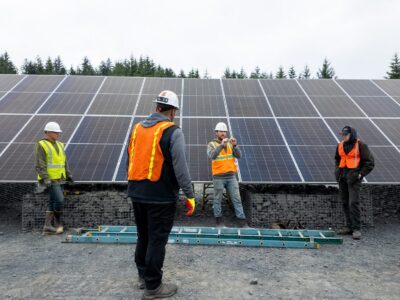
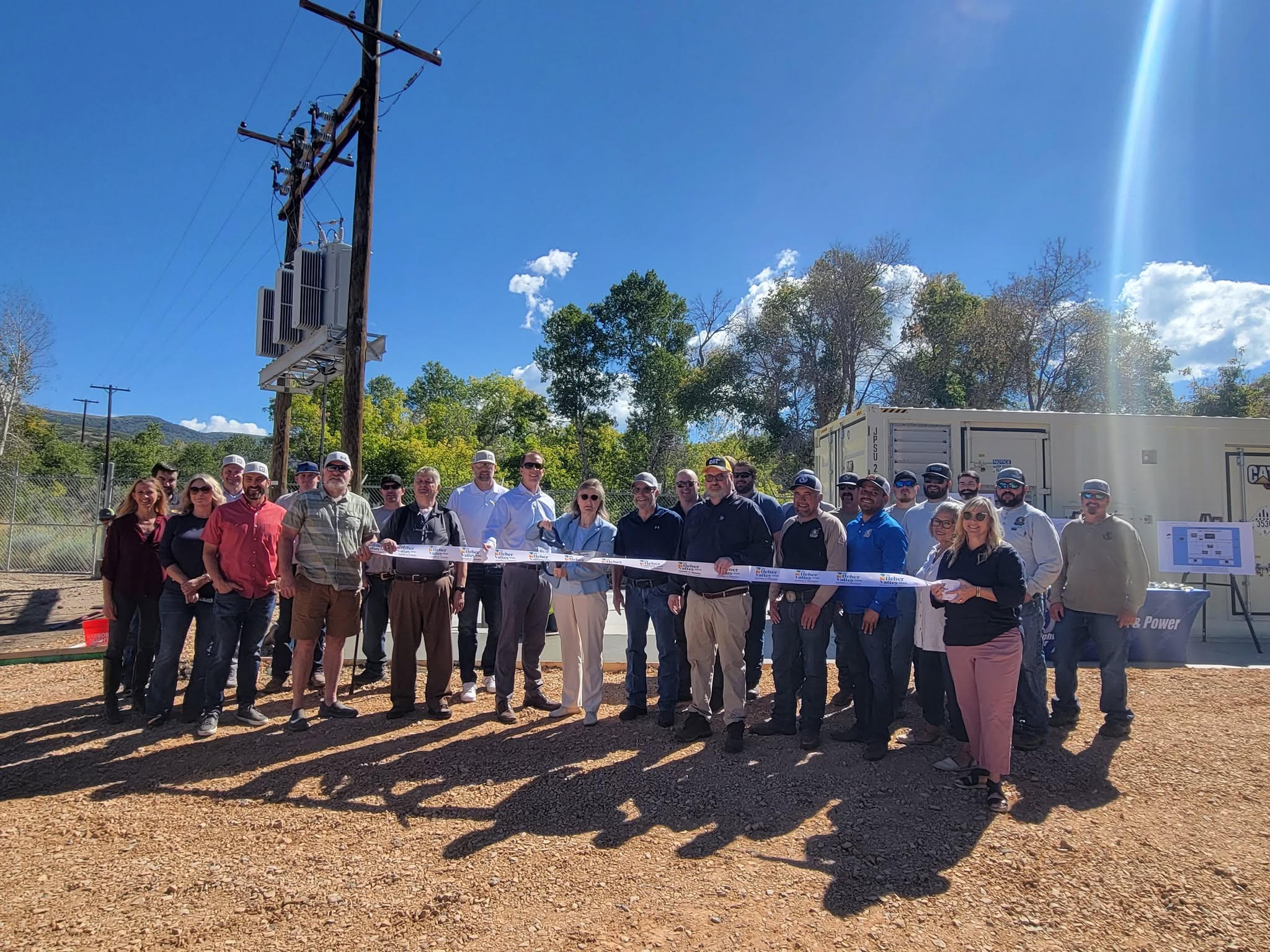
Jason Norlen knows that being first takes patience. As general manager of Heber Light & Power, he spent years building support for a lithium-ion battery at the utility’s Lake Creek hydro plant, starting with an engineering study that he said was “huge to get buy-in from my team and the HL&P board of directors.” As Norlen told Caterpillar for a case study, “This project has been at least five years in the making… It’s never easy being the tip of the spear.”
The battery is one piece of how a community-owned utility keeps up with growth in Utah’s Heber Valley. Heber City, Midway City, and Charleston Town formed Heber Light & Power (HL&P) in 1909, and it remains community-owned and employs 48 people. Its customer count grew 5.12% in 2025, reaching 16,786 by May 31, 2026, and its system peak hit 53 megawatts in both 2024 and 2025.
The growth shows no sign of slowing. Heber City added almost 700 residents from 2024 to 2025, ranking seventh among Utah communities of 20,000 or more. The University of Utah’s Kem C. Gardner Policy Institute projects that Wasatch County’s population will grow 113% by 2065, the largest projected increase of any Utah county. The pandemic accelerated demand, Norlen explained to Caterpillar. “Our loads increased dramatically during COVID because people stayed at home to work, and we’re a bedroom community,” he said.
The utility’s local power supply starts with water. The utility says its Upper Snake Creek hydro plant began generating in 1949 and “continues to operate much the same” today. It built its Lake Creek plant in 1981, and it acquired the Lower Snake Creek plant downstream from Rocky Mountain Power in 2010. In 2008, the Jordanelle Dam hydroelectric plant began operating on the Provo River after Heber Light & Power and the Central Utah Water Conservancy District jointly proposed it. The district, which runs the plant, says it sells the power to Heber Light & Power and that the plant is one of only 178 to be certified “Green” by the Low Impact Hydropower Institute.
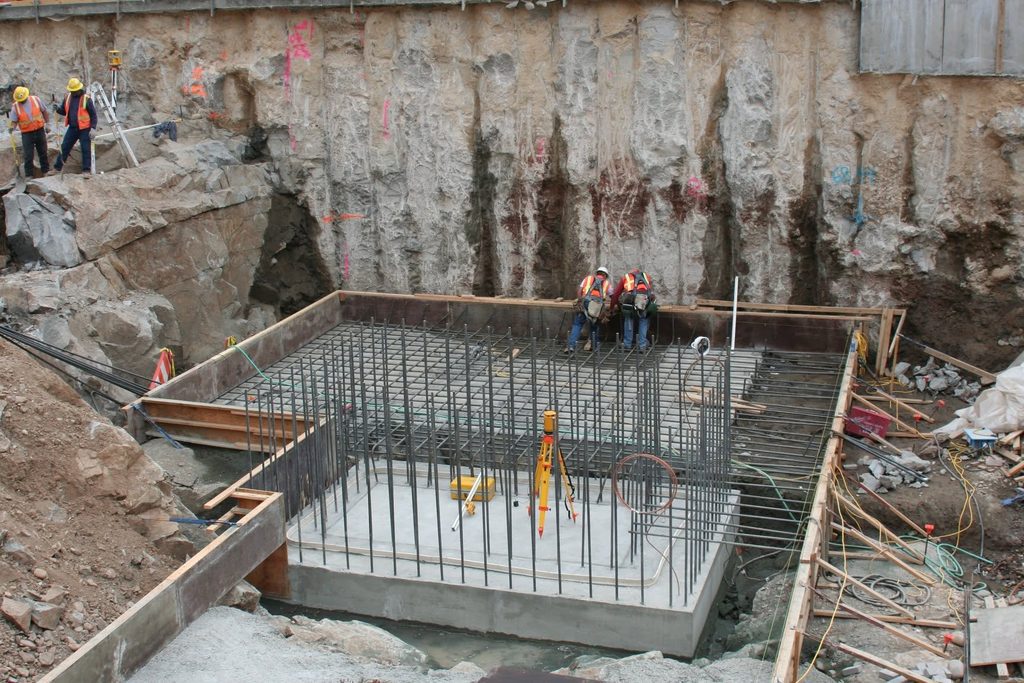
Photo Courtesy Heber Light & Power
Long-term contracts add geothermal from Nevada, solar from southern and northern Utah, wind from Idaho and Wyoming, and federal hydropower from the Colorado River Storage Project. Renewables made up 41% of its 2024 power mix. The utility’s 2026 to 2040 resource plan aims to keep renewables at 30% or more, and it notes that the utility’s base load has grown by an average of 5% per year over the past five years, after adjusting for weather.
Hydropower and contracts do not cover every hour, so Heber Light & Power also runs its own natural gas generators. The utility has owned gas generation since 1984 and now has over 15 megawatts available. In 2002, it became “one of the first public utilities in the world” to install Caterpillar’s advanced gas generator sets. Caterpillar reports the units are designed to carry the top 25% of daily demand, run when market power costs more than generating locally, and increasingly fill in when solar and wind output drops. The utility’s fast-response units “can go from sitting idle to full load in five minutes,” Norlen said. “There’s value in having that fast-start capability.”
The battery works alongside that fleet. The utility told the American Public Power Association that it was one of the first lithium-ion installations at a Utah public power utility, and it can deliver 1 megawatt for about two and a quarter hours. Heber Light & Power typically charges it from hydro and releases the energy during peak demand, and the battery helps regulate voltage when Lake Creek goes offline. “By having the battery, it extends our capacity by a few more hours when the solar day ends,” Norlen said. He added that the batteries “can do a lot more than some of the technology we’ve been using forever,” such as voltage regulators and capacitor banks.
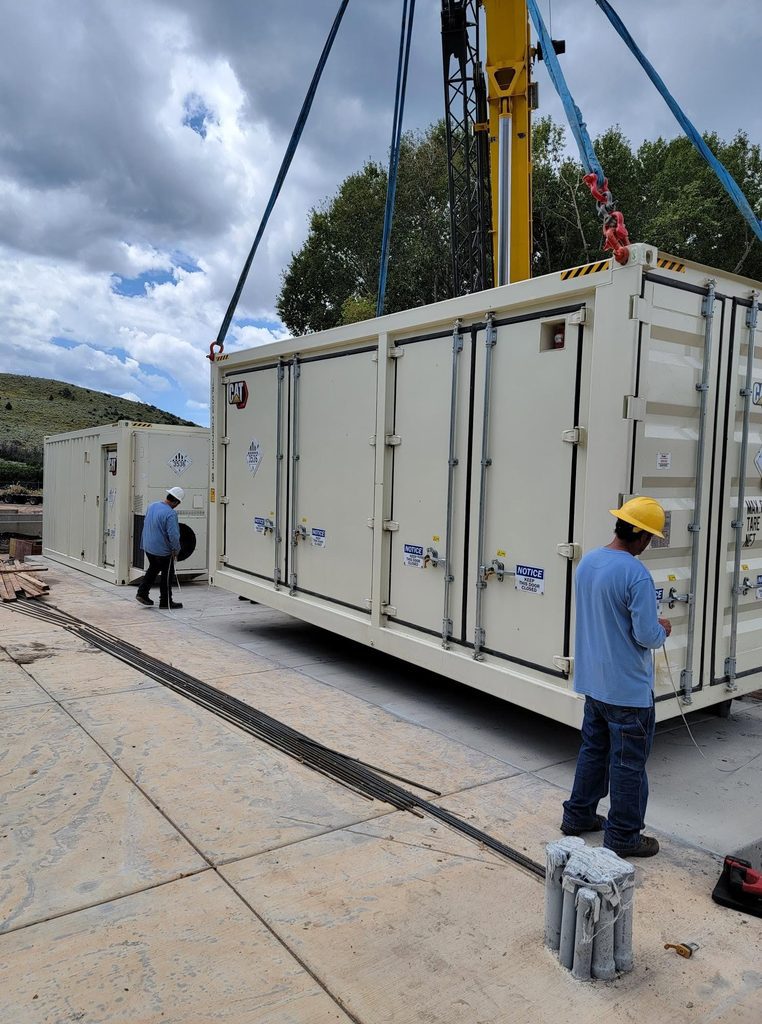
Photo Courtesy Heber Light & Power
Customers get tools of their own. The utility offers residential rebates of $1,200 to $1,600 for converting an electric resistance heating system to an air-source heat pump, up to $1,700 for a ductless heat pump, and $2,500 for a ground-source heat pump conversion. Other rebates include $1,000 for a heat pump water heater, $75 for a smart thermostat, and $100 for a timer that shuts off rooftop heat tape when it is not needed. The utility also pays up to $500 toward a qualifying home EV charger. Drivers can also use public chargers at five utility-operated sites around the valley, including Wasatch High School and the Midway City Building.
Businesses have a program, too. Heber Light & Power’s commercial rebate program offers an incentive “for any project that demonstrates energy or demand savings,” according to the utility, and runs each year until funding runs out.
For customers who want all-renewable power, the Clear Peaks program sells it in 100-kilowatt-hour blocks for 90 cents each. Every 10 blocks equal a megawatt-hour of renewable generation; the utility retires a renewable energy certificate for each, and program revenue supports current and future renewable projects. In February 2024, Soldier Hollow Nordic Center in Midway, a former Olympic venue, enrolled to cover 100% of its electricity through the program, from its snowmaking system to its competition building.
“Sustainability is a priority throughout winter sport, and this initiative will benefit the Heber Valley community, the kids in our sports programs, and visitors from around Utah and the world,” Soldier Hollow General Manager Luke Bodensteiner said. “Our partnership with Soldier Hollow is a tangible example of the benefit of the Clear Peaks program,” Jared Wright, Customer & Community Relations Manager, added.
Customers can also generate their own power. Residential and small business customers bank credits for excess renewable generation through the end of March, and the utility pays for any unused kilowatt-hours at the customer’s retail rate in April. Larger businesses can also sell all of a project’s output to the utility through its feed-in tariff program, under contracts that usually run 10 to 20 years.

Photo Courtesy Heber Light & Power
Growth also costs money. The utility’s board approved a 13% rate increase for 2025 after a cost-of-service study projected the utility would go into debt by 2028 without it. The proposal was expected to raise the average household bill by about $12 to $15 a month. Since September 2026, time-of-use rates have been the default, with higher prices only from 3 to 10 p.m. on weekdays and lower prices at other times, including weekends and holidays.
When the utility first offered that option in 2023, Wright described the shift to KPCW as a benefit for every customer. “It actually helps everybody because any kilowatt hour we don’t have to buy helps to stabilize and keep rates low,” Wright said.
More building lies ahead. Heber Light & Power is financing a new power plant, a substation and related improvements with 2026 bonds. Customers’ own equipment may come next. In May 2026, Masood Parvania, a University of Utah engineering professor who directs the Utah Smart Energy Laboratory, presented the board with a proposal for a virtual power plant that would tap customer-owned solar panels, batteries, and EV chargers to reduce peak demand. An initial $50,000 investment would fund the program structure, incentives, vendor partnerships and a pilot, and the board directed staff to keep reviewing it.
The utility’s crews have helped beyond the valley, too. In 2019, Heber Light & Power lineworkers volunteered to connect homes on the Navajo Nation that had never had grid power. “I do feel a pretty big sense of pride, coming down here and helping these guys out, sharing my skill with them and bettering their lives,” lineworker Brad Fryer said. Today, the utility receives up to 5 megawatts from the Red Mesa Tapaha solar facility on the Navajo Nation in southeastern Utah, through an agreement with a subsidiary of the Navajo Tribal Utility Authority.

Photo Courtesy Heber Light & Power
For Norlen, the mix of old and new comes back to independence. He told Caterpillar that “just having the ability to control our own destiny by peak shaving and filling in behind the renewables is definitely something that gives us the ability to keep rates lower than they otherwise would be.”