
Based in Salt Lake City, Rocky Mountain Power is a utility that provides energy to homes and businesses across Utah, Wyoming, and Idaho. A division of PacifiCorp, the company is committed to providing safe, reliable, and resilient energy.

Resiliency is perhaps the biggest focus in response to natural disasters and climate events that have caused catastrophic power outages worldwide in recent years. Rocky Mountain has emphasized grid hardening and system strengthening to ensure power stays on, stating that “From wildfires to winter storms, our grid is built to stand strong.” For example, the utility invested heavily in wildfire prevention strategies. Using aerial and ground patrols, it searches for trees and vegetation that may come into contact with power lines and prunes or removes them as needed. It also upgrades fuses, relays, and reclosers, and installs fire-resistant poles to minimize the risk of sparks starting fires. In fire high consequence areas (FHCAs), Rocky Mountain even buries lines underground.
A network of weather stations and a Wildfire Intelligence Center enable teams to consistently monitor weather and conditions in service areas, leveraging technology such as AI cameras and social listening. These insights help the company to make decisions more quickly, such as conducting a public safety power shutoff, turning on enhanced safety settings, or enacting emergency de-energization. In the case of a power outage, Rocky Mountain works around the clock to restore power to transmission lines, substations, distribution lines, and eventually homes and businesses.

Photo Courtesy Rocky Mountain Power
Reliability is also at the forefront of Rocky Mountain’s work. “Always prepared. Always improving,” the company described, “We deliver power you can trust.” These words are put to action by ensuring energy security during hot summer days. The Cool Keeper program allows households to earn $30 in bill credits every year for installing a device near the central air conditioner unit that is activated during ‘Cool Keeper events’ on certain days in the summer, when the utility temporarily cycles off the air conditioner. The air conditioning fan continues to circulate cool air, making cheaper energy available for all Utahns.
Rocky Mountain also contributes to energy assistance programs for lower-income customers. Notably, it matches and doubles every dollar Utah customers donate to the Lend a Hand program, helping other households keep their heat running and their lights on during the cold, dark winter months.
The utility additionally offers multiple avenues for customers to source clean energy, including rooftop solar installations. Those who install solar systems with backup battery storage can then participate in the utility’s Wattsmart Battery program, which aggregates all participating batteries to provide energy to the grid when it is most needed or to keep the grid stable. Rocky Mountain uses upfront rebates and ongoing bill credits to encourage customers to join the program.
Video Courtesy Rocky Mountain Power
Even if they do not install anything on their own property, Rocky Mountain customers can support clean energy. The BlueSky program enables customers to purchase 100-kilowatt-hour Blocks of renewable energy at just $1.95 per Block per month. In 2024, more than 158,000 customers participated, sourcing over 1 million megawatt-hours of clean energy from projects in the western U.S., enough to power 103,017 homes for a year. Since 2000, participants have sourced nearly 15 million megawatt-hours of clean energy, enough to charge more than 800 billion smartphones. Participation helps fund new community-based clean energy projects, adding 377 such projects to local schools, libraries, and food banks thus far.
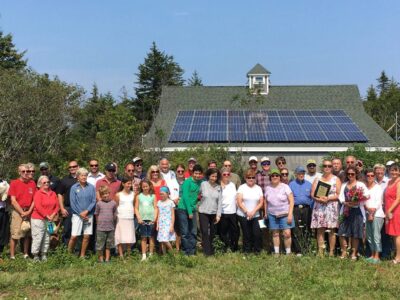
For example, a 306.72-kilowatt solar array was added to The Other Side Tiny Home Village, an affordable housing community that emphasizes social bonding to combat homelessness, and 500 solar panels were added to a new Salt Lake School District transportation bus solar canopy, helping clean the air in an underserved area. Meanwhile, the Utah Subscriber Solar program enables customers to buy 200-kilowatt-hour blocks of solar energy generated by a 20-megawatt solar project in Millard County, Utah’s largest shared solar project with more than 81,000 solar panels. Over 3,200 customers participate in the program.
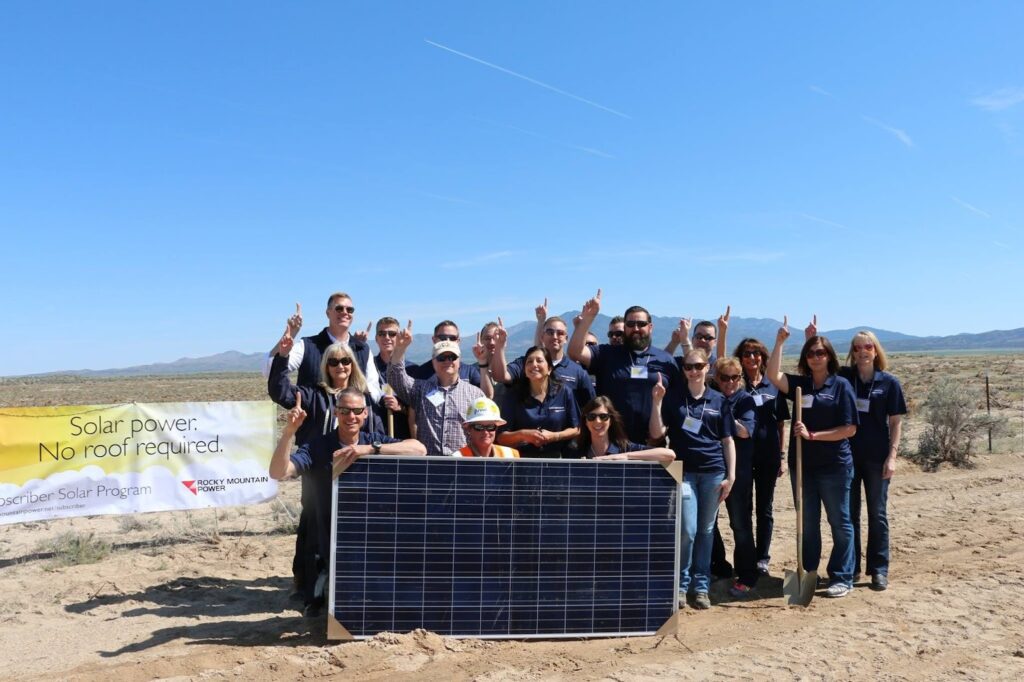
Photo Courtesy Rocky Mountain Power
Rocky Mountain strives to help customers achieve their energy goals, particularly by providing tools to lower monthly electric bills. In the Home Energy Reports portal, customers can easily see their energy costs broken down by appliance category and even receive personalized tips for saving energy. Additionally, a ‘Time of Use’ rate plan enables customers to shift energy usage to off-peak hours, for example, by washing dishes or charging electric vehicles when demand and energy costs are lower.
One of Rocky Mountain Power’s most powerful perks is the rebates it offers to consumers for enhancing the energy efficiency of their homes, like through their partnership with Wattsmart Homes. The program offers cashback rebates on smart thermostats so residential users can easily set temperatures to achieve cost savings, as well as on heat pumps, insulation, and high-efficiency windows. In Utah, Rocky Mountain Power offers up to $2,000 in cash back on ground-source heat pumps and up to $1,600 on air-source heat pumps.
Plus, through the Rocky Mountain Power New Homes program, the utility offers rebates to a network of Wattsmart home builders for including energy-efficient features in new builds. Working with one of these builders translates into cost savings, the company explained: “A home with a HERS (Home Energy Rating System) Index Score of 60, as an example, can save you an estimated $1,257 in energy costs each year.”
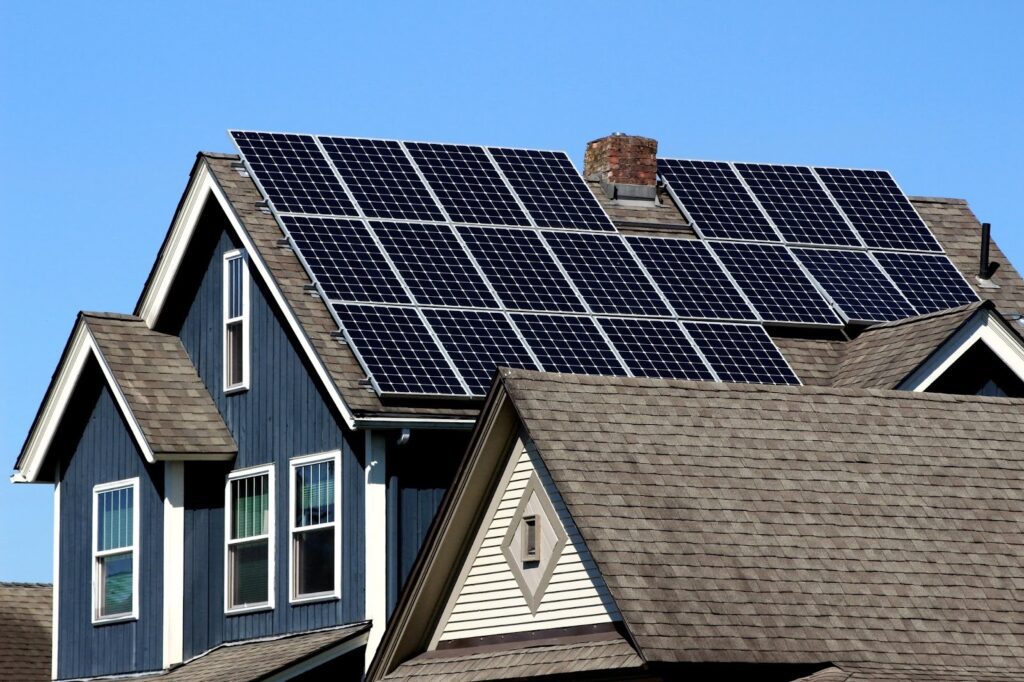
Photo Courtesy Rocky Mountain Power
Altogether, Rocky Mountain’s typical residential customer saves $601 annually compared to the U.S. average, while the typical commercial customer saves $4,127 per year, according to the Edison Electric Institute.
Houweling’s Tomatoes in Mona, Utah, is one company that benefited from cost savings through the Wattsmart Business Program, as Rocky Mountain helped them use waste heat and carbon dioxide from a power plant to fuel agricultural operations. Proprietor Casey Houweling said, “We got some $950,000 to help increase our efficiency of electrical use and reduce our consumption. It also saves us some $500,000 in power.” Another, Ash Grove Cement in Leamington, Utah, has been part of the program for more than 15 years. Kendall Taylor, an Ash Grove process engineer, reflected that while upgrades on the finish mill system cost around $1 million, it resulted in around $3.3 million kilowatt hours of savings, or about annual electricity bills that are $200,000 lower, “so it was a very successful project, it paid itself back very quickly, and it set us up for the long term.”
Rocky Mountain also contributes to its community. Notably, the Rocky Mountain Power Foundation has awarded more than $16 million to nonprofits in the past five years alone. One of the grant cycles focuses on education, emphasizing topics such as energy efficiency and STEM, as well as workforce development. Most recently, last July, the foundation gave $460,000 to such groups in its service areas. One of the awardees, the University of Utah’s John and Marcia Price College of Engineering, will fund five scholarships for senior electrical engineering students. Another, the National Inventors Hall of Fame of Utah, will fund STEM programs for underserved elementary school children. “As a proud part of the communities we serve, we’re committed to supporting local organizations and helping fuel economic growth,” the company described.