
When the City of Ames, Iowa, bought its first hybrid car, nobody called it a turning point. It was a Toyota Prius, purchased from a local dealer, Wilson Cadillac-Toyota-Scion of Ames, for $23,319, and the city council had to waive its formal bidding requirements to get it. A comparable used sedan would have cost about $16,000. The car went to Don Kom, then the city’s electric services director, who would drive it daily while the fleet office tracked its performance. Paul Hinderaker, who ran Ames Fleet Services at the time, was blunt about the math in comments reported by the Iowa State Daily: “The economics don’t really pay out, but the environment is improved because you’re burning less fuel.”
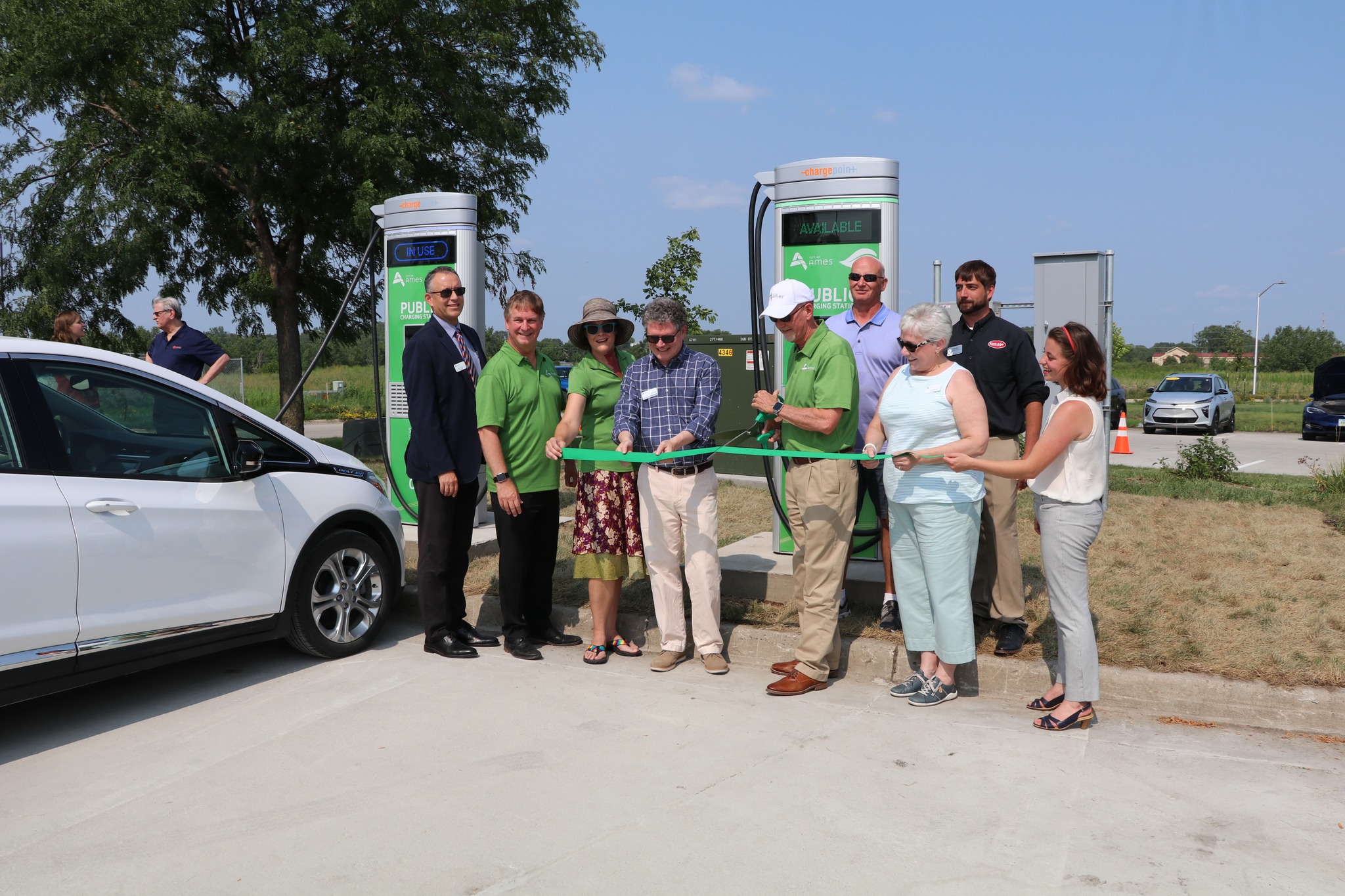
That was the cautious beginning of something that took root. Nearly two decades later, Don Kom attended a ribbon-cutting for the city’s first public fast charger, and Ames later held a distinction no other community in the state could claim. The City of Ames did not get there through a grand plan or a political stand. It got there the way a well-run business gets anywhere: one practical decision at a time, each one tested before the next was made.
In July 2025, Ames became the first community in Iowa to earn a Charging Smart designation, reaching the program’s Silver level. Charging Smart is a national program that recognizes communities for adopting policies that make it easier to own EVs by building charging infrastructure; it is led by the Interstate Renewable Energy Council and funded by the U.S. Department of Energy’s Vehicle Technologies Office. As Energy Ready describes, communities not only advance EV adoption but can also “secure cleaner air, support economic growth, and bring the mobility of the future to their residents’ doorsteps.” The recognition was less an arrival than an acknowledgment of the work the city had been quietly doing for years, including through policy implementation and the completion of a fleet analysis.
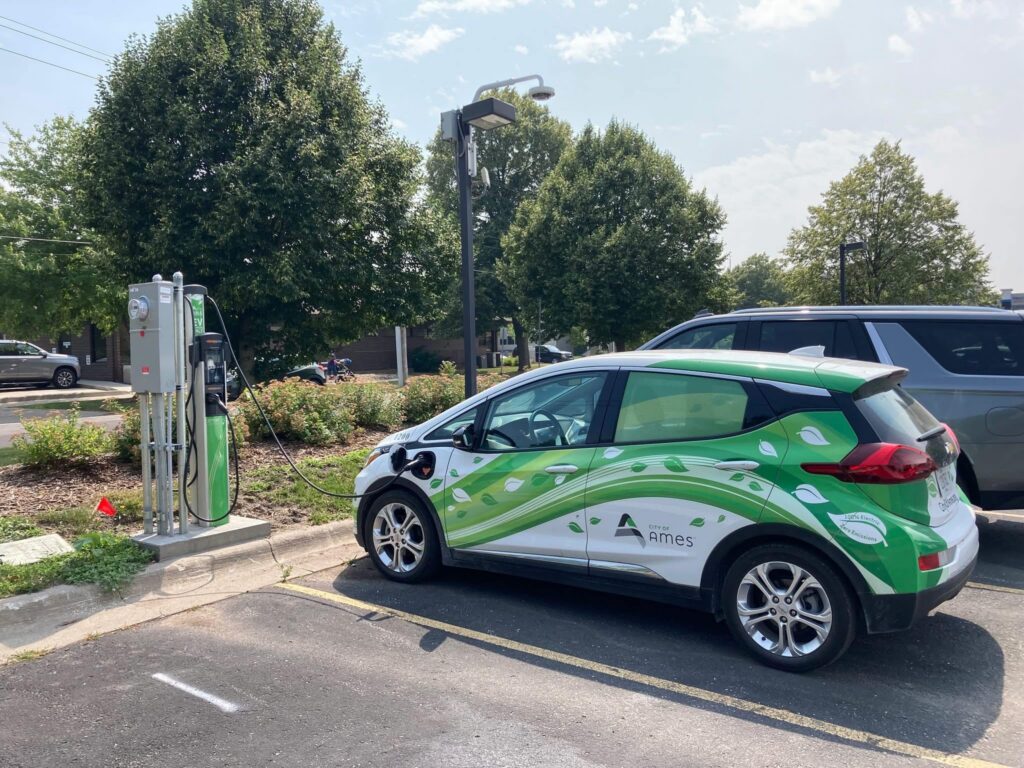
Photo Courtesy SolSmart
The work started with a problem any operator would recognize. As Green Fleet Magazine recounted, Hinderaker began steering the city toward fuel-efficient vehicles after fuel became the fleet’s largest line item, a serious concern for an operation that runs entirely on fee-based revenue, with no support from tax dollars or utility income. His early purchases were a deliberate experiment. Beyond the Toyota Prius hybrid, he mixed hybrids, flex-fuel vehicles, and even the Zenn low-speed electric car, so the city could learn which models actually fit the work. “Purchase decisions are made based on the best fuel efficiency rates and price, but we purchased multiple brands for experimentation,” he explained. Today, according to the city’s Climate Action Plan dashboard, Ames counts 12 electric vehicles in its municipal fleet, including buses operated by the city’s transit agency, CyRide.
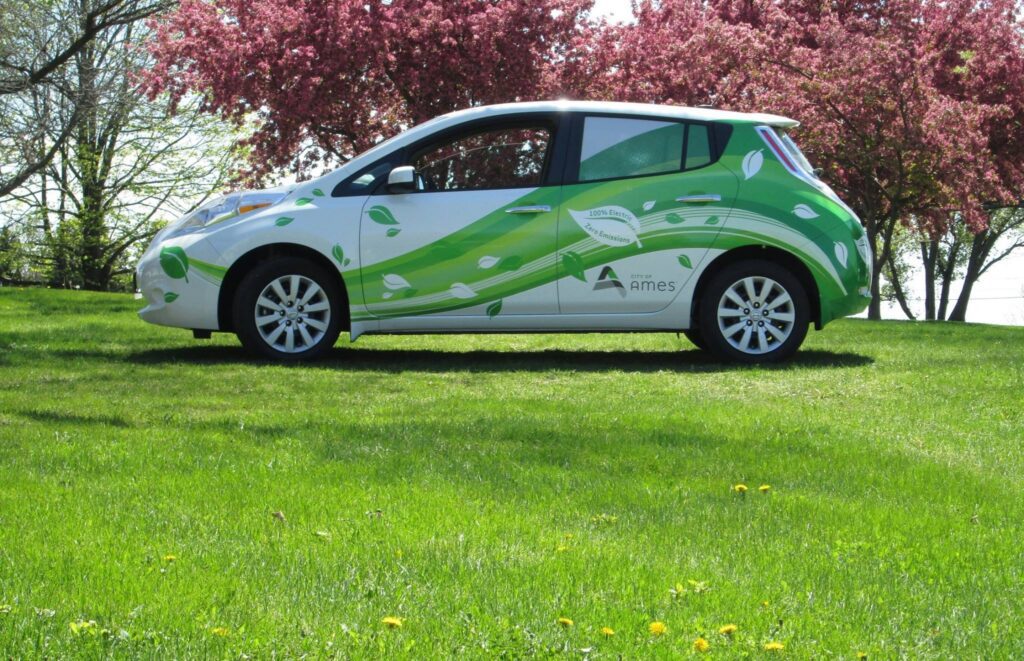
Photo Courtesy City of Ames – City Government
The clearest proof that the approach works came from the Ames Police Department. Since 2019, the department has been replacing its patrol vehicles with hybrids, an effort led by Cmdr. Dan Walter, who acknowledged early doubts. “I did have some apprehension, and a little bit of nervousness about whether or not these would work and operate the same,” Walter said. The numbers settled the question. Over six months in 2020, the city told We Are Iowa, non-hybrid patrol units averaged $4,600 in fuel and maintenance, while new Ford Police Interceptor Utility Hybrids averaged $2,000. In 2022, the department said hybrids saved $8,000 in fuel costs and $420 on oil changes, in addition to staying in service longer and resulting in higher resale value. The department said its whole fleet would consist of hybrids by the end of 2022.
CyRide took the same measured path. After planning for battery-electric buses since 2018, the City announced its first two in 2022, funded through grants from the Federal Transit Administration and the Iowa Department of Transportation Volkswagen Settlement Environmental Mitigation Trust. When the agency unveiled the buses the following year, Mayor John Haila framed them as a beginning rather than a finish line. “I believe it sends a strong message to our community that we’re willing to invest in new technologies,” he said. With 263 miles of range, running quieter and with zero emissions, the city expected 17 more to join the fleet. “Public transit is already one of the best ways to reduce carbon emissions for traveling, and so adding electric buses to the fleet is an even better way to continue reducing emissions for transit around the city,” CyRide Board of Trustees member Jacob Ludwig told Iowa State Daily.
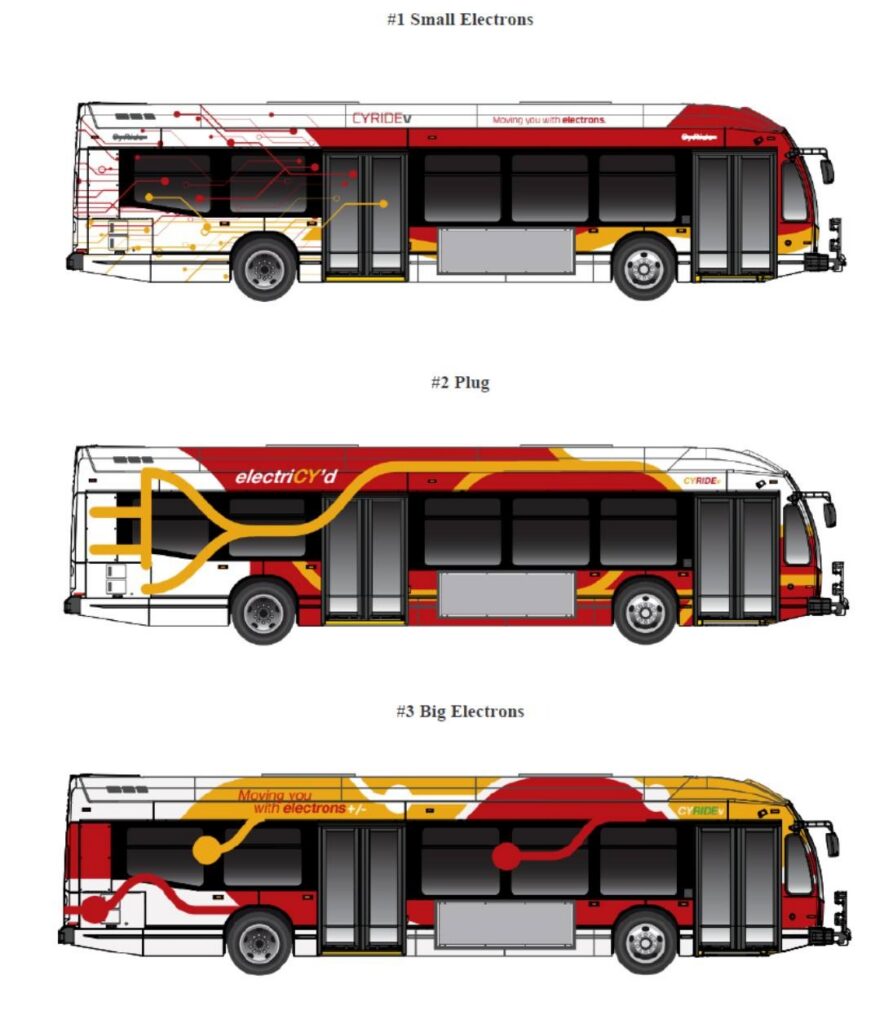
Photo Courtesy City of Ames – City Government
Expanding public infrastructure has also been a cornerstone of the city’s strategy. In July 2021, with Mayor Haila and the city council on hand, Ames opened its first public direct-current fast charger at a local Kum & Go near the Interstate 35 and U.S. 30 interchange, providing reliable charging for both local drivers and travelers passing through. Kayley Barrios Lain, then the city’s energy services coordinator, explained the reasoning, “Building this infrastructure in Ames helps support EV growth both in our city and throughout the state.” As of last year, the city had installed 11 public chargers throughout the community. According to the city dashboard, those chargers delivered 598,000 miles of charging in 2025, an 8% increase over the previous year, and were available to dispense power 99.6% of the time.
Luckily, for residents and businesses ready to make their switch, Ames lowered the cost of entry. Ames Electric Services customers who install a home charger can receive 50% of the cost back, up to $500, and businesses can recover 50% of the cost of a commercial installation, up to $2,500 per port. The rebates sit alongside one more Iowa advantage. Wind turbines generated 63% of Iowa’s electricity in 2024, the highest wind share of any state, while Iowa maintains some of the lowest average electricity prices in the country, which means an electric vehicle charged in Ames runs on power that is both inexpensive and homegrown.
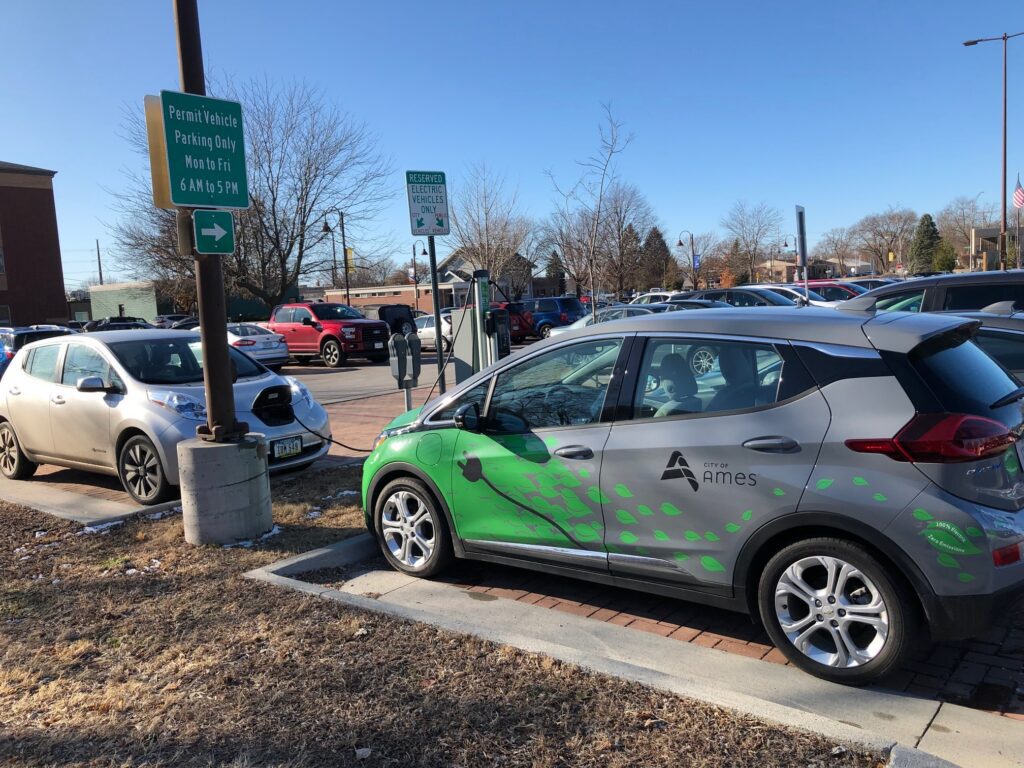
Photo Courtesy City of Ames – City Government
Nolan Sagan, the city’s sustainability coordinator, describes the effort as ordinary infrastructure work that is not finished. “The City of Ames continues to explore new EV charging station locations and add to our growing inventory of chargers around the community,” he said. From a single Prius to a citywide network, Ames built a home for electric vehicles the same way it built everything else: by deciding, carefully, that it made sense.

Photo Courtesy City of Ames – City Government