
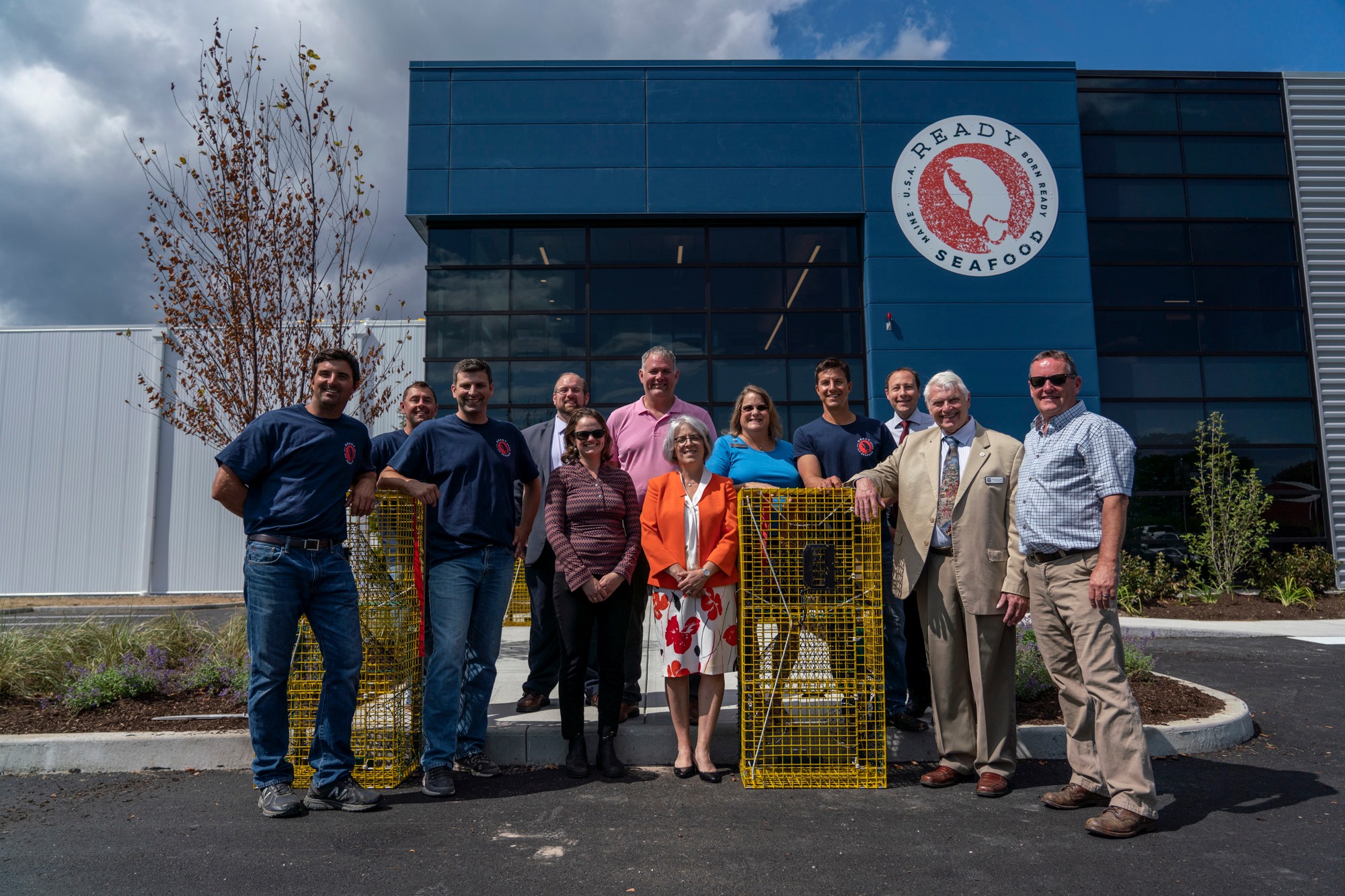
John and Brendan Ready grew up on the Maine coast, where they became lobstermen. “It’s a love for working on the water since we first stepped onto our uncle’s boat at seven and eight years old,” the brothers described. Now, their company, Ready Seafood, is one of the biggest suppliers of live and processed lobster products. “We feel lucky to have been born into this calling, to have been Born Ready. That’s what makes us proud to have our name on the box,” John and Brendan wrote.
The family-owned business works directly with small, independent fishing operations off the coasts of Maine and Canada. Through this direct-from-the-boat supply chain, the company sends live lobsters to wholesale facilities on the waterfronts of Portland, York, and Sorrento, Maine, and Boston, Massachusetts. Despite the company having thousands of pounds of holding capacity and shipping millions of pounds of lobsters every year, each lobster is handled only once before shipping, thanks to a two-tank, one-touch system, and a focus “on quality handling, packing, and distribution.”
In 2019, the company opened a 52,000-square-foot lobster processing facility in Saco, Maine, where 250 employees produce lobster products, including cold-cracked lobster, fresh and frozen lobster meat, and whole frozen tails. It became the largest lobster processing facility in the state. The company produces its cold-cracked lobster, a “raw, all-natural, unadulterated claw-knuckle blend,” using a high-pressure processing machine, ultimately providing “chefs with a level of versatility and culinary control unlike any other lobster product available.” The Ready Seafood team steams and hand-shucks every lobster used to produce fresh lobster meat, ensuring “the perfect freshness, succulent texture and sweet flavor of Maine lobster cooked in your own kitchen, but without the mess or hassle.”
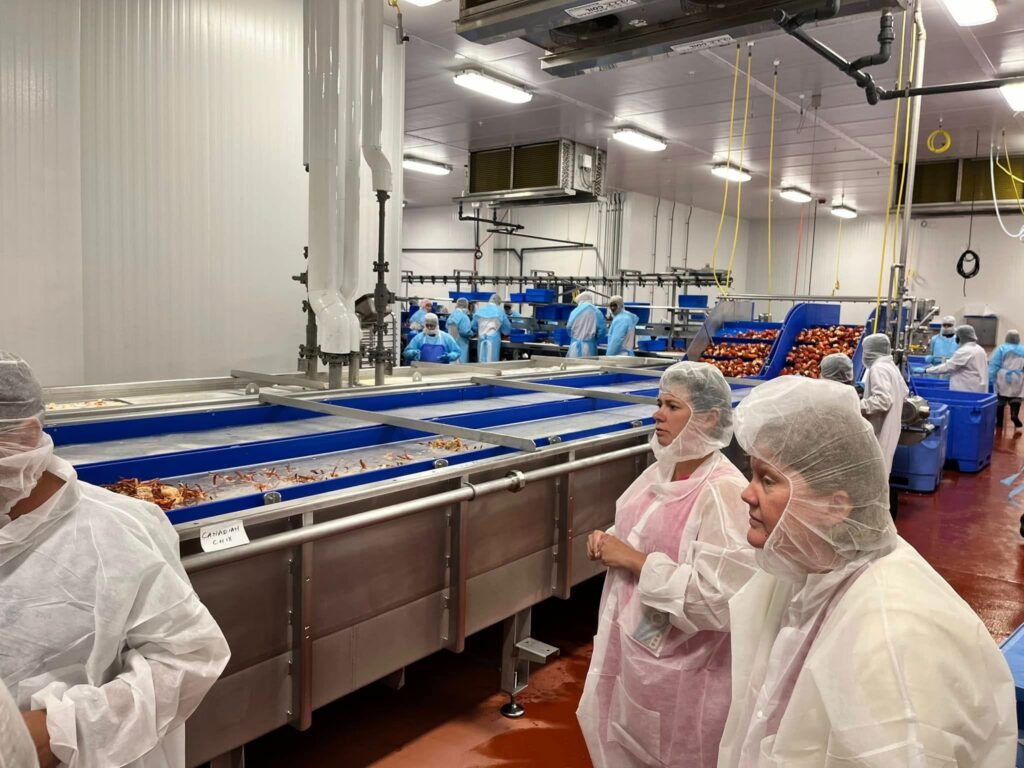
Photo Courtesy Representative Jim Thorne
Throughout these operations, Ready Seafood says it is “proud to incorporate sustainable practices into all aspects of our business.” The company pre-treats wastewater on-site, which has allowed it to reduce wastewater volume “dramatically,” and it is working to use the treated water for irrigation. Ready Seafood also reduces its waste by crushing shell waste from the processing plant to produce fertilizer. The seafood business has also worked to reduce energy consumption by adding heat exchangers to lobster tanks and installing high-efficiency light bulbs in its facilities. It is also planning to install a solar farm, which it hopes will help it become the first carbon-neutral seafood company in the U.S.
The company is also working to keep the lobster industry thriving for years to come. For example, Maine lobstermen add a V-notch to the tail of any female lobster caught with eggs, before throwing her back into the ocean. The state then fines anyone trying to sell an egg-bearing or V-notched lobster. One lobsterman explained, “We are trying to take care of our resource. It’s something for future generations.”
Video Courtesy Ready Seafood
Ready Seafood was also the first seafood company in the country to employ an on-site marine biologist, Curt Brown, to create a lobster-focused research program. In 2018, it became the first private company to fund public lobster research that will benefit the entire industry, competitors included. Ready Lobster contributes $75,000 per year to support the work of University of Maine lobster scientist Rick Wahle, with additional funding from Red Lobster, Cranberry Isles Fishermen’s Co-op, and Thurston’s Lobster Pound. The research team quantifies the number of baby lobsters along the state’s coast to better understand the animals’ population dynamics and respond to an ever-changing environment.
“We know next to nothing about lobster settlement in waters deeper than 30 feet. I just find that staggering. If you look at the Gulf of Maine, if you look at lobster habitat in general, the majority of where lobsters live is deeper than 30 feet of water,” Brown noted to the Portland Press Herald. “With all this fishery means to Maine, all the people depending on it, we need to know exactly what’s happening to the babies, exactly what’s going on on the bottom, whether it’s good or bad,” Brendan added.
Video Courtesy Ready Seafood
Ready Seafood also runs an education outreach program, through which employees teach local elementary, middle, and high school students about the industry, and offers internship programs for college students. “Education is at the core of our community involvement, and we are committed to educating and inspiring the next generation of lobstermen and women, scientists and stewards of the sea,” the company says.
Some of these initiatives extend to other industries, such as agriculture. In 2022, for example, the company provided lobster shells to support the work of Katie Ashley, a plant science Ph.D. student, as she assessed how adding varying amounts of cooked, dried, and ground lobster shells, contributing an ingredient called chitin to the soil, could help prevent potato diseases such as early potato dying syndrome. The project offers a second life to shells from processed lobsters that would otherwise go to landfills. “We have these really valuable resources; why aren’t we using them yet? This presents an opportunity to connect the potato and lobster industries and utilize shellfish byproducts, which would otherwise enter the waste stream,” Ashley explained.
As John and Brendan summarized, “Maybe we can’t get you out on the boat with us today or package up the way it feels to be out there on the water… But we hope to let you taste a little of our way of life by capturing the utmost in freshness, purity, and sustainability in every lobster we sell.”