When a fishing boat or a state ferry breaks down in Alaska, the nearest full-service shipyard can be a long way off. For much of the state’s working fleet, the practical options have historically meant a tow of more than 1,200 nautical miles to Seattle, a trip that is, for many owners, simply too expensive to make. The crews at the Seward Shipyard exist to close that gap.
The shipyard sits at the south end of the Seward Marine Industrial Center, across Resurrection Bay from the town of Seward, in an ice-free port that stays open year-round. Since 2018, it has been run by JAG Alaska Inc. JAG is the Alaska arm of JAG Industrial & Marine Services, a marine-services firm based in Jonesville, Michigan. When their leadership arrived in Seward with a combined 150 years of shipyard management experience, they were ready to problem-solve.
The problem JAG set out to solve was structural. Roughly 45% of the Alaskan fleet was built before 1980, resulting in an aging inventory of vessels that need constant repair, modernization, and occasional replacement. The Seward yard ranks among only a few in Alaska equipped to work on vessels longer than 150 feet. By the company’s own account, it is the second-largest shipyard north of Seattle. It also sits closer than any comparable yard to more than two-thirds of the Alaskan coastline and, “the majority of the Alaskan fleet harboring from Yukatat to Kodiak to Prudhoe Bay.” The company’s pitch to fleet owners is straightforward: “We cut the distance and cut the cost.”
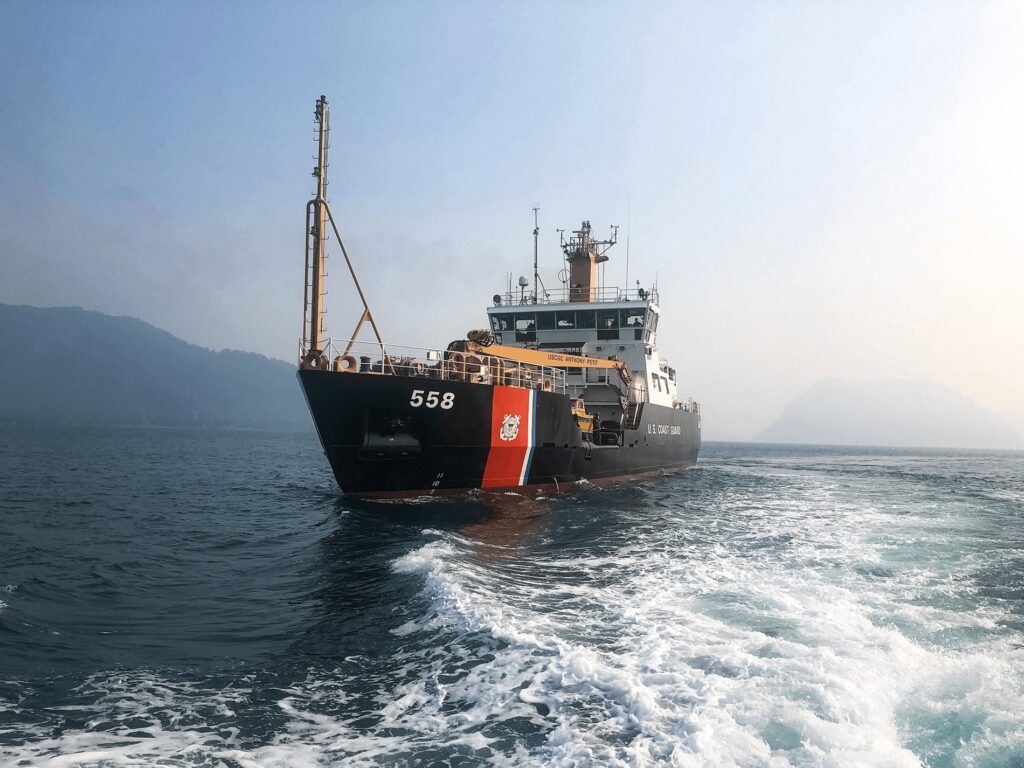
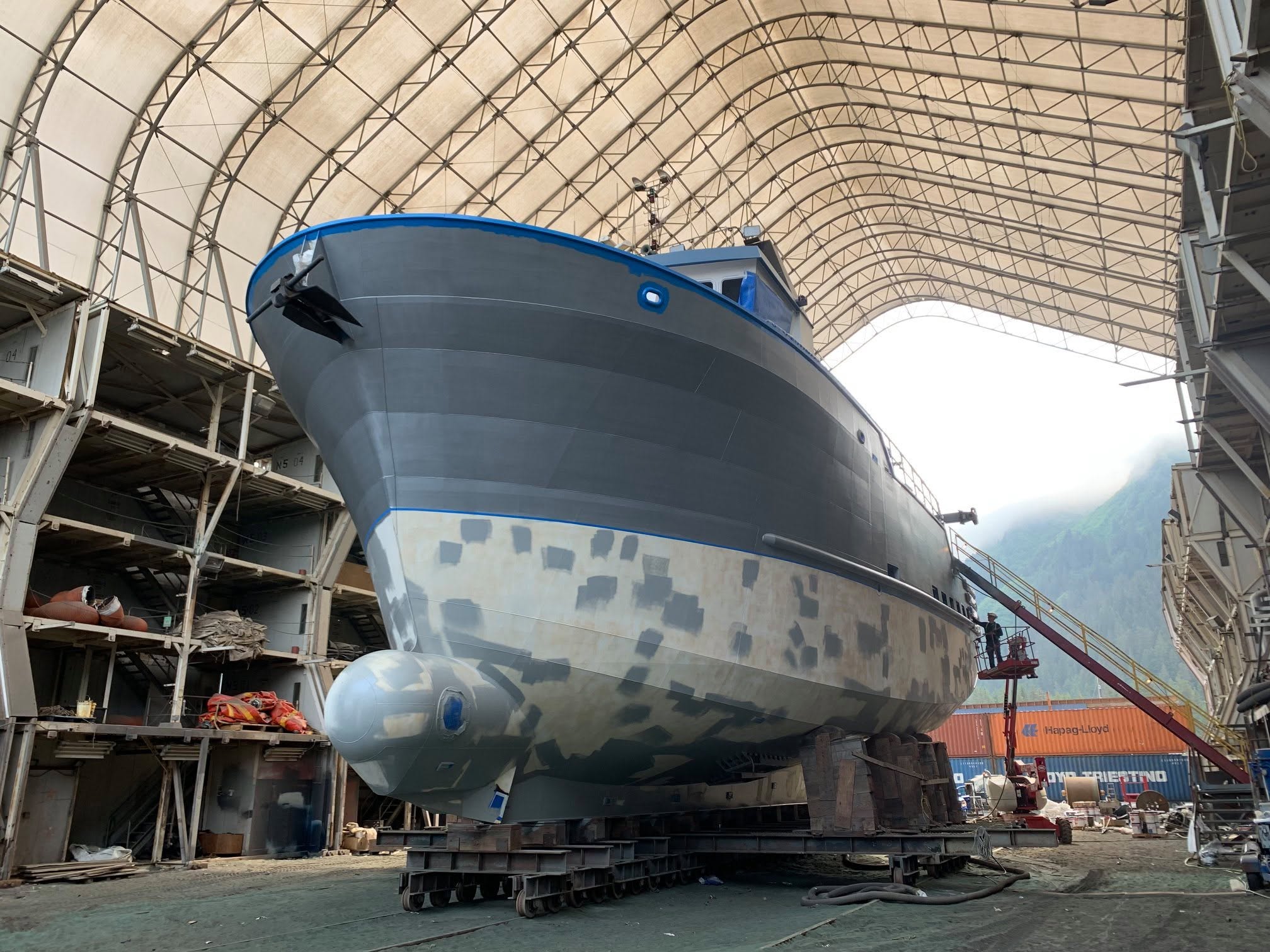
Photo Courtesy JAG Alaska Inc., Seward Shipyard
What makes that possible is steel and lift capacity. The Seward facility spans 11 acres with a 35,000-square-foot covered work area. The site maintains two shiplifts: the City of Seward runs a 330-ton Marine TraveLift, and JAG Industrial’s Synchrolift can haul out vessels weighing up to 5,000 long tons. The yard can drydock four large vessels up to 350 feet in length at once, providing marine repair and maintenance services for everything from private and commercial fishing boats and oil-and-gas support vessels to U.S. Coast Guard cutters.
The work employs more than 100 skilled tradespeople, project managers, and support staff. “We are proud to be building relationships here in Alaska and growing to provide more marine job opportunities for skilled tradesmen right here in Seward,” the company describes. The mobile shipyard crews include the likes of marine welders, painters, and blasters who can meet “both convenience and urgency of ship repair and maintenance needs off-site, virtually anywhere in Alaska.” Combined with the larger JAG Industrial and Marine Services, it maintains a highly skilled workforce that can be “rapidly mobilized to virtually any marine or industrial project, whether it’s on the Great Lakes, the Mississippi River, or right here at home in Seward.”

Photo Courtesy JAG Alaska Inc., Seward Shipyard
The federal government has noticed. In June 2025, the National Oceanic and Atmospheric Administration (NOAA) awarded JAG Alaska a $95.4 million contract to overhaul the research ship Oscar Dyson, homeported in Kodiak, which collects the data NOAA uses to manage Alaska Pollock, one of the largest commercial fisheries in the world. The mid-life overhaul is also a quiet efficiency story. NOAA Corps Rear Adm. Chad Cary said the modernization will “improve the Dyson‘s fuel efficiency and operational safety,” with a new propulsion system featuring variable-speed, Tier 4 generators, and quieter air-conditioning motors. Keeping a working ship in service longer, and burning less fuel doing it, is the kind of outcome that arrives as a consequence of good marine engineering rather than as a slogan. “These upgrades will help the ship continue to meet the needs of the nation in primarily Alaskan and Arctic waters well into the future,” Cary added.
That work brought the state’s congressional delegation to JAG’s side. Senator Lisa Murkowski called supporting small shipyards “vital to our blue economy,” as the mid-life renovation will “allow for the collection of accurate data that will inform Alaska’s fisheries – all while putting Alaskans to work.” Senator Dan Sullivan added, “I am glad to see one of our great Alaskan shipyards will be conducting the repairs, keeping the ship close to home so that it can swiftly return to its important work once the maintenance is finished.”
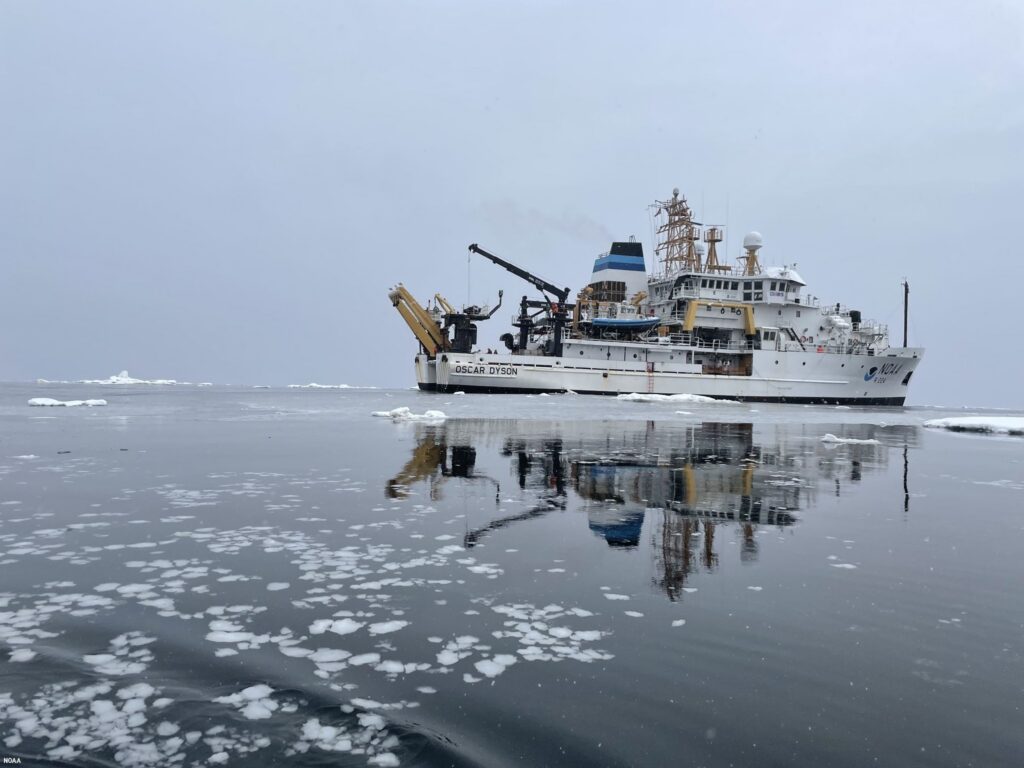
Photo Courtesy Josh London/NOAA OMAO
Seward is now only part of the story. In September 2025, JAG took over the state-owned Ketchikan Shipyard, the only facility of its kind in Southeast Alaska, after the Alaska Industrial Development and Export Authority (AIDEA) chose it as the new operator. The early returns are about people. The previous operator, Vigor Alaska, had 100 employees before 2025, which fell to fewer than 20 during demobilization. As of February 2026, JAG had rehired nearly 70% of the prior workforce and employed about 175 Ketchikan employees, more than half of whom are Alaskan. “It’s a lot of economic driving assets that will be brought here to Ketchikan with that increase of jobs,” Ketchikan shipyard general manager Bergan Wieler told KRBD. In January, AIDEA also announced its support for a workforce agreement between JAG and the Generations Southeast Vocational Training Center. Alaska State Senator Bert Stedman (R-AK-District A) said the collaboration plays “a critical role in building a skilled workforce that meets state and regional labor demands, strengthens long-term economic growth, and helps keep families, jobs, and students in our communities.”
The next chapter is being written 150 miles north. In early 2026, JAG and the Wrangell borough signed an agreement to develop a large-scale shipyard on the community’s deep-water port, even bigger than the Seward and Ketchikan sites. The borough estimates the buildout could bring about 150 jobs over a roughly three-year construction period. Borough Manager Mason Villarma sees it as a chance to recover ground lost when the timber industry faded in the 1990s. “It’s exactly the opportunity we’ve been looking for to create jobs in Wrangell and attract families to Southeast Alaska,” he told KSTK. For a state whose waters produce more than 60% of the nation’s seafood harvest, the math is local and durable. Every vessel hauled out in Seward or Ketchikan rather than Seattle is a repair bill, a paycheck, and a skilled trade that stays in Alaska. That is the quiet logic JAG is betting on, one ship at a time.