In an average month, a cattle producer hauls off about 150,000 pounds of wet, spent barley from an Iowa City brewery. The Gazette reported in December 2024 that “If not for the farmer, the grain would have gone to the landfill.” Mikala Demet, who manages community and sustainability projects for Big Grove Brewery, told the paper the company “can’t say enough about how much we enjoy their partnership.”
That handoff is a small piece of how Big Grove runs, and it helps explain a milestone the Solon-born company reached in May. Brewers Association data released that month showed Big Grove produced 38,929 barrels in 2025, up 13% from the year before and enough to pass Decorah’s Toppling Goliath as Iowa’s largest craft brewer. The same report found Big Grove now ranks 61st nationally in craft production. “To now be leading the state in volume, and closing in on being a Top 50 brewery nationally is a testament to the hard work of our staff and the incredible loyalty of beer drinkers across Iowa and the Midwest,” co-founder and CEO Matt Swift told the Business Record.
Big Grove started in 2013 as a 3.5-barrel brewhouse in Solon, and, in 2024, opened a 68,000-barrel production plant on Iowa City’s east side that tripled its capacity. The company began packaging beer in 2018 from a 28,000-square-foot Iowa City facility that anchored the city’s Riverfront Crossings redevelopment project, and it now operates taprooms in Solon, Iowa City, Cedar Rapids, Des Moines, Omaha, and the Kansas City suburb of Prairie Village.
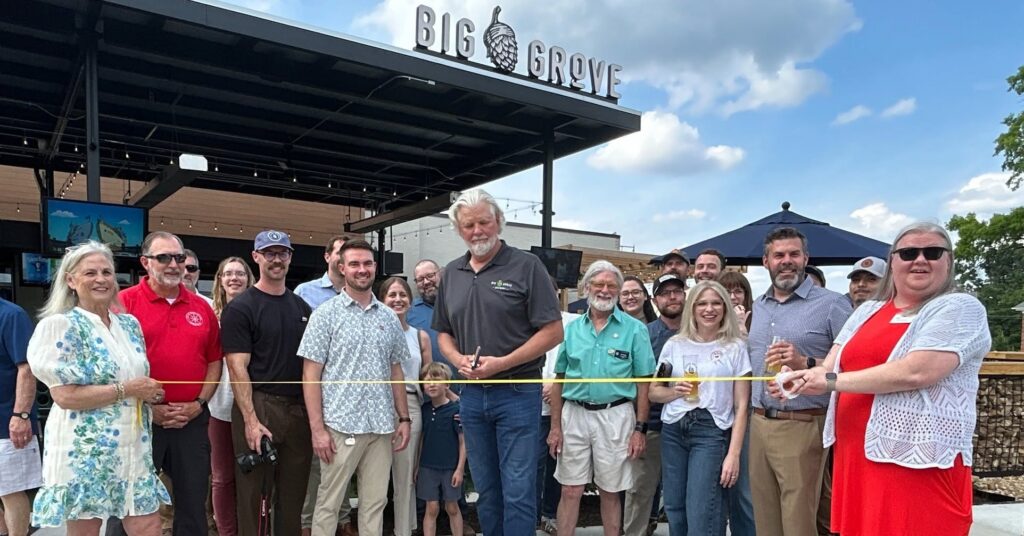
Photo Courtesy NEJC Chapter
Through all of that growth, the brewery kept working with the Iowa Waste Reduction Center (IWRC) at the University of Northern Iowa, which runs the state’s Iowa Green Brewery Certification program. Certification rests on a 100-point audit covering environmental recordkeeping, water quality, solid waste and energy efficiency, with platinum requiring 96 points or better. Big Grove’s Iowa City location earned gold in 2018 and platinum in 2020, making it one of only five Iowa breweries with that level of certification. When the Des Moines taproom reached platinum in May 2024, the university announced that Big Grove became the first Iowa brewery to hold two platinum certifications.
Joe Bolick, director of the IWRC, said, “Big Grove has really set the standard of what it means to be a sustainable craft brewery here in Iowa. Their forward-thinking approach during their rapid growth and expansion is certainly commendable.”
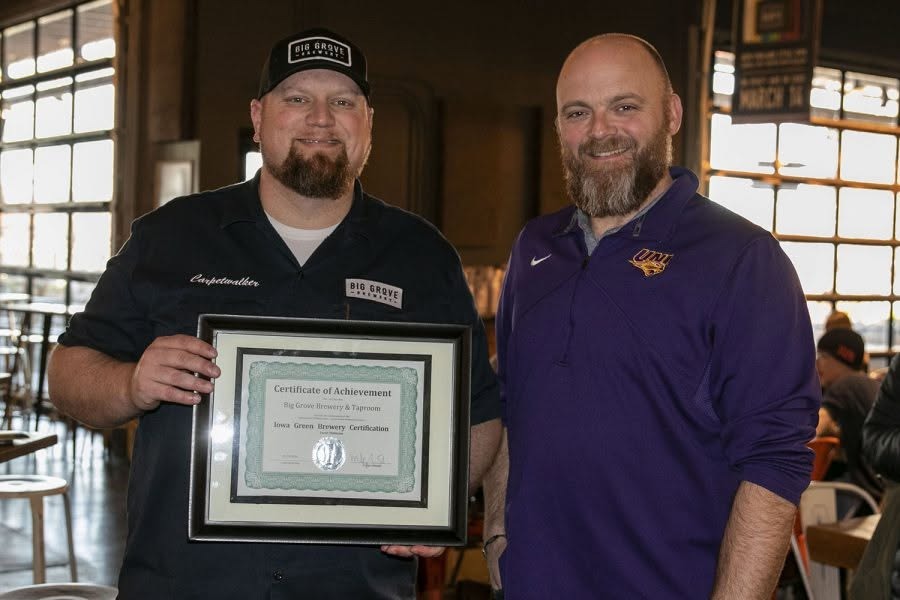
Photo Courtesy Big Grove Brewery
The most expensive piece of equipment behind those points is a carbon dioxide reclamation unit from Earthly Labs that the crew nicknamed CiCi. Fermentation produces carbon dioxide, and before the unit arrived, Big Grove let that gas vent through blow-off buckets while separately purchasing carbon dioxide from an industrial supplier to package and carbonate its beer, the company explained. CiCi captures the gas off the fermentation vessels, dries it, scrubs it with charcoal filtration, and compresses it for reuse downstream in the packaging and brewing process.
The math Big Grove published in September 2022 was specific. In 2021, without recapture, the brewery used 112,000 pounds of carbon dioxide and purchased 132,000 pounds, resulting in emissions of 332,000 pounds. In 2022, with CiCi running, it still used 112,000 pounds but purchased only 3,480 pounds, lowering total emissions to 213,480 pounds. The unit cost roughly $165,000 installed, covered through financing agreements and grant funding from the City of Iowa City, and the company estimated payback at just five to seven years. Big Grove was equally direct about the limits. The system “is complex, requires regular maintenance, and prone to downtime,” the company wrote at the time.
Cheaper measures do steadier work. Heat pulled off the brewing process routes back to hot liquor tank storage rather than being replaced with natural gas. Permeable patio pavers capture rainfall on site. LED lighting, natural lighting, and efficient equipment reduce electricity use. A QR Code beer menu system replaced the daily printing of menus. In Des Moines, the university credited a hop vacuum that extracts more beer per batch and generates nitrogen onsite, as well as cooking oil recycling and the creation of a company-wide Green Team.
Recycling has been a huge initiative, as the company notes, “Recycling input has doubled, and we’ve halved our solid waste.” In 2022, green trash dumpsters in Iowa City and Des Moines were swapped out with red compost dumpsters, and those kitchens now compost about 8,000 pounds of waste per month, or “the weight of two average passenger cars.”
Video Courtesy City of Iowa City
The agricultural ties extend to the spent grain, which the local farmer reuses as cattle feed. Big Grove buys local ingredients from 40 Iowa farms to supply its taproom kitchens, including eggs and dairy, while an herb garden in Solon sits right in the company’s backyard. In 2023, the brewery purchased two bison from Whiterock Conservancy, a nonprofit land trust near Coon Rapids, then sent more than $8,000 back to the conservancy by donating $2 from every bison burger sold, plus a share of proceeds from a ticketed six-course ‘Foraged’ dinner, as part of its ‘Big Grove For Good’ program.
The following year, in partnership with Patagonia Provisions, Big Grove released a certified organic lager made with Kernza, which, as the company described, is a perennial grain that “grows year after year without needing to be replanted, reducing soil disturbance and erosion. Its deep roots improve soil health by retaining nutrients, enhancing water absorption, and sequestering carbon, making it a powerful tool in the fight against climate change.” Marketing director Bryan Farrell told Craft Brewing Business, “We are in an agricultural production state; this is important not just to us, but the communities we are in.”
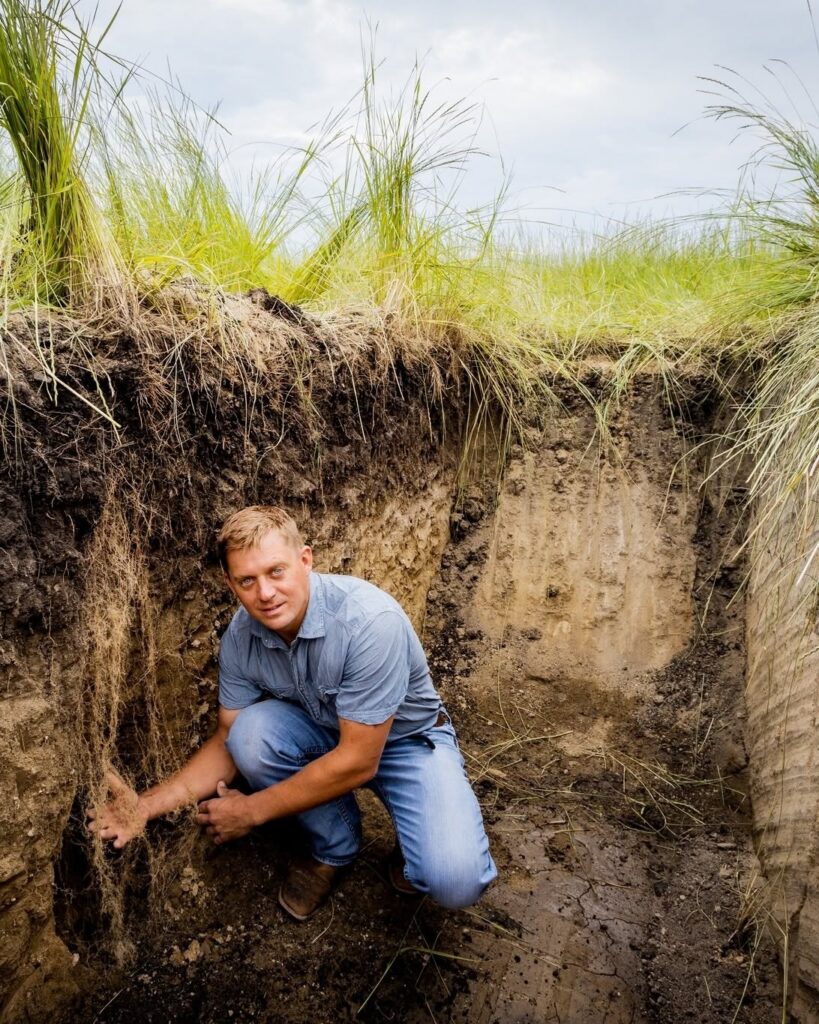
Photo Courtesy Big Grove Brewery
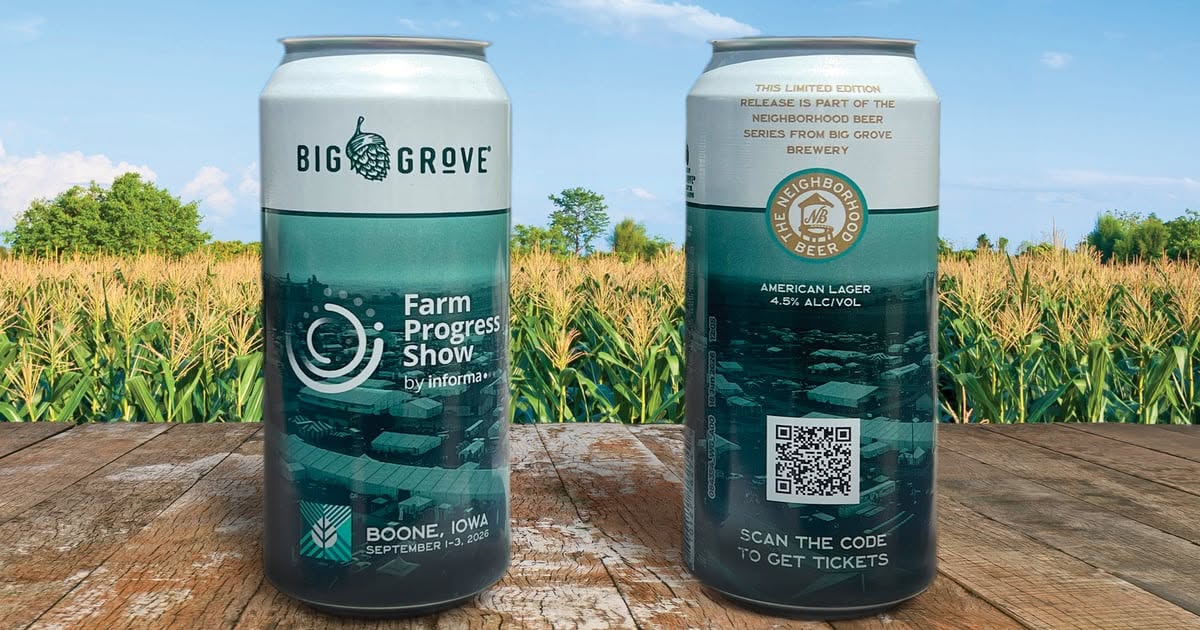
Meanwhile, in July 2026, the brewery’s Neighborhood Beer became the official beer of the 2026 Farm Progress Show in Boone. A dollar from every case sold funds the Big Grove For Good Foundation, which awards micro-grants of $250 to $1,000 on a rolling basis for neighborhood projects that improve local accessibility, environmental stewardship, community connection, or neighbor-nominated projects to help particular individuals in need. In the program’s first year, the foundation distributed more than $36,000 to 68 individuals and organizations. The first award bought the Solon Fire Department a chainsaw, which, as Greg Morris explained to the Solon Economist, “is a little easier to operate (it’s designed to start on the first pull, saving time when seconds count), and it’s got a wood blade on it so if we’re at a house fire and we need to cut quick, that’ll do it.” Later grants funded goats clearing invasive species at Bever Park in Cedar Rapids, and a project helping Iowa City homeowners choose and buy sustainable trees.
Demet, who serves as the foundation’s executive director, reflected, “We are seeing firsthand how small projects can make a big difference in our local communities and neighborhoods.”
The foundation runs a larger annual grant program alongside the micro-grants. In April 2025, it awarded $48,000 to six nonprofits across Johnson, Linn and Polk counties, $8,000 apiece, with recipients ranging from the Iowa City Free Medical & Dental Clinic, which treated more than 6,700 patients in the prior year alone, to Central Furniture Rescue, which turns empty spaces into homes, to Monarch Research, which restores monarch habitat and tree canopy. Demet said that year brought a record number of applications, and explained, “This year, more than ever, it’s clear that nonprofit organizations and their causes are vital to the well-being of our communities.”
A third program puts the money in the ground. Good Grove, a fruited lager, supports a company pledge to plant 400 trees over four years, one for every employee, “in the communities where we live, work, and play,” in partnership with Marion-based Trees Forever. As of the beer’s third release, Big Grove counted 215 trees and 45 species in the ground, and the company invests in tree diapers that release water slowly to help young trees survive. Those trees have avoided 2 million pounds of carbon emissions and 707,115 pounds of runoff. The plantings have carried particular weight in Cedar Rapids, which was hit hard by the 2020 derecho.
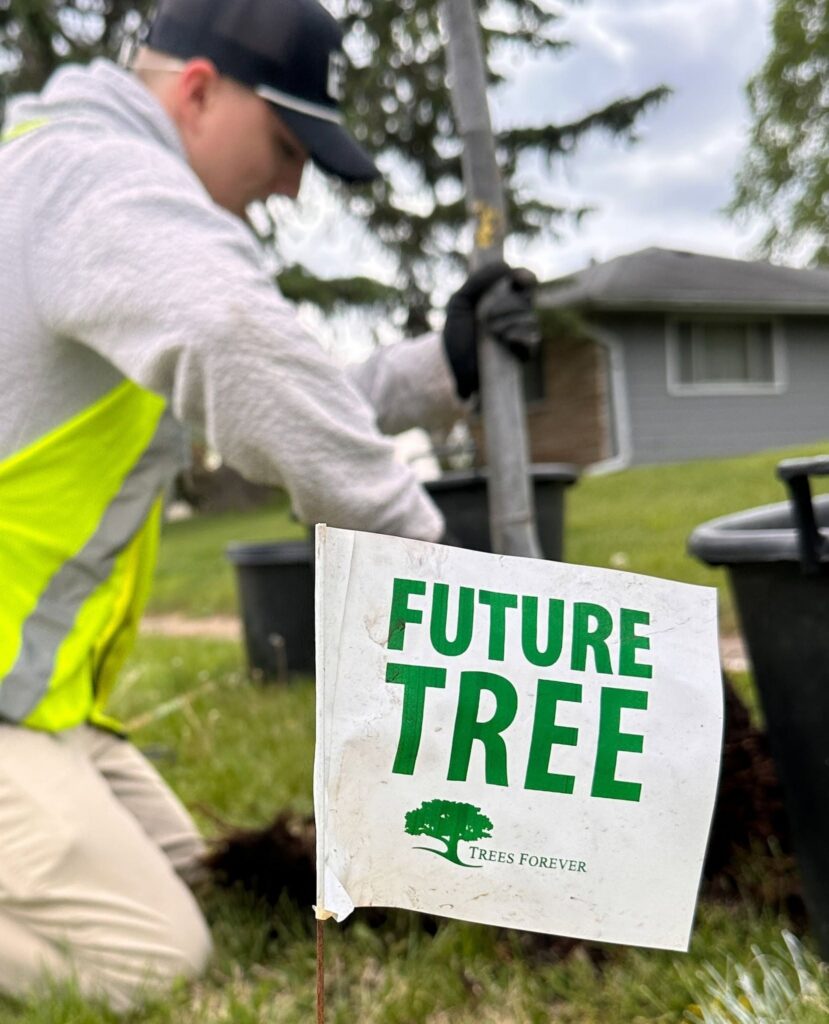
Photo Courtesy Big Grove Brewery
Dave Moore, then Big Grove’s director of operations, made the business case to The Daily Iowan in 2020, when the company held one platinum certification. He framed it as a question of trust, saying, “People really care. I think they want to know that you’re caring, so they can know that they’re buying the right place.”