In 1995, Shawn Nelson was sitting on his parents’ couch in Holladay, Utah, when the idea of a giant beanbag struck him. He told the Deseret News, “I was 10 days out of high school, watching ‘The Price is Right,’ eating a bowl of Cap’n Crunch, and I just had this idea.” He bought vinyl, sketched a figure-eight pattern, and stuffed the result with his parents’ old camping mattresses, chopped into pieces. “It was squishy and comfortable, and everyone loved it. I made a few more and brought them with me anytime I went out with friends,” he told Utah Business.
That idea, sparked on his parents’ couch, grew into Lovesac, a furniture company Nelson still leads as founder and CEO. Lovesac reported $697.1 million in net sales for fiscal 2026, and its design approach, which it calls Designed for Life, rests on one idea: furniture should last long enough that families never need to replace it. The company calls planned obsolescence “an outdated business strategy that is irresponsible.” Nelson put it simply: “Our stated purpose as a company is to inspire humankind to buy better stuff and less stuff.”
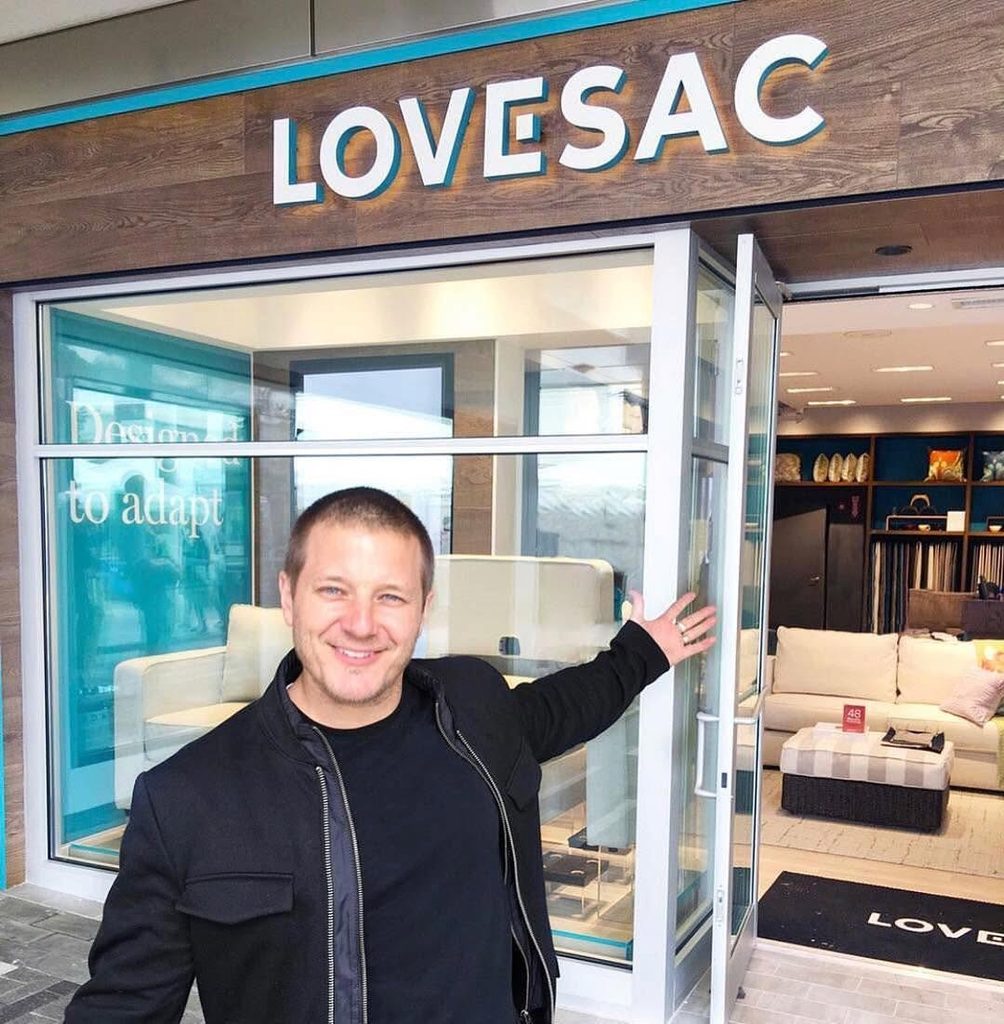
Photo Courtesy Lovesac
The company’s thrift goes back to its first weeks. A Salt Lake City sofa maker, Intermountain Furniture, offered Nelson its scrap foam for five cents a pound if he swept it up once a week. The factory also let the young crew run an old grain grinder converted into a foam shredder “in return for disposing of their leftover sofa foam,” the company wrote. Although it had not been used since the 1980s, “we shredded foam 100x faster than by hand,” Nelson reflected.
That arrangement is the root of Durafoam, the filling inside every Lovesac Sac. Durafoam comes from factory foam remnants, and the company repurposed more than 30 million pounds of them by the end of fiscal 2025.
The first customers were classmates. “Lovesac is a quintessential Utah story,” Nelson said in 2018. “The first Sacs were literally sold from the lawn at the U. during Oktoberfest to friends and classmates while I was attending school there. It was a side hustle until we made it to graduation and opened our first store at Gateway for the Olympics. We financed the whole thing on our credit cards.”
Nelson left to serve a mission for The Church of Jesus Christ of Latter-day Saints in Taiwan. When he returned, a neighbor ordered a Lovesac as a Christmas gift, and he realized he still had a business opportunity, bolstered by what he had learned abroad. “Being a missionary trains you in 100 other ways. It just makes you tough,” he told LDS Living. “All of these things matter in business and in relationship building.” That mattered in 2001, when the teen retailer Limited Too ordered 12,000 Sacs, and Nelson negotiated directly with a fabric mill’s sales office.
To shred that much foam, the crew tracked down a Haybuster farm machine and paid for it with a federal agricultural equipment loan. Fulfilling that order made it clear that Lovesac needed a more permanent location. Lovesac opened its first store on Nov. 17, 2001, at The Gateway Mall in Salt Lake City and by Christmas Eve, it had run out of its oversized Sacs. This showed the need for a second location, which it later opened in Provo.
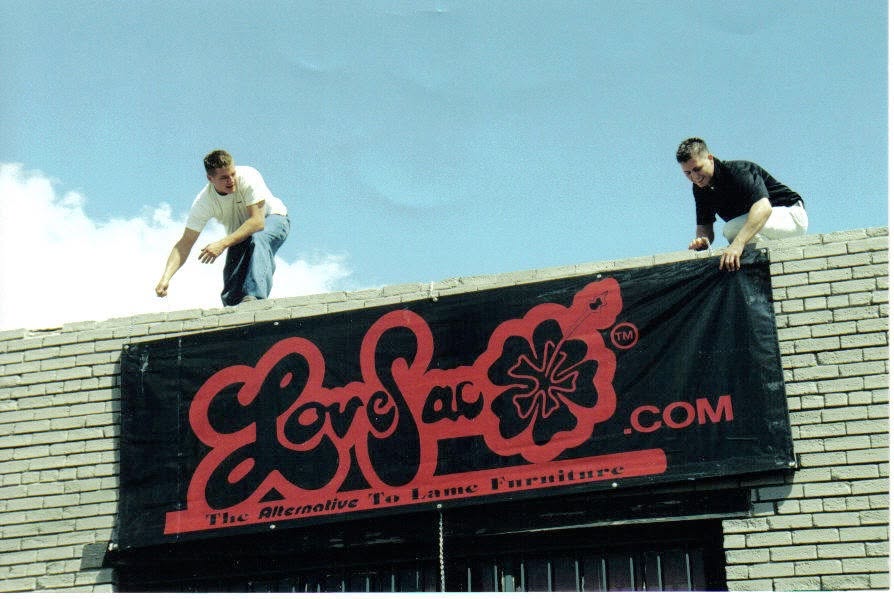
Photo Courtesy Lovesac
In 2005, Nelson won $1 million on Fox’s The Rebel Billionaire, a reality show from Virgin Group founder Richard Branson, but the company soon stalled. Lovesac filed for Chapter 11 bankruptcy in January 2006 with 74 stores, six in Utah, and emerged from Chapter 11 protection that August. With just a skeleton crew, Nelson moved the company to Stamford, Connecticut. They “started over with just 12 locations and about 12 employees at our tiny new HQ. It was the right move in the long run. We learned, focused, and built Lovesac back up to 50 locations,” he recalled.
The comeback product had been hiding in the corner of the first store. Customers kept trying to buy a display couch that was there only for looks. “We first invented Sactionals because we were selling Sacs in these tiny stores and there just wasn’t room for full-blown couches,” he said. The couch carried the company back. Lovesac priced its initial public offering at $16 a share in June 2018, and it had 284 showrooms as of its latest quarter ending August 2026.
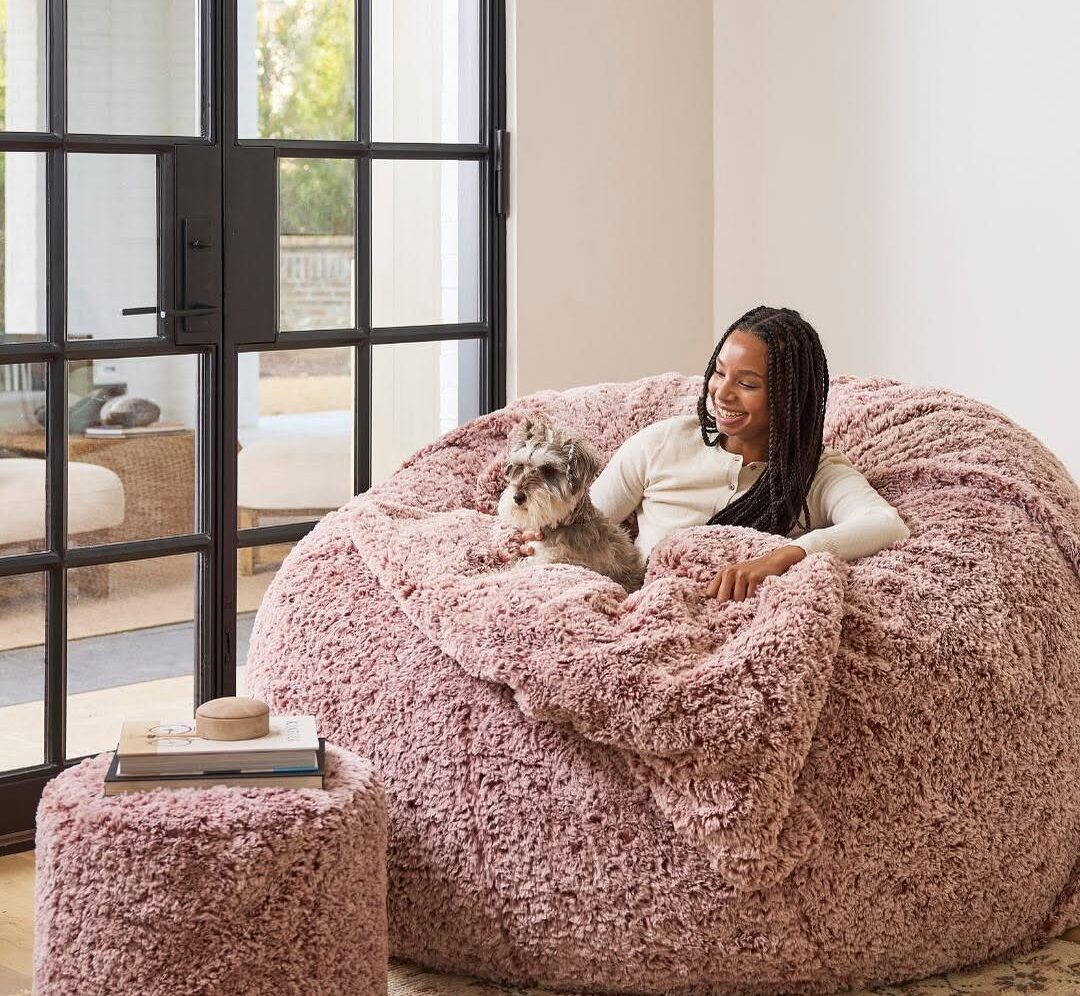
Sactionals are modular, breaking a sectional into seats and sides that rearrange like building blocks. Their covers come off for the washing machine, and if a cat scratches one arm, owners replace that piece instead of the whole couch. Every new feature is designed to fit older pieces, “whether you bought your couch 5 years, or 5 days ago.”
Lovesac says independent labs test its seats and sides against a commercial-furniture standard that simulates 10 years of heavy use, and the company runs that test three times in a row to mimic 30 years. The frames are solid wood rather than particle board, and every Sac insert carries a lifetime guarantee.
Nelson lives with the results. “Right now across from me, I’m looking at a couch with pieces that are 17 years old. They’re mated with brand-new pieces, they’re mated with StealthTech and they’re on their 10th set of covers, but they look new, they smell new — you’d have no idea. There is no other couch in the world that can do that,” he told Retail TouchPoints. Customers say the same about the Sacs. “I’ve had my luvsac for 13 years and it feels like brand new,” a verified buyer wrote in an August 2026 review on the company’s website.
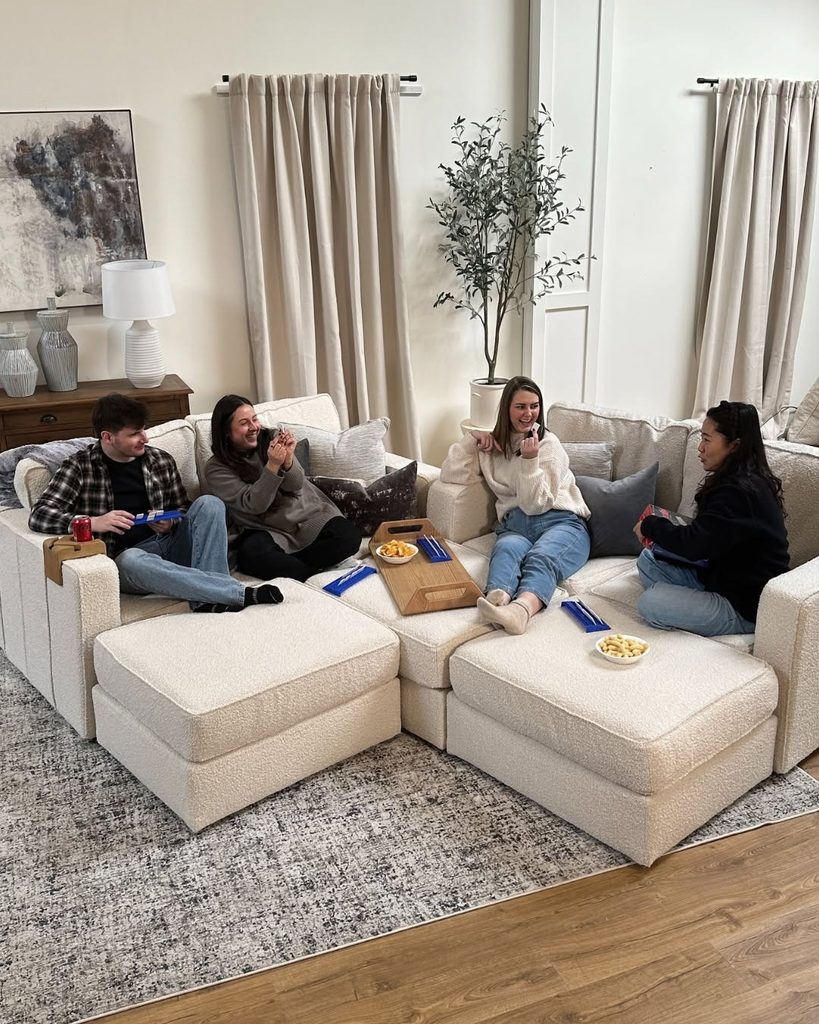
Photo Courtesy Lovesac
Americans generated 12.1 million tons of furniture and furnishings waste in 2018, and 80.1% of it went to landfills, the U.S. Environmental Protection Agency reported for that year, the most recent it has measured.
“It’s not about guilt; it’s about leveraging your own self-interest to make better buying choices,” Nelson told Retail Merchandiser in 2025. The Edison Awards gave Lovesac a 2025 Bronze award for Sustainable Consumer Solutions, and Executive Director Frank Bonafilia called its products “a groundbreaking advancement in Sustainable Consumer Products.”
Lovesac’s upholstery fabric is made with Repreve fiber spun from recycled plastic bottles, and the company repurposed 322 million bottles by the end of fiscal 2025; a single Sactional can incorporate up to 1,900 of them. The U.S. factory that makes its Sacs is a zero-landfill manufacturing facility. Loved by Lovesac gives returned furniture a second life by reconditioning open-box and resale pieces and selling them below the price of new. Nelson added that the company is “on the cutting edge of small footprint, highly efficient retail spaces meant not to sell you stuff, but to allow you to experience the stuff and to plan to buy it.”
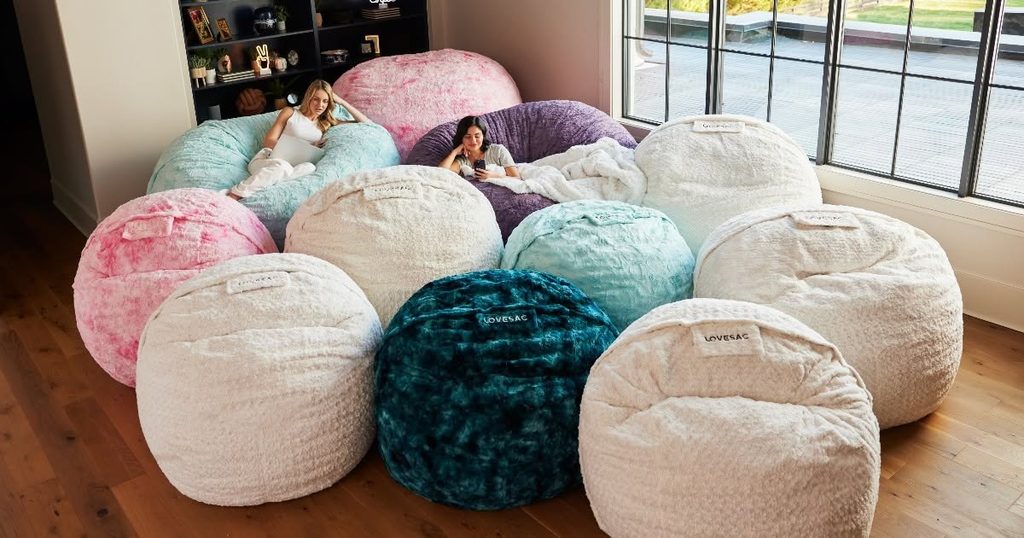
Photo Courtesy Lovesac
“We have always considered Utah home,” Nelson said in 2018, the year the company opened a St. George office for product development and design. “We have our design studio there and are now bringing jobs back to Utah,” Nelson told KSL.com. In October 2021, Lovesac also opened a showroom in St. George. Nelson lives in St. George with his family, as well.
Lovesac partnered with Habitat for Humanity in 2025 to donate and sell Sactionals and Sacs through Habitat’s more than 900 ReStores, the company announced. Through that partnership it donated products worth $286,000 in fiscal 2025, including returns, floor models, and lightly used items. It is also preparing to make Sactionals seats in the United States, and Nelson told investors in September 2026 that the redesigned seats will stay “forward and backwards compatible with every generation of Sactionals born and yet to come.”
For Nelson, that compatibility matters because life happens on the couch. “I think that we have some of our best memories on the couch,” he told the Deseret News. “We see our children take their first step holding on to the cushion.”
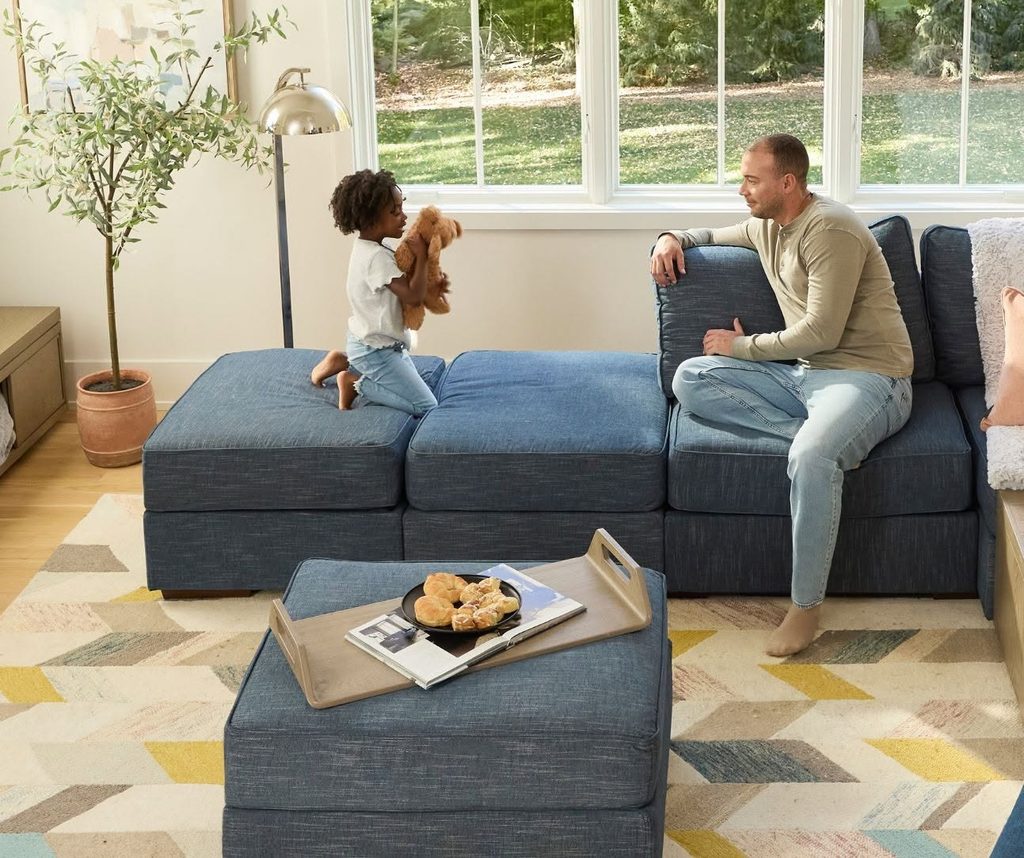
Photo Courtesy Lovesac