
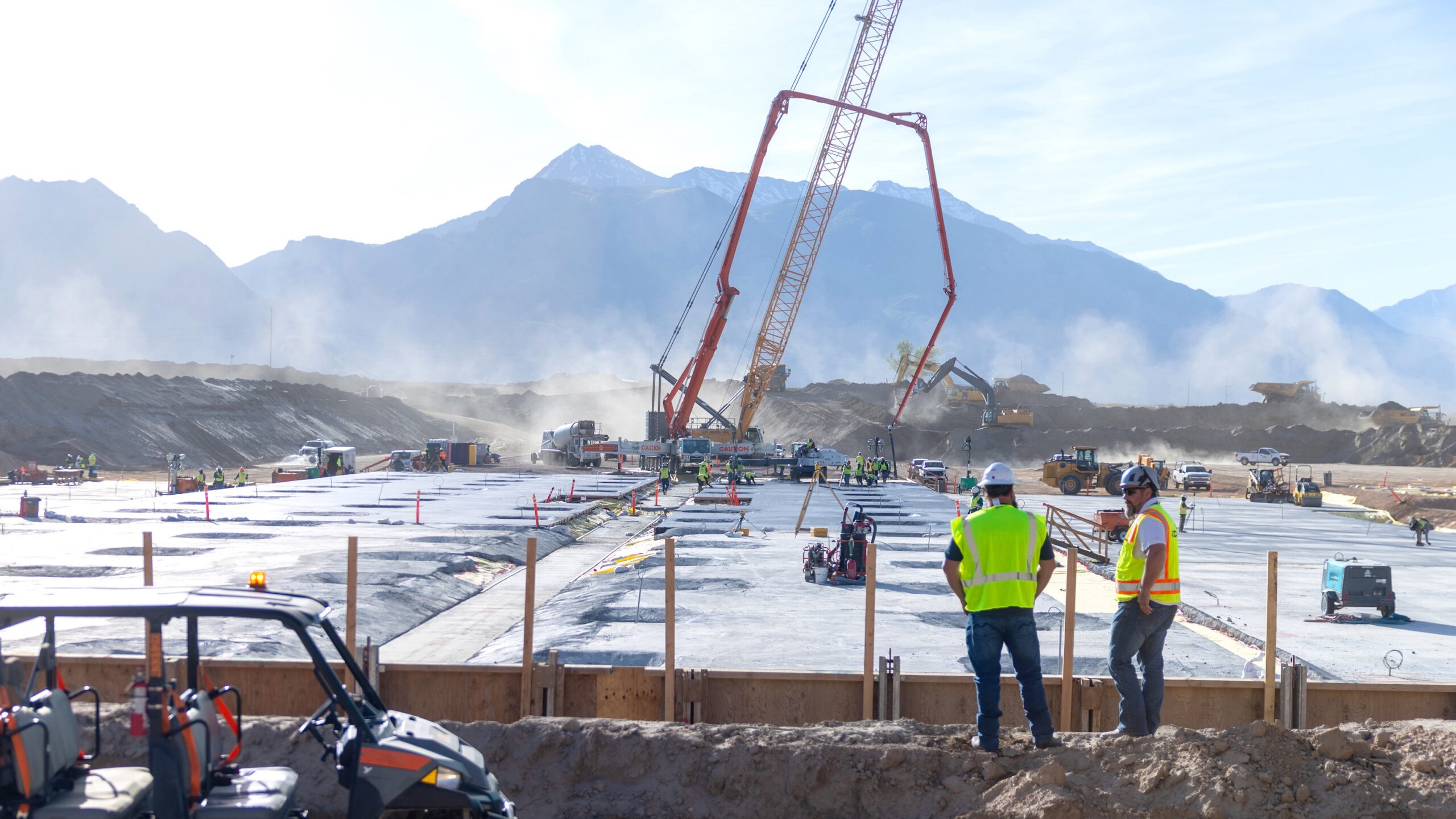
Four years ago, a sprawling plant in Lehi, Utah, belonged to Micron Technology and made memory chips. Today, it belongs to Texas Instruments (TI), and the work happening inside it sits close to the center of another American manufacturing story: analog and embedded processing chips.
Texas Instruments acquired the Lehi semiconductor factory (fab) from Micron for $900 million in a deal announced in June 2021, making it the company’s fourth 300-millimeter wafer fab at the time. The fab, known as LFAB1, began production in December 2022, about a year after the purchase closed. The Dallas-based company saw a foothold in the place Utahns call the Silicon Slopes, and a head start on a much larger plan.
In Lehi, TI makes analog and embedded processing chips, the foundational components that convert real-world signals like sound, temperature, and pressure into something electronics can use, which handle the specific tasks running inside a device. TI describes itself as the largest U.S. manufacturer of these foundational chips, the kind found in cars, smartphones, satellites, data centers, medical devices, and nearly all electronic devices. They are the unglamorous workhorses of modern life, and for years, a growing share of them came from overseas.
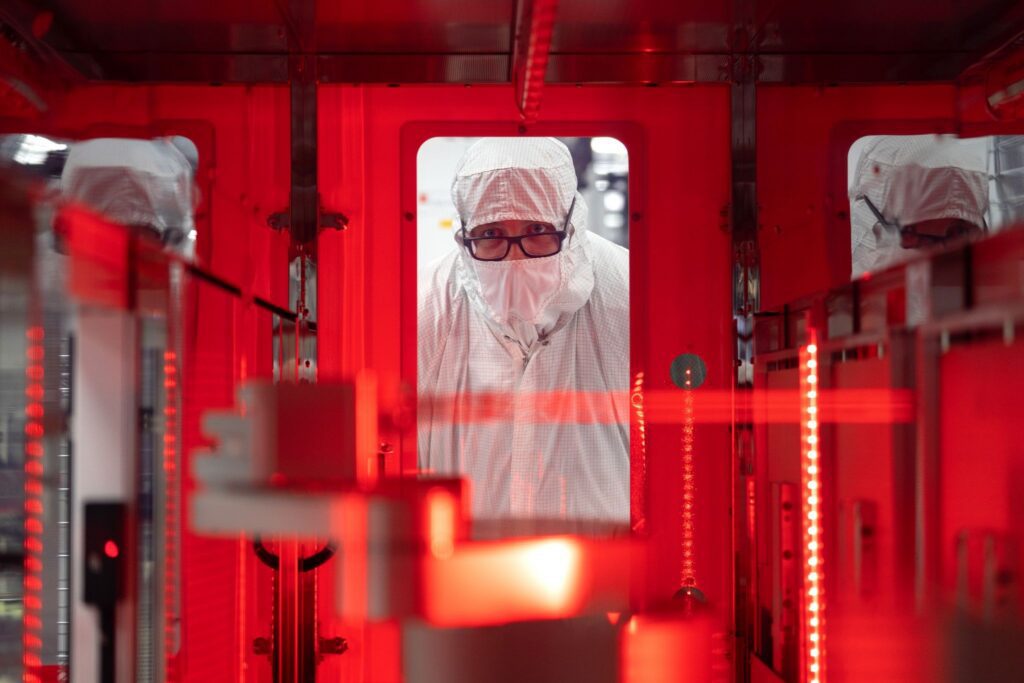
Photo Courtesy Texas Instruments
That is the gap TI is now spending heavily to close. In June 2025, the company announced plans to invest more than $60 billion across seven U.S. semiconductor fabs, which TI says is “the largest investment in foundational semiconductor manufacturing in U.S. history.” The build-out spans three mega-sites in Texas and Utah, and is expected to support more than 60,000 U.S. jobs, per the company.
For Scott Cuthbertson, former president and CEO of the Economic Development Corporation of Utah, the project’s rationale also extends well beyond Utah’s borders. According to the U.S. Department of Commerce, the U.S. produces only 10% of the global semiconductor supply, with 75% coming from East Asia. “The federal government recognized at the front end of the pandemic that our country’s reliance on overseas semiconductor manufacturing is a national security issue,” Cuthbertson said. “This project is the direct result of significant investment in strengthening our country’s supply chain.”
That logic is why the customers lining up behind TI read like a roster of American industry. Ford CEO Jim Farley noted that 80% of the vehicles Ford sells in the U.S. are assembled in the country, and said the automaker is “proud to stand with technology leaders like TI that continue to invest in manufacturing in the U.S.” Apple CEO Tim Cook said TI’s “American-made chips help bring Apple products to life.” Notably, Apple committed funding last year to support tool installations at TI’s facilities in Utah and Texas.
For Utah, the numbers are difficult to overstate. When TI selected Lehi for a second fab in February 2023, it committed $11 billion to the project, which the company and the state both described as the largest economic investment in Utah history. The company reported the second fab would add roughly 800 high-tech jobs, along with thousands of indirect jobs from construction and other supporting industries. The Utah Governor’s Office of Economic Development, which offered TI a post-performance tax reduction through the state’s Economic Development Tax Increment Financing program, projects the agreement will generate more than $2.4 billion in wages and $111.5 million in new state tax revenue over its 20-year term.
The second fab will operate sustainably, as a certified Leadership in Energy and Environmental Design (LEED) Gold building. The company wants the building to be completely powered by clean energy, and will recycle water “at nearly double the rate of the existing Lehi fab.” Other equipment and processes will “further reduce waste, water, and energy consumption per chip.”
“Companies like Texas Instruments continue to invest in Utah because of our world-class business climate and exceptional workforce,” Gov. Spencer Cox said when the project was announced. “TI’s new semiconductor fab will solidify Utah as a global semiconductor manufacturing hub for generations to come.” Lehi City Mayor Mark Johnson added, “TI has brought great opportunities to our city, our state, and our country at a critical time in the semiconductor industry.”
Although TI conducted a round of layoffs at its existing Lehi fab last year, which the company described as organizational changes to support its long-term operational plans, its long-term Utah commitment remains unchanged. Construction on the second Lehi fab is well underway, and once finished, it will connect to the existing fab so the two operate as one. The federal government has put real money behind the effort. In December 2024, the U.S. Department of Commerce announced an award agreement of up to $1.6 billion in direct funding through the CHIPS and Science Act to support three fabs under construction in Texas and Utah, including LFAB2.
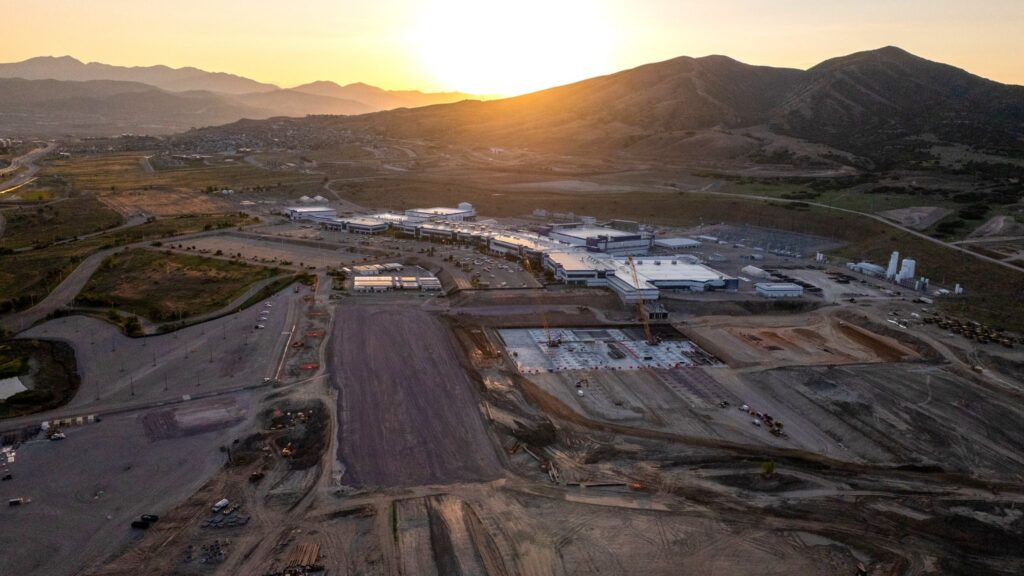
Photo Courtesy Texas Instruments
The investment reaches well past the fab floor and the obvious supporting industries. TI committed $9 million to the Alpine School District to expand science, technology, engineering, and math (STEM) opportunities for students from kindergarten through 12th grade. “We are excited this partnership will help our students develop essential knowledge and skills, preparing them for success in life and possible careers in the technology sector,” explained Alpine School District Superintendent, Dr. Shane Farnsworth. Marlin Eldred, Lehi’s director of economic development, elaborated to ABC4 on its importance, “It’s not just teaching a student a math problem, it’s actually now showing them how that math problem relates to real life. It’s instrumental in helping our employment base, helping our children grow in those industries, and understanding what are those opportunities for growth within the STEM industries.”
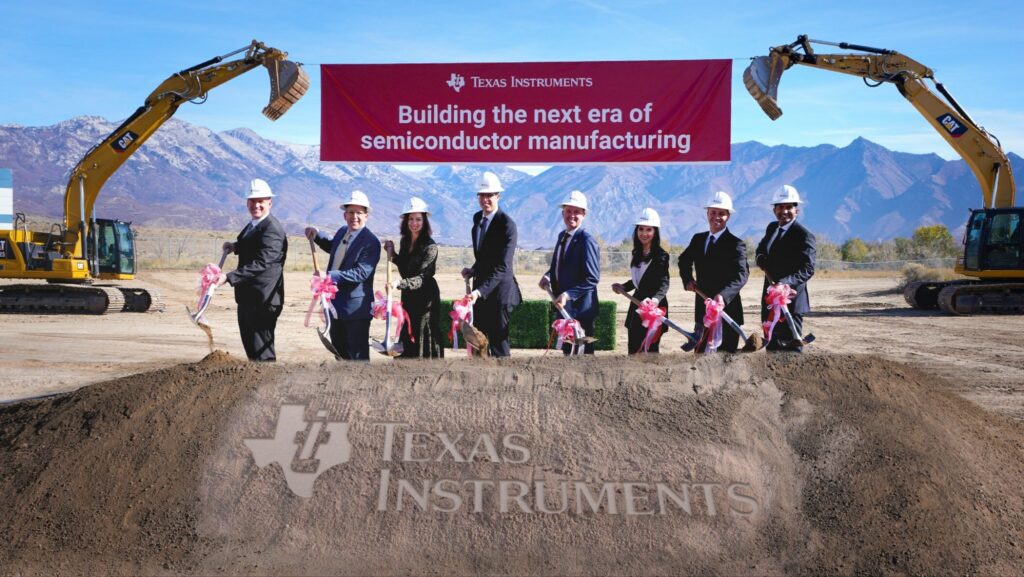
Photo Courtesy Texas Instruments
When both Lehi fabs reach full production, TI says they will turn out tens of millions of analog and embedded processing chips every day. They will be chips that run American cars and American phones, made by American workers, in a valley that four years ago was making something else entirely. As Gov. Cox said, “We are proud that semiconductors – made in Utah by Utahns – will power the innovation that is foundational to our country’s economic and national security.”