
When AlexAnna Salmon, president of the Igiugig Village Council, stood on the beach of the Kvichak River in July 2019 to welcome a bright blue-and-yellow underwater turbine generator to her community, she framed the moment as a return rather than a leap. “For millennia, the mighty Kvichak River has sustained us with the greatest sockeye salmon run on earth,” Salmon said at the launch ceremony. “It is high time that the Kvichak supplies 100% of our energy needs.”
Igiugig is a community of about seventy people on the southwest shore of Lake Iliamna, accessible only by air or water, with the closest village 40 miles away. In a 2023 project presentation, the Igiugig Village Council reported local electricity costs of $0.91 per kilowatt-hour and diesel prices above $10 a gallon. Two decades ago, the village set a target: to get the diesel generators offline by 2025.
Alaska has about 200 isolated microgrid power systems, and the U.S. Department of Energy (DOE) reports roughly 250 remote villages still depend on diesel generators for electricity. Alaskans pay higher energy prices than residents of any state except Hawaii. Every gallon of diesel that does not have to be flown in is money that stays at home. Using homegrown energy sources also means communities can avoid shipment delays or oil spills.
Behind the device in the Kvichak River, as well as a growing list of similar projects up and down Alaska’s coast, sits a quieter institution: the DOE’s Pacific Northwest National Laboratory (PNNL), based in Richland, Washington. PNNL doesn’t own the turbines or the kelp farms its research touches. Instead, the lab handles the engineering and the economics, the patient work of figuring out which technology will pencil out in each community. The work began more than three decades ago, when PNNL researchers came to Alaska to help assess the impacts of the Exxon Valdez oil spill. The lab has gone on to assist Alaskan communities with technologies such as the EyeSea software, which assesses how the use of marine energy resources can impact wildlife, and the ArcticShark, an unmanned aerial system used to collect atmospheric data in the Arctic.
A river, a turbine, and a 90-percent goal
PNNL’s Tethys knowledge base tracks the environmental performance of marine and wind energy projects, such as the RivGen Power System in the Kvichak. The submerged 35-kilowatt hydrokinetic device designed by Maine’s Ocean Renewable Power Company (ORPC) sits on the riverbed and spins its turbine foils in the natural current. PNNL and Sandia National Laboratories also built three-dimensional models to assess the energy potential and most reliable designs. The findings will enable the development of larger hydroelectric projects across the state.
According to the DOE, “there’s enough potential energy across Alaska’s water resources to power every home in Alaska and then some,” plus the potential to power industries like mineral smelting. Monty Worthington, ORPC’s director of project development in Alaska, summarized to Alaska Public Media, “I think when we can prove it out in these small grids, it allows us to leverage that information and even apply it to larger grids and increase our ability to provide more renewable energy. So it’s a real novel project in that way, and it will have applications throughout Alaska.”
The RivGen Power System is an example of this potential. The first RivGen went into the water in 2019, the Hydropower and Hydrokinetic Office confirms, making it the longest-operating current energy converter in the United States. A second device followed in 2023. With both devices running alongside battery storage and a smart microgrid controller, DOE estimates the combined system will generate roughly 456 megawatt-hours of clean electricity per year, reducing diesel use by 90% and avoiding nearly $170,000 in annual diesel-generation costs.

Photo Courtesy ORPC
Kelp, fish guts, and a half-price gallon
A second strand of PNNL’s Alaska work points at the fuel itself. In 2021, a team led by PNNL research principal Michael Rinker, together with the regional nonprofit Southwest Alaska Municipal Conference (SWAMC), asked whether coastal communities could turn the kelp and fish waste they already produce into a fuel cheaper than the diesel they fly in.
The full technical report concluded that, in many places, the answer is yes. By combining farmed Alaskan kelp with waste from existing fish plants and processing the mixture via hydrothermal liquefaction, the team estimated a biocrude production cost of $3.18 to $3.64 per gallon. Against the ten-dollar-a-gallon diesel flown into villages like Igiugig, that is roughly a third the price for a substance that can still power generators and fishing boats.
The design rule that made the economics work was the same one that worked in Igiugig: use what is already there. “Diesel is expensive up there, especially in the winter,” Rinker said. “We wanted to see if we could turn existing waste into fuel in a way that makes financial sense to small, remote, disadvantaged areas in Alaska.”
The process would also support the Alaskan kelp industry, which is still gaining traction. “There’s opportunity for a kelp industry in Alaska, which could diversify our economic base and add big benefits to coastal communities,” explained Shirly Marquardt, executive director of the Southwest Alaska Municipal Conference.
As Rinker posited, “Now that we know this might work, what if we tested it in a few specific coastal communities to dial in the details?”
Sitka: a grid model and a fishing fleet
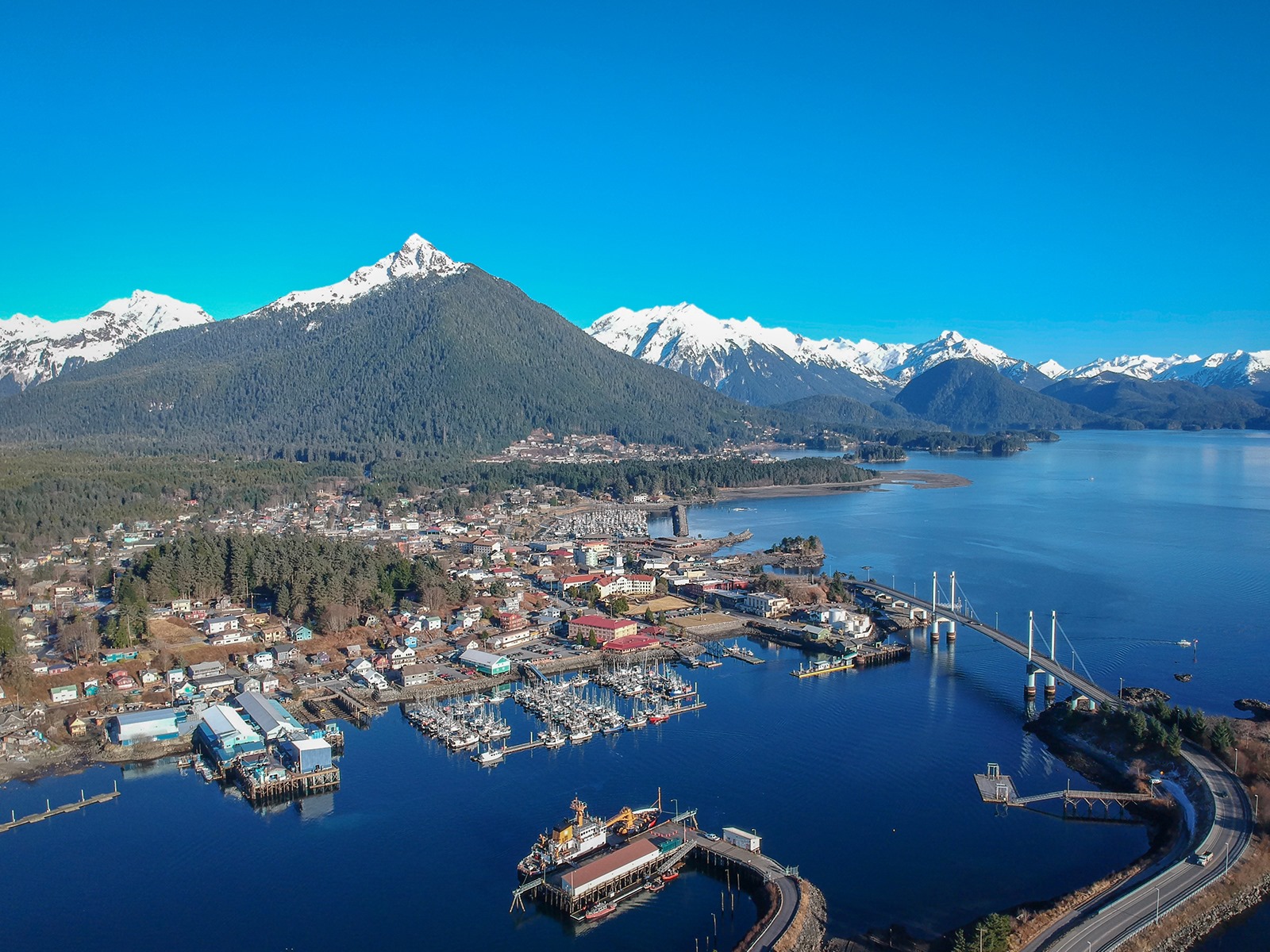
Up the panhandle, the city of Sitka, with a population of about 8,000, is running a different version of the same playbook. Sitka already draws nearly all its electricity from two hydroelectric dams. Still, a new hospital and the fishing fleet’s appetite for cleaner propulsion add up to a load forecast that could otherwise push Sitka back toward diesel.
Through DOE’s Energy Transitions Initiative Partnership Project (ETIPP), PNNL and other partners helped Sitka evaluate its grid options, including near-term wind and solar resources, and longer-term geothermal, wave, and tidal sources. They also tested whether Sitka could one day export green ammonia or hydrogen produced from its renewable surplus. “The wind resource is the strongest resource that there is available, is what we found,” PNNL engineer Amy Solana explained.
In 2023, PNNL also joined Sitka in another technical partnership through DOE’s Clean Energy to Communities (C2C) program to help the city optimize its existing hydropower infrastructure, advance its solar, wind, and storage projects in the pipeline, and explore replacing diesel with clean-energy-powered ammonia production. The ammonia concept, in particular, has previously been analyzed in partnership with the University of Alaska Fairbanks. At the time of the announcement, PNNL engineer Molly Greer said, “We look forward to working hand-in-hand with the community of Sitka to help them define how they want their energy future to look. Just as important, we will help them gather the right information from experts at PNNL to chart a path for achieving those goals through listening and learning from the community.”
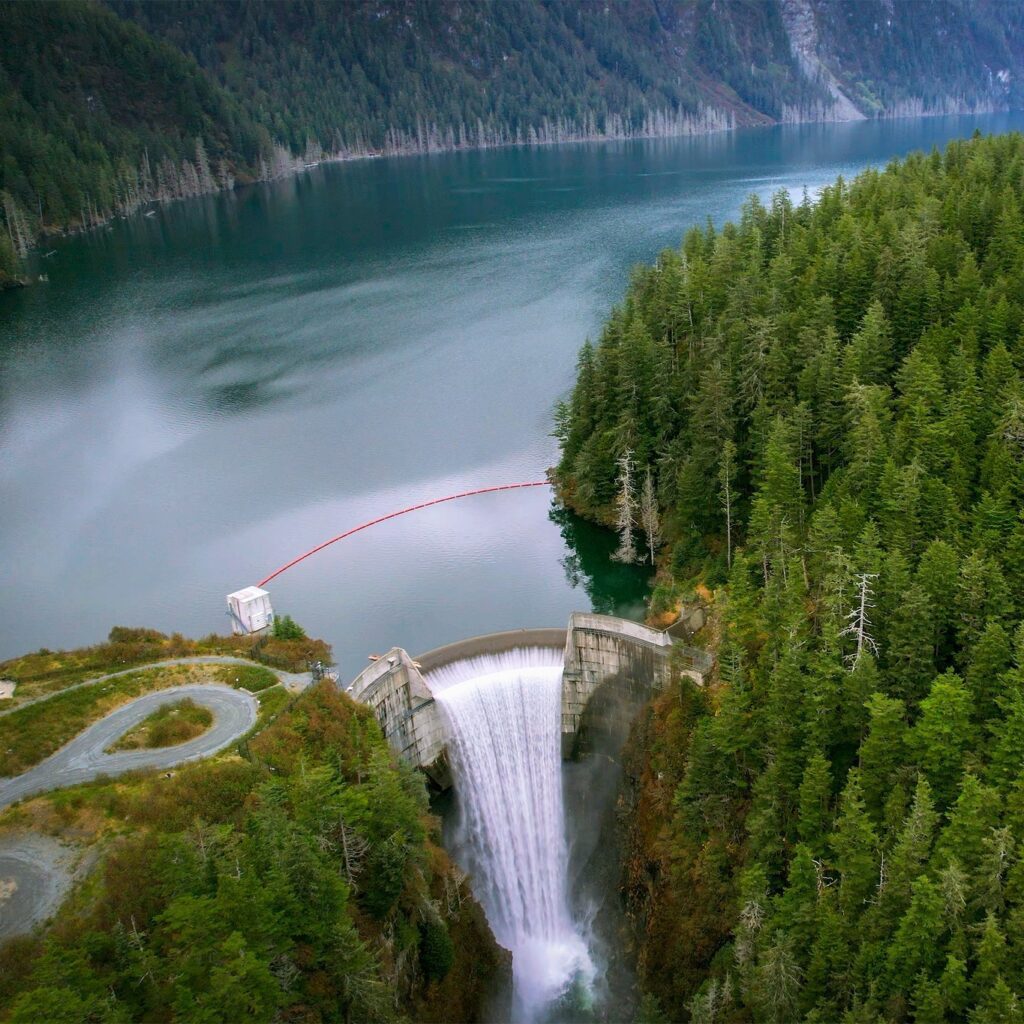
Photo Courtesy Sitka Conservation Society
What ties Igiugig’s river, Sitka’s grid, and the larger tidal resource in Cook Inlet together is an insight that has driven Alaska Native communities for thousands of years: the resource that gets you through the winter is the resource already there. PNNL’s contribution is to put the engineering and the price tag next to that idea.