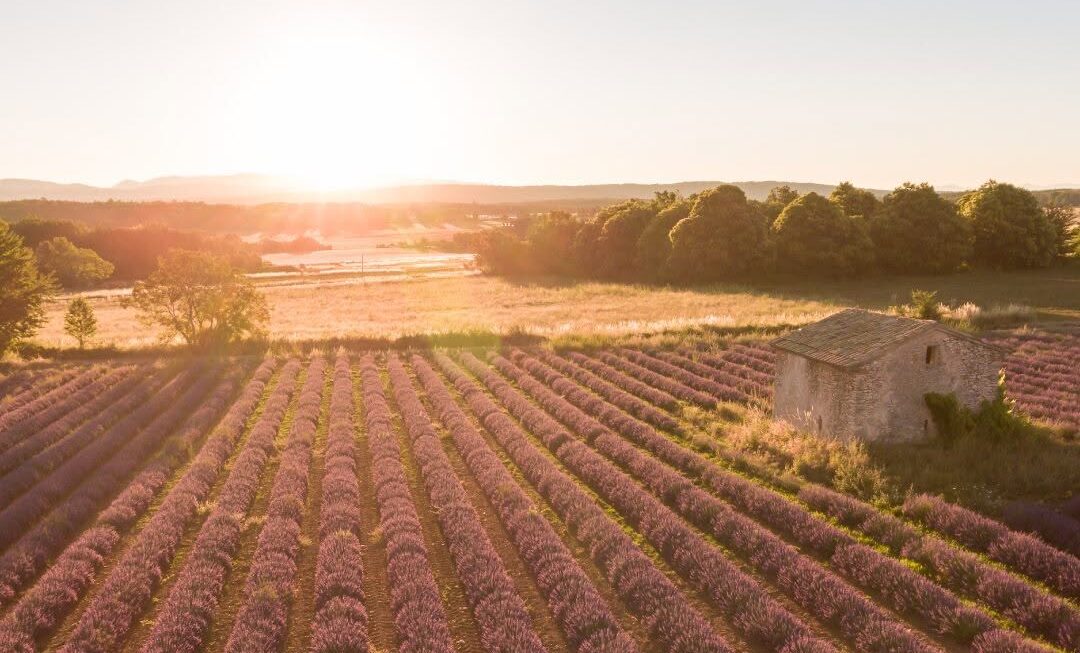
The sheep will not touch the lavender. That is the whole trick, and it is the reason there is no herbicide on the fields at the Mt. Nebo Botanical Farm and Distillery in Mona, Utah. Sheep dislike the floral scent, so the farm turns them loose in the rows during the growing season, where they eat the weeds and grasses and leave the crop alone. It is a low-tech solution to a problem many growers solve with herbicides, and it costs little more than keeping the sheep.
The farm, which belongs to Young Living Essential Oils, sits about 70 miles south of Salt Lake City, on the valley floor of Juab County. Visit Utah describes it as one of the world’s largest privately-owned essential oil distilleries, spanning nearly 1,700 acres. D. Gary Young, along with his wife Mary, bought the original farmhouse and 160 acres in 1994. Gary had a “passion for discovery and wellness that brought him to distant corners of the world—from lavender fields in southern France to desert ruins in Yemen to rainforests in Ecuador.”
The couple established their first lavender farm in Idaho before building Young Living Essential Oils in Utah. Mary, now CEO, remembers, “One summer evening in 1995, Gary looked out over hundreds of acres of sagebrush and uncultivated farmland and with that visionary look in his eye, said, ‘One day, this farm will be a worldwide destination welcoming thousands of visitors who are eager to learn about essential oils and Young Living’s amazing Seed to Seal story.’”
Lavender, goldenrod, clary sage, blue yarrow, and melissa all grow at Mona, with planting starting in mid-April. Harvest begins in early to mid-July, and the timing is precise: the crew tests Brix levels, a measurement of naturally occurring sugars, along with ambient temperature, humidity, barometric pressure, and wind speed to determine when to cut. The plant material goes into the on-site still, and each batch of resulting oil is tested in the farm’s on-site lab. One acre of lavender produces up to five liters of oil, meaning every 15-milliliter bottle uses about 18 plants.
Most consumer brands in this category buy their oil from brokers. This one grows it, distills it, and tests it without the material ever leaving the property. That vertical integration makes farming practices both commercially and environmentally important. Whatever goes onto the field ends up in the still.
Young Living’s Seed to Seal quality commitment ensures that consumers “get authentic, science-backed products that are kinder to both you and Mother Earth.” Over the past two decades, Young Living has vetted and developed relationships with like-minded farms and suppliers that use earth-friendly agricultural methods to achieve low-impact production. According to the company, Seed to Seal guardian Nicolas Landel champions the concept that “sourcing essential oils like Palo Santo, Royal Hawaiian Sandalwood, Black Spruce, and Hong Kaui from farms that invest in reforestation or use naturally fallen wood to produce oils leads to healthier forests.”
The company also uses the Mona farm for conservation and agricultural research. The farm in Mona even contributes to the Utah seed bank by growing native plants to collect and preserve their seeds. “Utah is our backyard, and we’re committed to preserving its beauty,” the company explained.
Photo Courtesy Young Living USA
The company’s dedication to a better planet is evident in much of its work. Steam distillation is thirsty, so in 2019 the team redesigned the distillery around a closed-loop cooling water system built from existing infrastructure. The company heats fresh water from its wells, and the steam helps team members extract essential oils from the plants. After that, the steam is cooled, returned to liquid form, separated from the oil, and sent to the farm’s holding ponds and irrigation lines. The redesigned system now saves about 260 million gallons of water per year, the amount required to fill 400 Olympic-sized pools. The company also composts all the plant material produced during growing and harvesting and uses animal manure to enrich the soil.
Young Living also built its headquarters in Lehi to meet LEED and Green Globe specifications, implemented a corporate recycling initiative, and reached 99% landfill-free status at its biggest distribution center. In 2023, the company introduced 100% recyclable boxes, bags, and tubes for shipping that are more durable, use Sustainable Forestry Initiative (SFI)-certified wood fiber, and feature nature-inspired patterns that children can repurpose for coloring. “We strive to be stewards of the earth,” said COO Prasad Gankanda. “As the global leader in the essential oils space, we are committed to preserving the environment and making a positive impact in all that we do.”
Elsewhere in Utah, the company subscribed its Spanish Fork distribution center to the SharedSolar program from RenewChoice, a Utah company, expected to offset roughly 80 percent of the building’s power usage without installing a single panel of its own. “The SharedSolar program is a revolution in the renewable energy field, making going green more accessible and attainable for companies and residents alike,” Gankanda explained.
Through the D. Gary Young Young Living Foundation, whose administrative costs are covered by the company, Young Living has funded education, anti-trafficking initiatives, women’s entrepreneurship programs, and conservation projects around the world, including the planting of roughly 700 palo santo trees in Ecuador.
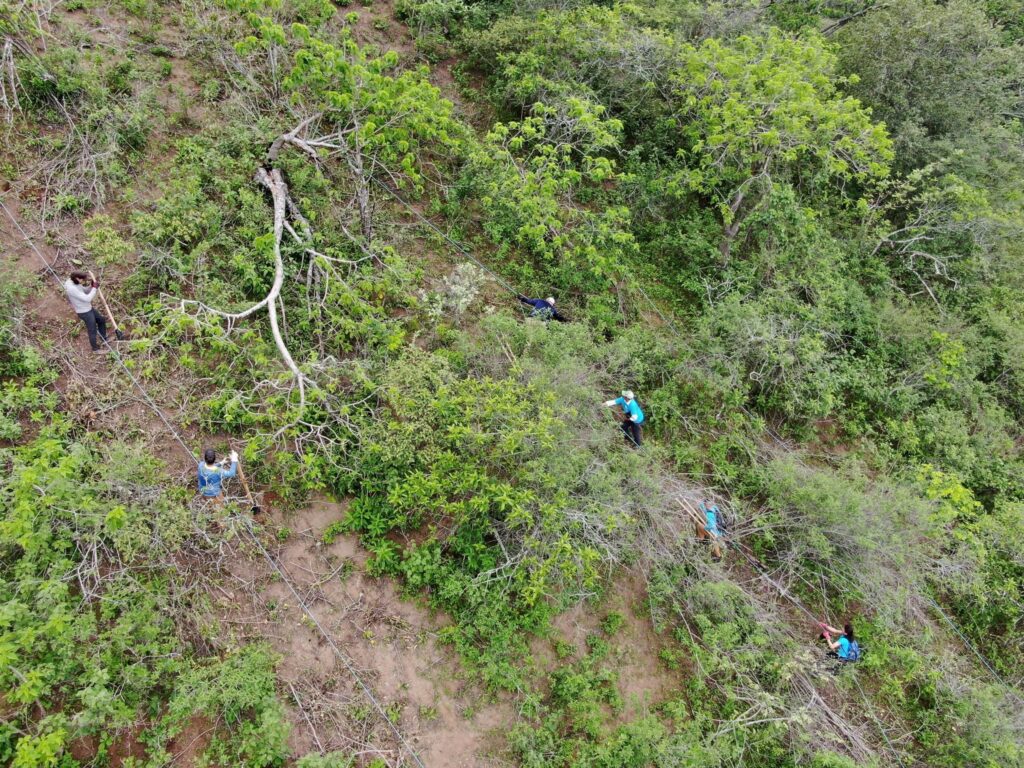
Photo Courtesy Young Living Foundation
Similar work is being done closer to home. In the Uinta Mountain foothills near Tabiona, Gary and Mary purchased Skyrider Wilderness Ranch. The couple donated an 11,597-acre easement to The Nature Conservancy, which became the largest conservation easement in Utah history. Now, the D. Gary Young Wildlife Sanctuary is home to a nursery herd of desert bighorn sheep, relocated from Nevada, thanks to a collaboration among the Utah Division of Wildlife Resources, the Nevada Department of Wildlife, and the Utah Chapter of the Wild Sheep Foundation. Deer, elk, and bison also inhabit the land, and Gary’s final resting place is there.
In 2019, Young Living and the D. Gary Young, Young Living Foundation also planted milkweed at the company’s farms and other locations to assist the monarch butterflies along their migration route. Monarch butterflies rely on milkweed to lay their eggs and feed newly hatched caterpillars. In 2023, the Mona farm became a registered monarch waystation, and Monarch City USA recognized it as the first Monarch Farm USA, the first time the organization had extended its designation to a farm. In 2022, the Mona farm also became a pollinator paradise, complete with native seeds and bee homes, while invasive plants were stripped away.
The grounds have been central to a variety of research. From May through October 2022, Young Living Senior Scientist Tyler Wilson and Director of Business Development Jacob Young contributed to research on bee species attracted to lavender in the region. The results, published in the journal Diversity in February 2024, identified 68 bee species. The researchers flagged the scale themselves. “Excluding bees collected from high elevations, the farm supported nearly 50% of the bees known from the valleys and foothills of Juab County,” they wrote, which is noteworthy “given that the farm covers less than 0.08% of the county’s land area.” Lavender did most of the work. Of the 34 plant species the team collected bees from, the lavender fields supported the richest community, with 32 species. The conclusion: farms in the Great Basin Desert can house diverse pollinator communities, the authors write, particularly those employing “pollinator-friendly farming practices.”
Since 2023, Wilson and Research Scientist Emma Andrews have also researched the chemical profiles of different populations of showy milkweed in Utah, for the benefit of butterflies. “As stewards of the earth, we work to achieve our ambitious conservation, preservation, and restoration goals. We hope that the findings from our dedicated team of scientists will aid the larger scientific community in further conservation of the monarch butterfly,” said Wilson.
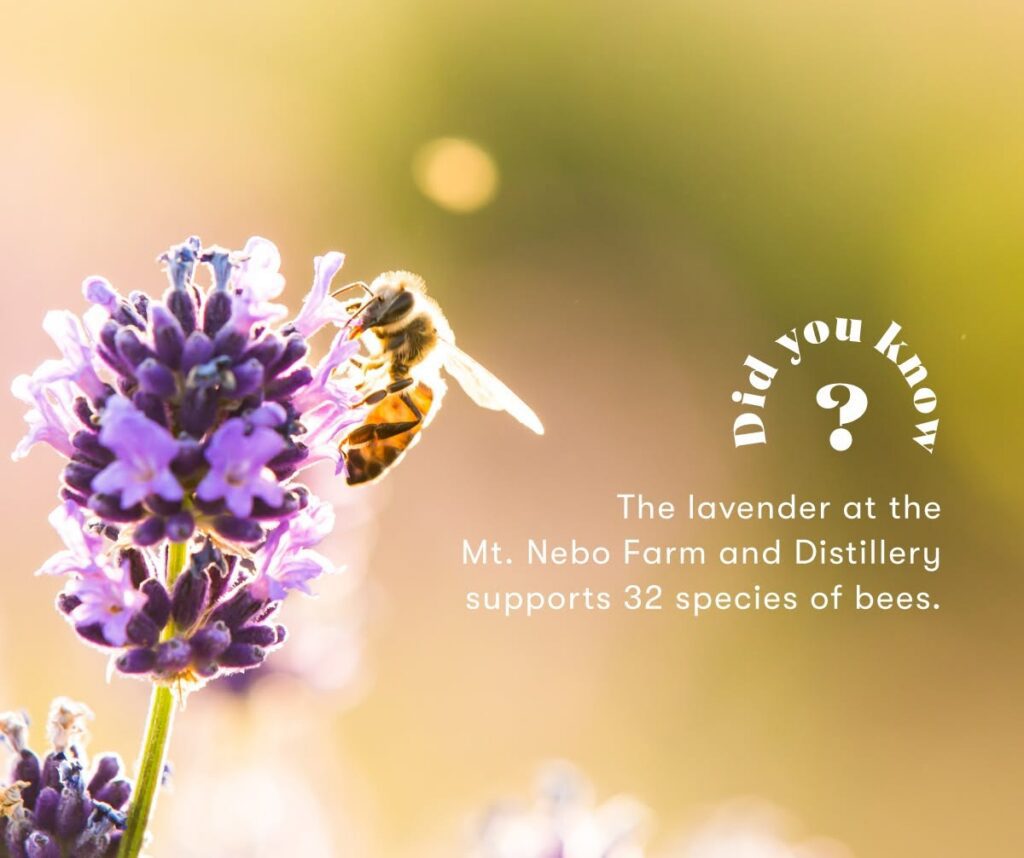
Photo Courtesy Young Living USA
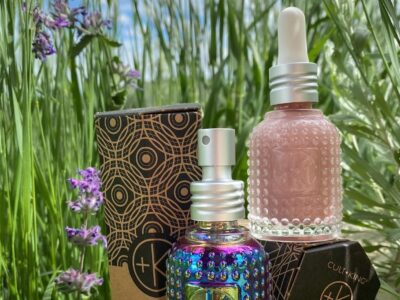
Closing the loop, the company launched a sister company and fragrance line, Wyld Notes, last year, and many of its 100% natural scents are built around juniper, lavender, clary sage, and black spruce grown on the company’s farms. The scents in the bottle came from plants distilled in Mona, grown in fields weeded by sheep instead of herbicides and bordered by pollinator habitat. “We are farmers and families–creators, distillers, and dreamers who harness the power of nature’s living energy to enrich humanity,” as the company described its purpose.