Lisa White remembers Zion Canyon before the shuttles. White, the transportation manager at Zion National Park, has spent 25 years at the park and witnessed the canyon’s parking problems firsthand. The visitor numbers steadily increased, rising from 2.4 million in 2000 to 5 million in 2021. “I personally saw fistfights over parking spaces because it was just so congested,” she told Reasons to Be Cheerful.
The park’s free shuttle system helped address increasing visitation when it began operating in 2000, using liquid propane gas instead of diesel to reduce smog. During its first summer, visitors told the park, “You have given us back the canyon,” Superintendent Jeff Bradybaugh recalled to the Salt Lake Tribune in 2024. “Operating the shuttle system here is essential to accommodating everyone who comes from across the United States and around the world who wants to enjoy this spectacular place,” park spokesman Jonathan Shafer said.
Two decades of service took a toll on the original fleet. In December 2018, Bradybaugh said the propane buses’ engines were “no longer manufactured” and that the park was “scrambling around buying up all the replacement engine parts we can find.” By 2020, staff members were scavenging parts from broken-down buses and searching online for replacements, including on eBay.
The park had been considering a replacement for years. A 2010 park plan to protect the canyon’s natural soundscape identified “quiet technology for replacement shuttle buses” as one measure to consider.
The first attempts stalled. A 2016 effort to convert up to 14 of the old buses to battery power attracted no successful bids and was canceled. The park then tested electric buses in regular service. A Proterra E2 bus operated the routes from August to October 2017, facing temperatures as high as 113 degrees. The National Renewable Energy Laboratory (NREL) documented two additional trials: a 60-foot New Flyer bus on the canyon route in September 2018 and a 35-foot New Flyer bus on the Springdale route in August 2019.
Funding proved harder to secure. The Utah Department of Transportation applied for $25 million in federal funding in both 2017 and 2018, while the park sought $35 million through another federal program in 2019. All three requests were denied. Jack Burns, then Zion’s chief of commercial services and partnerships, acknowledged in 2020 that among parks seeking help, “we are just one of many.”
The persistence paid off in 2021, when the park secured a $33 million grant from the U.S. Department of Transportation. The project cost about $37.1 million, with the remaining funding coming from the National Park Service, the National Park Foundation, Kane and Washington counties, private donors, and the Zion National Park Forever Project, the park’s nonprofit partner.
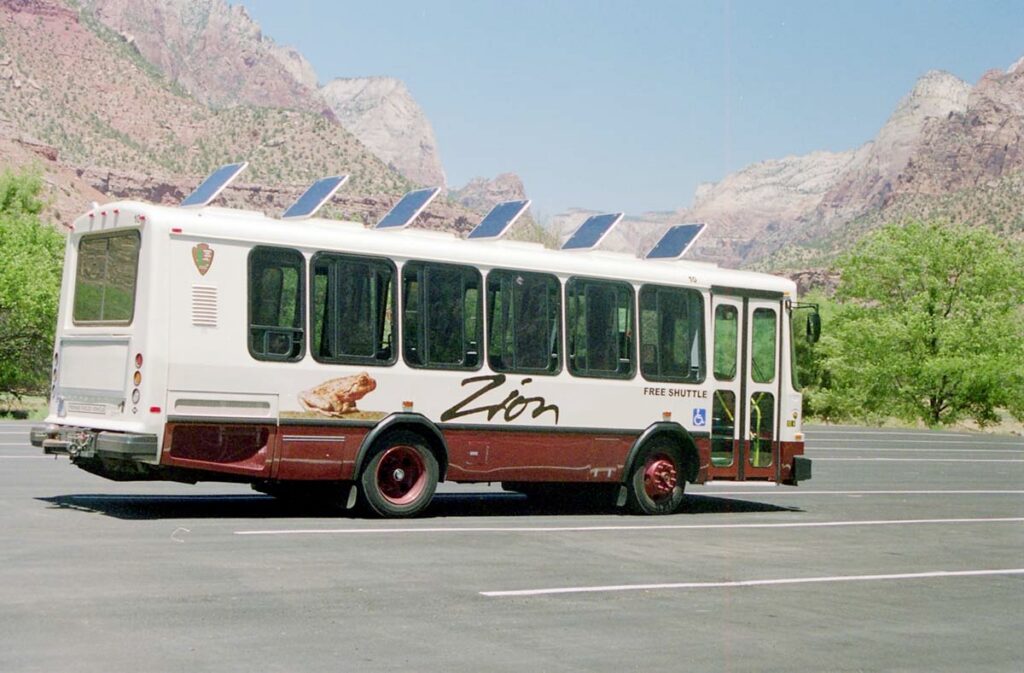
Photo Courtesy Zion National Park, Museum Catalog Number ZION 15933
The park purchased the new buses through the U.S. General Services Administration’s (GSA) fleet program. Following a 2021 pilot, it selected New Flyer‘s XE60 articulated electric bus.
The first five electric buses entered service on the Springdale line in September 2023. That fall, the park determined that the old shuttle trailers had reached the end of their service lives. As a result, single buses operated at reduced capacity while the new electric buses helped transport visitors.
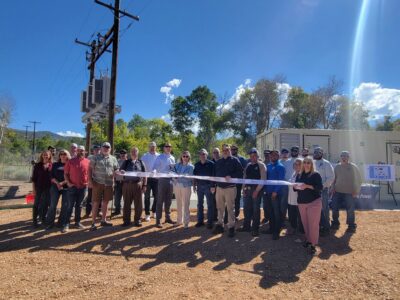
The remaining 25 buses arrived in 2024, making Zion the first park in the National Park System to operate a fully electric transit fleet. The park put its retired propane buses up for public auction, advertising starting prices “as low as $25.”
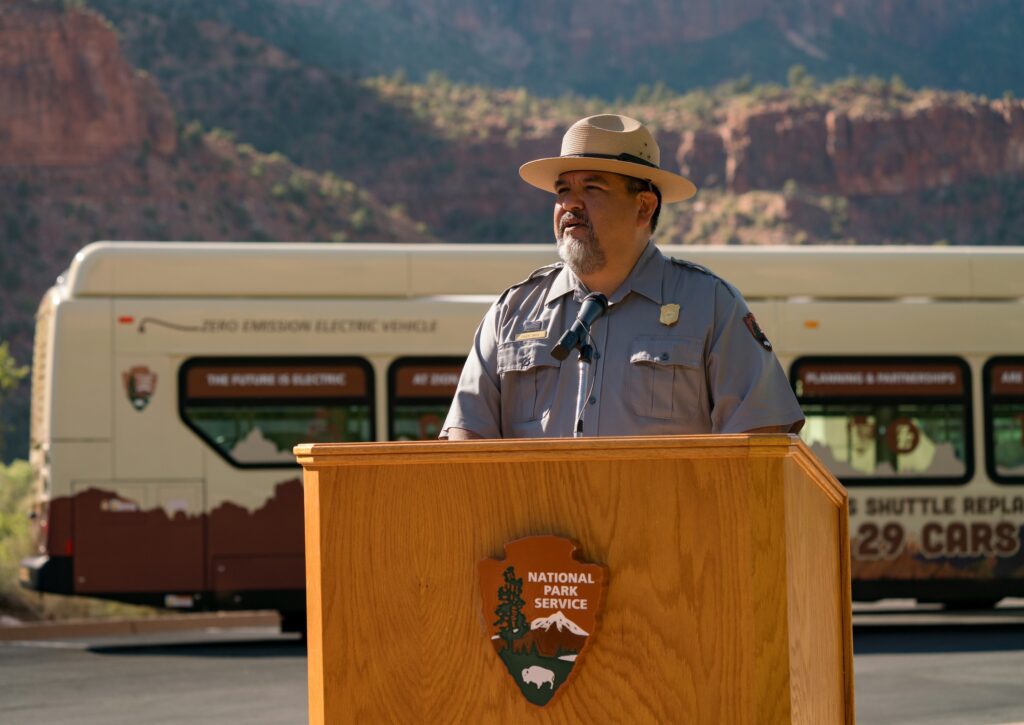
Photo Courtesy NPS/Abi Farish
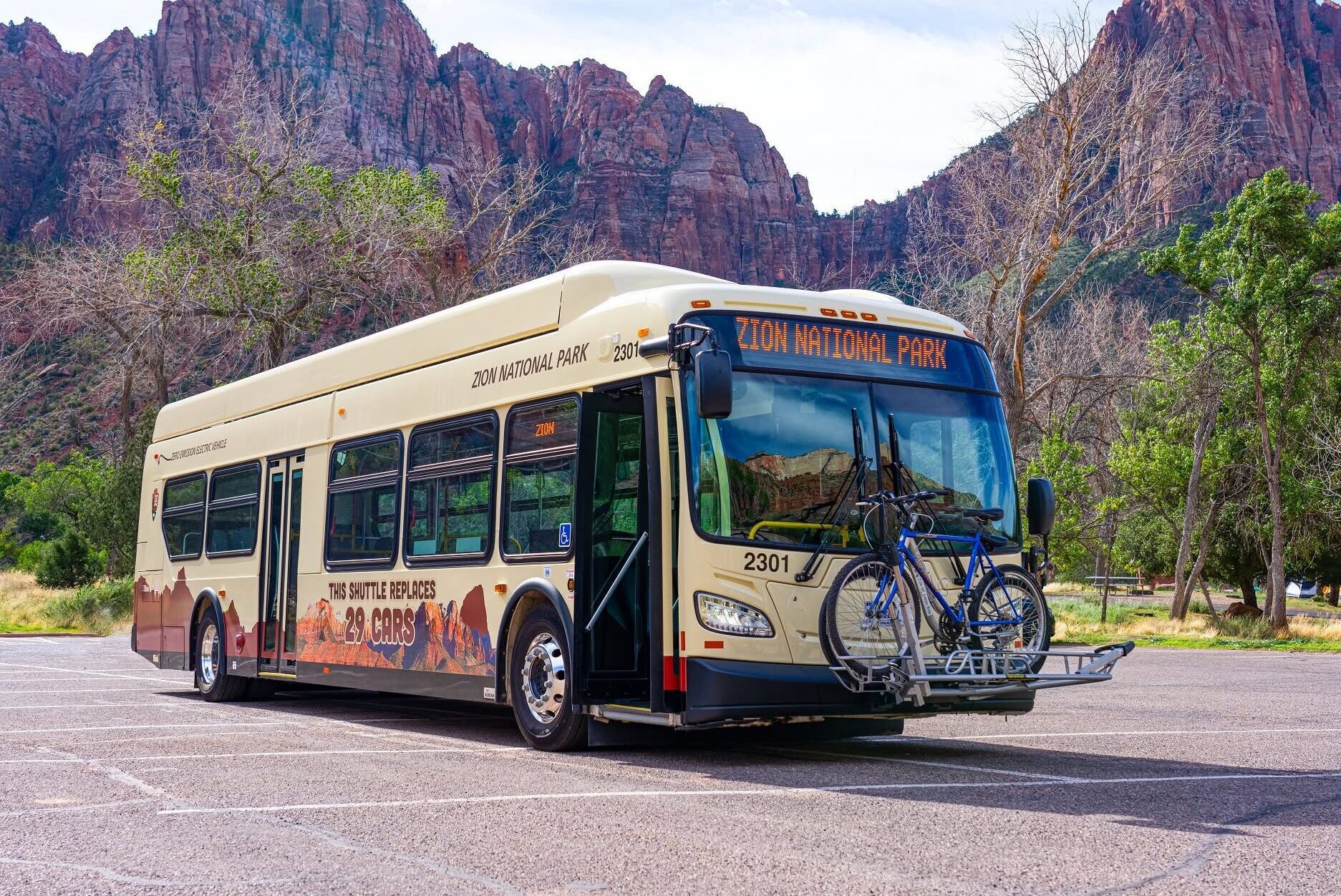
Five 40-foot buses now serve Springdale, while 25 articulated 60-foot buses each capable of carrying up to 90 riders operate in the canyon. Unlike the old propane buses, the new fleet has air conditioning. “If you’ve ridden them — the propane buses — you know they can get warm in Zion summers,” White told St. George News. The buses also have low floors, two sets of doors and “a really easy ramp for anyone who needs it,” she said. “So we’ll be able to unload and offload people faster than before and provide even better service than we do right now.”
The new buses are quieter, as well. “We’ve actually had to add little bike bells because they’re so quiet that people can’t hear them coming,” White told KUER. The air is cleaner, too. The electric buses produce no tailpipe emissions. The smaller shuttles in the fleet replace an estimated 29 cars every day, according to the National Park Service, and if those riders drove gas-powered cars instead, they would emit about 8.67 metric tons of greenhouse gases daily. “The smog is gone,” White told Reasons to be Cheerful. As a result, the ecosystem has transformed. “Vegetation has been able to return, native plants [are] growing again, which brings back the animals,” she said.
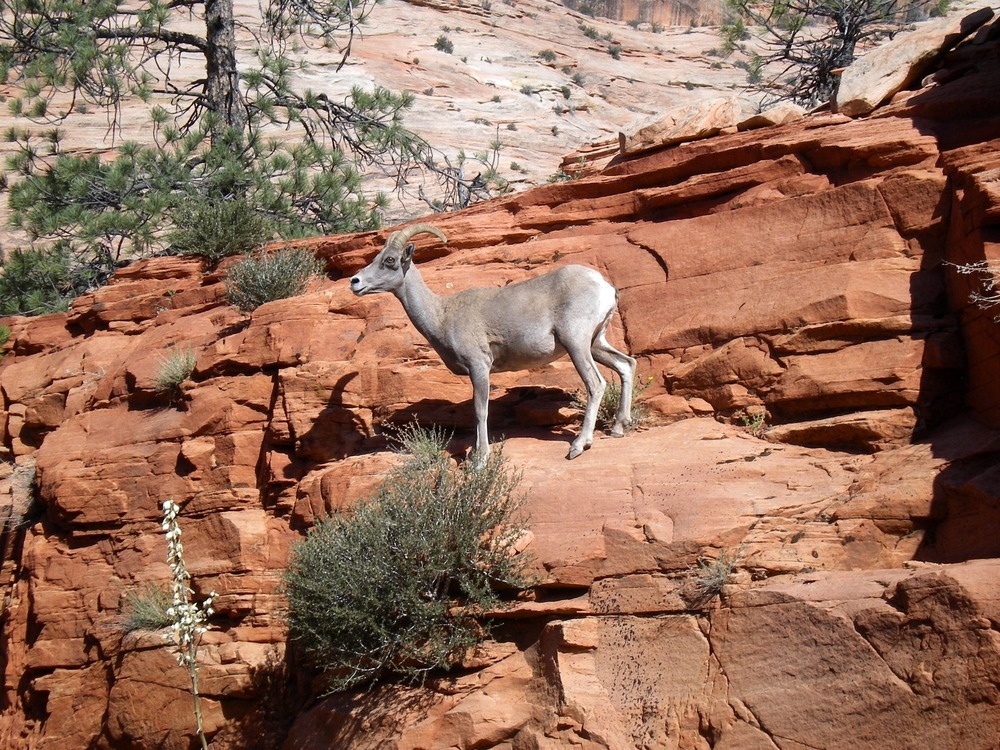
Photo Courtesy NPS / Katie Raney
The shuttle system recorded its 100 millionth boarding on June 12, 2025. “Zion National Park just hit $1 billion in economic output for our region in 2024,” Heath Hansen of Washington County told St. George News.
Park leaders credit the people behind the wheel. “I am thankful to the women and men who operate our shuttle system, providing safe and efficient transportation to thousands of park visitors every day!” Bradybaugh said.