On the Iowa side of the Mississippi River, in the community of Montpelier just upstream from Muscatine, a steel mill has been melting scrap into heavy plates since 1997. For most of its life, it has been a dependable piece of the American industrial map. Since then, it has also become the first place on earth to produce near-zero-emission steel that the rest of the global industry is still trying to match.
The mill belongs to SSAB Americas, the North American arm of a Swedish steelmaker that entered Iowa in 2007 when it acquired IPSCO, which opened the Montpelier plant in 1997. SSAB Americas is now the largest producer and supplier of carbon steel plates in North America, holding roughly 30% of the market in 2025 and shipping 1.8 million tonnes of steel that year. Its customers and end-users are the unglamorous backbone of the economy: energy, heavy transport, construction, infrastructure, and heavy equipment.
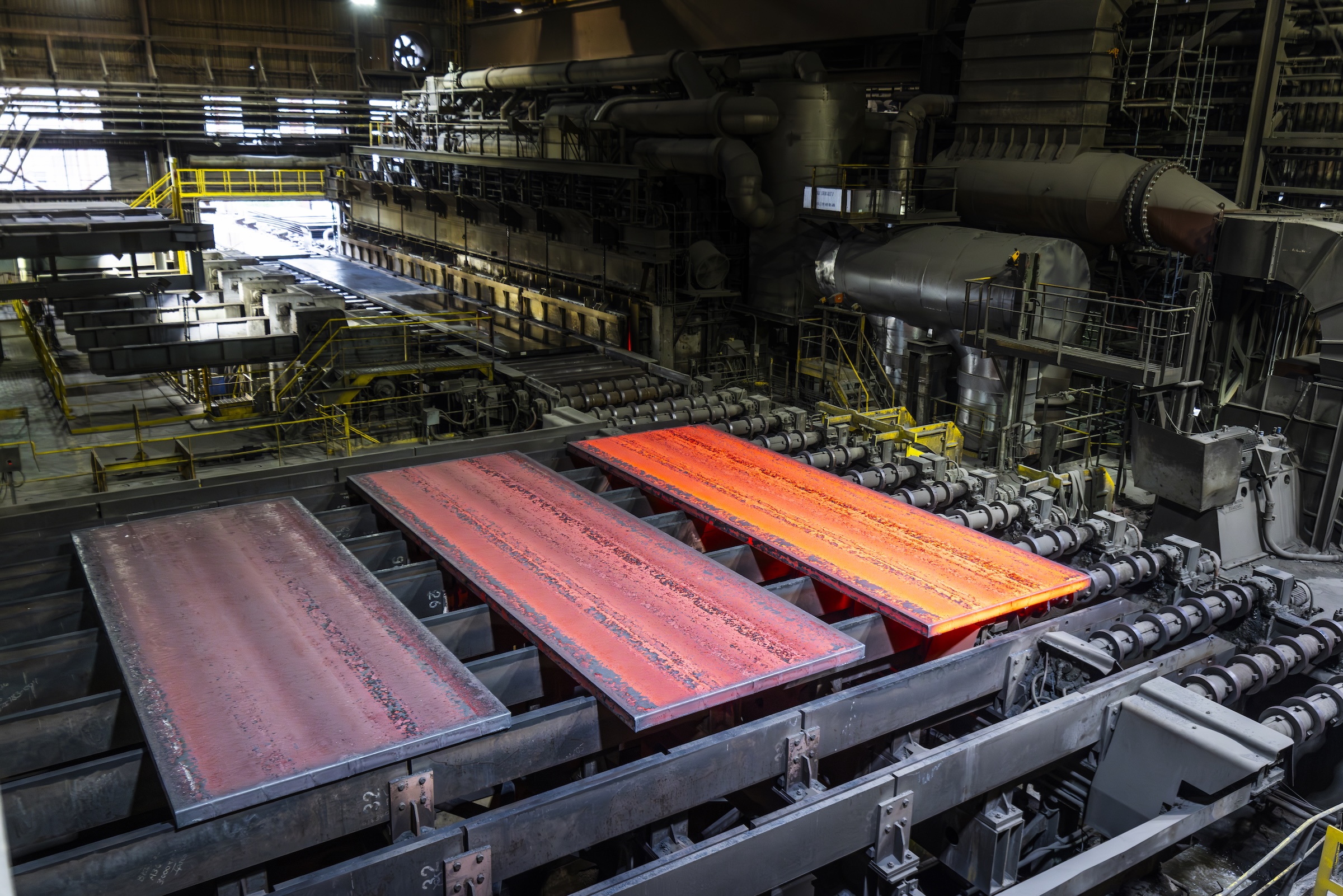
What sets the Iowa mill apart starts with how it makes steel. Rather than a coal-fired blast furnace, SSAB Americas operates an electric arc furnace (EAF), a process it says is “highly productive and low-cost.” Enhancing EAF productivity has also resulted in on-time cost savings for power.
The end product is 100% recyclable steel and steel plate products made with up to 99% recycled scrap. The Montpelier facility is one of Iowa’s largest steel scrap recyclers, consuming roughly 1.4 million tons of scrap a year. Recycled-scrap steelmaking in an electric furnace is inherently far less carbon-intensive than the blast-furnace route, and it gave the mill a head start that most of the world’s steel cannot claim, without sacrificing quality. The company explained, “The durability and high strength of plate and coil produced by SSAB Americas means it lasts a long time, adding years to the lifecycle of products made using SSAB Americas’ steel and reducing customers’ carbon footprint.”
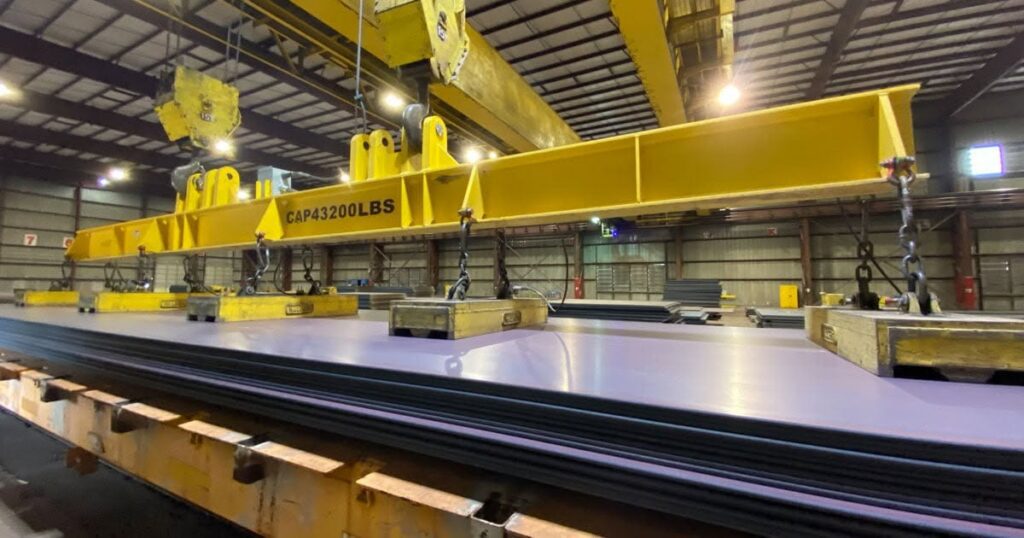
Photo Courtesy SSAB
The breakthroughs came in 2021, when SSAB demonstrated the world’s first fossil-free steel as a proof of concept, and in 2023, when the Iowa mill became the first to produce steel made from recycled scrap with essentially no fossil-carbon emissions during production, and without mass balancing allocation of carbon emission reductions or carbon offsets. By using hydrogen to remove oxygen from the iron core instead of coal and coke, as in traditional steelmaking processes, the process avoids the industry’s largest source of carbon emissions, and the sole by-product is water rather than carbon dioxide. In fact, the carbon emissions associated with the production of the steel are less than 0.05 kg CO2e/kg steel in Scope 1 and 2 of the GHG Protocol. “If everything could be made using steels with a lower climate impact, 7% of the world’s fossil CO2 emissions would disappear,” the company wrote. The company launched SSAB Zero™ steel as a commercial product.
Then, in September 2025, the mill cleared a bar no one else yet had. At GE Vernova‘s Annual Wind Supplier Conference, SSAB announced that SSAB Zero had become the world’s first near-zero steel to meet the thresholds set by the International Energy Agency (IEA) and the First Movers Coalition (FMC). The near-zero steel produced at Montpelier benefits from fossil-free electricity, biocoal, and renewable natural gas, as well as recycled scrap metal and hydrogen-reduced iron. “The First Movers Coalition is encouraged to see two member companies achieve a commercialized solution for steel decarbonization. SSAB’s achievement demonstrates industry transformation, and GE Vernova’s procurement leadership accelerates the impact,” said Noam Boussidan, Program Head of FMC.
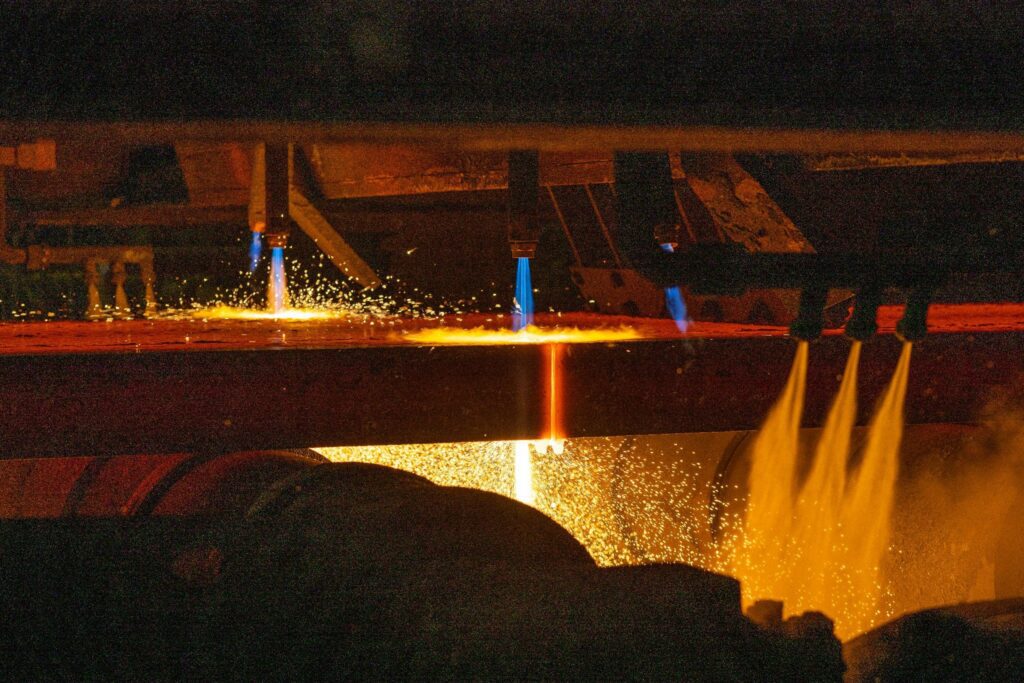
Photo Courtesy SSAB
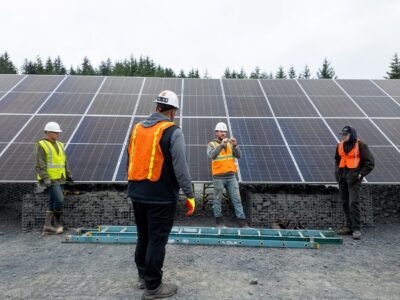
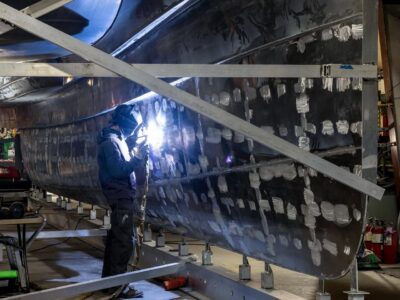
The destination for that steel closes a loop that runs entirely through Iowa, including heavy machinery, ships, rail cars, and even wind towers. SSAB’s Montpelier plate goes to Arcosa Wind Towers in Newton, which fabricates the towers, according to a joint announcement by the companies. MidAmerican Energy then puts wind turbines into production across the state, generating the renewable electricity that powers the steel mill. Between 2009 and 2023, Arcosa built nearly 4,000 wind towers in Newton and nearly 15,000 across the country. “The partnership between SSAB, Arcosa, and MidAmerican Energy leverages the strengths of three world-class companies to produce zero-carbon emissions steel, using wind-powered electricity that will reinforce Iowa’s reputation as a leader in renewable energy,” Iowa Governor Kim Reynolds reacted.
The near-zero SSAB Zero is also slated for GE Vernova onshore wind towers across the United States, having first gone into the company’s towers in 2023. Guy Lynch, VP of Wind Sourcing and Sustainability for GE Vernova, reflected, “GE Vernova and SSAB have a shared focus on innovation. This verified near-zero-emissions steel supports our mission to electrify to thrive and decarbonize the world. Together, our companies are providing for a more sustainable and secure energy economy.” More recently, Volvo became the first automaker to sign an agreement to use the steel in its vehicles, including the electric EX60 SUV. The company also sends leftover steel from its car production to be recycled into SSAB Zero.
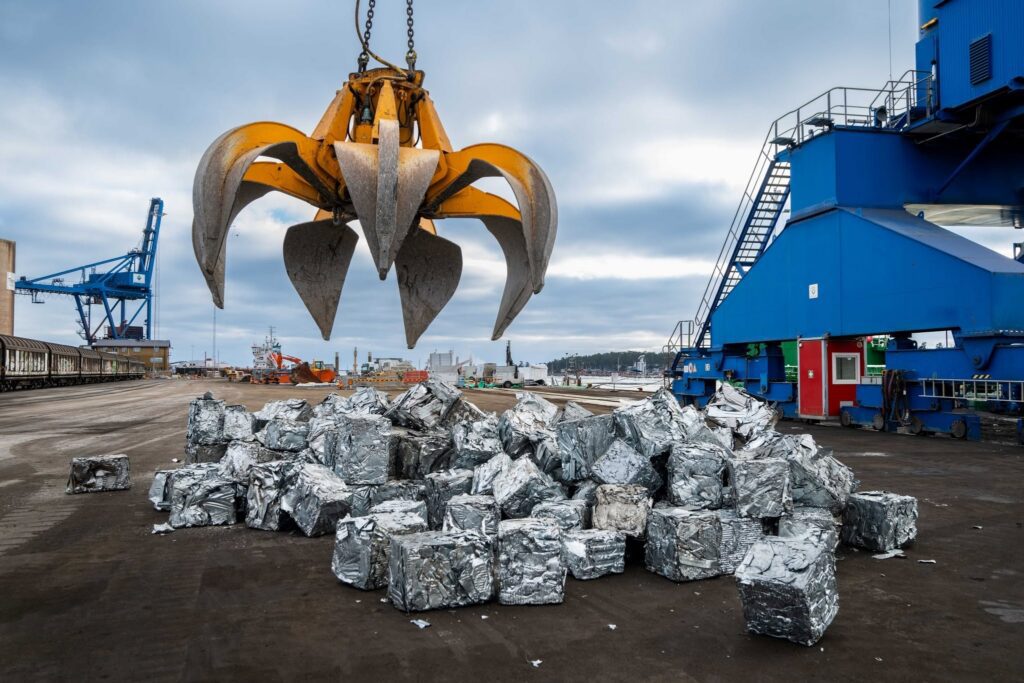
Photo Courtesy SSAB
Collaborations like these also stimulate local economies. SSAB, Arcosa, and MidAmerican explained, “Iowa-based businesses are producing good-paying jobs with great health benefits, enabling employees to have a secure and prosperous life for their families.” SSAB employs 500 Iowans at its Montpelier facility alone.
For a product this advanced, the research behind it is rooted in the same eastern Iowa ground. In 2010, SSAB opened an $11 million, 25,000-square-foot research and development facility next to the Montpelier mill. That lab marked its 15th anniversary in 2025. The work it does has put a small Iowa community at the center of SSAB’s global product development, as it houses “some of the most cutting-edge testing, simulation, and metallographic equipment in the world.”
Attention has followed. In August 2025, Representative Mariannette Miller-Meeks (R-IA-01) toured the Iowa facility to learn about its operations and workforce. The visit underscored what the Montpelier story has come to represent: an American mill out-competing the rest of the world on a premium product made on the banks of the Mississippi. It got there by melting Iowa scrap in an electric furnace powered by Iowa wind, and by discovering that the cleanest steel in the world was also a product its customers wanted to buy. Johan Anderson, who works on global strategy at SSAB, summarized, “Customer demand for decarbonized steel and products with less climate impact is real. It encourages and pushes us as steelmakers to go all the way, virtually eliminating the product’s carbon footprint.”
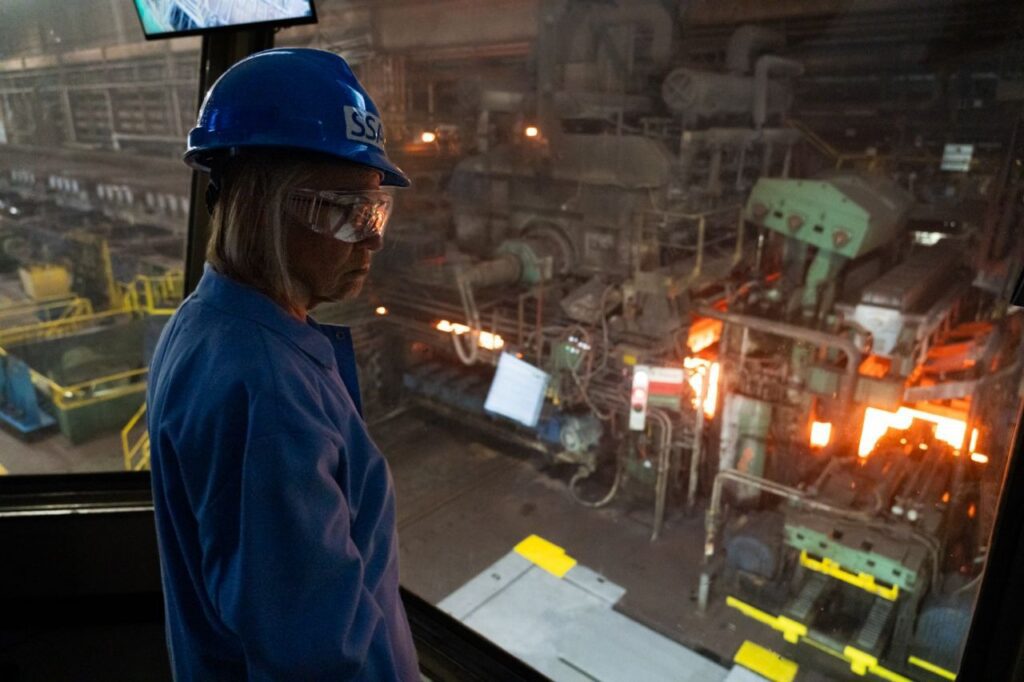
Photo Courtesy SSAB