Golden Valley Electric Association (GVEA) has served customers and employed Alaskans since the 1940s. In fact, the company notes that it is now “one of the largest employers in Interior Alaska,” and that “these jobs secure and enable the backbone of this area’s economy by providing power to our mining and tourism industries.” Since its humble beginnings, the association has also increasingly embraced renewable energy for power generation.
One of the first clean energy projects the association participated in was the Bradley Lake Hydroelectric Project, which provides GVEA 20 megawatts (MW) of power, or 16.9% of the project’s total generation. The utility notes that the power is “both environmentally clean and economical,” delivered to Fairbanks at a cost of 0.89 cents per kilowatt-hour, which “helps to offset higher cost generation during peak load times.” This cost-effective power source also came in below the project’s original cost estimates, at $328 million instead of $371 million. The state of Alaska also provided $175 million in financing for the project.
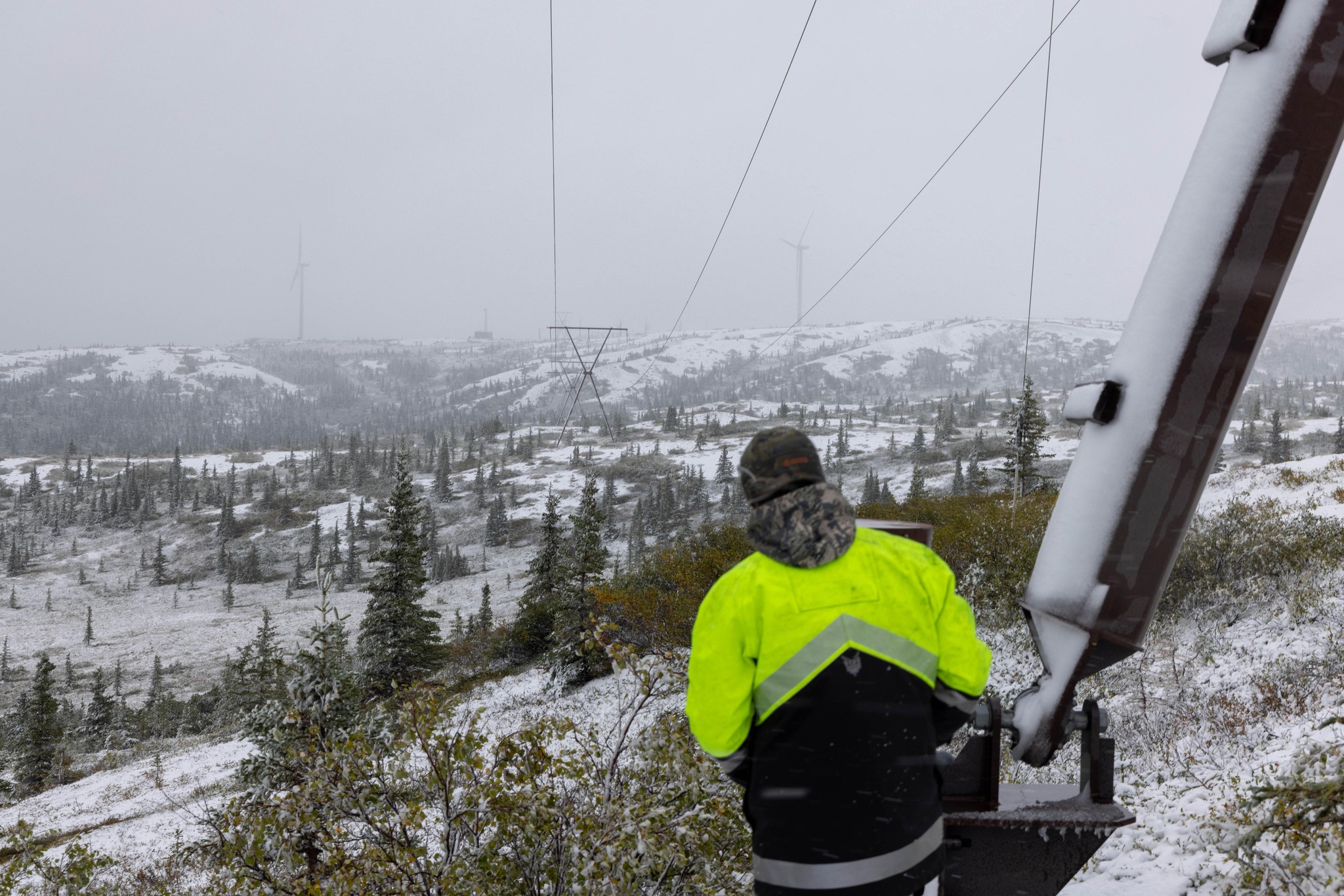
In 2005, GVEA’s Board of Directors adopted a Renewable Energy Pledge, and by the end of 2007, the association had met its goal of reaching 10% of system peak load from renewable sources, primarily through hydroelectric power. It then achieved 20% by 2013, after the Eva Creek Wind Farm came online near Healy. The 25 MW project, which includes 12 turbines, became the largest wind project in the state and the first developed by a Railbelt utility. “Eva Creek Wind also helps reduce the Interior’s dependence on oil for power generation,” the association stated, estimating that it eliminated the need for 1.3 million gallons of diesel fuel in its first quarter of operation alone and that it saved $4 million in annual electricity costs in its first two years. This January, the wind farm generated 3.68 million kilowatt-hours of power for the grid, enough to power 6,434 residences in the Interior. The utility also has an experimental power sales agreement with Alaska Environmental Power (AEP), from whom it buys up to 2 MW of wind power generated near Delta Junction.
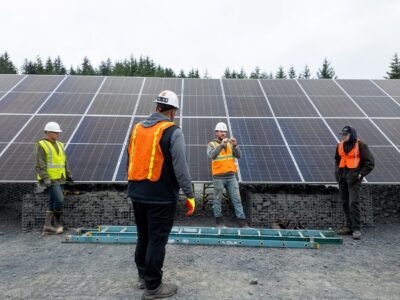
Then, in 2018, GVEA brought its 563-kilowatt (kW) solar farm online in Fairbanks, spanning three acres and with 1,760 total panels, with the help of a $225,000 grant through the U.S. Department of Agriculture’s Rural Energy for America Program (REAP) program. The solar farm generates enough electricity to meet the annual power needs of 71 households.
The association is continuing to expand its efforts. At the beginning of 2019, GVEA’s board adopted a Carbon Reduction Goal to reduce the utility’s carbon emissions by 26% from 2012 levels by 2030. In 2024, the company also approved a strategic plan that included partnerships with additional developers for large-scale wind projects, and at its annual meeting earlier this month, CEO Travis Million said, “We want to make sure that we have the right resources in place in order to ensure the members have reliable power every year going forward.”
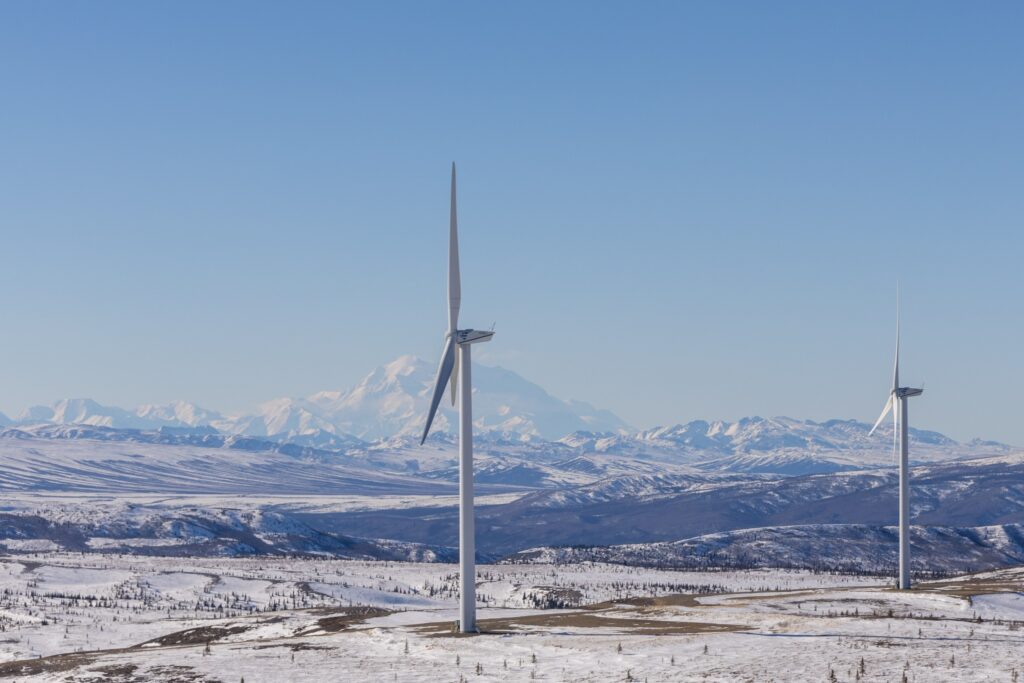
Photo Courtesy Golden Valley Electric Assn.
GVEA has also worked to enhance reliability for its customers and brought a $35 million battery energy storage system (BESS) online in 2003. The BESS can provide 25 MW for 15 minutes, helping maintain power for a limited time during outages. “The fast response of BESS systems is very valuable because it can keep the lights on when conventional generation or power lines are damaged, so other generation has time to ramp up or get started,” Director of Engineering Dan Bishop told Alaska Business. In fact, the system can deliver up to 40 MW of power, making it “one of the most powerful battery energy storage systems in the world in terms of MW output,” and it even earned a spot in the Guinness Book of World Records at the time. The system continues to prove valuable; it has prevented more than 1,000 outages through 2024.
As the system reaches the end of its 30-year useful life, though, GVEA considered a system that uses lithium-ion batteries instead of nickel-cadmium ones, which could integrate additional renewable resources more cost-effectively and efficiently. Although the federal government previously awarded GVEA a $100 million loan through its Powering Affordable Clean Energy (PACE) program, that funding was paused last year. Since then, however, the utility decided that “with funds obligated, GVEA is moving forward with this project,” which is listed as ongoing on the company’s website. In addition to expectations to “strengthen system reliability, reduce fuel costs, and provide critical support for outages, spinning reserve, and dispatching functions,” GVEA expects to hire 40 temporary construction employees and some full-time electricians, and it is committed to more job training and recruitment for Interior Alaska youth and young adults. GVEA approved the budget for the system and associated infrastructure upgrades this January.
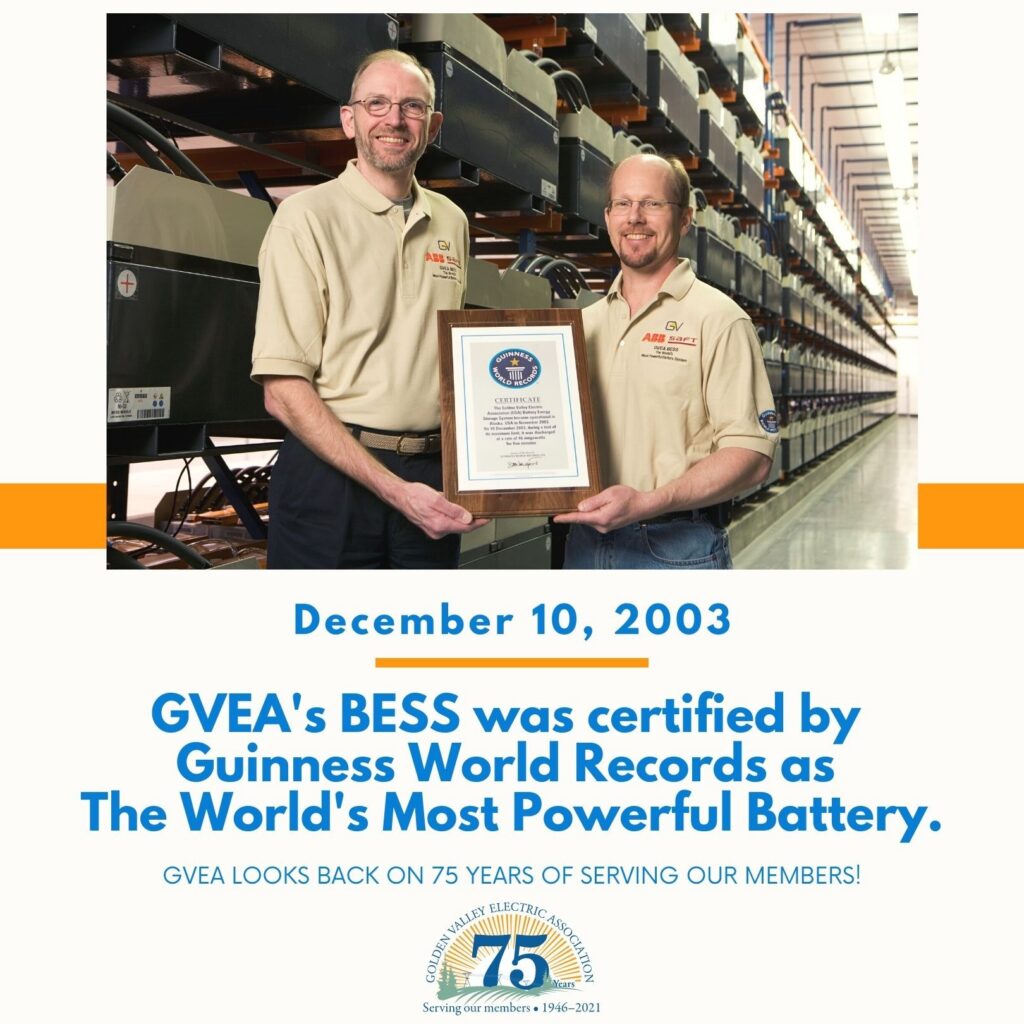
Photo Courtesy Golden Valley Electric Assn.
These expansions of the energy strategy are important for meeting demand while keeping costs low. This winter has been particularly challenging for Alaska, with temperatures in the Interior reaching -40 degrees in December. The bitter cold was combined with reduced hydropower availability from Bradley Lake during cold spells and an insufficient natural gas supply in the Cook Inlet, an issue that has persisted since 2024. This winter, Fairbanks relied on diesel and imported around 250,000 gallons per day.
As the war in Iran drove prices even higher, every $1 increase per gallon of diesel corresponded to $7.5 million more per month for local utilities, according to Gwen Holdmann, founding director and chief scientist at the Alaska Center for Energy and Power (ACEP) at UAF. In March, prices for diesel and naphtha increased by 50%. “The implications are being felt directly in residents’ pocketbooks. Right now, residential customers in GVEA’s service territory pay an effective rate of about 32.9 cents per kilowatt-hour (kWh). That’s roughly 7–10 cents per kWh higher than what residents in Anchorage and the Mat-Su pay,” Holdmann wrote for the Alaska Beacon in April.

Photo Courtesy Golden Valley Electric Assn.
The company recognizes the need to upgrade its infrastructure to ensure reliability and is planning to do so. “If you have a generation unit or multiple generation units go down, or a transmission line goes down, it then becomes very tight in order to meet those demands and those needs,” Million said, and local demand is only expected to increase. Investing in maintenance for existing power sources will help address these issues.
At the same time, the company is trying to address energy costs through the Responsible Energy Decisions Using Cost-effective Efficiencies (REDUCE) program. Eligible members can apply to have energy efficiency projects installed in their homes, including solar array installations, lighting improvements, and weatherization. The program aims to make these types of projects accessible to all members regardless of their income level or credit rating, and ultimately help them reduce their energy consumption and save money.