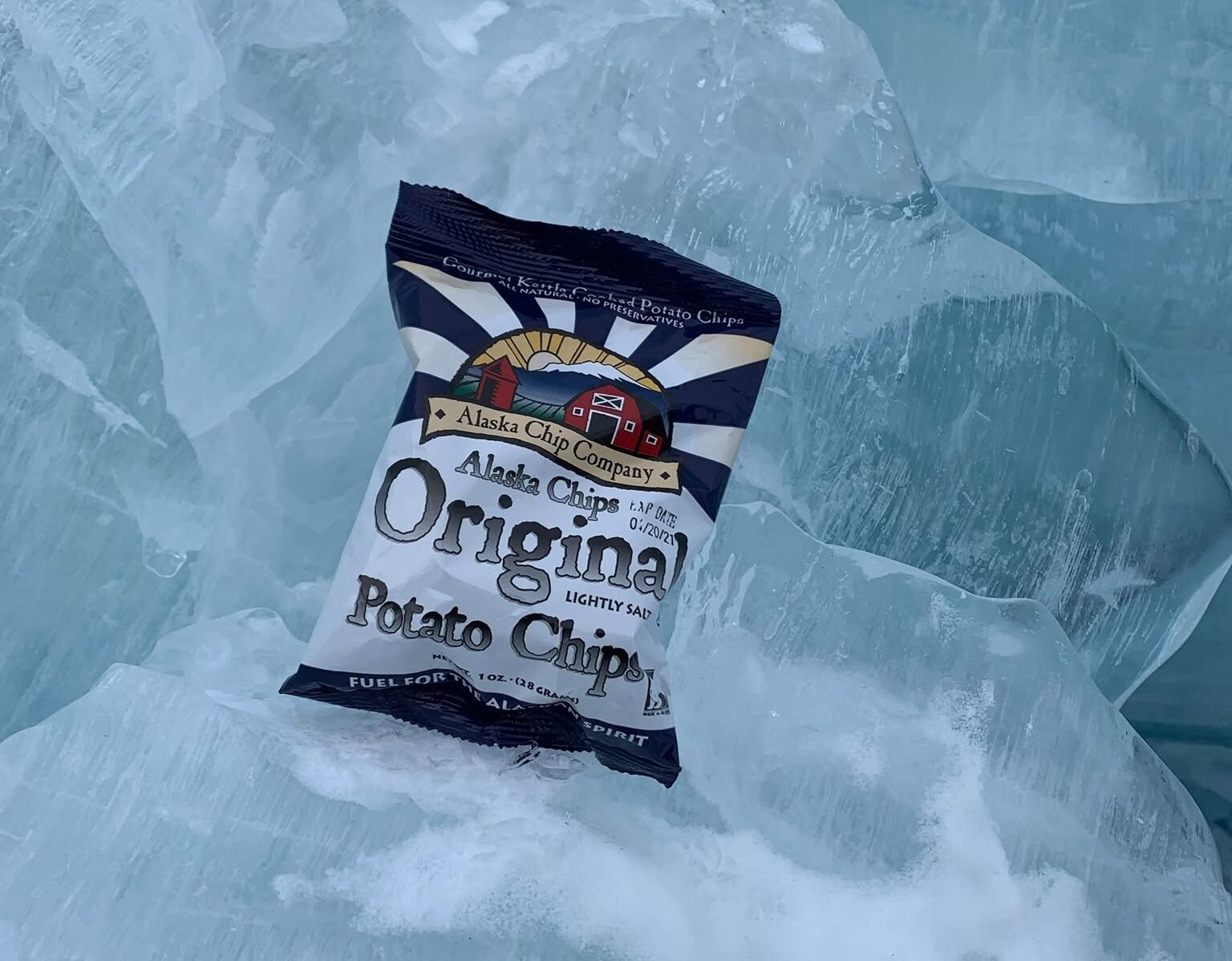
The idea arrived on a beach in Hawaii. In 2002, Ralph and Darcy Carney were sharing a bag of chips on vacation when they decided to make their own back home in Alaska, from potatoes grown there. After returning home, they built a chip-testing lab in their garage and began calling growers, grocers, suppliers, and marketers to learn whether such a supply chain could be built at all. Alaska Chip Company, now run out of a plant in Anchorage, still tells its story with the same challenge from back then: “They said we couldn’t make a chip with Alaska potatoes… but we did.” Production began in July 2003 with two items, the lightly salted Alaska Chip and the barbecue Grizzly Chip.
The hard part was never the frying. It was the potato. “Selecting the right variety is important for achieving a hearty and delicious snack,” the company explains, because sugar content and moisture determine how a slice cooks in hot oil. So Carney looked north to Palmer, in the Matanuska Valley, where “the valley is filled with fertile fields carved out by glaciers that left behind the perfect medium for growing spuds,” the company wrote. Alaska Business reported in 2014 that Ralph approached grower Ben VanderWeele, who handed him half a dozen varieties to test, and that once Carney selected a variety, VanderWeele Farm grew that variety exclusively for the chip company. The magazine described the operation as “one of the few agriculture processing plants located in Alaska.”
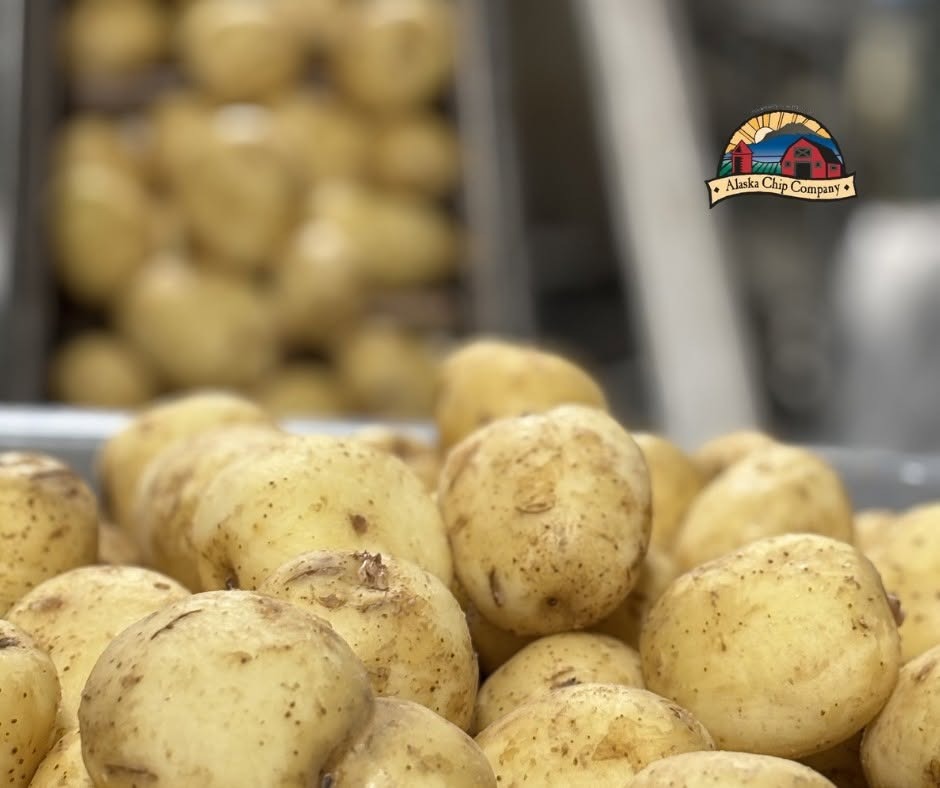
Photo Courtesy Alaska Chip Company
The farm has deep roots in the valley. Ben and Suus VanderWeele immigrated from the Netherlands to Palmer in 1967 and began farming shortly after arriving, and Ben is a tenth-generation farmer. Potato Grower magazine reported in 2015 that the family farmed roughly 200 acres, 100 of them in potatoes, packed everything on-site, sold all of it within Alaska, and had brought all three of their children back to the family farm. Ben VanderWeele told the magazine that the state’s Alaska Grown label carries real weight at the register, calling it “one of the most important things we have going for us.”
That same profile noted something easy to overlook: rather than barging or trucking seed potatoes north, the farm gave over 10 acres to growing its own. The company buys seeds from Cornell University’s Uihlein Farm in Lake Placid, New York, and plants them in their Alaskan greenhouse.
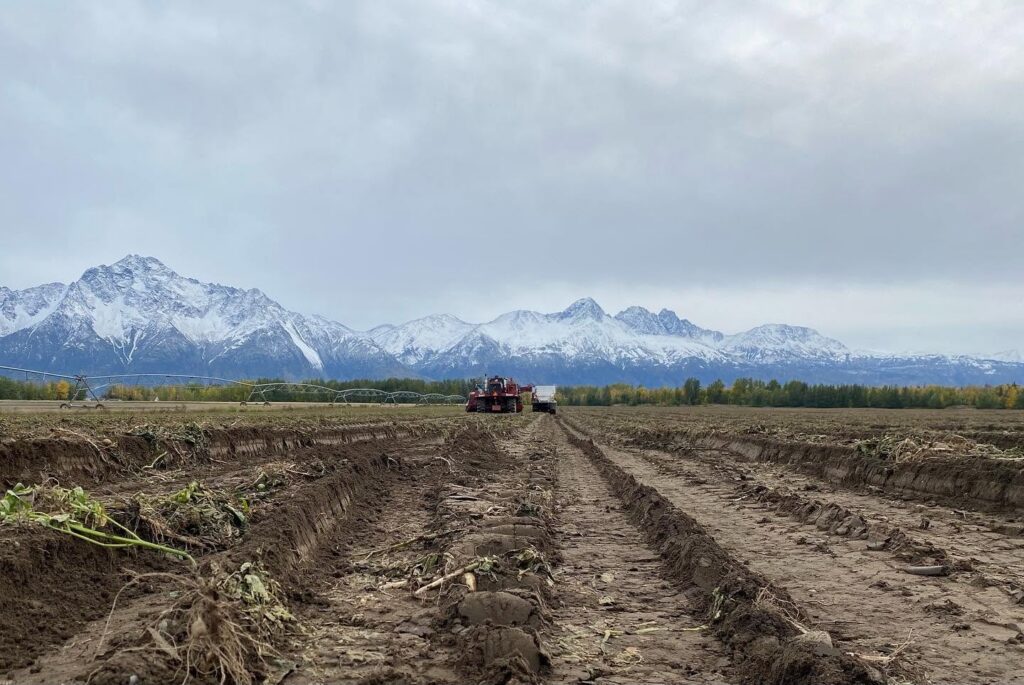
Photo Courtesy VanderWeele Farm
State agriculture programs also help support Alaska potato growers. The Alaska Division of Agriculture runs a seed potato program at its Plant Materials Center in Palmer, established in 1984, that supplies commercial growers with certified, disease-free seed stock, and the center has screened more than 600 varieties for their performance at high latitudes. According to the division, potatoes rank among the most valuable crops on Alaska farms, with a net value exceeding $3 million annually. Certified seed stock is developed in Palmer, where commercial crops are grown, helping support the local agriculture economy.
Inside the plant, the potatoes are cleaned, peeled, and sliced before they reach the oil. The frying oil is filtered and reused rather than discarded. Each batch is cooked in corn or sunflower oil without preservatives, according to the company. Once the seasoning goes on, workers sort out by hand the chips that fall short of standard. The bagger, the largest machine on the floor, seals the rest so they stay fresh. The facility also provides local jobs and regularly hosts Future Farmers of America students for tours of the production process.“Their curiosity and thoughtful questions remind us why community matters—and why the future of local ag is in great hands,” the company said.
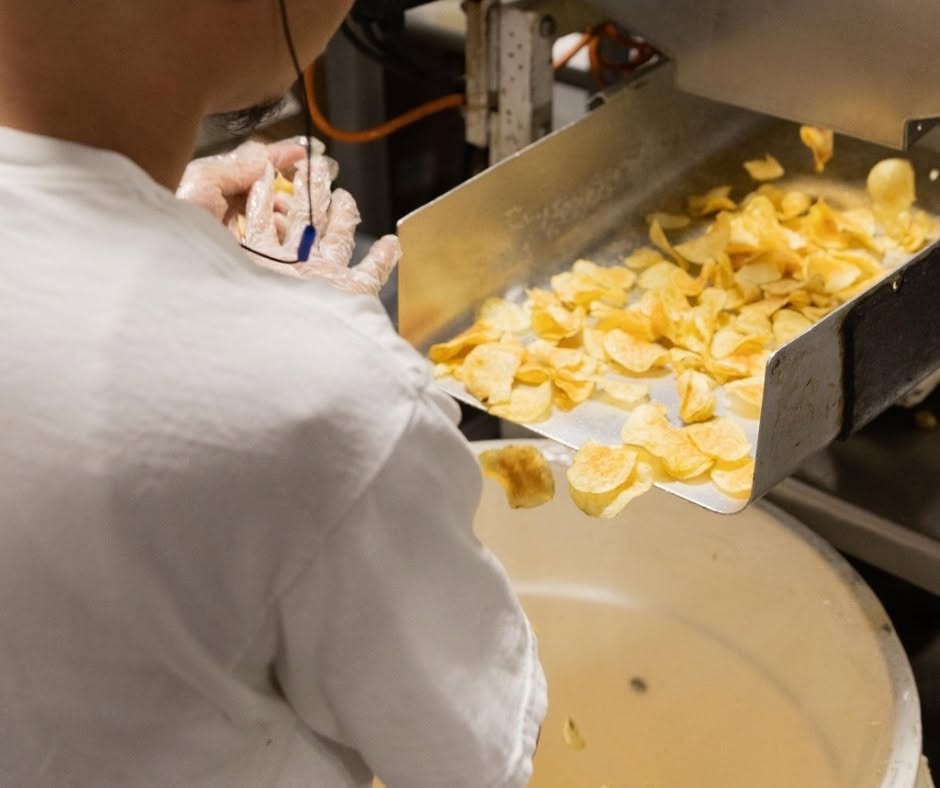
Photo Courtesy Alaska Chip Company
The chips have developed a loyal following in Alaska. Jason Ryan, a lifelong Alaskan and self-proclaimed chip connoisseur, called them the “best potato chips around. I’ve enjoyed every flavor I’ve tried.” The chips are also award-winning products. In October 2021, America’s Test Kitchen writer Kevin Pang went looking for the best regional barbecue chips in the country, limiting the field to labels without national distribution. He tasted 30, cut them to 12, then named six favorites. The Grizzly Barbecue chip from Anchorage was one of them. “Of all the chips sampled, this Anchorage-based brand offered the deepest potato flavor (there are some chip brands with potato flavors that are barely present). Could it have something to do with it being made with Alaska-grown potatoes? I don’t know, but they’re delicious,” Pang described. He rated the result “a complete, all-around grade-A potato chip.”
Carney told Alaska’s News Source that he had not known the contest existed until a call came telling him he had won. He said he was surprised, but that the company had always been dedicated to quality: “We’ve been making our potato chip for 18 years, so I’ve known it’s been good.”
Video Courtesy America’s Test Kitchen
The recognition quickly translated into more business, he said, along with orders from people outside Alaska curious to try a bag. The chips are sold statewide through major grocery chains, warehouse clubs, convenience stores, gas stations and the Anchorage International Airport. The company summarized, “After almost 20 years of production, Alaska Chip Company has become a solid local manufacturer of high-quality gourmet snack products that are sold in nearly every category and store that sells snack foods in Alaska.” The chip line has grown to five flavors, and the company added popcorn in 2008, followed by several specialty caramel corn flavors.
Carney has never forgotten the skepticism he heard at the beginning. “When we started the company, they said we couldn’t make a potato chip from an Alaskan potato,” he told Alaska’s News Source. “And now we win this award that our potato chip is one of the best in the nation or in the world. So I guess they were wrong when they said we couldn’t do it.” The company has expressed its gratitude for all the ongoing support: “We are so thankful for the incredible support we’ve received from our community and the opportunity to bring a taste of Alaska to your homes.”