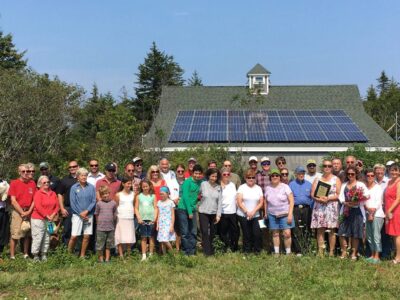
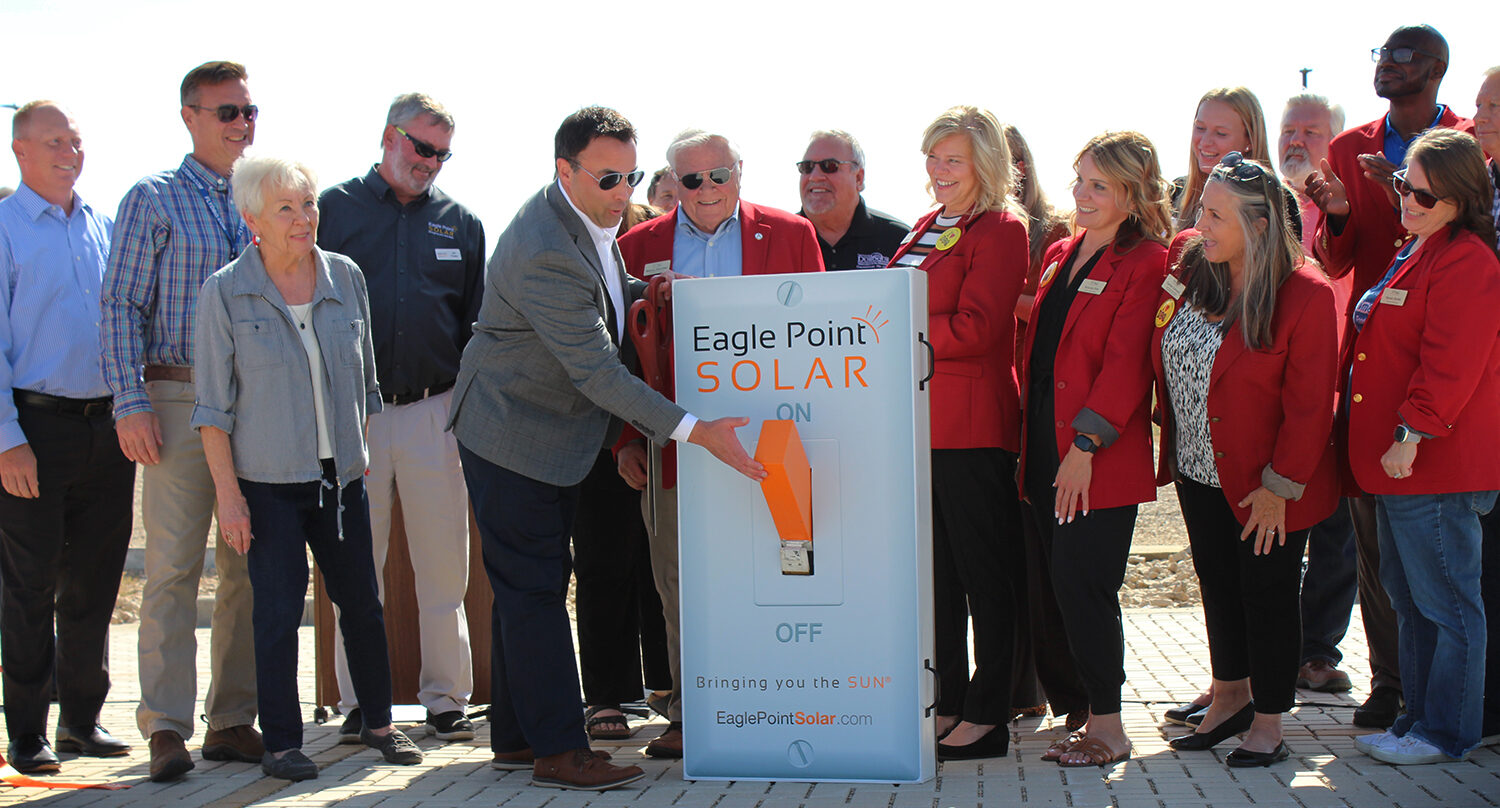
Since 2010, Eagle Point Solar has been providing clean energy solutions, particularly photovoltaic solar, in Iowa, Illinois, and Wisconsin. Starting with just three employees, the company is now the biggest solar installer in the Midwest, with more than 100 employees, and has installed more than 5,000 projects, representing 108 MW of affordable, reliable energy. The company has opened offices across Iowa, expanding from its origins in Dubuque to Cedar Rapids, Des Moines, Ankeny, and Iowa Falls, with some of those offices expanded over the years. Last year, Solar Power World ranked the company in its top 200 solar contractors in the U.S.
The company was also at the forefront of bringing Power Purchase Agreements (PPAs) to Iowa. PPAs enable a third-party developer to install, own, and operate a solar system for a non-taxable customer, often a municipality, academic institution, or nonprofit organization. The latter purchases the project’s energy output for a predetermined period, reducing its electricity costs without navigating complications arising from the project’s tax credit structure. Essentially, such entities are unable to tap federal and state tax incentives for clean energy projects.
After installing its first solar project in 2011, Eagle Point Solar contracted with the City of Dubuque, Iowa, to build a 360 kW project for its Operations Center, consisting of 806 solar panels. A local bank would serve as the investor, collecting the tax credits and paying for the panels, and the city would pay Eagle Point for the electricity. The city council approved the project, both for energy cost savings, cleaner energy supplies, and associated economic development. Aaron DeJong, then the city’s assistant economic development manager, told Canary Media, “This was certainly saving on carbon dioxide emissions by buying green power, and it’s good for the community because it’s creating jobs from a local company.”
However, Alliant Energy objected to the arrangement, saying it would violate state law that guaranteed the utility company exclusivity rights. Dubuque was forced to shift to a revised plan under which Eagle Point leased the panels to the city, making the city the owner, rather than Eagle Point maintaining ownership. As DeJong explained at the time, tax-exempt customers generally prefer PPAs under which they pay per kilowatt-hour of energy received, rather than leases that lock them into fixed rates even during periods of lower energy production, such as a cloudy week or a darker winter month.
Fortunately, in 2014, the Iowa Supreme Court ruled on the case, deciding the PPA did not violate state law and paving the way for an expansion of the agreement vehicle in Iowa. Rhone Resch, then-president and CEO of the Solar Energy Industries Association (SEIA), reacted, “This is an important milestone for solar energy in Iowa. It undoubtedly will help to jumpstart solar installations across the state, creating new jobs, pumping money into the Iowa economy, and reducing pollution. But just as importantly, this is a victory for freedom of choice, affirming the right of Iowans to decide how they want to power their homes and businesses in the future. We commend the court for doing the right thing.”
Since then, Eagle Point has installed solar for other municipal customers, including the City of Woodward last year. The year prior, it completed a 297 kW DC array and energy storage project for the Dubuque Regional Airport. Airport Director Todd Dalsing reflected, “In a fairly short timeframe, this project will provide a significant savings for the airport and the City of Dubuque.” In fact, the airport expected to halve its electricity costs and save about 776,000 gallons of gasoline, which is the equivalent of charging 796,000,000 cell phones or burning 7.4 million pounds of coal. Eagle Point has brought municipal projects to many other Iowan cities, with installations on buildings including City Halls, community centers, fire and police stations, garages, public libraries, sewer plants, and wells, as well as at locations like campgrounds, parks, swimming pools, and even cemeteries.
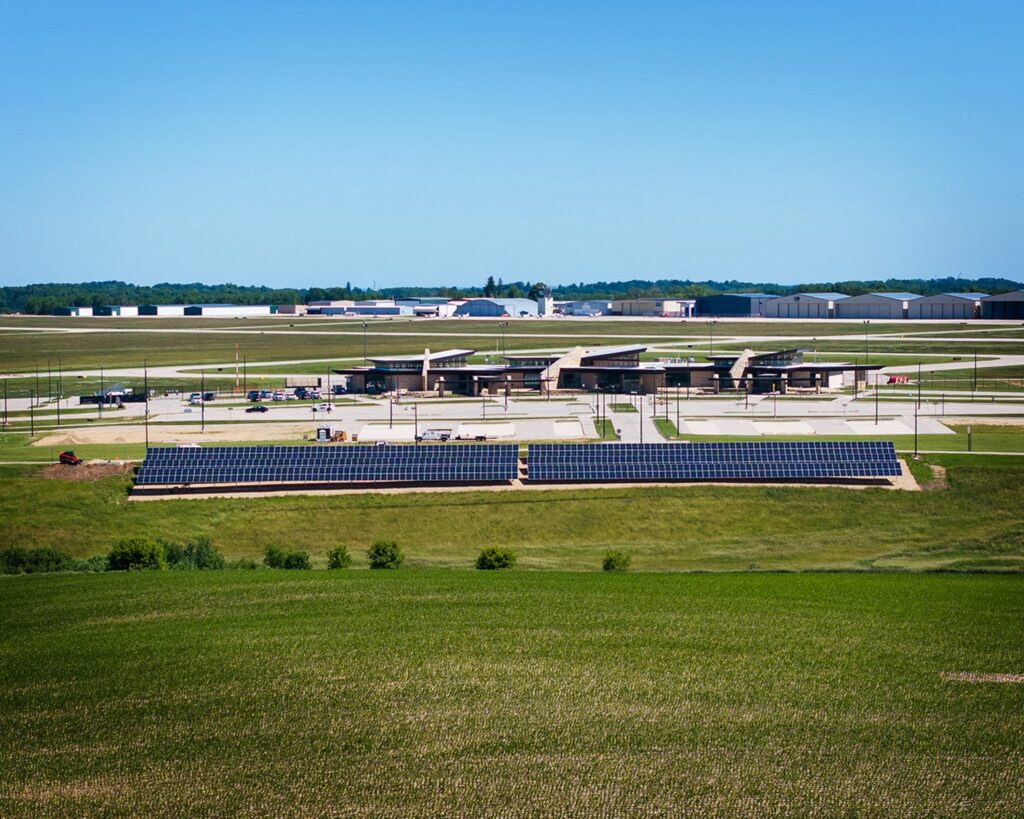
Photo Courtesy Eagle Point Solar
Even schools have collaborated with Eagle Point to bring solar to their campuses. Since installing a 104 kW solar array on its Peosta Child Development Center in 2016, Northeast Iowa Community College has managed to meet 95% of the center’s daily energy needs, while saving over $60,000 on electricity bills to date. Such savings are ever more important, as is the ability to reduce exposure to future energy rate increases, Eagle Point President and CEO Jim Pullen reflected to KCRG, “I think if you’ve looked at your electric bill lately you recognize that rates are increasing. It’s really being driven today by more demand. For the last two decades, the demand for electricity was really pretty level.” Kent Kraus, an account manager, elaborated to KWQC on factors driving higher utility prices in the Midwest, including more data centers, upgrades to grid infrastructure, and volatile natural gas markets.
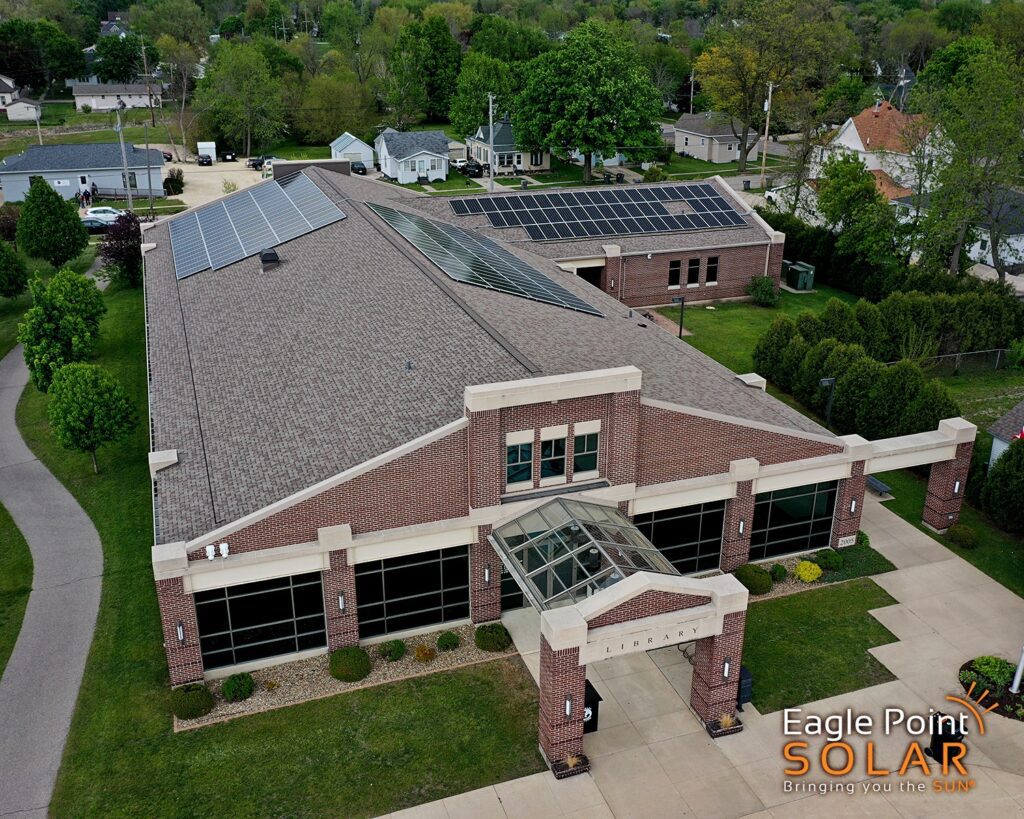
Photo Courtesy Eagle Point Solar
Energy savings can be even more impactful for Eagle Point Solar’s residential, business, and agricultural customers. One customer, Terry Lemon from Cedar Rapids, Iowa, noted, “I’ve been enjoying hands-off electrical savings from the day it was turned on.” Steve Leytem from Monticello, Iowa, detailed just how significant the savings have been: “Prior to solar, my electric bill averaged $300 – $375 per month; it is now $10 – $13 per month, with one or two mid-winter bills during low production months around $100.” Donald Reyerson from Dubuque agreed, “Our electrical bill for July (with two Ac’s running) was 75% less than it was last year in July.” Tanner Wright from Morrison, Iowa, said the local company raised rates by 50% 6 months after their installation, providing some energy independence. “Glad I had a 100% energy use solar system in place!”
The company also promises that “installing a solar array naturally increases the value of your property in the same manner as remodeling or building an addition.” The systems’ reliability is central, with equipment warranties of up to 25 years and 40-year life expectancies. While there is usually very little required maintenance, Eagle Point is happy to help if the need arises. Kristin Pardubsky from Cedar Rapids remembered, “While our purchase and installation two years ago was flawless, it’s the service and help afterward that really shine. We needed some items removed and reinstalled for a siding construction project, and Eagle Point was responsive and easy for the contractor to work with. They were available when we needed them, and the team was professional and friendly.”
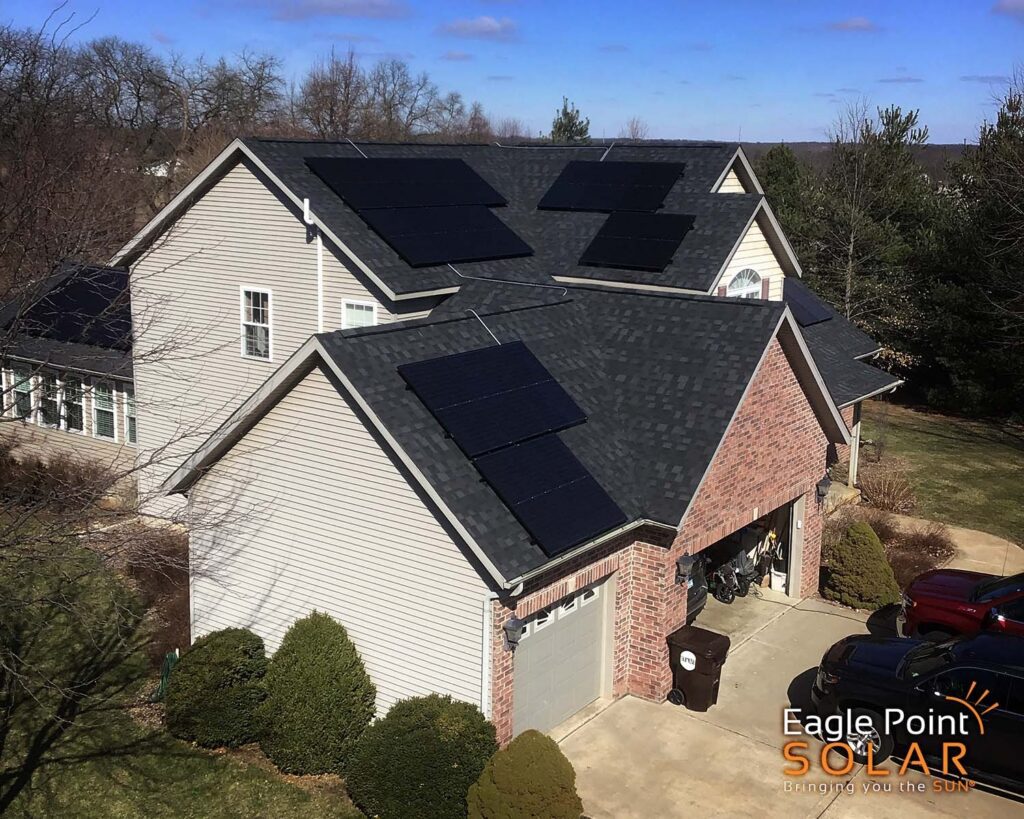
Photo Courtesy Eagle Point Solar
The systems are also designed to be resilient, even in the face of bad weather. In addition to both of his solar units outperforming projections, Rick Meyer from Monticello, Iowa, added, “We also had a hail storm with quarter to golf-ball sized hail, and the panels held up through the storm without a scratch. Three years after the storm, they are still performing well.”
Additionally, Eagle Point Solar offers a Solar Benefit Program for companies and business owners, which they can offer at no cost to their employees. By joining, those employees can then access cash rebates on residential solar designs and installations and start saving on their electric bills. Participating companies, meanwhile, can both foster a sustainable culture internally and designate an external community nonprofit to receive a portion of the program’s solar array sales earnings. As Carl Bobis, an Eagle Solar customer from Dubuque, reflected, “I’m glad we went with a local company that cares about reinvesting in their community.”
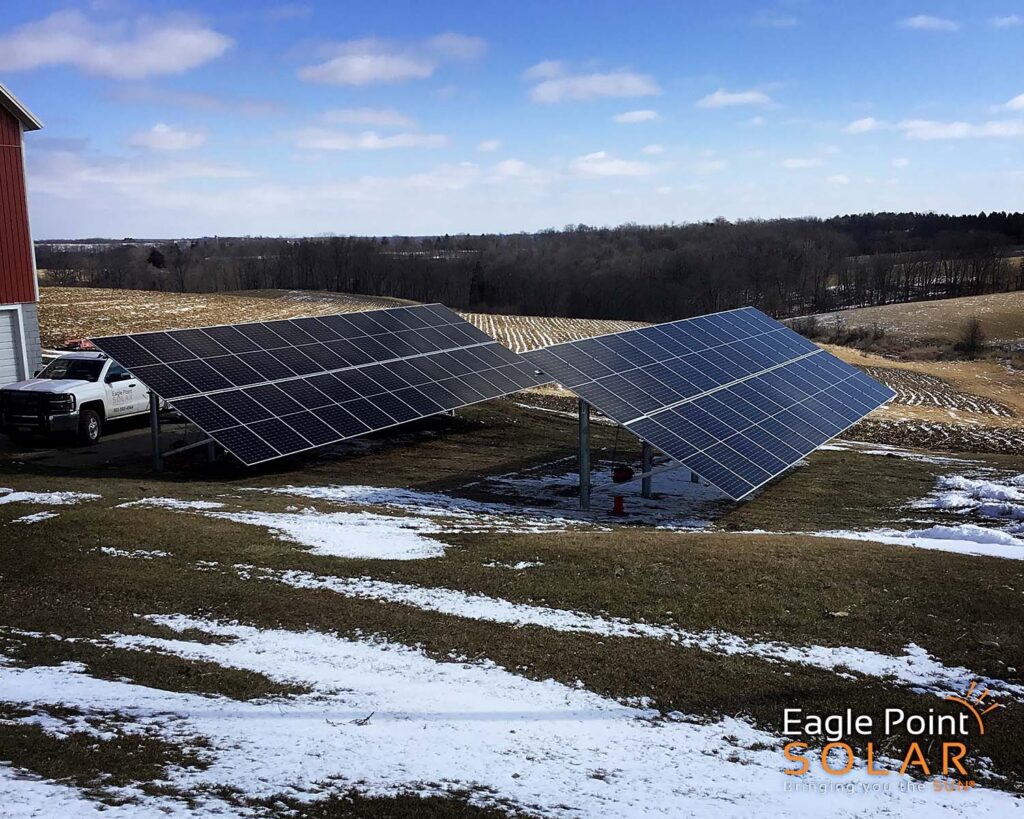
Photo Courtesy Eagle Point Solar