Across rural Iowa, a homeowner whose school district hosts large-scale wind turbines tends to pay noticeably less in property taxes. The gap amounts to roughly $194 less per year than in an otherwise similar district without turbines, according to a February report from the Common Sense Institute. That gap is not an accident of geography. It is the downstream result of a quiet bet that utilities started placing on Iowa’s wind more than 20 years ago, and the turbines now spinning above those fields are still delivering returns.
One such utility is MidAmerican Energy, the Des Moines-based utility owned by Berkshire Hathaway Energy. Since its first wind farm became operational in 2004, MidAmerican has invested roughly $15.8 billion in wind and solar across Iowa, and the company says it does so at no net cost to customers. The payoff shows up on the monthly bill: MidAmerican’s Iowa electric rates run about 42% below the national average, as of last year.
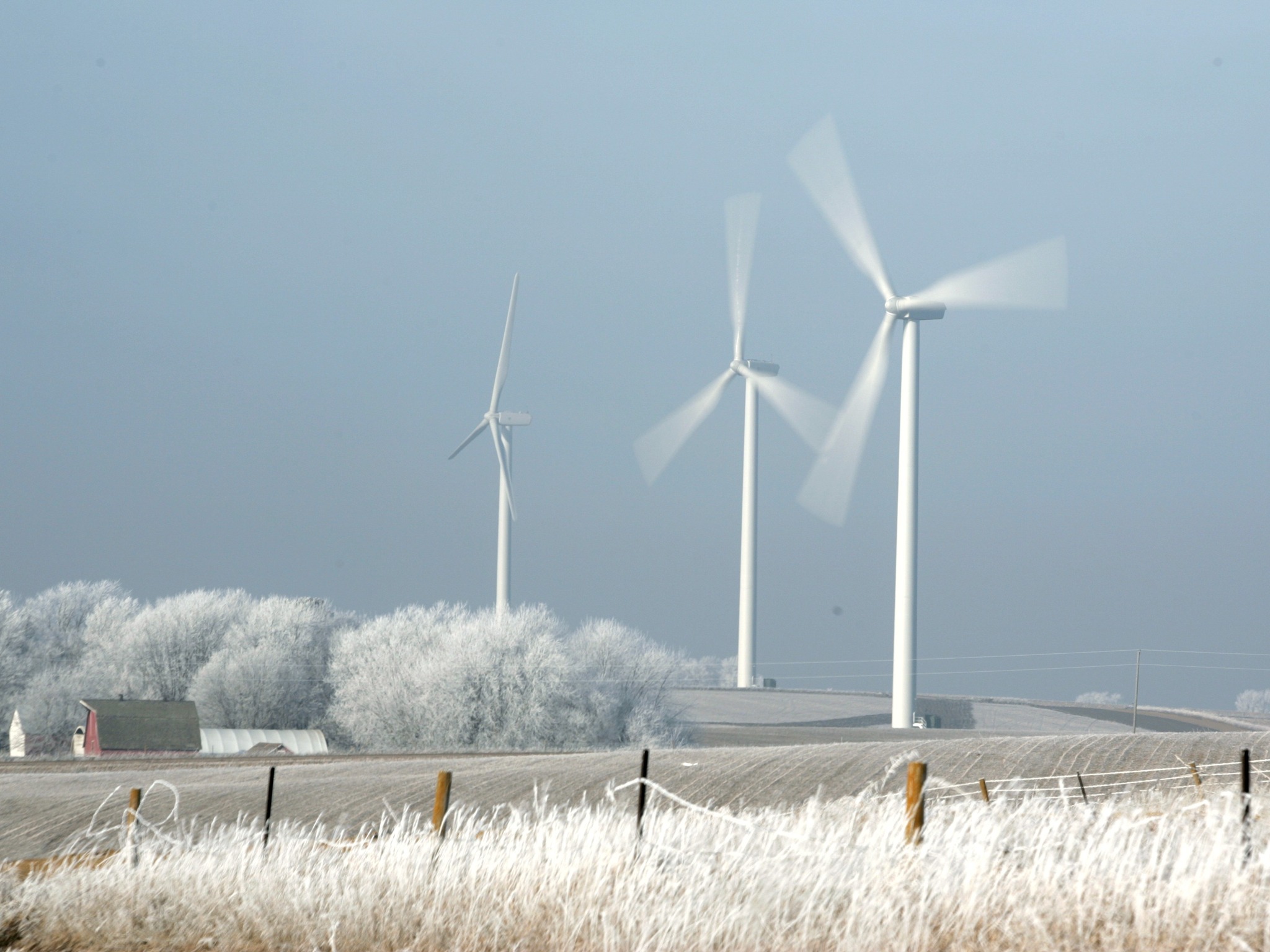
The scale of the build is hard to picture from a single county road. MidAmerican now operates more than 7,800 megawatts of wind capacity from over 3,500 turbines spread across more than 40 wind projects, enough electricity to power more than 2.4 million average households annually. It represents a remarkable amount of homegrown generation spread across Iowa’s agricultural landscape. In fact, MidAmerican says it owns more than 5% of the country’s wind capacity. The company adds that the power is reliable, writing, “Thanks to our investments in optional features that keep turbines operable in extreme weather, as well as diligent preventive maintenance, our turbines are prepared to provide clean, safe and reliable energy – even during brutal Midwest winters!”
For the families who farm that ground, the turbines are a second crop that does not depend on rain. In 2025, MidAmerican paid about $45.7 million in easement and lease payments to landowners, and it now partners with more than 4,000 primary and neighboring landowners in the state. That money flows into rural communities that have spent decades watching young people leave, and it arrives whether the growing season is good or bad.
The county math is just as concrete. MidAmerican paid approximately $60 million in property taxes on its wind turbines in 2025, spread across 35 Iowa counties. Those dollars fund schools, roads, bridges, public health services, and the emergency responders who answer rural 911 calls. The effect reaches even homeowners who never see a turbine on their own land: the Common Sense Institute analysis found that districts without large-scale wind carry property-tax bills about 26% higher than those in districts where the turbines stand.
MidAmerican’s wind buildout is the biggest single piece of a statewide shift. Renewables now account for roughly 62% of Iowa’s electricity generation, compared to 18% in 2010. Wind supplies nearly 59% of the total output.
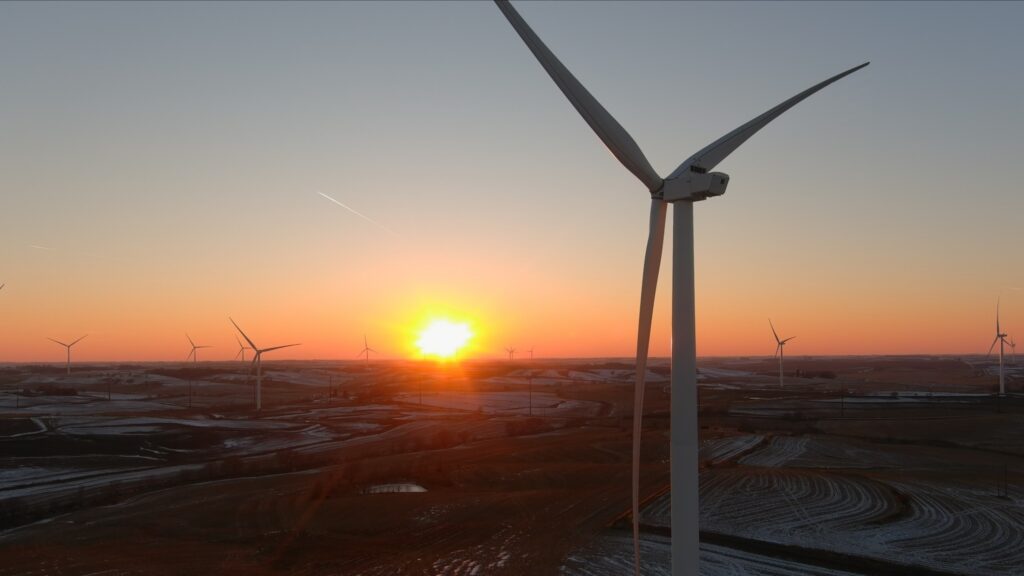
Photo Courtesy MidAmerican Energy
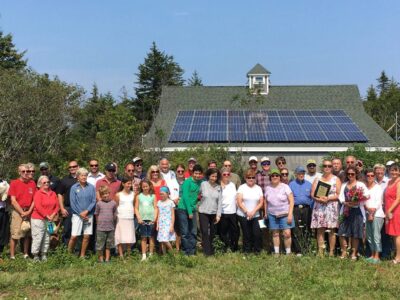
The newest chapter is solar. The company has already deployed 400,000 solar modules, generating 141 megawatts of power, and more is coming soon. In February 2025, MidAmerican proposed an 800-megawatt solar project spread across about six sites in Iowa, a complement to the wind fleet during hours when the wind is calm. Later that year, the Iowa Utilities Commission approved the project, the largest solar approval in state history, which would roughly quintuple MidAmerican’s existing solar capacity. The company expects the solar to power about 144,000 homes and to deliver nearly $25 million in property taxes and about $270 million in landowner lease payments over the life of the project.
The logic behind the solar addition was reliability, not ideology. “We’re focused on ensuring our customers always have reliable power, no matter what’s going on with the weather,” Kelcey Brown, MidAmerican’s president and CEO, said when the company filed its plan. Like wind, solar requires no fuel purchases, which helps keep prices stable; pairing the two resources helps maintain generation when one source produces less power. “It’s crucial for our economy to have energy that’s there when we need it most – regardless of whether it’s hot, cold, windy or cloudy,” Iowa Senate President Amy Sinclair (R-Wayne County) added.
The projects also provide ground cover that lessens runoff and erosion, and the company plants native prairie grasses and flowers to support pollinator habitats.
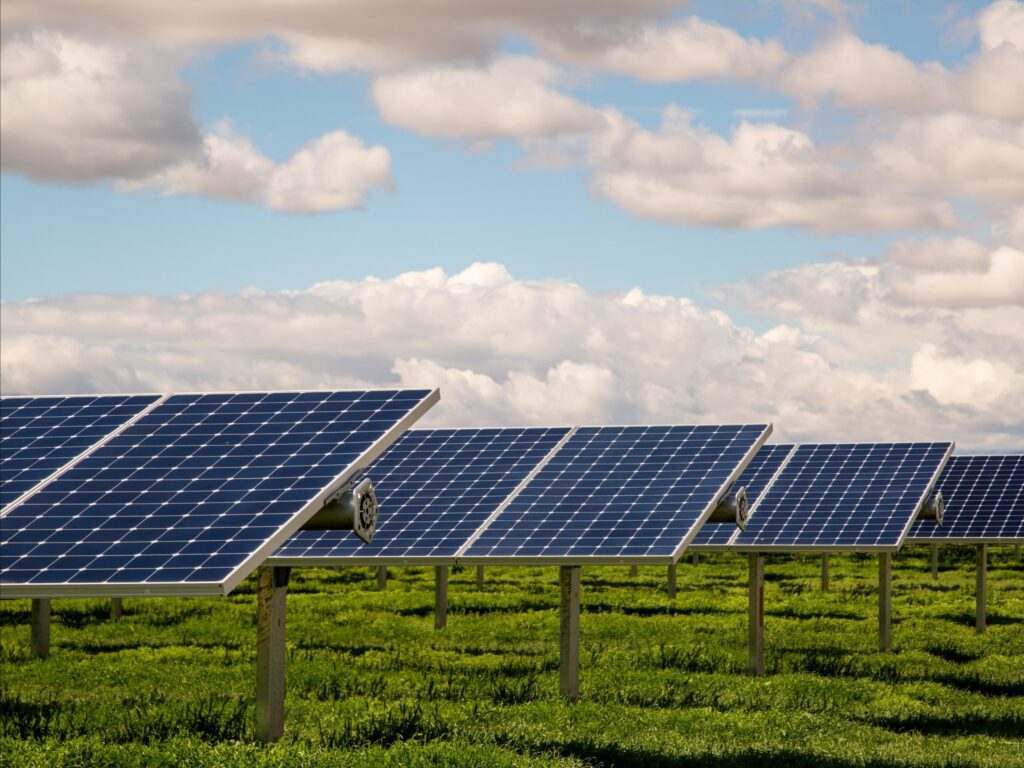
Photo Courtesy MidAmerican Energy
MidAmerican has also worked to protect Iowa wildlife energy as its portfolio expands. Through a Habitat Conservation Plan developed with landowners and the U.S. Fish and Wildlife Service, the company has taken steps to minimize and mitigate the impact of its turbines and other energy systems on bald eagles and certain bat species.
Closer to the customer, MidAmerican’s Neighborhood Power-Up program won a 2026 Inspiring Efficiency Innovation Award from the Midwest Energy Efficiency Alliance. The program offers free energy assessments and incentives for efficient equipment to homeowners, renters, and small businesses in areas with significant numbers of low-income or energy-burdened residents. It was piloted in Rock Island, Illinois, in 2024, moved to Sioux City in 2025, and is planned for Waterloo this year. “This program demonstrates that when we collaborate with our customers and communities, energy efficiency becomes more accessible and helps maintain low energy costs,” Erin Rasmussen, MidAmerican’s director of energy efficiency, said.
MidAmerican helps residential and business customers reduce energy use and save money. It offers a HomeCheck Online assessment to help customers identify major sources of energy consumption and receive personalized tips to reduce their bills. Meanwhile, MidAmerican has helped companies like Conagra Foodservice reduce their annual energy costs at its Council Bluffs facility by more than $170,000.

Photo Courtesy MidAmerican Energy
The milestone most people remember came in 2022, when MidAmerican’s wind fleet generated more than 27,000 gigawatt-hours over the year, slightly more than the total electricity its Iowa customers used, thereby achieving a goal set in 2016: “to generate renewable energy equal to 100% of our Iowa retail customers’ annual usage.” The company verifies the annual volume of carbon-free energy generated for customers through its GreenAdvantage program, then retires the renewable energy certificates and emission-free energy certificates associated with that generation rather than selling them. Last year, MidAmerican delivered 95.9% carbon-free energy to Iowa customers. “It’s incredible to see the enormous amount of electricity that we’re now able to generate using renewable resources like wind and solar,” Mike Fehr, MidAmerican’s senior vice president of renewable generation and compliance, said.
MidAmerican’s investment strategy reflects a consistent conclusion: the lowest-cost and most stable way to serve Iowa customers is through renewable generation. “We’re always looking ahead, planning for decades in the future, to make sure we meet the needs of our customers in the most affordable and sustainable way,” Brown said. Wind technician Jason Gruszeczka elaborated, “I think wind power is doing a lot for these communities. It’s job creation, it’s the livelihood, but it’s also a sustainable energy source that will last. I think that’s the important thing. I believe it’s a benefit to local communities and it’s a benefit to the earth as a whole.”