When Winter Storm Fern coated the trees north of Chattanooga with ice on Sunday, Jan. 25, 2026, EPB switched the Sale Creek neighborhood to battery power twice. Both times, about 100 customers kept their power for roughly six hours. EPB, Chattanooga’s city-owned electric utility, had installed the battery the previous June.
The ice storm was the battery’s second and third real-world tests. The first came on Oct. 8, 2025, when crews had to shut off the line serving Sale Creek to complete repairs. At about 10 a.m., EPB switched nearly 400 Sale Creek customers to battery power for about 30 minutes. Without the battery, the utility would have had to cut power to those customers.
Ryan Keel, EPB’s president of energy and communications, told the utility’s board afterward that the half-hour demonstration was only the beginning. “There will be future uses of this where we’ll keep customers on for hours and hours during a storm or a tree event,” he said. About three months later, the ice storm put him to the test.
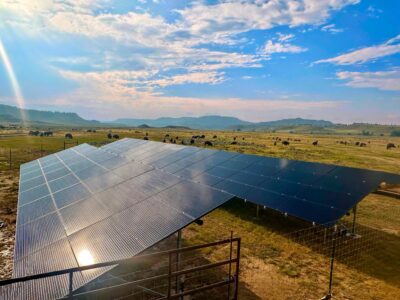
The Sale Creek battery is one of seven facilities EPB has built, most of them at the far edges of its service territory. Across most of its network, EPB can reroute power around a damaged line. During the ice storm, its automated grid did so on its own, restoring power to about 15,000 homes. The edges of the system are different. They are served by a single long line, with no second circuit to reroute power when a tree falls. “If you picture our power system, it’s a finite area with a boundary,” Keel explained to the Fiber Broadband Association. The association reports that challenging geography and the cost of reaching those areas make batteries a simpler solution than building additional lines.
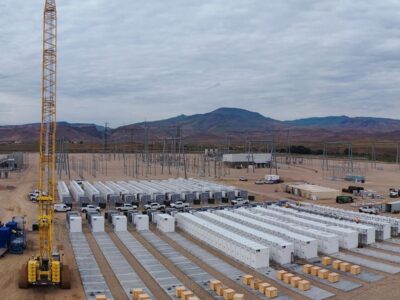
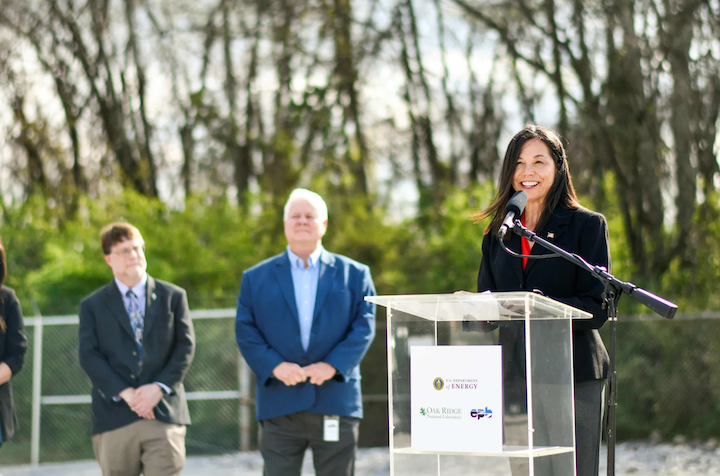
The Sale Creek unit is a Tesla Megapack capable of delivering 2.5 megawatts and storing 10 megawatt-hours, according to a presentation EPB gave to the U.S. Department of Energy (DOE). The same presentation describes the site as the edge of EPB’s territory, with no backup connections and a history of poor reliability.
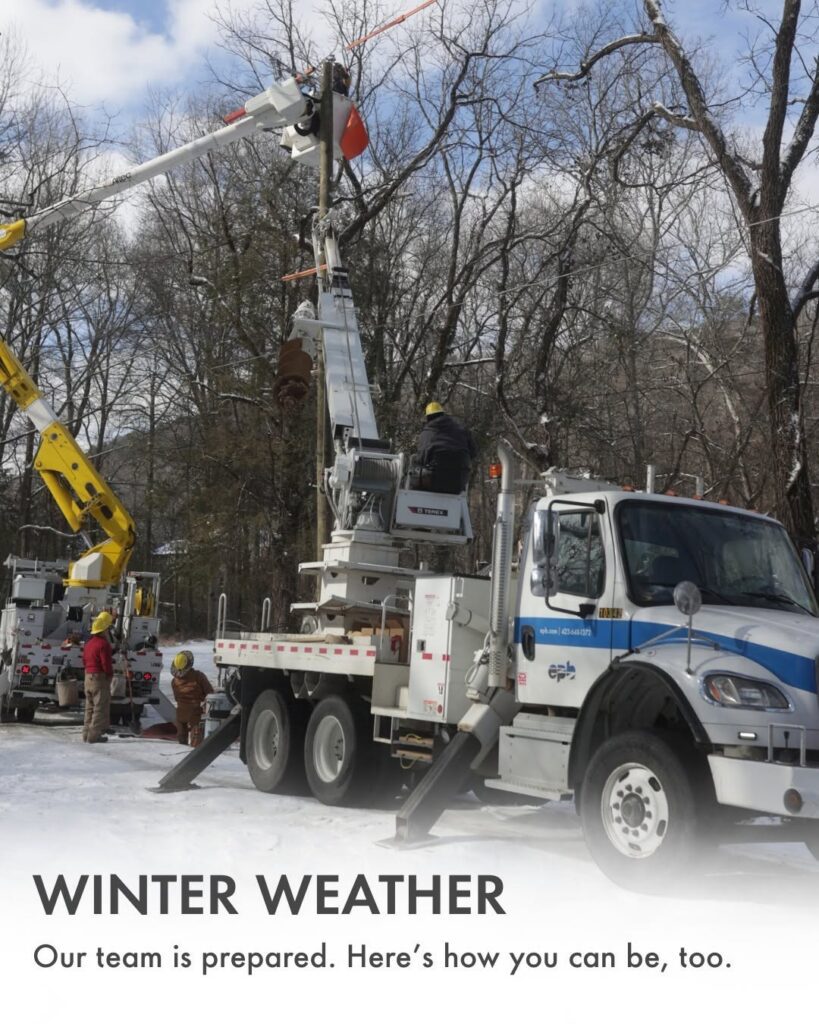
Photo Courtesy EPB
The program traces its origins to December 2022. As Winter Storm Elliott hit just before Christmas, the Tennessee Valley Authority (TVA), which supplies EPB with power, cut service to customers for the first time since its founding in 1933. TVA asked local utilities to reduce demand, forcing EPB to cut power to some of its own customers. “That event shaped our strategy,” Keel told Canary Media. “We want to deploy a large amount [of batteries], because it gives us some local insulation from what may be happening on the TVA system that could impact our customers.”
Jason Read, who leads EPB’s energy operations and field engineering, described the board’s reaction to pv magazine USA: “I don’t want to expose our customers like this again. We will be ready the next time this happens.”
The batteries also save money on ordinary days. TVA bills EPB for the energy it uses, along with a demand charge based on the single busiest hour of demand each month. That charge can account for about one-third of EPB’s total power-purchase costs. As Keel told Utility Dive, “so whenever that hour occurs, we have a financial incentive to reduce that peak with energy storage and other measures.” EPB charges its batteries when demand is low and releases stored power as the monthly peak approaches, lowering the demand TVA uses to calculate the bill.
The savings add up. At its June 2026 budget meeting, EPB’s board heard that the batteries save the utility about $5.6 million annually. EPB expects its battery installations to pay for themselves within five years. “The more we can keep our costs down operationally, the more we can avoid having to do electric rate increases,” J. Ed. Marston, EPB’s vice president for strategic communication, told Canary Media.
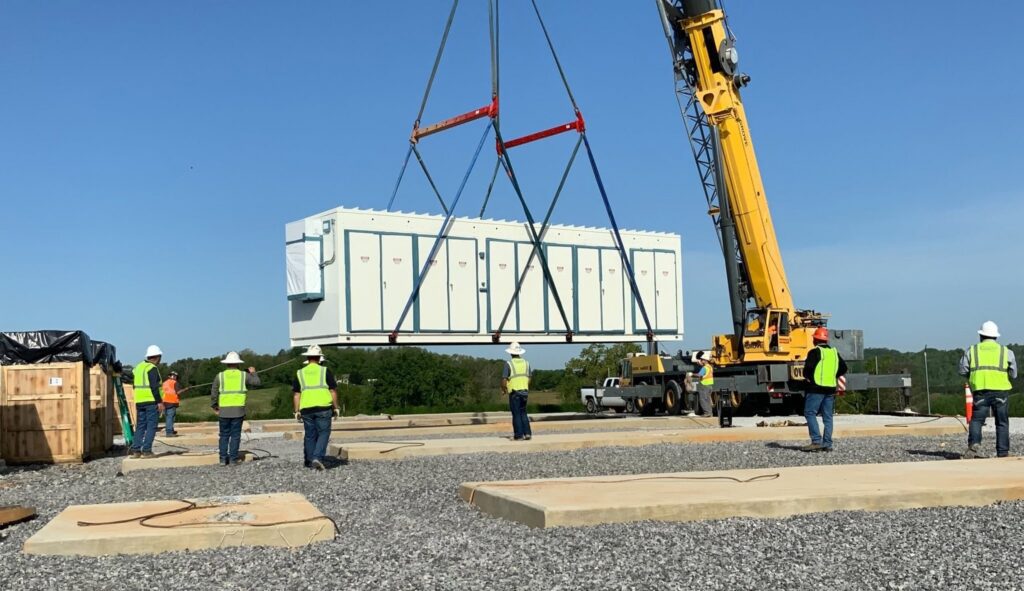
Photo Courtesy Tennessee Valley Authority
In 2024, a Sale Creek resident told the Times Free Press that he worried about getting his family out if the battery site caught fire, since a single road serves his neighborhood. In a statement to WTVC about a proposed site in Georgia, EPB said its systems are “designed by the manufacturer to self-contain if a fire were to occur” and that it had reviewed the installations with local fire departments.
EPB continues to expand its battery fleet. The utility reported having 6 megawatts of battery storage in November 2024. By mid-2026, it had 45 megawatts in service and planned to double that capacity within a year, Keel told Utility Dive. In March, for example, EPB added five battery-based microgrids with combined capacity of 29 megawatts in urban Chattanooga.
Even so, the battery fleet remains small compared with the system it serves. Two days after the ice storm, EPB set an all-time demand record of 1,359 megawatts at 7 a.m. on Jan. 27, 2026. At that peak, 45 megawatts of battery capacity would have covered roughly 3% of demand. That is enough to reduce demand during the most expensive hours, but nowhere near enough to replace TVA’s supply. EPB aims to reach 100 to 150 megawatts within two to three years. TVA itself has committed to building 1.5 gigawatts of grid batteries across its territory by the end of 2029.
Keel’s long-term goal is straightforward. “Our hope is that if TVA calls for a 10% required reduction of our load, we can achieve that completely with the battery systems that we’ve put in, and we don’t need to do any unplanned outages to customers at all,” he told Canary Media. In Sale Creek, a neighborhood at the end of the line, that kind of protection has already arrived.

Photo Courtesy Tennessee Advanced Energy Business Council