On July 14, 2025, the afternoon high in Boise reached 100 degrees. From 4 to 10 p.m. that day, Idaho Power switched off participating farmers’ irrigation pumps, trimming as much as 122.9 megawatts (MW) of system demand, according to the utility’s 2025 demand-side management report.
Evenings like that one are the toughest test of the year for the utility. Its annual peak loads “typically occur in the summer, driven primarily by air conditioner use and agricultural irrigation,” an Idaho Power representative told Energy-Storage.news. The growth of solar power has pushed the riskiest hours later in the day: with substantial solar on the system, staff at the Idaho Public Utilities Commission found in 2022 that the most critical hours now come when “loads are near peak and after the sun goes down.”
To cover those hours, Idaho Power has turned to energy storage systems. The company brought 250 MW of new company-owned battery storage online in June 2026, its fourth straight year of adding batteries, and has added more than 550 MW since 2023, President and CEO Lisa Grow said on the company’s July 30, 2026, earnings call.
While the batteries do not produce electricity themselves, they can store excess power that was generated earlier. “Batteries charge during hours when energy use is low, like summer mornings,” the company says, and then can be used “to meet our customers’ needs when energy use peaks.”
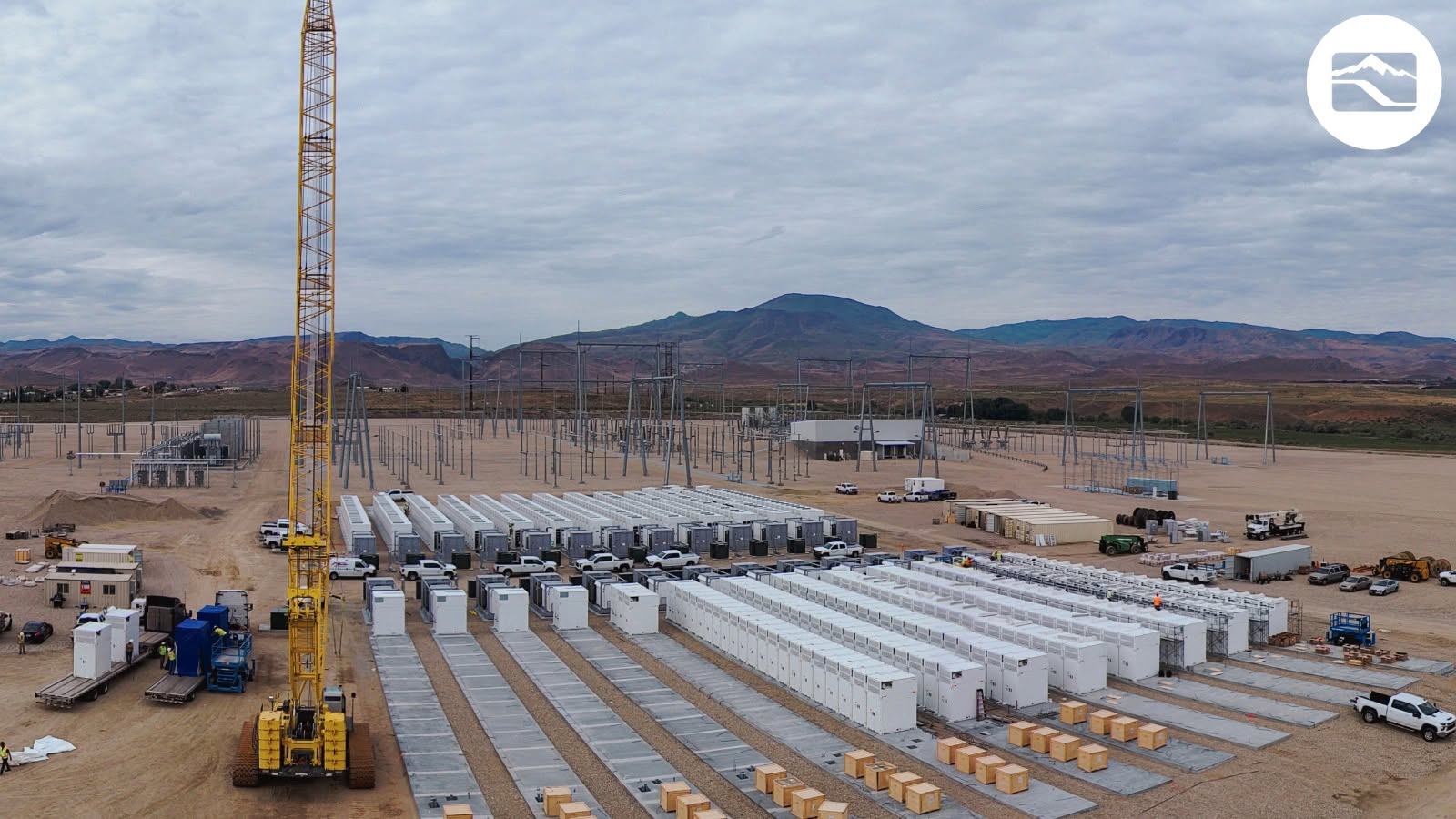
Each system is designed to release its stored power over about four hours, so a 40 MW battery can deliver 160 megawatt-hours (MWh) of energy. A battery generally fills and empties within the same day, Idaho Power wrote in a September 2024 newsletter: “For example, if a 100-megawatt (MW)/400-megawatt-hour (MWh) battery array is fully charged during peak solar hours in the middle of the day, that energy likely will be sent back to the grid the same evening over a 4–6 hour span.” The batteries also smooth out dips in solar output when clouds pass overhead.
Photo Courtesy Idaho Power
In 2023, Idaho Power started construction on an 80 MW battery at its Hemingway substation in Owyhee County and a 40 MW battery beside the Black Mesa solar project in Elmore County. “These battery projects are an example of how we are using new technology to make sure our customers have reliable power while we adapt to the continued growth on our system,” Mitch Colburn, the company’s vice president of planning, engineering and construction, said at the time.
In June 2025, the Happy Valley battery in Nampa entered service. Idaho Power picked the 80 MW system through a competitive request for proposals (RFP) that identified it as a low-cost option. In 2026, the Boise Bench battery and its expansion added 200 MW, and the Hemingway expansion added 50 MW, while another 100 MW of batteries paired with 100 MW of solar at a project called Crimson Orchard is planned for 2027, Idaho Power’s September 2026 planning update shows.
The newest additions have also compared well on cost. When state regulators approved the Hemingway expansion in October 2025, they found that its levelized cost, a measure of lifetime cost, was lower than that of the original 150 MW Boise Bench battery and every battery bid on the shortlists from Idaho Power’s RFP.
Boise Bench alone can power about 70,000 homes for four hours at peak, and each battery has its own fire-suppression system and sensors that detect fire-indicating gases. Idaho Power also worked with the Boise Fire Department and other emergency responders on fire prevention and response planning.
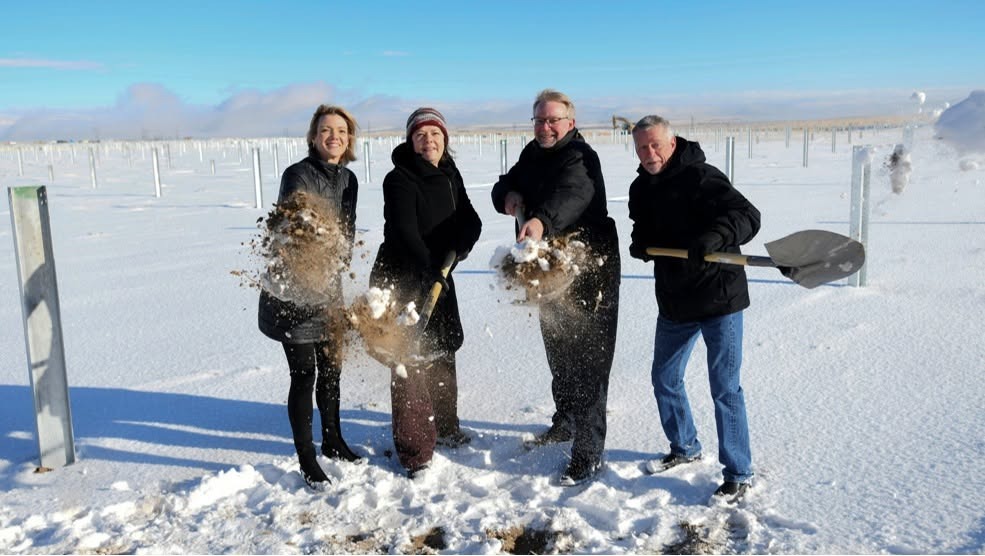
Photo Courtesy Micron Technology
Farmers have long been helping with those summer evenings. In 2004, Idaho Power agreed to pay irrigators for power they did not use during summer peaks. Today, farmers in the Irrigation Peak Rewards program choose a window of 3 to 9 p.m., 3 to 10 p.m., or 3 to 11 p.m., and Idaho Power can switch off their selected pumps for no more than four hours a day, the program summary states. In return, they earn incentive payments.
In 2025, 2,702 pump sites took part, and Idaho Power called on them on seven days between July 8 and Aug. 12, the demand-side management report shows. The program’s potential reduction now stands at about 291 MW, nearly the 318 MW that Langley Gulch, Idaho Power’s largest natural gas plant, can generate. The pump shutoffs fall in the same late-afternoon and evening hours the batteries are built to cover.
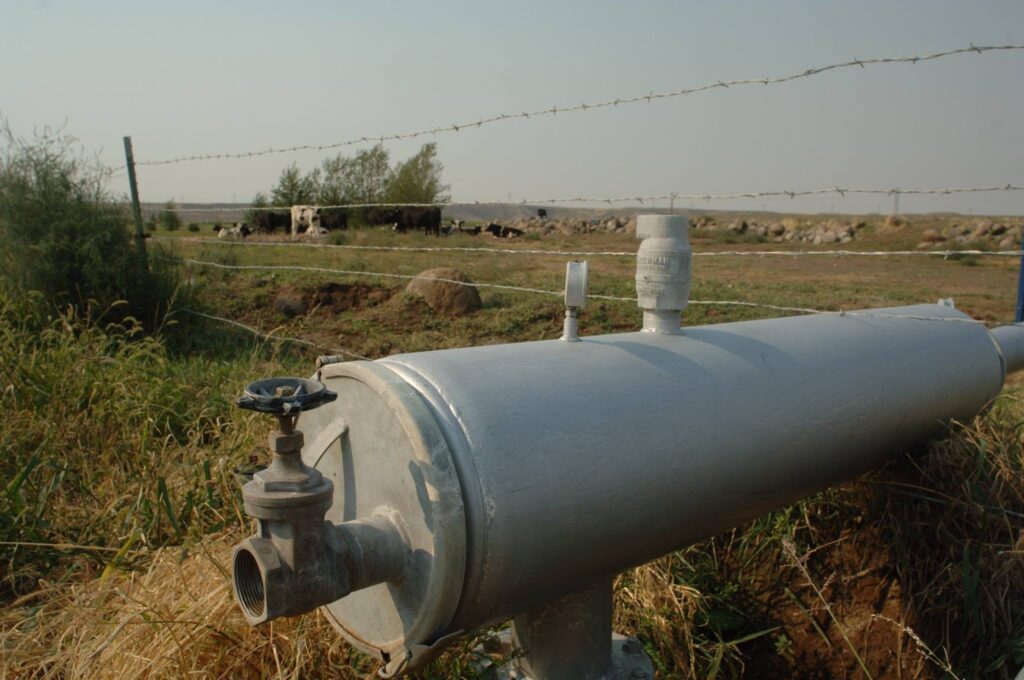
Photo Courtesy Idaho Power
The batteries help with water, too. Hydropower is Idaho Power’s largest energy source, supplying 36.9% of its energy in 2025. Most of its 17 hydroelectric plants are run-of-river projects that store little water, so batteries let the utility hold water in its reservoirs and release it when it does customers the most good, Idaho Power explained.
The need keeps growing. Idaho Power expects electricity demand to grow by about 1,700 MW over the next 20 years, the commission reported in February 2026. The utility served more than 664,000 customers at the end of 2025 and expects about 867,000 by 2045. “Batteries are proving to be critically important for meeting our customers’ needs reliably,” Resource Planning Leader Jared Hansen said in the company’s 2025 Corporate Responsibility Report. Reliability is already strong: customers averaged 1.04 outages each in 2025, the lowest in the company’s nearly 110-year history, which the company credits to grid upgrades and maintenance.
However, Idaho Power acknowledges batteries are not the whole answer. The company’s long-range plan, which state regulators acknowledged in February 2026, adds solar, wind, natural gas and energy efficiency alongside 885 MW of storage, the commission announced. The planned transmission line, Boardman to Hemingway, would bring in electricity from the Pacific Northwest, where demand peaks in winter, to help Idaho through its summer peak, with enough capacity for more than 150,000 homes at that peak.
Photo Courtesy Idaho Power
For now, summer evenings across southern Idaho rely on two partners working side by side. Banks of batteries charged earlier in the day release power as the sun sets, while participating farmers let a few pumps sit idle for a few hours. Together, they help keep homes cool and crops watered until the heat breaks.