On Feb. 16, 2021, the thermometer at Fayetteville’s Drake Field fell to 20 degrees below zero, the coldest temperature ever recorded in the city. From North Dakota to Texas, demand for electricity and natural gas climbed to unprecedented levels. According to RE Magazine, the trade publication of the nation’s electric cooperatives, the regional grid operator, the Southwest Power Pool, began directing utilities to impose rotating blackouts. Southwestern Electric Power Co. noted it was the first emergency of its kind in the grid operator’s 80-year history.
At Ozarks Electric Cooperative, a member-owned utility based in Fayetteville, the operations team immediately went to work. “We reached out to our key accounts to help us with our curtailment effort,” Troy Scarbrough, who led the co-op’s engineering and operations, told RE Magazine. One of those calls went to the city of Fayetteville.
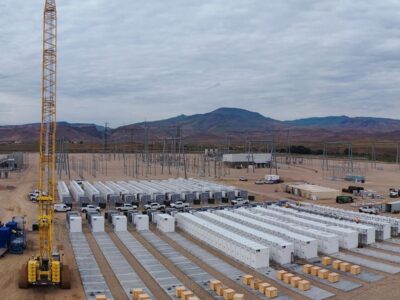
Fayetteville’s two wastewater treatment plants sit on Ozarks Electric lines and are equipped with 10 megawatts of solar panels, 24 megawatt-hours of battery storage, and on-site backup generators. City officials offered the entire capacity to the co-op and lined up a steady diesel supply to keep the generators and sewage systems running. That week, Ozarks Electric reported no supply-related outages. Originally built to cut municipal utility bills, the solar-and-battery system proved its worth during the freeze by keeping the lights on for local families.
Not every household in the region was as fortunate. On Feb. 15, about 5,500 Southwestern Electric Power Co. customers in Northwest Arkansas lost power for an hour or more in controlled outages, most of them in Lowell, Centerton and Prairie Grove.
The co-op’s members did their part, too. On Feb. 15, Ashley Harris, Ozarks Electric’s vice president for marketing and communication, said requests to conserve electricity were reducing demand, and the co-op had outage plans ready but didn’t need them. “What’s been done so far is having significant success in alleviating the power shortages,” she told the Arkansas Democrat-Gazette.
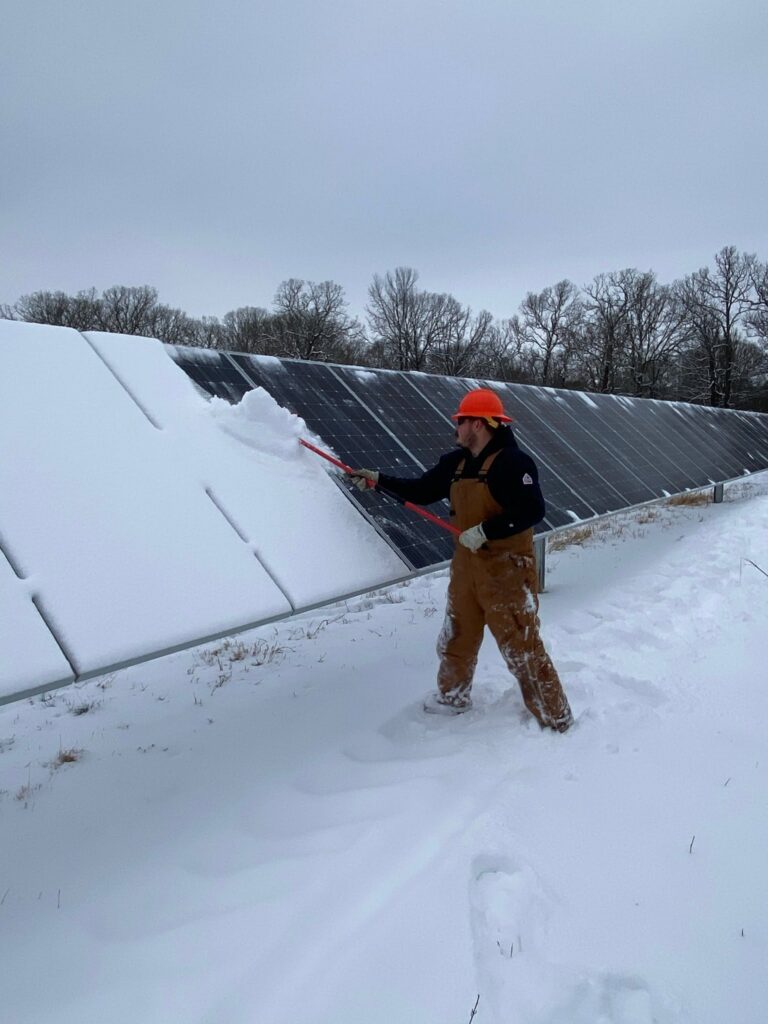
Photo Courtesy Ozarks Electric Cooperative
The infrastructure grew out of a practical, market-driven deal. In November 2018, the Fayetteville City Council approved a 20-year agreement among the city, Ozarks Electric and Today’s Power, a Little Rock-based subsidiary of the state’s electric cooperatives. Today’s Power agreed to build, own, and maintain the state’s largest solar power system on municipal land – making it Arkansas’ sole solar system with utility-scale storage on site. The two wastewater plants were the city’s largest electricity users, accounting for about 67% of its consumption, and the solar was sized to cover all their needs. The city invested $560,818 upfront for site improvements and expected to earn that back in a little more than three years, with projected savings of $182,021 a year, for a total of $6 million over the project’s 20-year life. In late 2021, Harris said the facilities were indeed saving the city about $180,000 a year on electricity costs.
That modest upfront investment gave the city access to a much larger system. The full $23 million project came online in 2019. Today’s Power fronted most of the money, and under the agreement, the city buys the solar power at $0.0033 per kilowatt-hour less than it had been paying Ozarks Electric, the Northwest Arkansas Democrat-Gazette reported when the system went live. The deal also called for Ozarks Electric to pay the city to manage the backup generators at both plants. When the co-op called in February 2021, the plants’ backup generation was ready to help.
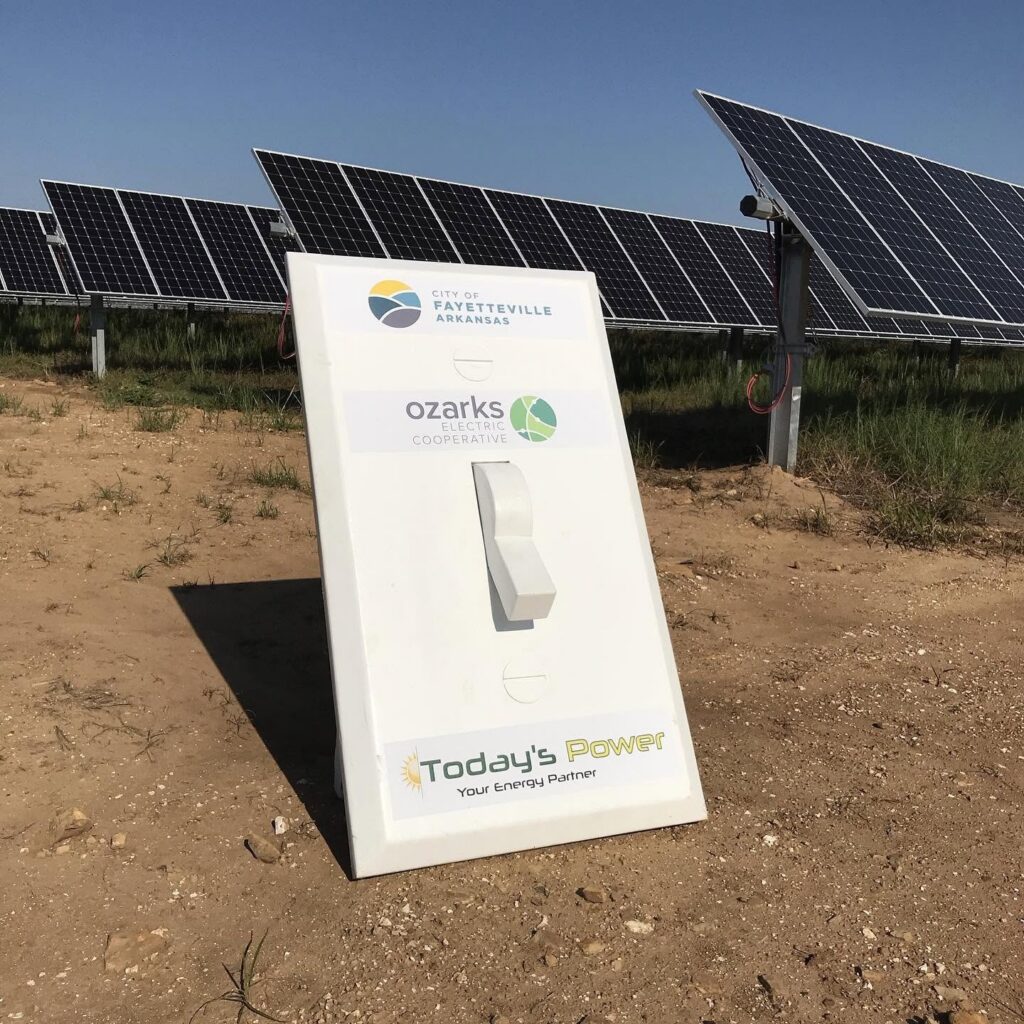
Photo Courtesy City of Fayetteville Arkansas Government
Each plant has a 5-megawatt solar array paired with a battery bank that holds 12 megawatt-hours. The batteries charge from the solar panels during the day and release that power during the evening peak, when grid demand is highest. On an ordinary day, that shift lowers how much expensive wholesale power Ozarks Electric has to buy at peak times, which saves its members money, the co-op reported in a review of the system’s first year. Over roughly that first year, the arrays generated more than 18 million kilowatt-hours, “enough to power an average residential consumer’s home for 1,800 years.”
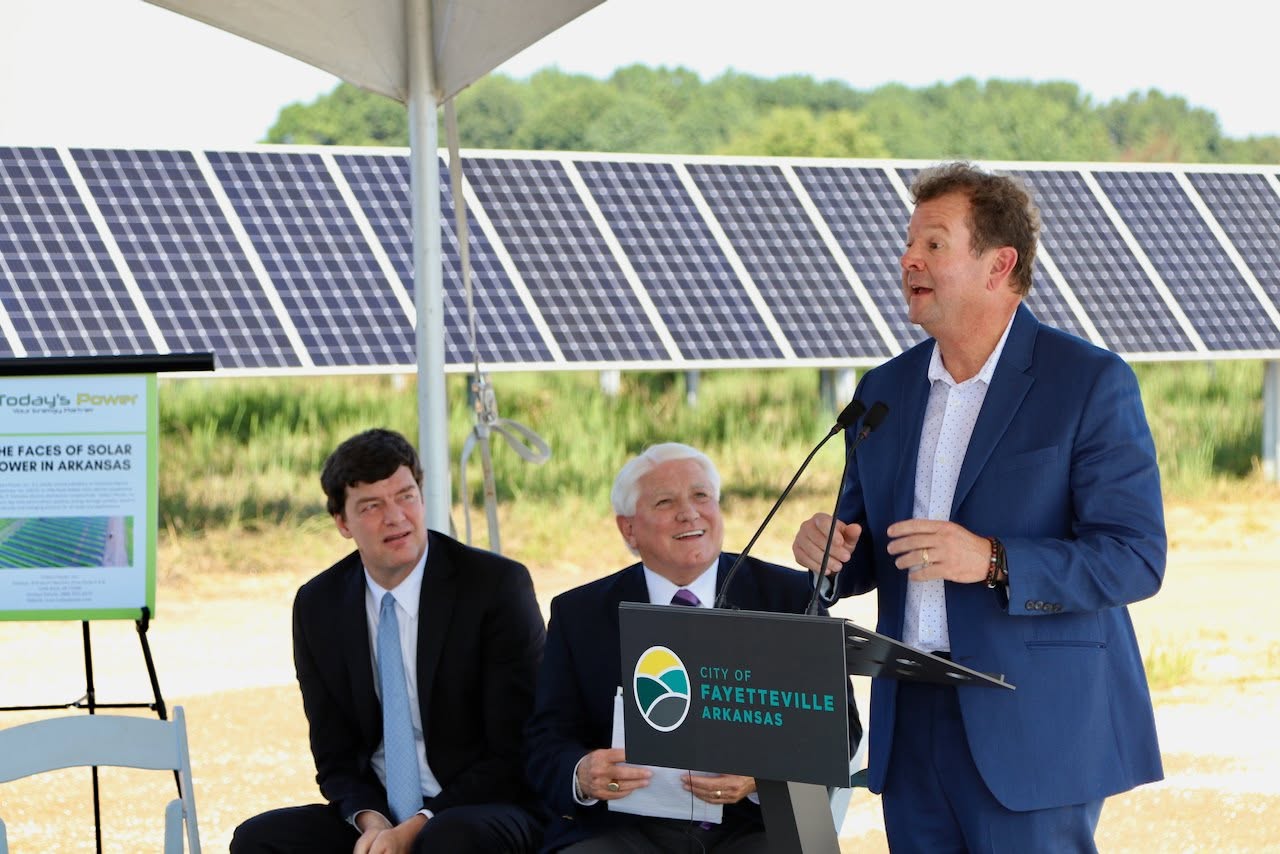
The projects also raised the city’s share of renewable energy from 16% to 72%, eliminating about 13,000 metric tons of carbon emissions. Mayor Lioneld Jordan noted the economic upside: “We want to lead by example for our residents, students, businesses, and utility partners—showing the nation that supporting low-carbon initiatives not only promotes renewable energy and efficiency—it also creates opportunities for good jobs and investments in the Northwest Arkansas region.”
In February 2021, the same batteries became a grid-stabilizing asset. The solar arrays helped meet demand in real time while the co-op charged and discharged the storage at strategic hours. Timing mattered. “Every megawatt of resources or curtailment was critical to avoid the need for rolling blackouts,” Scarbrough told RE Magazine. “Every megawatt-hour generated during certain hours was extremely expensive, so Ozarks reacted to optimize the solar generation and dispatchability of the energy storage.”
Across Arkansas, those extreme storm fuel costs hit co-op bills for months afterward. The wholesale supplier for Arkansas’s electric cooperatives spread the storm’s high fuel costs across nine months of member bills, as Petit Jean Electric Cooperative explained to its members. Ozarks Electric credited a total of 50 megawatts of curtailment that week to the city’s solar and storage combined with on-site generation at its other large accounts.
Scarbrough credited the private-public relationships behind the numbers. “The relationships we’ve built with the city and our C&I members made all the difference here,” he told RE Magazine, referring to the co-op’s commercial and industrial accounts. “Without those close contacts, things might not have gone so well.” Keaghan Economon, formerly Today’s Power vice president of engineering and Implementation, added, “What really sets this project apart is the cooperation. It was the member, the co-op, and Today’s Power all working together to figure out a solution that would work for all partners. That can get tricky, but everybody came together.”
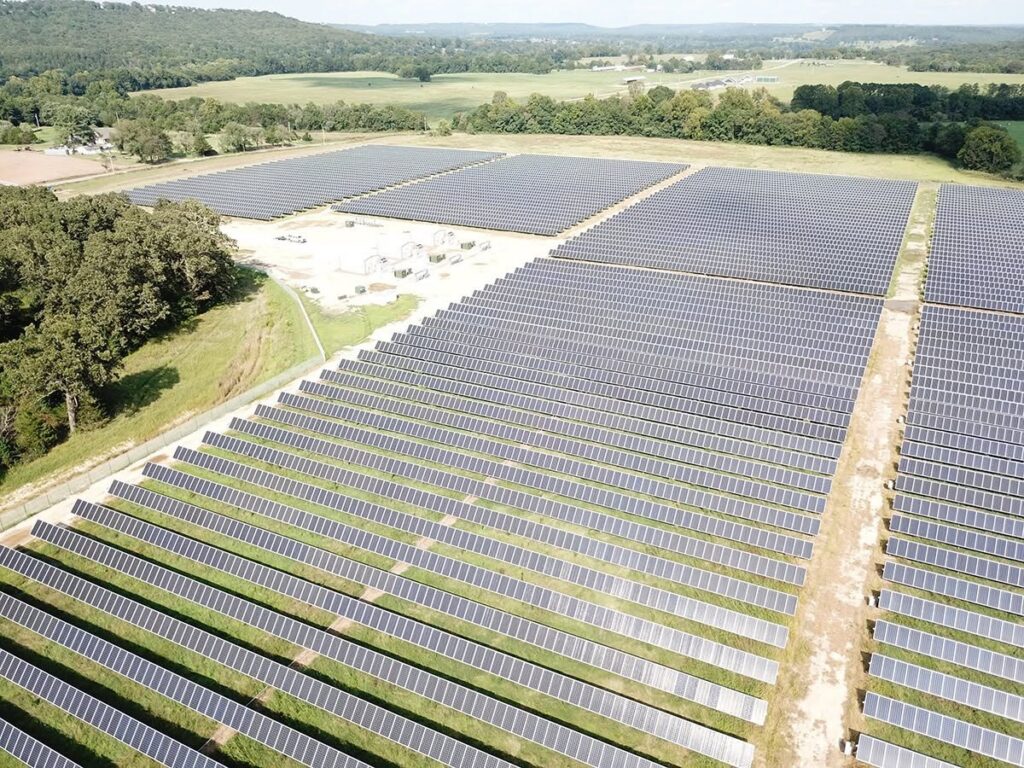
Photo Courtesy City of Fayetteville Arkansas Government
The co-op has since replicated this cost-saving model. In 2021, Ozarks Electric announced a 2.4-megawatt solar plant near a Springdale middle school, paired with 7 megawatts of battery storage the co-op leases from Today’s Power. It is expected to save members about $2.3 million over 25 years and offset about 95% of the energy the schools use. Ozarks Electric now serves more than 97,000 meters in northwest Arkansas and northeast Oklahoma, and in August 2026, it announced plans to develop its own independent power-supply strategy.
Fayetteville kept building, too. In April 2026, the city switched on a new solar array that brought city buildings to about 93% clean electricity, up from 16% in 2018.
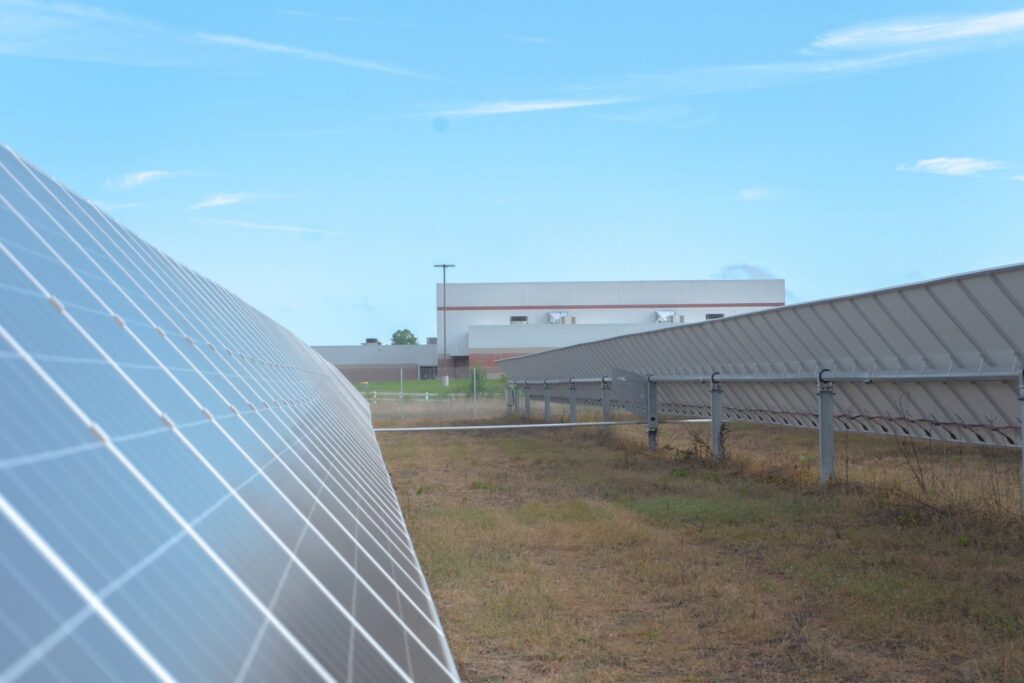
Photo Courtesy Ozarks Electric Cooperative
For Peter Nierengarten, Fayetteville’s environmental director and energy manager, the deep freeze showed what two sewage plants could do for nearby residents. “We were glad to do what we could to help area residents keep their lights and heat working,” he told RE Magazine.