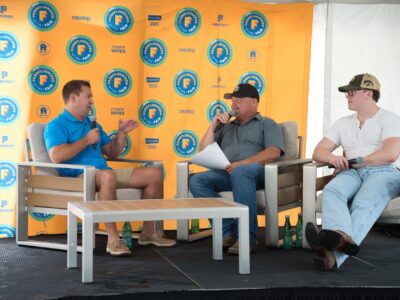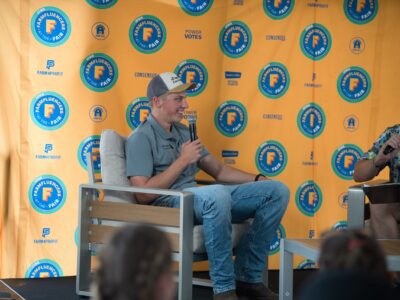
In late August, with eastern Iowa pushing 98 degrees, Matt Kroul walked into four-foot pumpkin vines to pick the first of the season. He described the job on Barn Talk at Consensus Digital Media’s Iowa State Fair event earlier this month without pretending to enjoy it. Grocery stores want their fall displays up by Labor Day, so somebody has to be out there in the heat.
Kroul Farms sits south of Mount Vernon, on rolling ground beside the Cedar River. “We’re located on a pretty major highway between Iowa City and Cedar Rapids, about 20 minutes from each, so we have a good flow and get support from the community of everything that we do,” Kroul said. At the Iowa State Fair, Kroul put his average Corn Suitability Rating at around 50, maybe 62 at best. Iowa State University Extension and Outreach scales the index from 100 for the most productive Iowa soils to 5 for the least. “Half of my row crop ground could flood,” he told Barn Talk.
So the family stopped trying to make the land into something it is not. Iowa Hawkeyes Athletics reported in 2019 that Kroul’s parents, John and Kaylene, looked for more profitable uses of the land when the farm crisis peaked in the mid-1980s. “We jumped into pumpkins, sweet corn, tomatoes,” Kroul said at the time. “We diversified in a way and didn’t beat our head against the door with corn and soybeans. They are still a valuable part of what we do, but we use these other options to maximize our acres.”
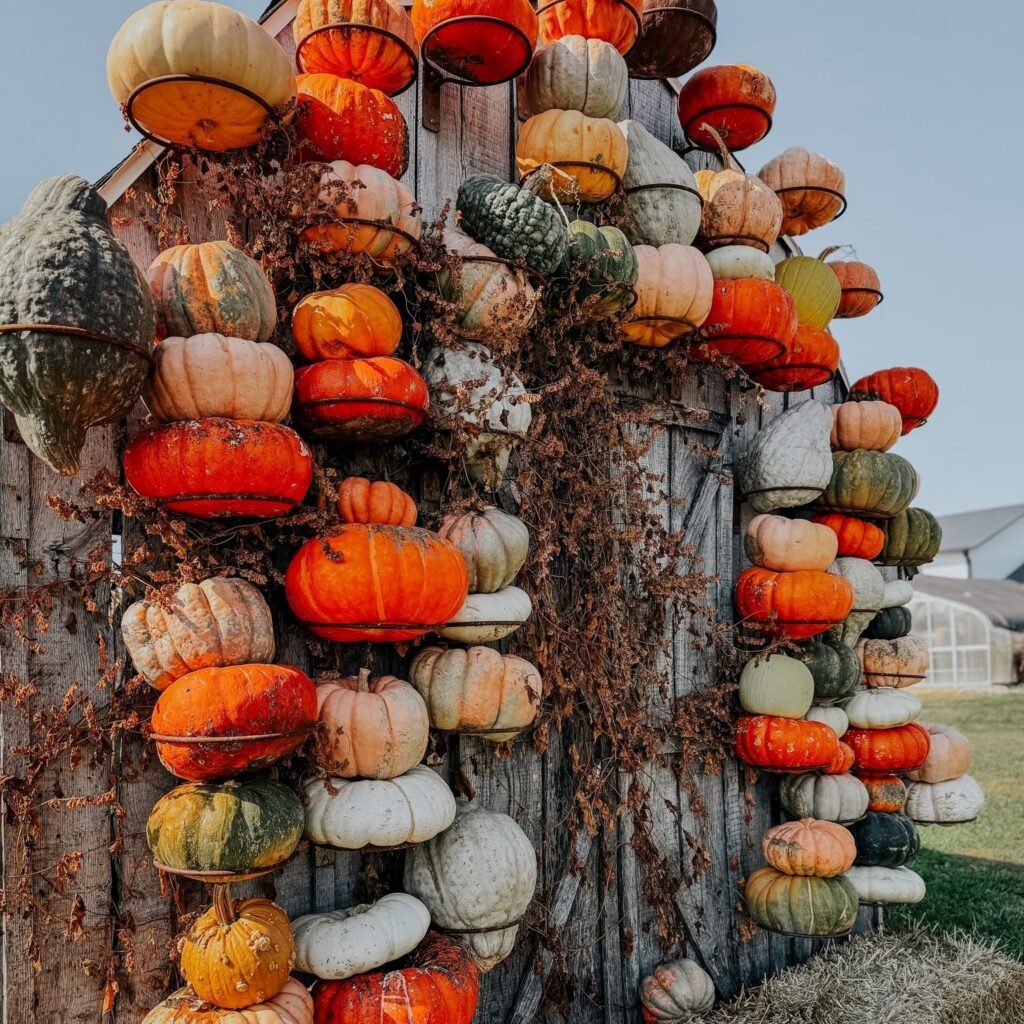
Photo Courtesy Kroul Farms
Kroul reached the business the long way around. He started 50 consecutive games on the defensive line at the University of Iowa, a school record. He signed with the New York Jets in 2009 as an undrafted free agent and spent three seasons and four training camps there, moving from practice squad to the active roster and back four times. “In 2012, I think, they cut me for the sixth or seventh time in three or four years, but that’s how it works,” he told the Corridor Business Journal about how he found his way back to Iowa.
What he came home to now spans about 1,250 acres: 450 acres owned by his parents, John and Kaylene, 300 by Matt and his wife Nicole, and 500 rented. The operation is remarkably varied: timberland supplies firewood, pasture supports 150 beef cows, 45 acres are reserved for pumpkins, 15 for sweet corn, and five for garden vegetables. The farm also has five greenhouses, a farm store, and a Community Supported Agriculture (CSA) program that is in its 14th year, delivering 16 weeks of produce to doorsteps within about 20 miles.
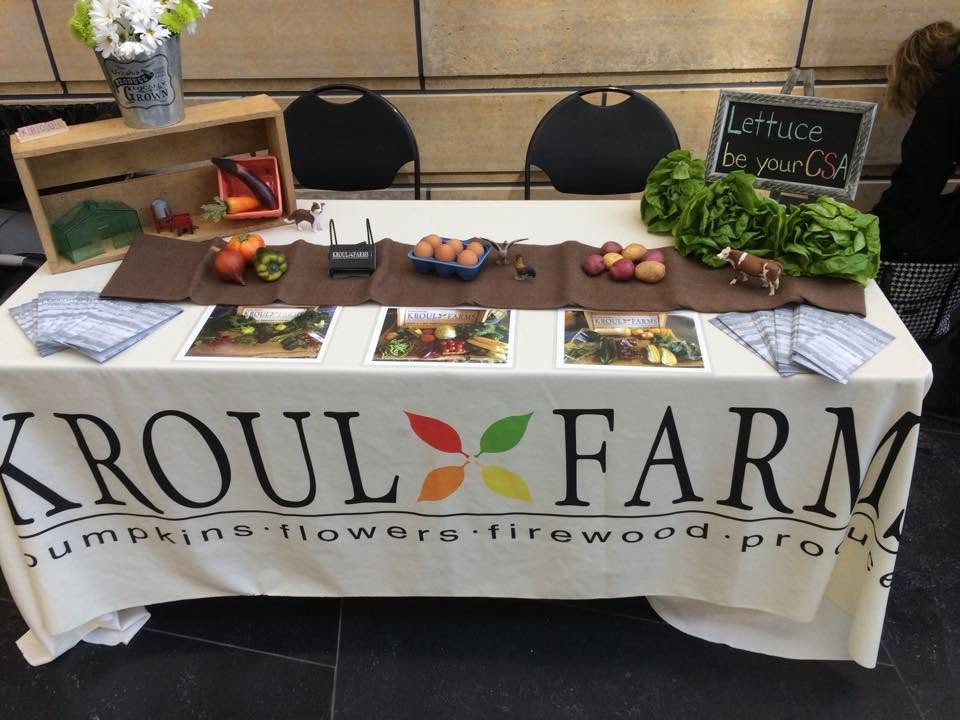
Photo Courtesy Kroul Farms
Asked on Barn Talk last September whether 550 acres of row crop could support the three families now working the place, Kroul said flatly that it could not. His wife explained the solution plainly. “We have found that if we can spread our risk around a little bit and then scale and grow all of it, it’s really helped us stay relevant and growing,” Nicole Kroul told KCRG-TV9 last June, when the farm anchored the first episode of the docuseries Farms of America. She was equally direct about the ventures that did not survive. “They started out doing more with hogs and we don’t do hogs today. They tried to grow Christmas trees, and we don’t do that today,” she said. “I think it’s just as important and it’s totally acceptable to realize when something isn’t working.”
Spreading the risk meant building a sales channel from scratch, one buyer at a time. The farm now supplies nearby Hy-Vee, Fareway, and Kwik Star stores, as well as area convenience stores that stock its firewood, pumpkins, or both. What makes that work is the size of the ask. “I can give you four bins of pumpkins bi-weekly. So you’re not getting a whole semi load. You don’t have waste. I compete with price,” he told Barn Talk last September.
The farm offers free local delivery and special wholesale pricing on pumpkins, sweet corn, firewood, and holiday greenery. Selling pumpkins to nearby grocers has another benefit, the University of Iowa Office of Sustainability and the Environment noted after touring the farm last fall: it reduces the need to ship the crop across the country. The direct-to-consumer channel has grown the same way, slowly. Iowa Farm Bureau counted about 50 subscribers in 2015, a couple of years after Kroul came home and started the Community Supported Agriculture program. He told Barn Talk last September that the farm was delivering to 214 families.
The newest channel is beef, and it is currently costing him money to build. Kroul Farms sells Angus crossbreed cattle, born and bred there and pasture-raised. The family makes no grand claim beyond an invitation: “There are no guarantees that cattle snacking on pumpkins and produce translates to better tasting beef, but we hope you’ll consider finding out.” Taking that route instead of selling fat cattle into a strong market costs him roughly $200 to $300 a head, he told Barn Talk last September. But he is building the channel anyway so it exists when the market turns.
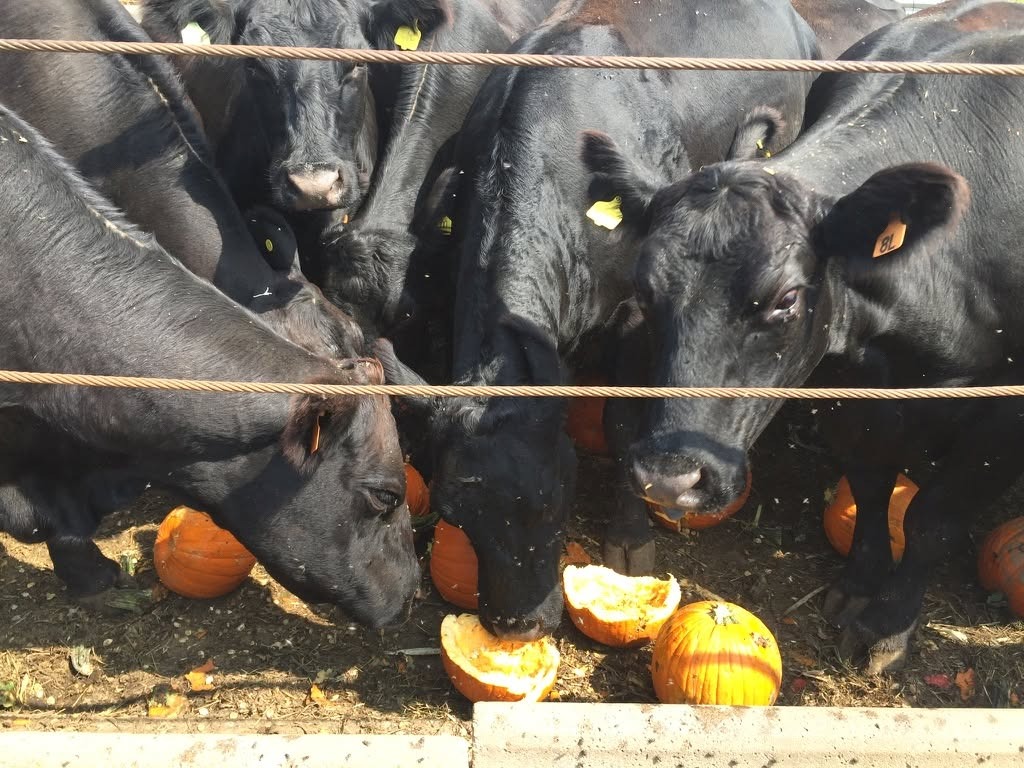
Photo Courtesy Kroul Farms
The strangest thing that worked came out of a disaster. The Iowa Department of Agriculture and Land Stewardship confirmed in October 2024 that the emerald ash borer, an ash tree-killing insect first found in the state in 2010, had reached all 99 Iowa counties. The Krouls harvest dead trees off the farm’s wooded edges, and the University of Iowa estimated the wood business at up to 24,000 pounds a day and about 8% of annual revenue. Logs too good for firewood get milled on site into boards, slabs and mantels, dried in the farm’s own solar kiln and sold to local woodworkers and contractors.
The conservation practices also answer practical problems. Cattle rotate through three paddocks, naturally fertilizing pastures as they graze and helping improve soil health. “We take pretty seriously the life cycle of what we are. As far as climate, as far as water usage, as far as fertilizers, pesticides, all these things,” he explained. “If we’ve managed those and this place is better than when I got to it, and it’s better than 30 years from a pure land and health standpoint, that’s success.”
In their 30 years, the family has never charged admission.“It’s our goal to use the working farm as an educational tool for families, so customers are welcomed and encouraged to explore,” the operation wrote. Kroul has described October days when 40 or 50 preschoolers, first-graders, and second-graders come through the farm. At the fair, he acknowledged that admission could be a real revenue stream, and said the family has passed on it anyway. “We leave it a farmer farm,” he said, before extending the invitation to listeners: “Come walk around, come see the things, and we’re doing chores, we’re driving tractors, we’re harvesting soybeans… Come take a look.”
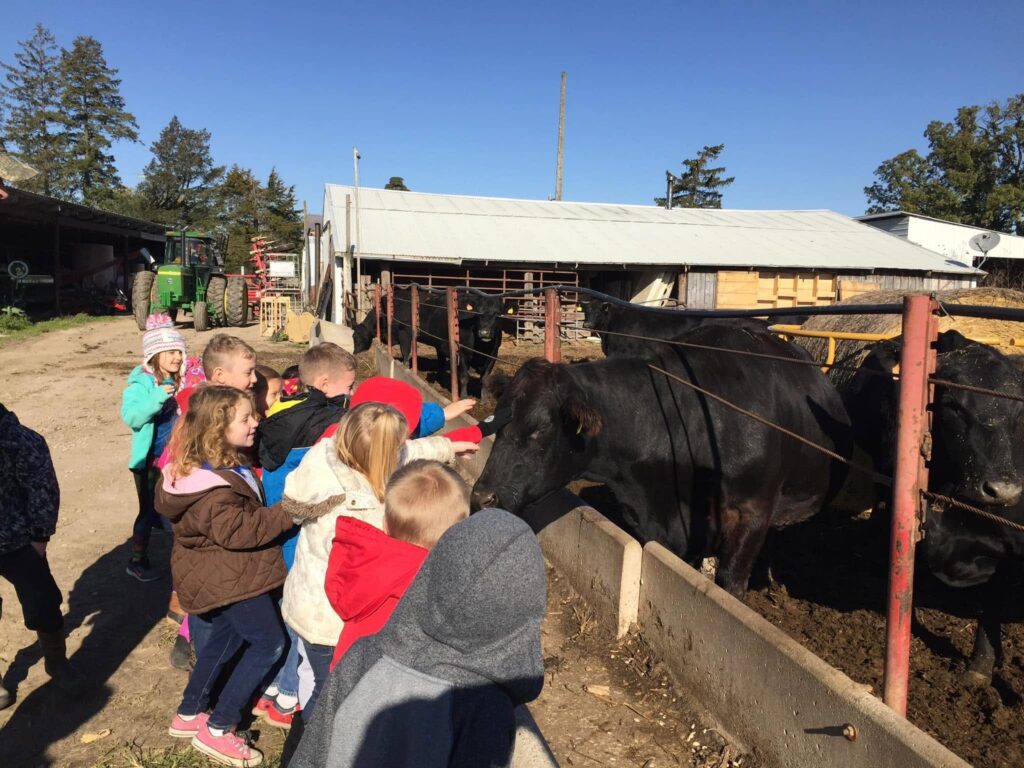
Photo Courtesy Kroul Farms
The honor Kroul carries from his playing days points back to the same decade. The Iowa Farm Bureau says a gold America Needs Farmers decal was placed on Hawkeye helmets during the 1985 Rose Bowl season to show support for farmers during the 1980s farm crisis. The helmets still carry it today. Kroul joined the ANF Wall of Honor as its eighth honoree in 2019, and he still measures the work the way he measured the other. “We always talk about leaving the jerseys in a better place,” he told KCRG-TV9. “If you can leave your farm operation or acres that you manage better than when you came to them, that is your job.”
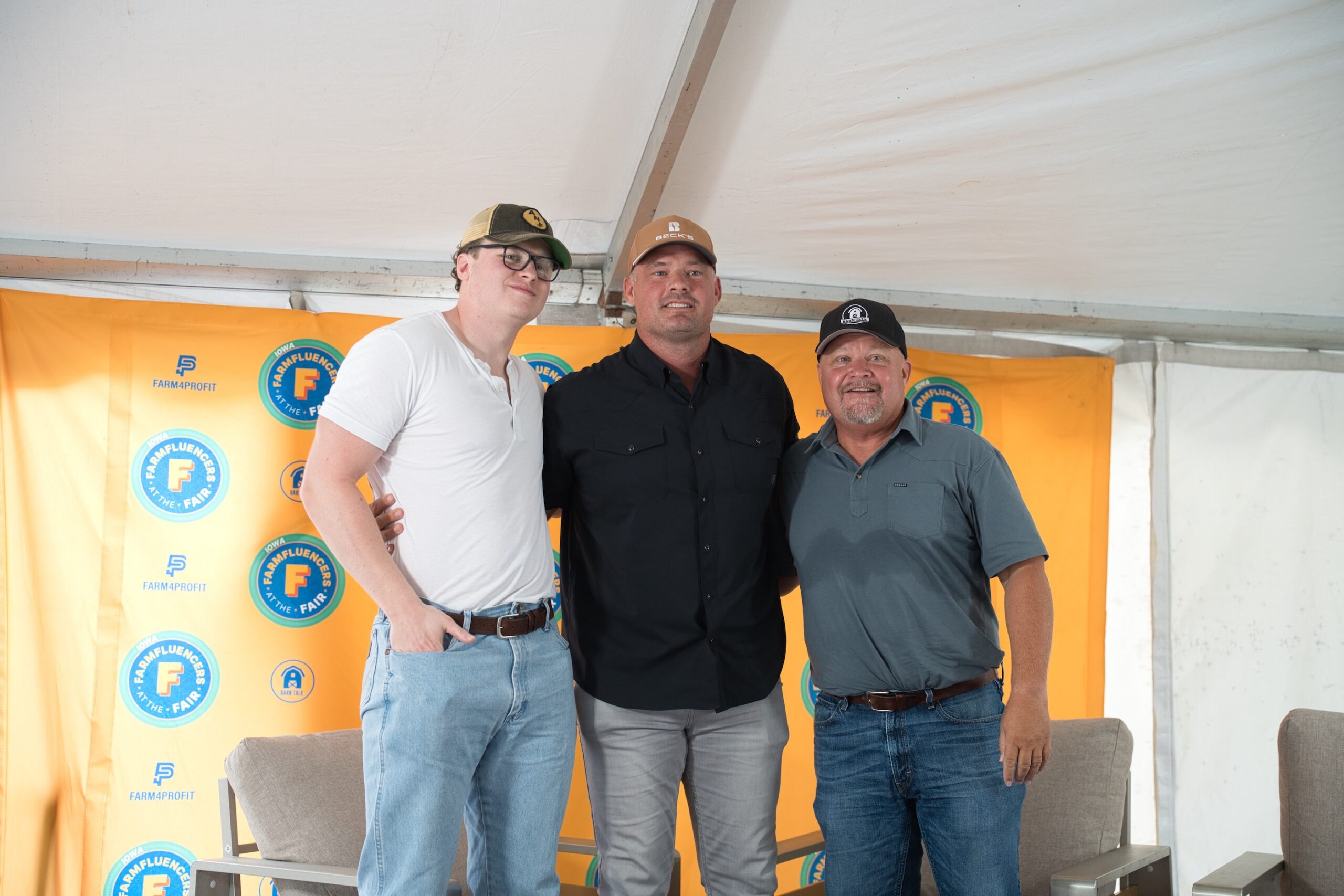
Kroul was recently interviewed at the Iowa State Fair during Farmfluencers At The Fair by Barn Talk, one of the country’s most-listened-to agriculture podcasts, with 274 million views to date. Stay tuned for the Barn Talk episode.