At 7:45 on a Tuesday morning at the end of June, Mitchell Hora sat in front of a camera and started taking questions. A farmer named Russ wanted to know why the new scoring system was so sensitive to region. Lanny wanted to know what it meant for the ethanol plant in Columbus, Nebraska. Then, a farmer named Tim came off mute and asked the question sitting underneath all the others. When, exactly, is any of this going to be final?
It was the 101st episode of CI Chit Chat, a call-in show Hora hosts every Tuesday from 7:45 a.m. to 8:15 a.m. “It took us 100 episodes to get 45Z rule to happen,” he told the group. “But we did it.”
Video Courtesy Continuum Ag
The rule he was referring to sets the terms under which a farmer’s growing practices can be counted and paid for under a federal biofuel tax credit. Four days earlier, the U.S. Department of Agriculture (USDA) had finally published it, and Hora, who said he had read all 101 pages, had spent most of the previous four years walking farmers through a program that did not yet work.
Hora farms in Ainsworth, in Washington County, Iowa, alongside his father, Brian. In 2020, the National Association of Conservation Districts recognized them as Soil Health Champions, noting that Brian is the sixth generation on the operation and Mitchell is the seventh. Mitchell is also the founder and chief executive of Continuum Ag, which he started in the fall of 2015, during his junior year at Iowa State University. The family farm supplied the proof of concept. Hora has said that his family began experimenting with no-till in 1978 and added cover crops in 2013, and that the operation has cut synthetic fertilizer use by 45% and pesticide use by 75% while holding yields steady. “So, we understand how to allow farmers to be successful and change their practices by utilizing data because we’ve done it ourselves and have helped many other farmers do the same. The key thing is that farmers have to drive sustainability,” he told Cisco. “I started Continuum Ag as a consulting company to help my family farm and help other local family farms understand soil health and access better data tools to manage their farms.” The goal has grown to “helping 1 million farmers improve their profitability through improved soil health.”
Photo Courtesy Continuum Ag
The company began as a consultancy built around the Haney Soil Health Test, a lab method for measuring biological activity in soil rather than only its chemistry. That work eventually became a software platform called TopSoil, as the soil health data intelligence company helps farmers map their fields, gain valuable insights, and evaluate new farming practices to achieve economic resilience and sustainability.
A carbon intensity score, or CI score, measures the carbon footprint of producing agricultural products, like a single bushel of grain. A score of 0.0 means the bushel is net carbon neutral. The standard score for corn now sits at 27.4 grams of carbon dioxide equivalent per megajoule of energy, according to the company, adding that “the lower the CI Score, the more attractive that production is for end users.” In fact, gaining CI Certification enables farmers to demand a price premium from the biofuel producers, who in turn receive special tax credits for low-carbon fuels.
The practices that move a score are ones many farmers already use. Lancaster Farming reported in April 2024 that Continuum Ag had scored 185 million bushels of corn and found an average score of 10.7, far below the roughly 29-point default in use at the time, with the strongest operations landing in the negative teens and twenties. More cover crops and manure, less tillage and reduced fuel and synthetic fertilizer inputs, better nitrogen efficiency, and higher yields all pull the number down.
Hora explained during his June press conference that an ethanol plant’s score gets rounded to the nearest multiple of five, so the value arrives in steps. Every five points a plant knocks off its score is worth up to about 10 cents a gallon, which he put at roughly 29 cents a bushel, before any of it is shared with the farmer who grew the corn. “But the point of all this is we now know that the practices can generate enough CI reduction to make this a carrot worth going after,” he said.
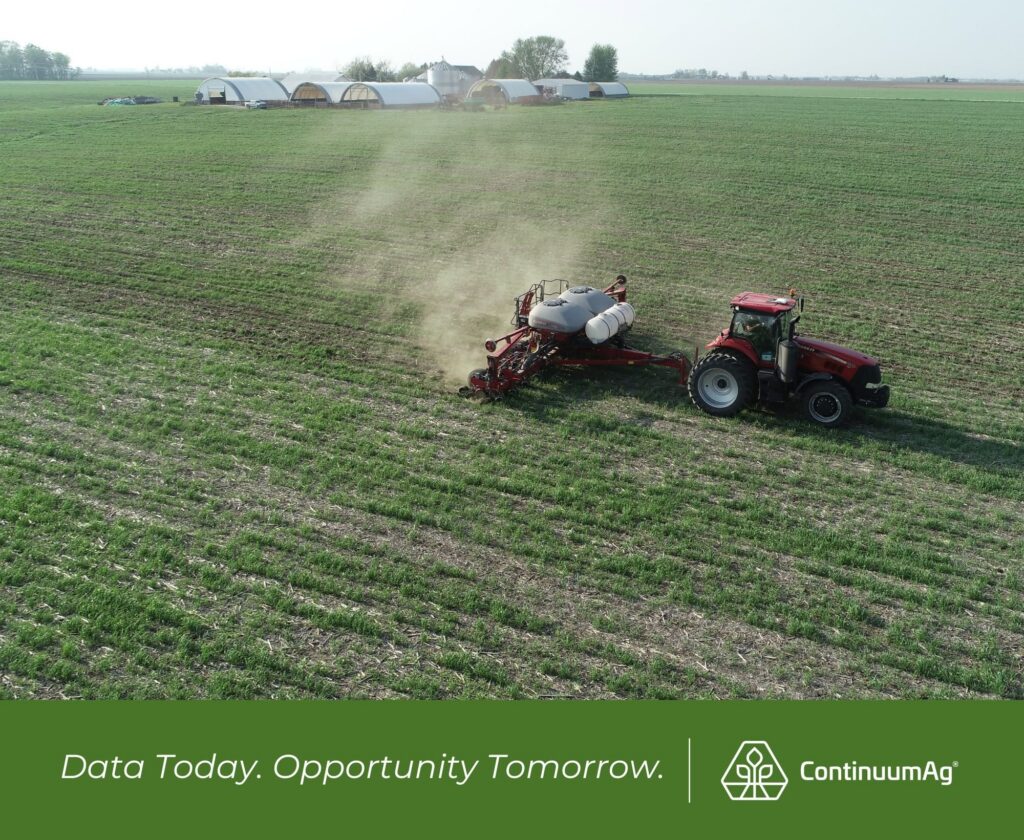
Photo Courtesy Continuum Ag
For most of the company’s life, none of that measurement paid. Congress created the Section 45Z Clean Fuel Production Credit in 2022, and the credit rewards biofuel producers for lowering their fuel’s carbon footprint. Grain accounts for roughly half of a gallon of biofuel’s carbon footprint, according to Continuum Ag. But the federal government never issued the rules explaining how on-farm practices would be counted.
Hora built the verification systems, audit relationships, and software anyway, then waited. “I’ve been right on the bet,” he told Barn Talk in an interview. “I’ve just been wrong on the timing.”
An audience carried the company through the gap. In November 2023, the company launched the Billion Bushel Challenge, an effort to get a billion bushels of corn scored in a single year and to raise awareness that farmers can make money by growing low-carbon corn. An annual gathering called the TopSoil Summit drew 250 people from more than 15 states and three countries in 2023. A single webinar on sustainable aviation fuel guidance in May 2024 pulled more than 400 farmers and still ran out of time before it ran out of questions. In conversation with Barn Talk, he called sustainable aviation fuel a “100 billion gallon a year opportunity,” up from the current 17 billion gallons.
On June 25, 2026, USDA announced a final rule establishing how the carbon intensity of biofuel feedstock crops gets quantified, reported, and verified. It covers field corn, soybeans, sorghum, and spring canola. The rule was published in the Federal Register on June 29 and took effect July 29, 2026.
Hora did not get everything he asked for. He had lobbied for a tracking system called book-and-claim, which would let a farmer sell the grain to one buyer and the carbon data to another. During the press conference, he reported that of roughly 114 public comments, 60 addressed traceability, and about 75% of those favored book-and-claim. USDA instead kept mass balance, which requires the grain and its data to travel together into the biofuel supply chain.
His plainest explanation of what that means arrived on a later broadcast. Picture two grain bins, he said, except digital: one holds low-carbon bushels, one holds conventional bushels, and a farmer needs verified data to get into the first one. “There ain’t much low-carbon corn out there right now, because we haven’t verified all of it,” he explained, so “that digital grain bin over here is empty. And that’s where Continuum fits in to help farmers get their data organized, get it scored, get it verified, so that your corn or soybeans goes in the low carbon bin, not the conventional bin.” On his own farm, the arrangement means trucking corn to an ethanol plant rather than selling it to the neighbor who feeds hogs to tap into 45Z.
One step remains. The Internal Revenue Service (IRS) issued proposed regulations for the credit on February 3, 2026, and has not yet finalized them. Hora noted in a later episode that the agency has signaled a November target, while adding that he has learned to hold his optimism loosely. The credit expires at the end of 2029, Hora told Tim, which means the window narrows every month: “We need to capitalize on this thing, make hay while the sun is shining.” He told Barn Talk, “I do think that there’s going to be some money moving by the end of the year. Farmers getting paid by the end of the year.”
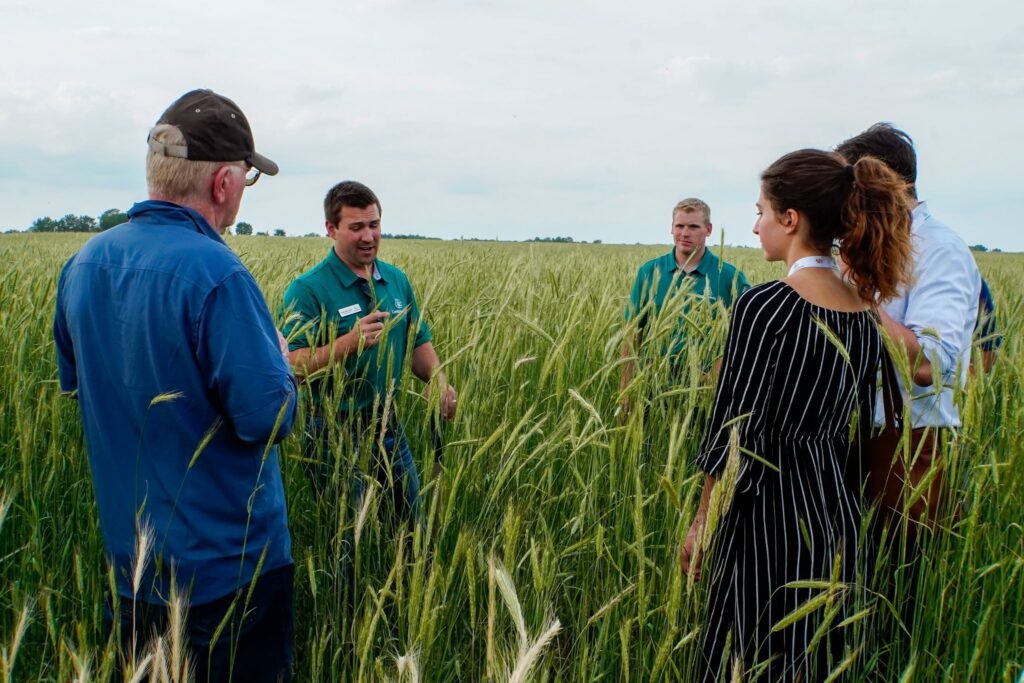
Photo Courtesy Continuum Ag
Because the data now has to follow the grain, the work has shifted from farmers to the people who buy from them. Within weeks of the rule taking effect, Hora said he had spoken with more than 100 of the country’s 192 ethanol plants. Counting soybean crushers, he put the universe of biofuel producers at about 250, alongside some 5,000 grain elevators.
Many of those relationships predate the rule. Siouxland Energy Cooperative in Sioux Center, Iowa, agreed in March 2024 to buy low-carbon bushels certified by Continuum. Aztalan Bio, an ethanol producer in Johnson Creek, Wisconsin, announced a similar arrangement in June 2026. Geography favors the effort. Lancaster Farming counted 41 ethanol plants in Iowa alone, against two in the entire Mid-Atlantic.
For a farmer trying to figure out whether any of this applies, Hora lays out three steps. Calculate the score first. Then find out where last year’s crop actually went, and whether that buyer intends to run a program. “And if they’re not, we’re happy to have those conversations with them.”
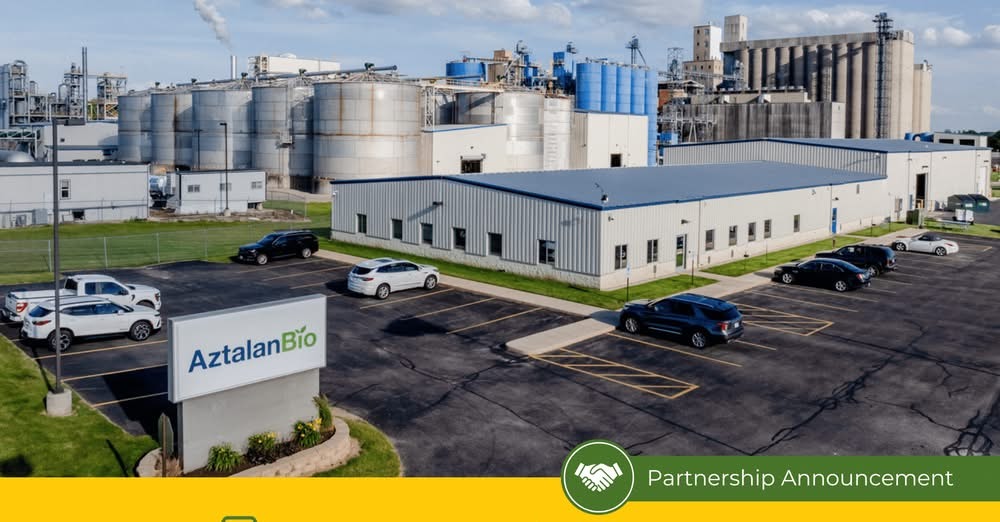
Photo Courtesy Continuum Ag
The recognition has come from several directions. The Iowa Department of Agriculture gave Hora its Environmental Excellence Award in 2023, and his work was entered into the Congressional Record in June 2025. He was named to the Forbes 30 Under 30 list announced in December 2021. In June 2025, Sen. Joni Ernst named Continuum Ag her Small Business of the Week, noting, “Since 2015, Continuum Ag has rooted themselves in helping farmers manage and improve their soil health. Partnering with over 40 states and 20 countries, Continuum Ag continues to encourage regenerative agricultural practices that enable farmers to make data-driven decisions.”
Marking the company’s tenth year, Hora closed a short film with a line that read less like a victory lap than a starting gun. “We feel like we’re just getting started.” And they’re doing it all while remaining “very passionate about adding jobs to the local area, keeping those small towns alive,” which is part and parcel of the agricultural story, he told Barn Talk.
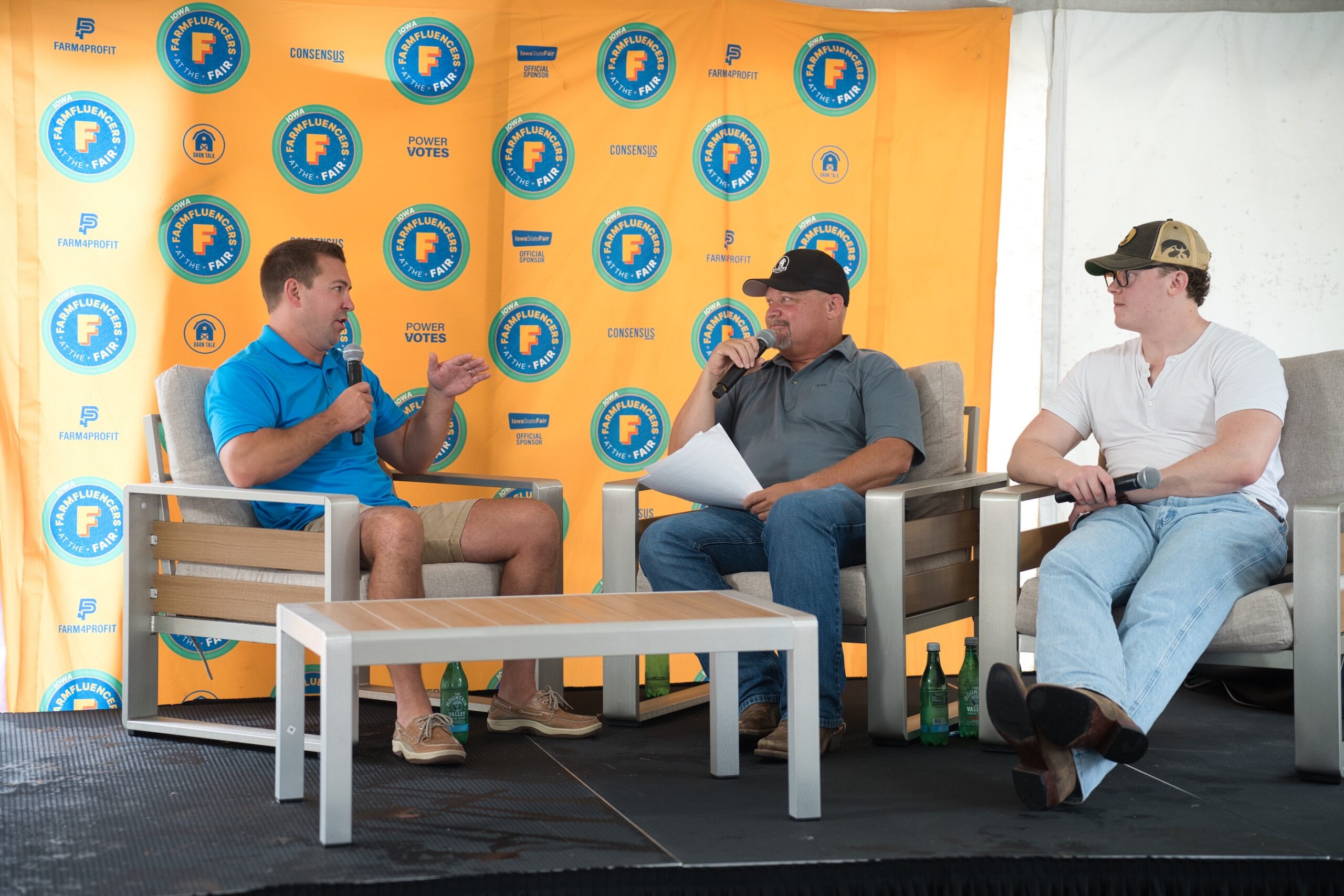
Hora was recently interviewed at the Iowa State Fair by Barn Talk, one of the country’s most-listened-to agriculture podcasts, with 274 million views to date. Stay tuned for the Barn Talk episode.
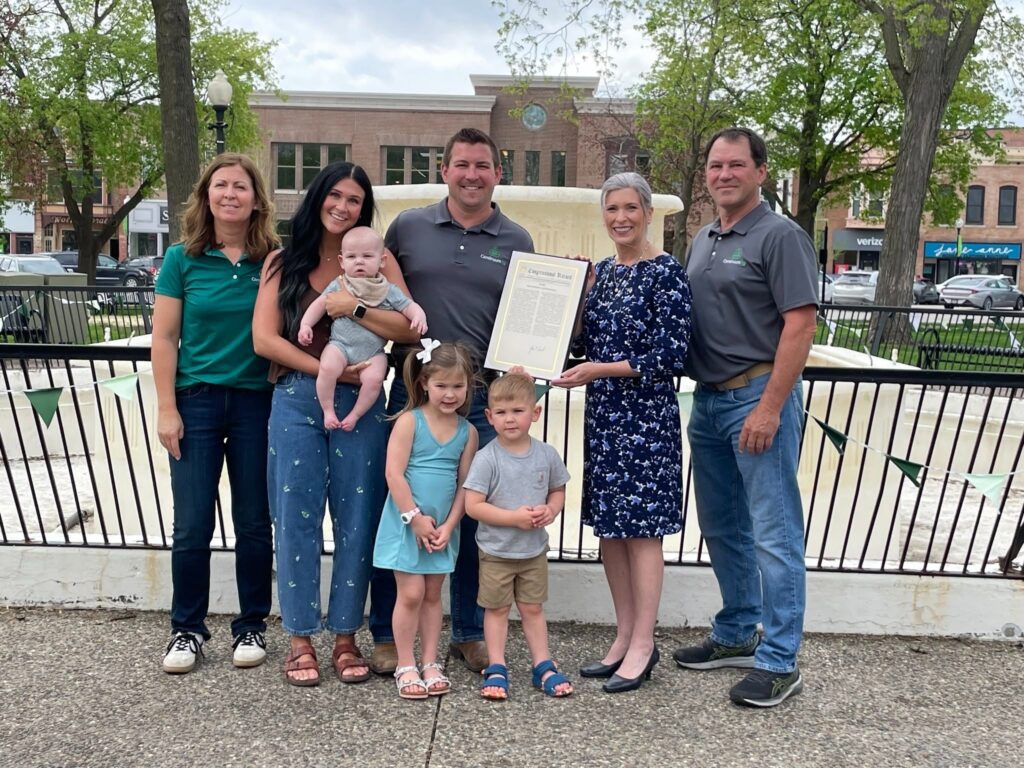
Photo Courtesy Senator Joni Ernst