As South Skunk and Cedar Creek Project Coordinator at the Mahaska Soil and Water Conservation District in Iowa, Joy Van Wyngarden made soil health her daily focus. Van Wyngarden grew up on a row-crop farm in southeast Iowa, and stewardship was baked into her family history. One of her grandfathers farmed organically before it was a category anyone marketed, and she credited him with planting an idea she didn’t understand until much later, as she “gained more interest in the outdoors and wildlife,” she described on the Ducks Unlimited podcast Ascend.
Upon graduation from Iowa State University in 2020 with a degree in agriculture and communications. She began working as a conservation professional at the Iowa Department of Agriculture and Land Stewardship South Skunk and Cedar Creek Headwaters Watershed Project. She grew up in this watershed. Van Wyngarden said on the Acres U.S.A. Podcast that the South Skunk was effectively her backyard, the creek system she played in as a kid.
While there, she learned how landowners weigh productivity, stewardship, and long-term land value against one another. She worked directly with Iowa farmers and landowners on conservation projects and cost-share programs, securing money and spending it alongside people who might otherwise skip the practices, because she understood “that land represents far more than an investment—it’s about legacy, opportunity, and a way of life.”
Additional practices of the South Skunk and Cedar Creek Headwaters Watershed Project include cover crops in the field and edge-of-field measures such as saturated buffers, bioreactors, wetlands, and grade stabilization structures. The department reported in October 2023 that nearly 20,000 acres of cover crops had been seeded across the project area. These practices all point to the same destination. A cover crop and a buffer strip both exist to keep soil and the nitrogen a farmer has already paid for from washing off the field and into the nearest stream, as Van Wyngarden explained on Ascend, “If we get those heavy rains, the snowmelt, nitrogen goes with it. That’s a problem for our water quality. So, cover crops help keep that nitrogen there in the field where it belongs because that’s where we want it. We need it. It’s good stuff. It’s fertilizer. We really don’t want to be losing it, and we really don’t want to get it into our water systems.”
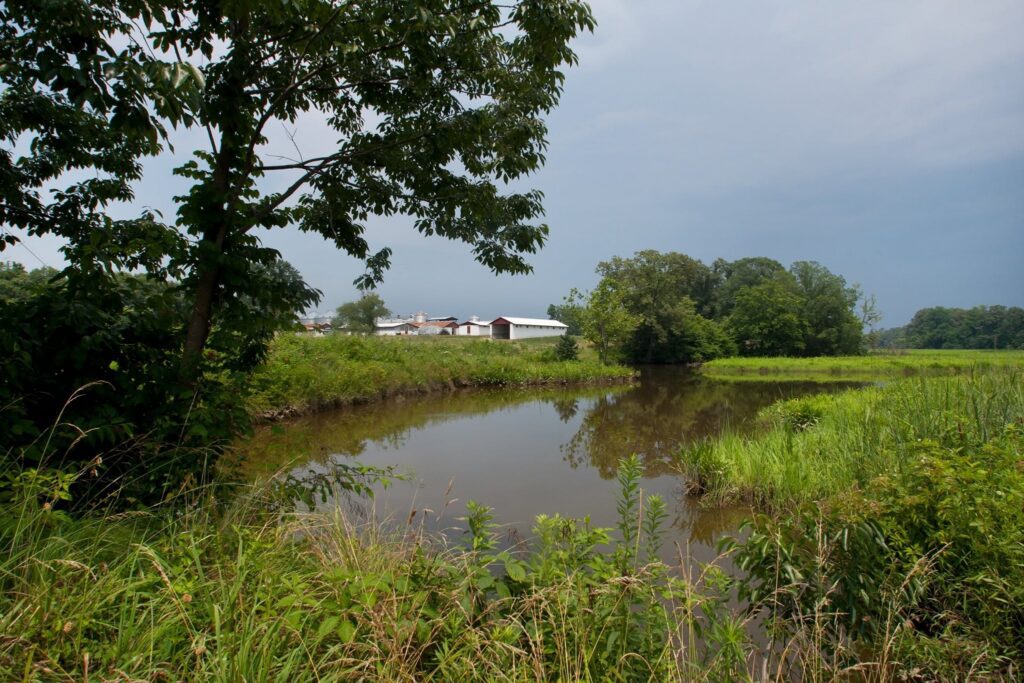
Photo Courtesy South Skunk Watershed Project
Since leaving the district, water quality has remained her focus, and she has been consistent on one point in particular: she rejects the idea that it sets rural Iowa against urban Iowa, arguing that everyone in the state ends up drinking from the same supply. As she said on the Rush Hour Ag podcast, “We all drink the same water. We all pay the same taxes. We all have the same neighbor down the street that’s getting cancer. Why is this a you versus me, rural versus urban, red versus blue argument? It is a bipartisan issue.” She added in a social post, “I feel convicted to raise awareness about the challenges in our conventional agriculture system because I refuse to look back wishing I had spoken up sooner. We can fix this. Together, we can work toward cleaner water, healthier food, and thriving, healthy families and communities.”
She started posting on social media around then, too. Her handle is “Joy of All Trades,” chosen because nobody could pronounce or remember her last name and because her interests never narrowed. She told the Fall Obsession podcast, “I started just kind of going down the rabbit hole of all the different things that I’m passionate about, and I really just shared about my life… And I just recognized that I don’t have a niche, and I don’t post about one thing, and I’m kind of all over the place, and I’m passionate about all these different things. So maybe I should just kind of stick with that.” The account now carries more than 319,000 followers across TikTok, Instagram, Facebook, and YouTube.
What gets attention is less advocacy and more explanation. Soil biology needs variety in what it is fed, she told viewers of Ascend. Bare ground over winter loses both the dirt and the nitrogen already bought and paid for. Organic matter behaves like a sponge, which matters as much in a drought year as in a flood year. “For every 1% increase in soil organic matter that the soil has, it then has anywhere from a 10,000 to 25,000 gallon water increase per acre… And with more soil organic matter present in the soil, your soil is able to hold onto that water so much more effectively,” she described.
The explaining eventually became the business. Van Wyngarden owns Lower Grove Media, a media company based in New Sharon, Iowa. She has since become a regular on the farm and outdoor podcast circuit, appearing on Brownfield Ag News to preview Iowa’s spring turkey season in April 2025, for example.
Video Courtesy Joy Of All Trades
Asked on Barn Talk how conservation and production get reconciled, Van Wyngarden went straight to economics. “I like incentives. I’m an incentives person,” she said. “We all share the resource, and I think everyone is kinda finally coming to the table about that, that it’s your legacy, it’s your children’s, your future children’s ability to be able to farm on the ground you’re farming on… From a longevity perspective, if you want your grand-kiddos farming someday, we have to start doing things a little bit differently.”
Her argument for why the numbers are moving rests on independence, rather than idealism. She described a northeast Iowa friend running the lowest inputs of any row-crop farmer she knows, whose most profitable year in four decades came after he stopped leaning on his suppliers, part of his 15-year journey of figuring out how to farm more sustainably and more profitably.
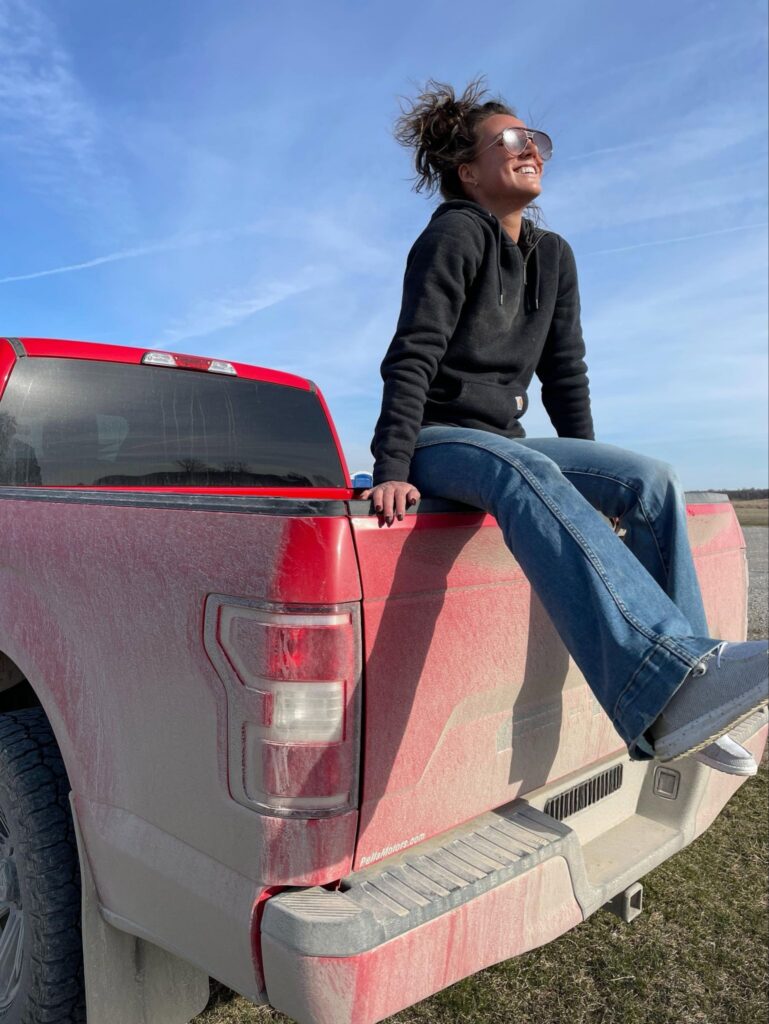
Photo Courtesy Joy Of All Trades
What she wants built is an entrance. “We need on-ramps for young farmers,” she said, and the case she makes for taking one is not sentimental. “We gotta make farming cool again. We have to make it profitable. We have to make it enjoyable. We have to say you don’t have to sell your soul to anyone that you don’t wanna sell to, and you can have a really fulfilling job because you are feeding people.”
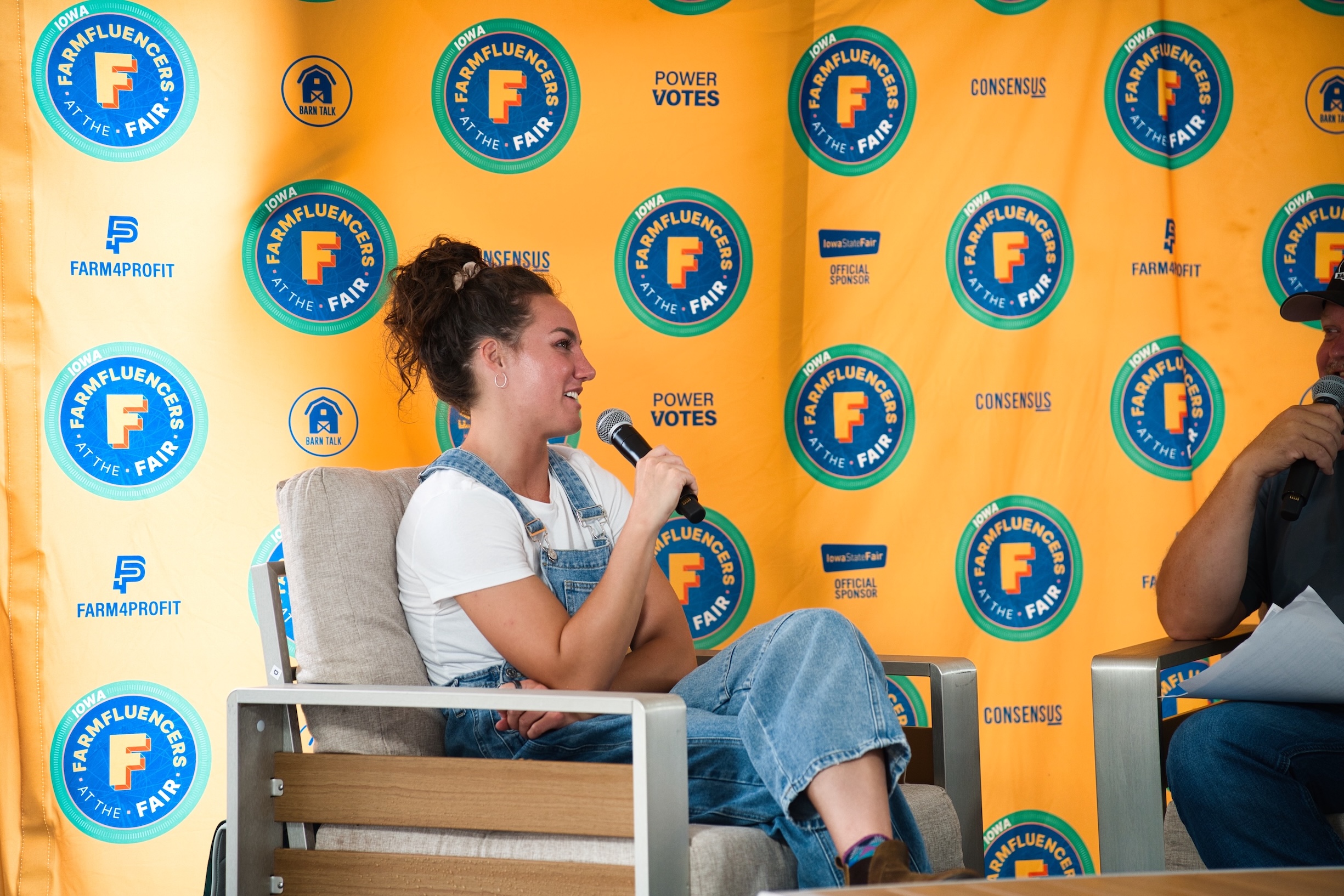
Joy was recently interviewed at the Iowa State Fair during Farmfluencers At The Fair by Barn Talk, one of the country’s most-listened-to agriculture podcasts, with 274 million views to date. Stay tuned for the Barn Talk episode.