Dan Venteicher came across a video of his own barn. A college student toured the family’s dairy near Strawberry Point in northeast Iowa, filmed the milking robots, and posted the clip to TikTok. Commenters mocked the equipment.
“I saw that, and I saw the comments were kind of making fun of the equipment, saying how crazy it was, we were crazy, why do we need robots,” Venteicher told Iowa’s News Now. “And that, honestly, just really annoyed me.” The robots were not a novelty. They were a financial decision.
Venteicher’s great-grandfather left Nebraska during the Dust Bowl years after the family ran so short of feed that they were giving their cows thistles, he said, moved to northeast Iowa in the early 1940s, and bought the Strawberry Point farm about six years later. During the farm crisis of the 1980s, he said, a banker came out and advised his grandfather to sell the cows. His grandfather doubled the herd instead. What Dan’s father, Rich, remembers most is what the cows did for them: “It was the girls, the cows, that got him through the farm crisis.”
Dan and his twin brother, Don, bought their uncle’s half of the operation in 2015 and formed Honey Creek Dairy. Four years later, the same generational challenge came around again. “My dad now is actually older than my uncle was when he retired, so he’s to the point where he needs to slow down,” Venteicher said in that same interview. “So we were looking to have to hire people or automate some things.” He added in his own video, “We decided to lean into the automation aspect, and it was the best decision we ever made.”
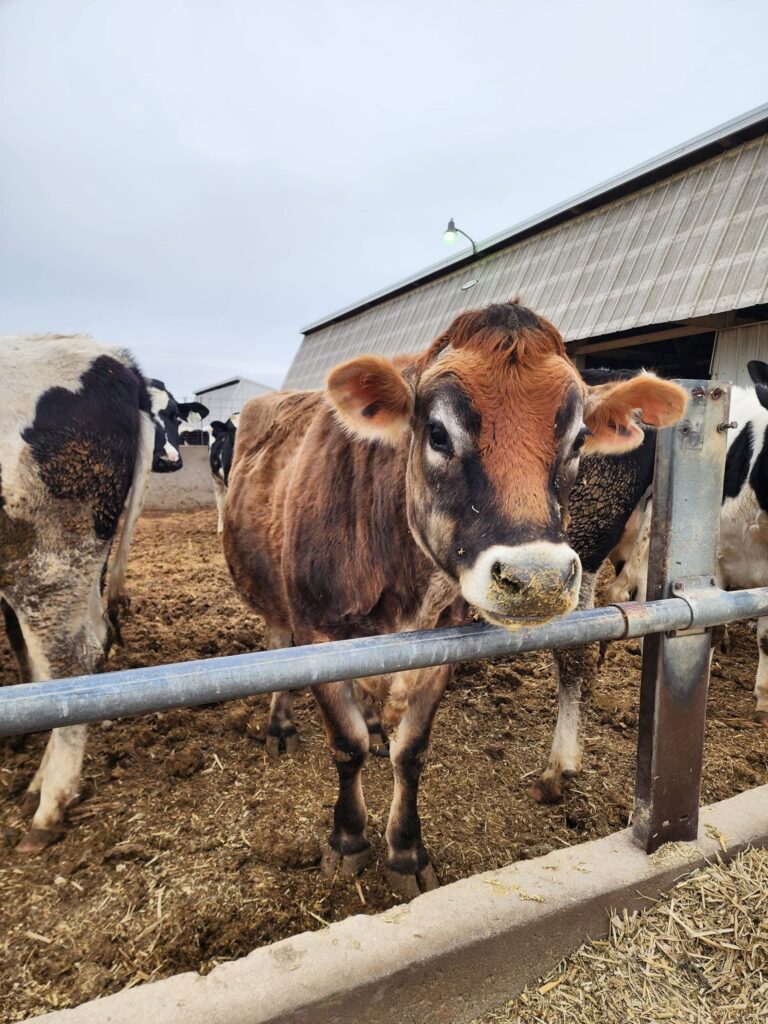
Photo Courtesy IowaDairyFarmer
The family began using a Lely Vector automated feeding system in December 2019 and installed Lely Astronaut A5 milking robots about 30 days later, according to Lely. The Vector delivers fresh feed every three hours, compared with the industry practice of once or twice a day, Venteicher told Zoetis chief executive Kristin Peck on the company’s podcast On Purpose. It also enables quick adjustments. “In the past, we’d dump feed twice a day or in the wintertime, I’d dump it all in the morning, and if we saw something we didn’t like in the cows, we had to wait a full day before we could make any changes,” he explained to Lely. Now, a ration adjustment can be deployed within half an hour. Venteicher observed a four-pound increase in milk production per cow within 30 days of usingthe Vector. “The cows get the same bite every day. The Vector has allowed the cows to meet their potential,” he explained to Agrinews.
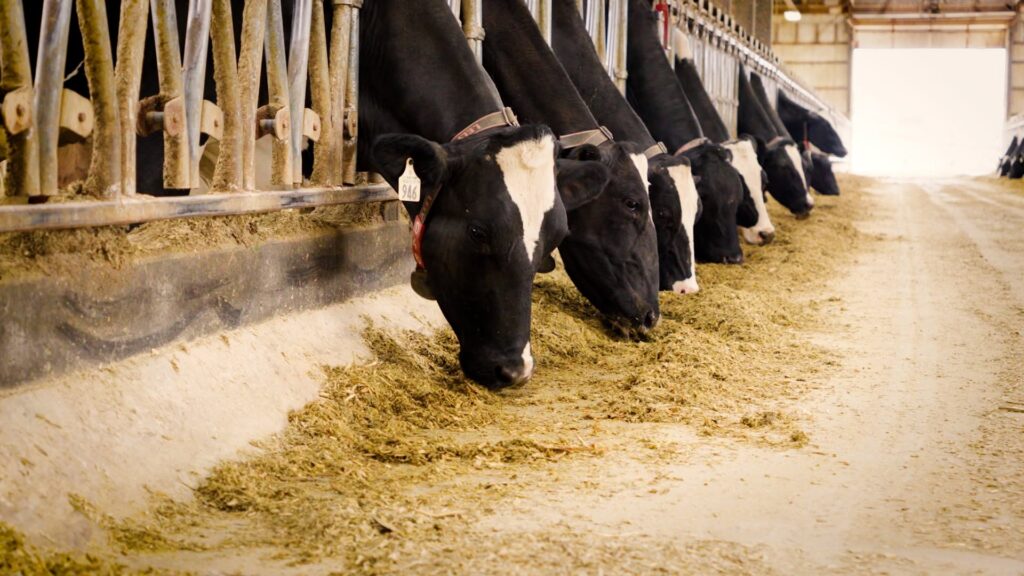
Photo Courtesy IowaDairyFarmer
“We were the first one to have them in Iowa,” Venteicher told Agrinews. He added on On Purpose that the robots “let cows be cows. They have minimal farmer involvement. They get milk when they want, they lay down when they want, and they come eat whatever they want. So, this lets cows be cows. It’s a completely free choice system.” He credited the change with an additional 10 to 14 pounds of milk per cow. Lely, for its part, reported that the herd went from about 86 pounds of milk per cow per day before automation to roughly 99 pounds by the spring of 2021. At the same time, Venteicher has saved $1,500 a year on fuel and $900 a month on electricity.
Video Courtesy Iowadairyfarmer
What the robots really bought was hours. Iowa’s News Now reported that before the farm automated, Venteicher worked 16-hour days and missed time with his children. He had wanted to post about farming for years, he told the Dr. Shawn Baker Podcast, and the old routine left no room for it. Milking alone took 40 to 45 hours a week, on top of raising crops, caring for young stock, maintaining machinery, and hauling manure. “Now that we’ve gotten stuff dialed in, my wife and I were talking, ‘Gosh, I need a hobby,’” he said. “I need something to do.”
He had wanted to teach for as long as he had wanted to farm. He started at Iowa State intending to become an agriculture teacher but switched to dairy science after a semester. “I have a really unique opportunity or potential here to have some time to kind of get back to what I do enjoy doing, which is teaching,” he said. His wife, Jamie, had been watching other farmers post about their work and told him he would be good at it.
He watched TikTok for about a year before posting anything. In March 2021, he put up his first video under the handle IowaDairyFarmer, which he had reserved back in 2010, according to Nebraska Farmer. Iowa’s News Now reported that he added Facebook that July, partly to reach a different audience and partly because TikTok’s algorithm kept flagging ordinary farm footage as graphic content. The two accounts together crossed 1.1 million followers by April 2022. Today, his accounts have more than 2.6 million followers across TikTok, Facebook, Instagram, and YouTube.
He has a theory about why it worked, and it has nothing to do with algorithms. As a young man, he made an offhand remark about a Mustang without realizing the car was rear-wheel drive, and spent the next five minutes being made to feel like an idiot. “I’ll never forget how stupid they made me feel for not knowing that some cars are rear-wheel drive,” he said. “I knew in that moment I never wanted to make somebody feel stupid for not knowing something.” He added in his keynote address at the 97th Iowa FFA State Leadership Conference, “Why blame somebody for knowing something they don’t know?”
Dairy farming is getting scarcer even as its audience grows. Licensed dairy herds in the United States fell to 23,609 in 2025 from 24,645 a year earlier, according to the U.S. Department of Agriculture (USDA); Iowa accounted for 675 of those herds. “There’s less than 30,000 dairy farmers in the whole country, so there’s a massive story to tell and not a lot of people to tell it,” he said. National milk production rose anyway, to 232 billion pounds. Venteicher can measure that shift on his own ground: his grandfather produced about two million pounds of milk on the acres that now yield six and a half million.
The technology behind that gain is spreading among farms his size. USDA researchers found that robotic milking adoption was highest on midsized dairies, reaching 13% of farms with 150 to 499 head as of 2021, They separately calculated that it raised net returns by $3.15 per hundredweight. Honey Creek Dairy milks about 200 cows, according to Nebraska Farmer.
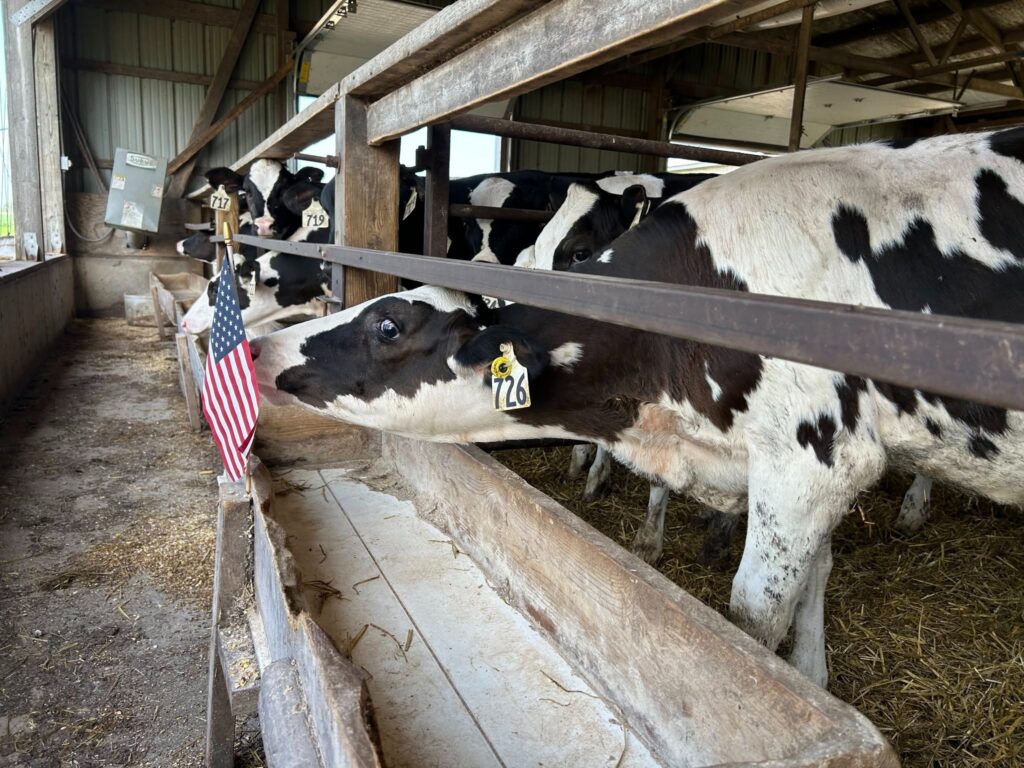
Photo Courtesy IowaDairyFarmer
At the same time, Venteicher warns other farmers about what made him famous. “Attention is the new oil,” he told the Iowa FFA audience. “People are making more money off your attention than they are off oil.” He follows his own advice. The man with nearly three million followers told that audience he keeps a timer on his phone, 30 minutes some days and 45 on others, and when it goes off, he is finished. He told Farm Progress, “This whole conversation about social media, advocating and sharing our lives online, this is all something that’s going to eventually fade. I want to make sure we don’t put too much emphasis on making this our identity because there are bigger things in life that matter.”
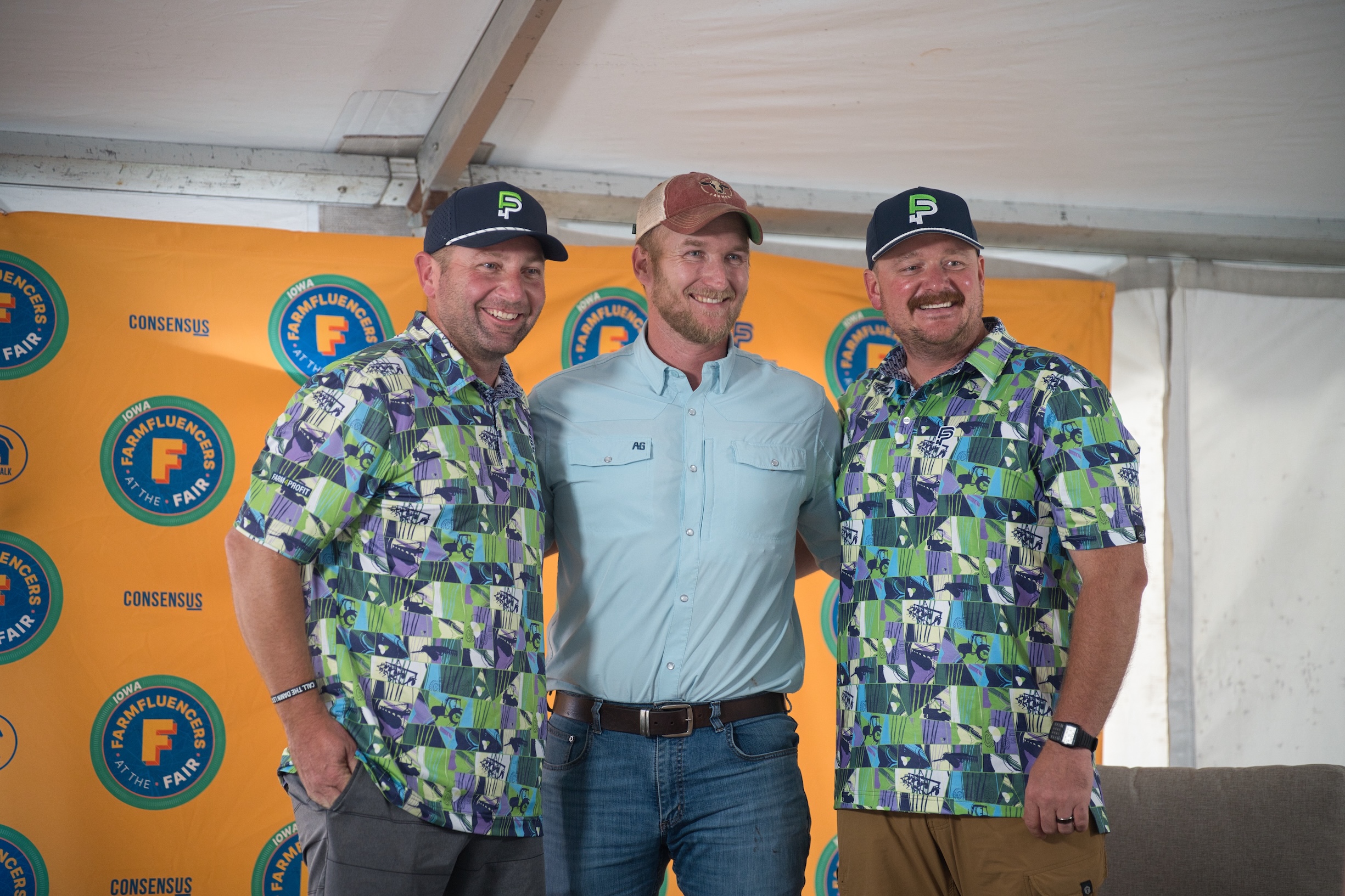
Venteicher was recently interviewed at the Iowa State Fair by Farm4Profit, one of the country’s most-listened-to agriculture podcasts, with more than 400,000 followers across platforms. Stay tuned for the episode.
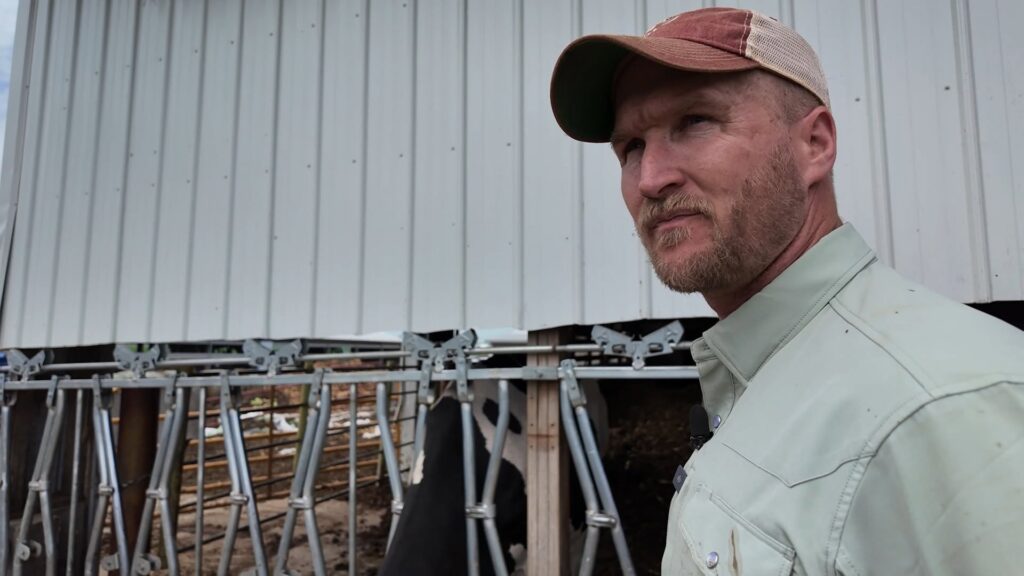
Photo Courtesy IowaDairyFarmer