
In 2010, Salt Lake City-based WAVE Charging introduced a wireless inductive charging system for commercial medium- and heavy-duty electric vehicles. Since then, the company has debuted additional charging technologies, which it says have “cut installation costs and are easily scalable as your business grows.” The company collaborates with business customers to identify solutions that “optimize their operations, reduce costs, and minimize their environmental impact.”
The inductive system is extremely easy to use. A driver simply stops above the embedded ground charging pads, guided by a display in the vehicle and road markings, and a magnetic field charges the vehicle through receivers attached to its undercarriage. The system promises to be near-instantaneous and 92% efficient, making it easy to charge during a regular or scheduled stop. Drivers can “add significant miles in seconds,” estimated at about 20 to 25 miles of range from 15 minutes of charging, and then get moving again quickly. A 500 kW charger can fully charge a class 8 electric truck in less than 15 minutes, the company announced in 2024, leading to its deployment in a consortium project with the U.S. Department of Energy, Cummins, and Venture Logistics later that year. “There is no easier way to keep workers happy and operations uninterrupted,” WAVE notes.
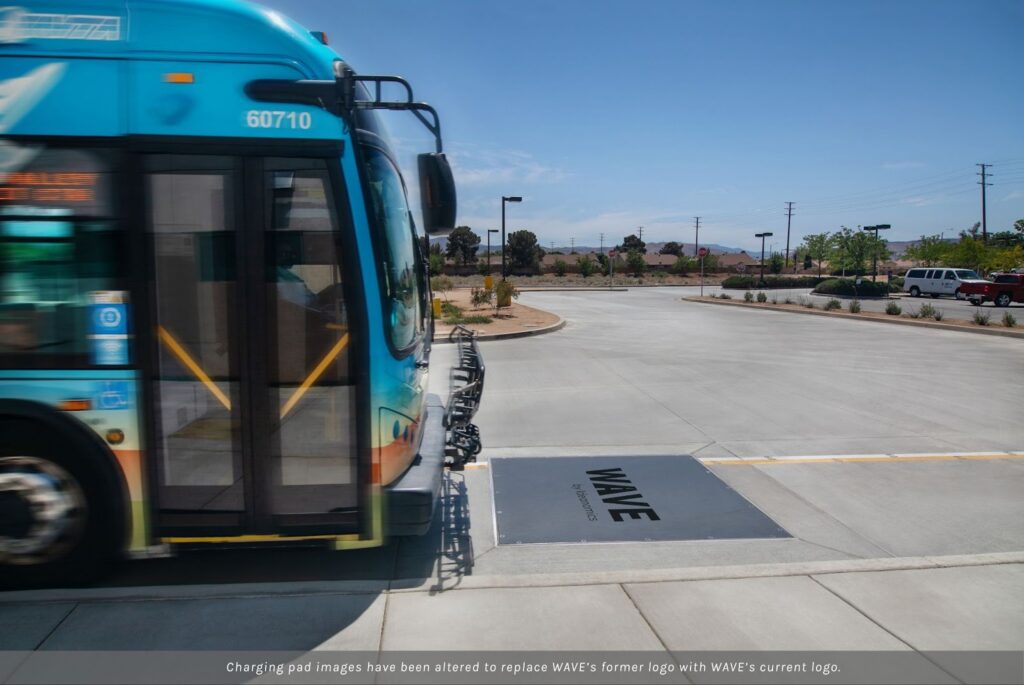
Photo Courtesy WAVE
Different sectors and industries could derive value from the wireless charging system: mass transit agencies adopting battery-electric buses; ports adopting electric container handlers, yard trucks, and drayage trucks; and warehouse and distribution centers adopting electric yard trucks, box trucks, day cabs, and forklifts. For companies that have already made the jump to electric, WAVE’s solutions can also be seamlessly integrated into fleets from numerous manufacturers.
New adopters, meanwhile, can guarantee that their electric models will outperform diesel-powered counterparts with WAVE’s technology, which optimizes battery life by topping them off throughout the day. The technology is intelligent, capable of identifying both the type of vehicle it is charging and how much it currently has, ensuring it delivers the exact amount needed. The Contra Costa County Transit Authority (CCCTA), for example, is able to maintain 80 to 90% state of charge for most of its fleet’s daily duty cycle, which Chief Operating Officer Scott Mitchell said is essential to the agency’s goal “to get about twelve years out of those batteries.”
The technology also extends vehicle range and duty cycles, making them competitive. Joe Clark, former executive director of Lewis County Transit, said, “With WAVE, we can augment our existing depot charging system by allowing our buses to ‘bump charge’ throughout the day. This allows us to extend the range of our fleet from a typical 150 miles to a virtually endless operating cycle.”
Another success story is found in the Antelope Valley Transit Authority (AVTA), which in 2022 became the operator of the first all-electric transit fleet on the continent, complying with California’s zero-emission transit requirement 18 years early. According to Executive Director and CEO Martin Tompkins, “WAVE has played a huge role in AVTA becoming the first all-electric zero-emission fleet. Having those chargers out there has enabled us to double vehicle range and run a lot longer.”
The AVTA doubled the standard operating range of its BYD K9 battery-electric buses during an 8-hour shift. The longest recorded route, 286 miles, was 131 miles longer than the standard at the time. In 16 hours, the buses can travel 400 miles without being taken out of service for charging. Between January 2019 and June 2022, WAVE’s technology contributed 2.39 million range-extension miles to the fleet, helping the transit authority set a domestic transit record by reaching 8 million zero-emission miles.
The savings in time and costs are particularly notable. Companies that use only overnight charging need more vehicles in their fleet, powered by bigger batteries. Scheduling and swapping vehicles to ensure all work is completed on time can get complex, too. WAVE promises “across-the-board savings,” enabling customers to deploy fewer vehicles with smaller batteries that require less maintenance and labor, which is especially valuable for mass transit agencies trying to meet their own customers’ needs. And when those buses finally return to the depot at the end of a shift, they require less charging, reducing costs during times of peak demand.
By using battery-electric buses, the AVTA said it had saved $2.7 million in fuel costs at the 8 million electric miles mark. With WAVE’s technology, the transit agency saves more than $1 million annually compared to what it spent at traditional charging depots for buses with bigger batteries. Additional savings can be attributed to deploying 37 fewer buses, as well as lower associated maintenance and labor costs.
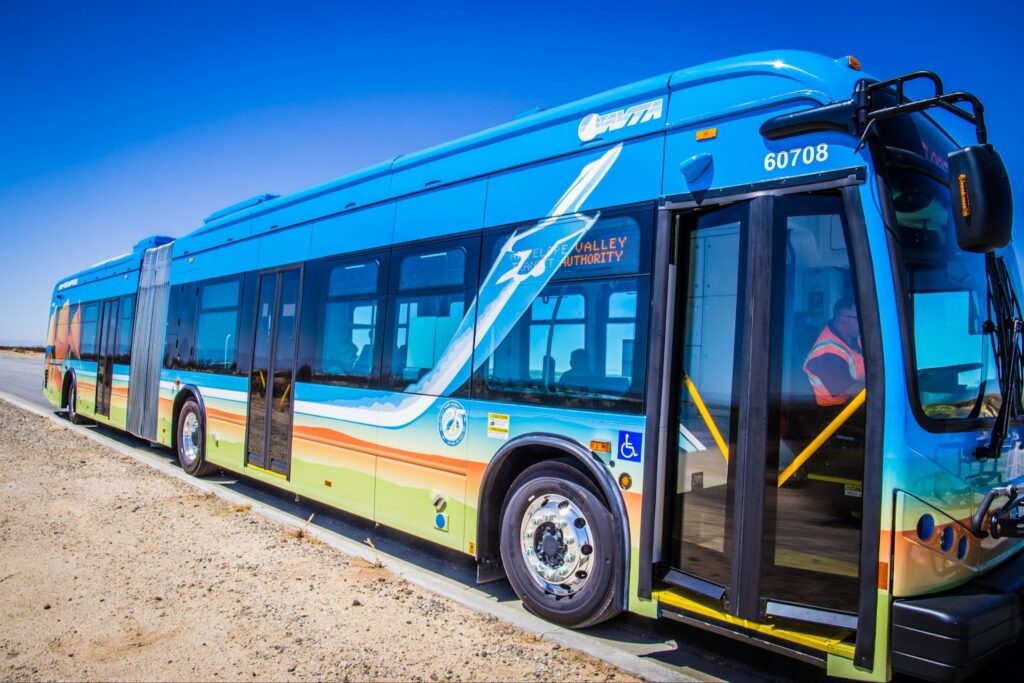
Photo Courtesy AVTA
Because the system is hands-free, electric vehicle charging is easier than ever. The lack of any ground clutter keeps spaces above ground clear, which is particularly important for decluttering and reducing tripping and collision hazards at ports and warehouses, where work is always ongoing. At warehouses and distribution centers, WAVE’s system also frees up valuable space for other uses. “Embedded in the pavement, wireless charging preserves space for parking and containers rather than charging pedestals while eliminating any need to handle cables,” CTO Micheal Austin explained.
Without any moving parts like cables or connectors, the system avoids safety risks or repetitive-motion injuries and offers added resilience against all types of weather events, without fear of anything freezing or breaking. High-power overhead charging infrastructure, for example, is associated with injuries such as burns or electric shocks. Such systems also require costly planning and zoning for deployments across large areas. WAVE’s system is more quickly scalable, and low maintenance translates into fewer interruptions.
When replacing the diesel-powered trolleybuses in its fleet, the CCCTA’s Mitchell recalls the decision to abandon the overhead pantograph chargers, “We needed to be less intrusive with lower maintenance. Being hands-off is just simpler, from both a user standpoint and on operations. Wireless is the way to go.” Plus, appearances matter, he said, “A lot of the communities are very concerned with aesthetics.”
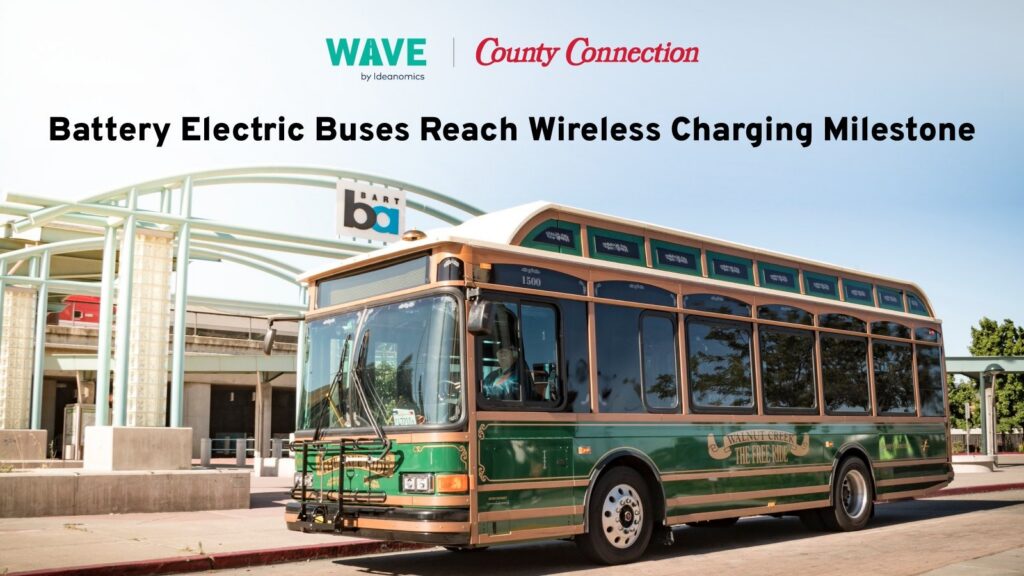
Photo Courtesy WAVE
Part and parcel of WAVE’s work is also creating a more environmentally friendly world. “We understand the importance of embracing sustainable transportation,” the company explained. “Our mission at WAVE Charging is to help businesses make a smooth transition to electric vehicles by providing innovative charging solutions tailored to their unique needs.” By using battery-electric buses, AVTA said it had avoided more than 47.5 million pounds of carbon emissions at the 8 million electric miles mark. WAVE’s technology helped the AVTA avoid 14.58 billion pounds of carbon emissions between January 2019 and June 2022 alone.
There is also a human element. Electric vehicle manufacturer BYD, which provided the vehicles for AVTA, noted that WAVE’s technology has helped it reduce range anxiety among customers. “Providing a flexible solution like WAVE helps us overcome some objections presented by our customers,” said James Holtz, former North American fleet sales manager for BYD. The AVTA’s Tompkins added, “For us, range anxiety does not exist anymore.”
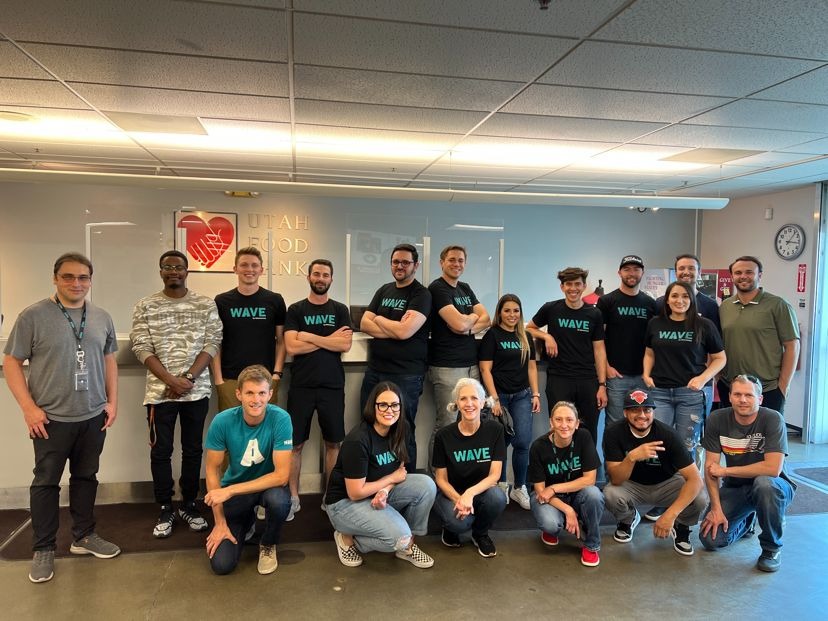
Photo Courtesy Aaron Gillmore