Nyle Systems has been driving manufacturing in Maine since 1977, when it launched in Brewer with its energy-efficient lumber drying technologies. Since then, Nyle Lumber Dry Kilns has become just one of the many companies under the Nyle name and has continuously innovated to help customers transition to sustainable energy systems. Now, Nyle also manufactures heat pumps and food dehydrators.
In 2023, Nyle announced its second manufacturing location, a former Wayfair customer call center in Bangor, to keep pace with the demand for its products. With this move, they created around 200 more jobs. Founder and CEO Ton Mathissen explained, “The jobs are not just the basic manufacturing, but we’re also having our design, product development or marketing, all our support functions here in that same facility as well. So, it’s going to be a complete, complete portfolio of manufacturing jobs, so to speak.”
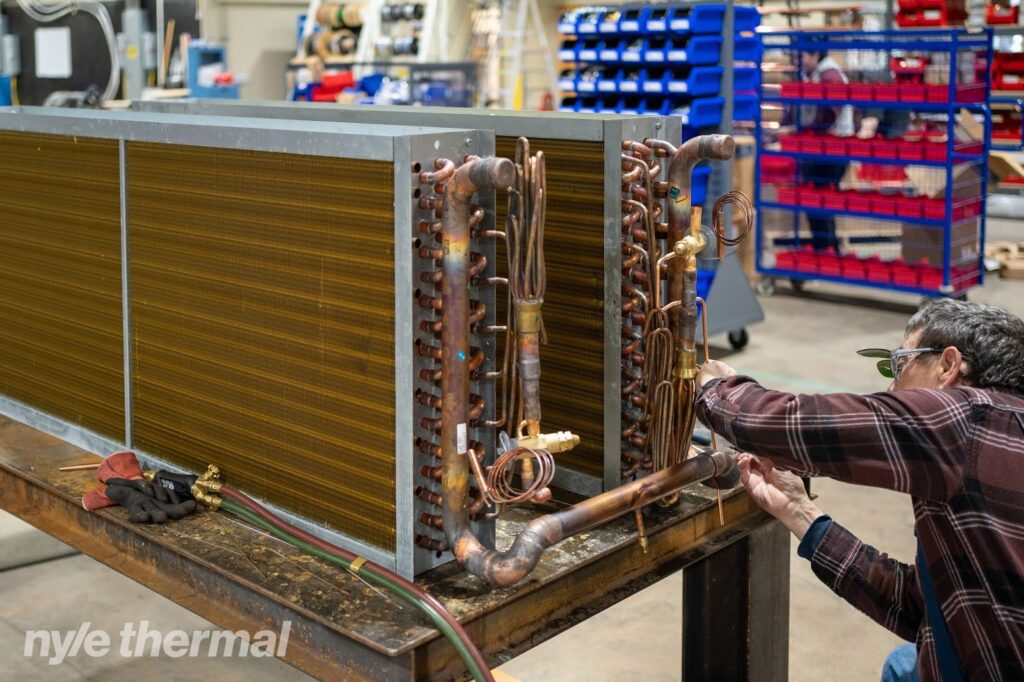
Photo Courtesy Nyle Thermal
Nyle Dry Kilns, “the company that started it all,” offers a variety of American-made, complete kiln systems for energy-efficient wood drying for softwood and hardwood operations. “By leveraging advanced technology and high-performance systems,” the company described, “our kilns optimize energy use and operational costs, enabling customers to adopt sustainable practices without compromising on quality.” As sales manager Jeremy Howard noted, “Almost everything here starts with energy savings in mind.”
For example, in each forklift kiln, used to load and unload lumber, and each track kiln, used to move wood in and out using a rail system, the company uses a large aluminum fan to provide a “streamlined and efficient air circulation system.” At the same time, the exterior walls are also made of aluminum to ensure waterproofing with thermal efficiency. Advanced control systems and remote access capabilities enable data to be used to enhance drying. Last year, in Belgrade, Maine, Hammond Lumber Company installed four Nyle DH Forklift Kilns, replacing four others that dated to the 1980s. “The operators are adapting very well to the computer controls and remote access. The technology has been a big benefit,” Matt Masse, vice president of purchasing, reflected to TimberLine Magazine. He added, “We value ‘made in Maine’ and local suppliers and vendors.”
Nyle’s ProDTY High-Temperature Continuous Kilns are a particular standout. They have independent zones to dry different types of wood at their own temperatures. Each kiln deploys an active heat recovery vent system in each zone, thereby “harnessing energy lost during the drying process to preheat incoming air,” and cutting fuel use by around 15%, “making it one of the most energy-efficient continuous kilns available.” A passive heat recovery loop, meanwhile, captures excess heat and sends it to zones with higher moisture content, making the process even more efficient. Plus, staging areas provide storage for additional lumber to go through the system, enabling it to run even when no one is there.
Nyle also offers kiln optimization equipment. Standalone or rooftop heat recovery vents capture about 80% of the heat that would otherwise be lost, thereby speeding up drying times and cutting energy costs by up to 30%. High-pressure spray systems precisely control moisture content during the dry cycle, thereby avoiding wood damage, reducing reliance on boilers, and minimizing the use of boiler chemicals and water. Plus, the company operates a parts store to assist in repairs, and Nyle’s kiln audits provide customers with recommendations to “enhance your kiln’s performance, extend equipment life, and improve your bottom line.”
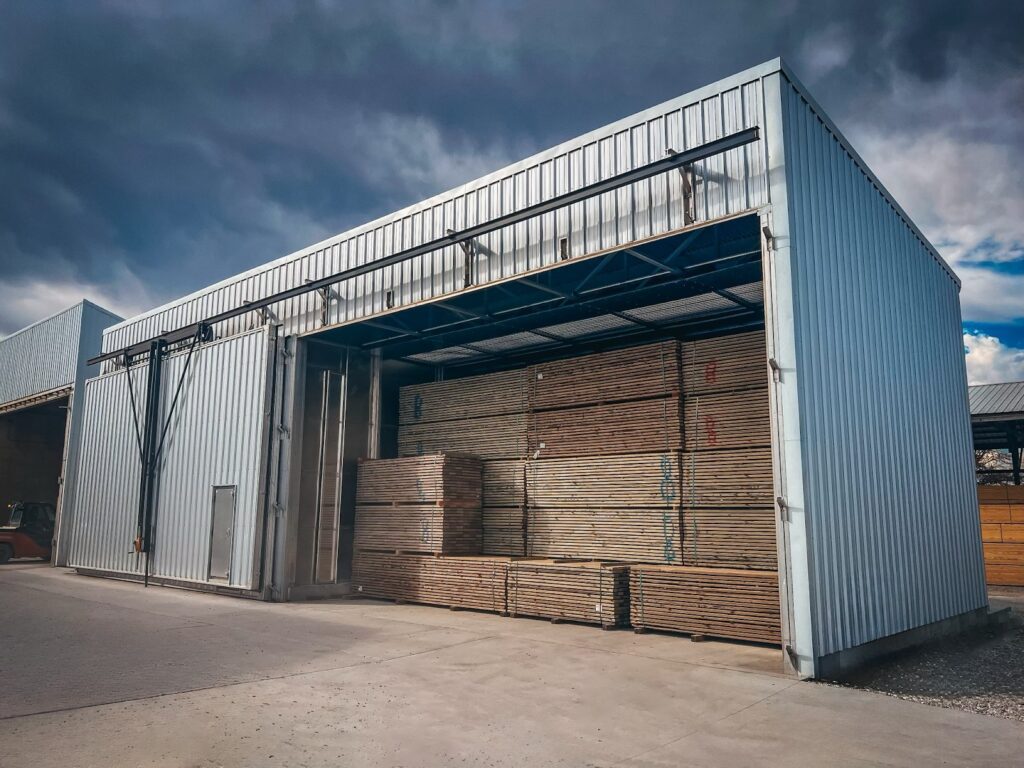
Photo Courtesy Nyle Dry Kilns
Additionally, Nyle has diversified into water-heating solutions with Nyle Water Heating Systems, which is now North America’s largest manufacturer of commercial heat-pump water heaters. With capacities ranging from 25,000 BTU to 2,000,000 BTUH, the systems can produce between 50 and 2,584 gallons of hot water each hour.
Different products offer different advantages. C-Series modular water-source heat pumps, such as the C270WM, are optimal for large-scale operations and can deliver water temperatures up to 175°F. The e-series provides reliable heat in cold conditions and can operate down to 10°F thanks to freeze protection and defrost capabilities. The e360 air source heat pump, for example, has a recovery rate of 405 gallons per hour. A new e-series unit, the recently announced Velo, will recirculate water back through the primary storage system rather than into its own tank, further reducing costs by avoiding the need for temperature-maintenance equipment and enabling up to 50% more efficient operations.
Last year, the company introduced the Alectro heat pump boiler, which it called “the world’s first direct boiler replacement heat pump for hydronic space heating.” Produced in Bagor, the Alectro reduces building carbon emissions by up to 51%, as Mathissen explained, “Space heating is one of the largest contributors to building CO2 emissions.” Because no infrastructure needs to be replaced, Mathissen added, the system also allows customers to save “up to 80% in retrofit costs compared to using other heat pump systems for space heating.” Nyle promises that customers will see a rapid return on investment thanks to “ significant reductions in your heating costs with our Alectro heat pump boiler, designed to maximize energy efficiency and minimize operating costs.”
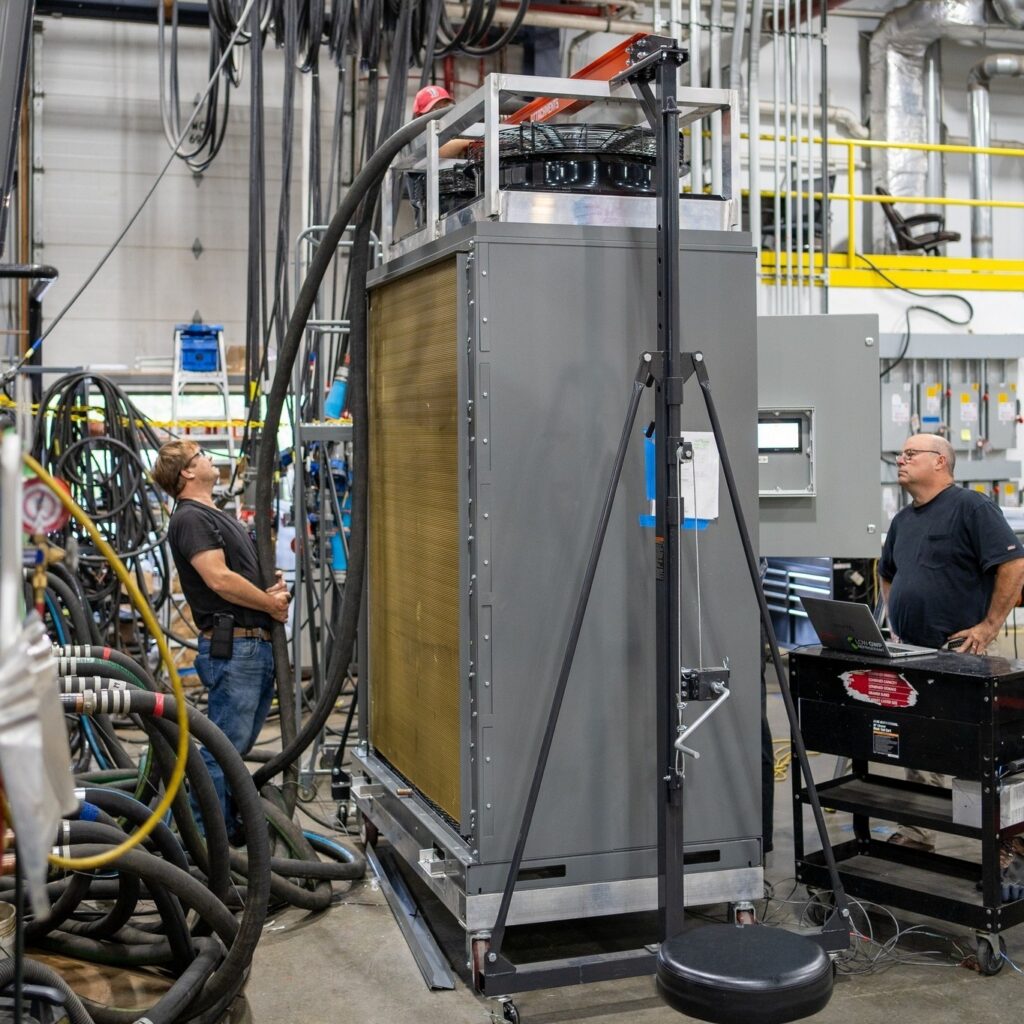
Photo Courtesy Nyle Water Heating Systems
Nyle Thermal, meanwhile, makes heat pumps for industrial electrification, and it installed more than 600 in the last year alone. These heart pumps capture and use energy that would otherwise be lost, “turning waste into energy and cost savings,” the company says, in a “continuous improvement cycle – for your business and the environment.” For example, its air-to-air heat pumps use heat from the ambient air to heat air. Its air-to-water heat pumps use heat from ambient air to heat water, while water-to-water heat pumps use heat from the water to heat water. Finally, air-to-air heat recovery systems use heat from exhausted air to enhance efficiency. Each uses “significantly less” energy than comparable solutions. The AAHR90 Heat Recovery Vent, for example, recovers up to 80% of waste heat, thereby saving 30% on fuel expenditures, while still maintaining air temperatures up to 248°F. The company develops solutions “that help our customers achieve their sustainability goals, shaping a greener future for generations to come,” using low-GWP (Global Warming Potential) refrigerants and no fossil fuels.
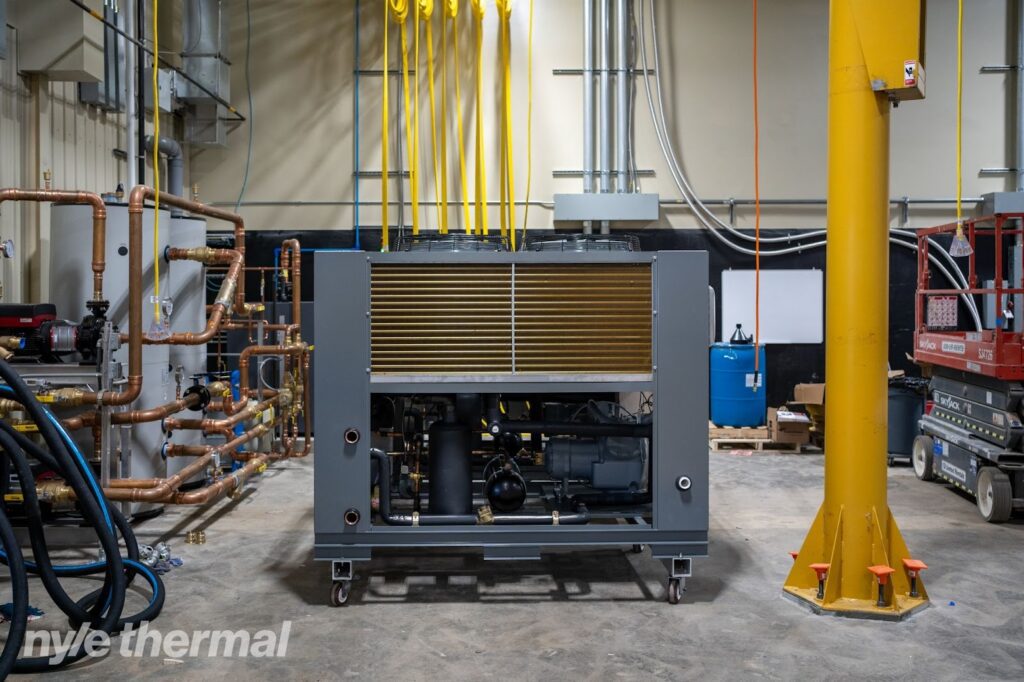
Photo Courtesy Nyle Thermal
Finally, Nyle Dehydrators brings the company’s heat pump technology to provide energy-smart drying and dehydrating for various industries. Also made in Brewer, they can preserve the colors, flavors, and nutrients in fruits, vegetables, coffee beans, spices, meat, and poultry products like jerky, seafood products like seaweed and kelp, and snack foods like granola and mushrooms. The process maintains the purity and potency of pharmaceutical products such as herbal supplements, as well as the material quality of natural fibers like wool, cotton, and hemp, and of more sustainable options like plant fibers and mushroom spores.
Nyle’s products pull air from refrigeration systems’ cold coils, reheat it over the heat pump systems’ hot coils to the proper drying temperature, and circulate it over wet products to absorb their moisture. “During this process, the energy used is only what is necessary to operate the compressor, blower, and circulating fans, resulting in up to 60% less energy than conventional dryers,” the company explains.
The FD24 Heat Pump Dehydrator, a commercial batch dryer with a small footprint that can hold 800 to 1,600 pounds of wet product per batch, can remove up to 24 pounds of water per hour, while the bigger FD60, which can hold 1,800 to 3,600 pounds of wet product, can remove up to 60 pounds per hour. Kittery, Maine-based Good To-Go, a backpacking food brand that makes healthy meals such as mushroom risotto and Thai curry, saw its production capacity increase fourfold and halved its electricity bill with the help of the FD60. With easily replaceable components and the availability of larger industrial batch dryers, such as the MD-Series Modular Dehydrators, customers can scale production over time. With 16 feet of loading space and 96 racks supporting 1,920 trays, the MD220 can dry 9,600 to 19,200 pounds of wet product at a time. Plus, Nyle’s food-drying lab enables further innovation to “unlock the full capabilities of your business’s dehydration process” and “support the growth and advancement of a variety of industries.”
Plus, recognizing the increasing environmental consciousness of the food and food processing sectors, Nyle notes that it “has already taken steps towards a net-zero greenhouse gas emissions production facility, and the Nyle Heat Pump Dehumidification Dehydrators emerge as a strategic choice for addressing these environmental priorities,” as they offer a “green advantage” in the field of food dehydration technology.
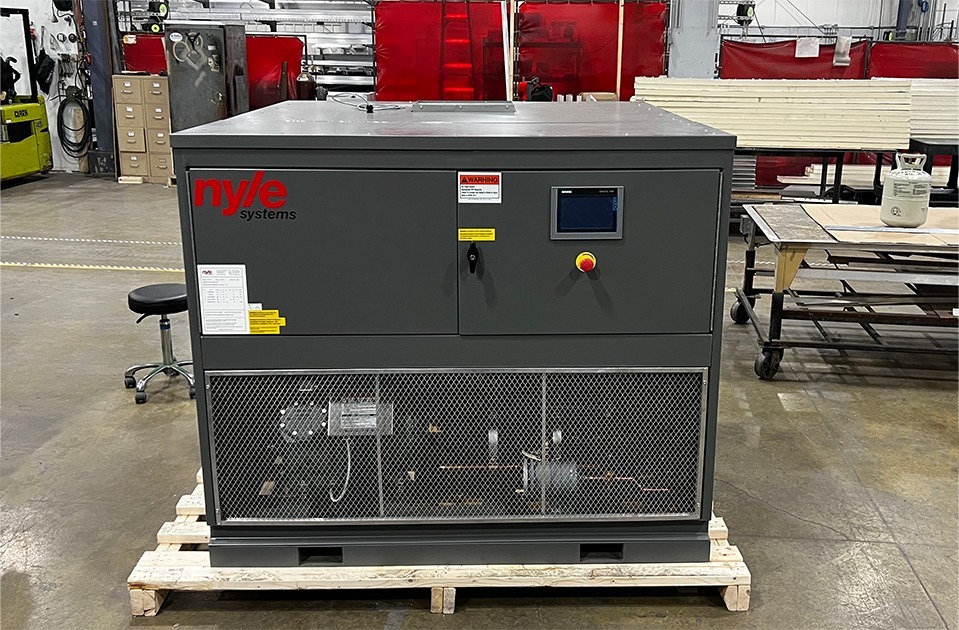
Photo Courtesy Nyle Dehydrators
Across its businesses, Nyle offers Maine-made products that drive operational efficiency and are backed by company support. In the words of Niki St. Denis, sales and marketing manager, “We don’t just sell equipment. We partner with customers to understand their goals, production challenges, and growth plans. Our engineering and service teams work side by side with them to build solutions that fit.”