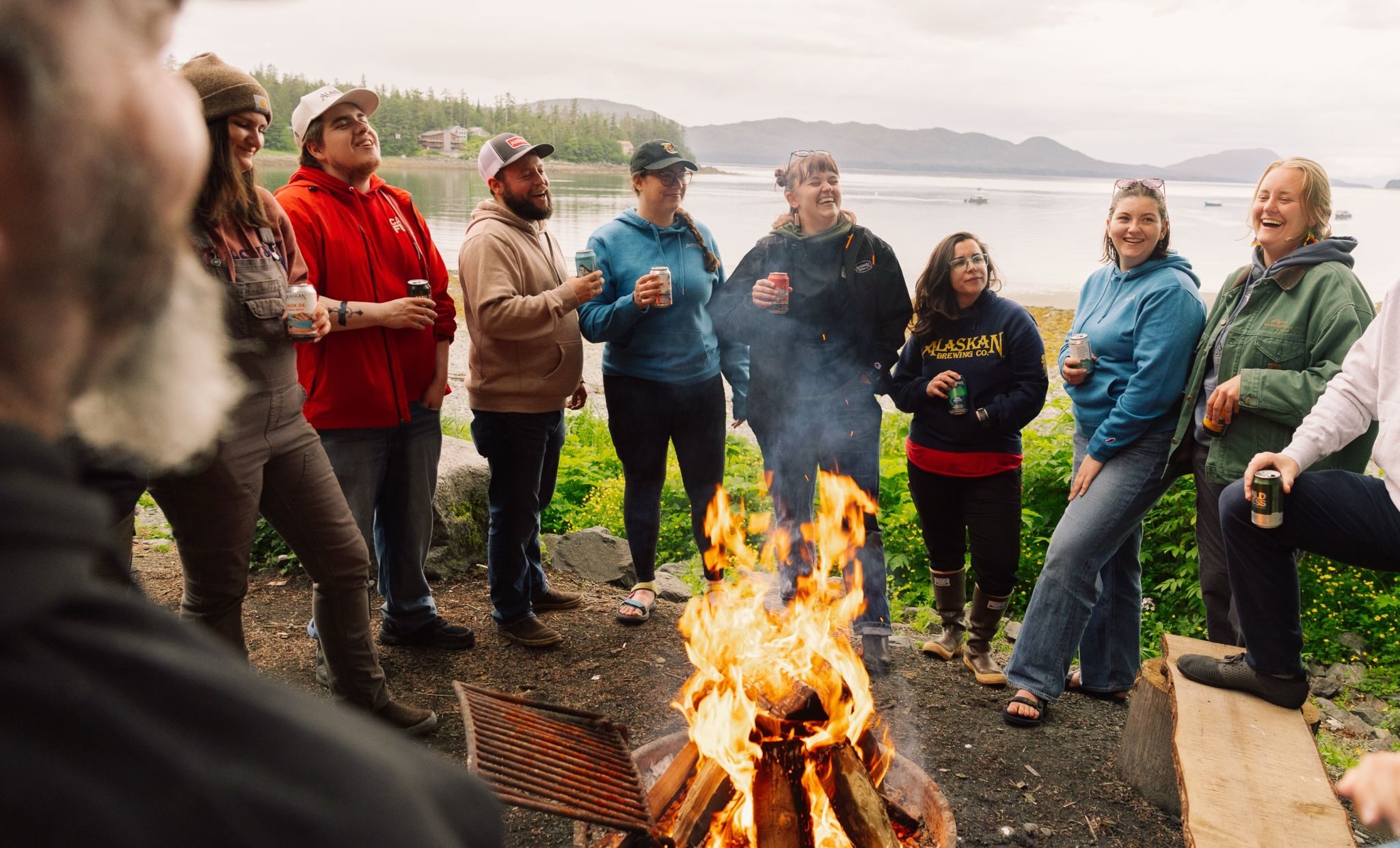
Alaskan Brewing Company’s story started in the 1980s, when Marcy and Geoff Larson moved to Alaska. Marcy recalled to Modern Farmer, “We were brought here by the beauty of the place—it’s paradise if you love the outdoors.” After moving to Juneau, Marcy began working as an accountant at the Department of Revenue, while Geoff started working as a chemical engineer at a local gold mine. Geoff explained, “The idea of starting a brewery seemed to match and mesh what we enjoyed about our life up here: each other, beer, working hard, and creating something.” When it opened in 1968, it became the first brewery in Juneau since Prohibition, before which there had been five in the city and more than fifty across the state. It also became the 67th independent brewery in the country. That December, the founder and 10 volunteers packaged the first 253 cases of Alaskan Amber in 12 hours.
With the help of 88 small investors, the company has reached its current position as Alaska’s oldest continuously operating brewery, despite Juneau’s remote location, accessible only by plane or boat. “Beer is a wonderful connector. The group of investors that we got was so diversified, it was wonderful because that represents Alaska, Geoff said to Edible Alaska. “There’d be environmentalists, loggers, oil guys, all together, and they didn’t agree on politics, but they had no problem drinking the beer.”
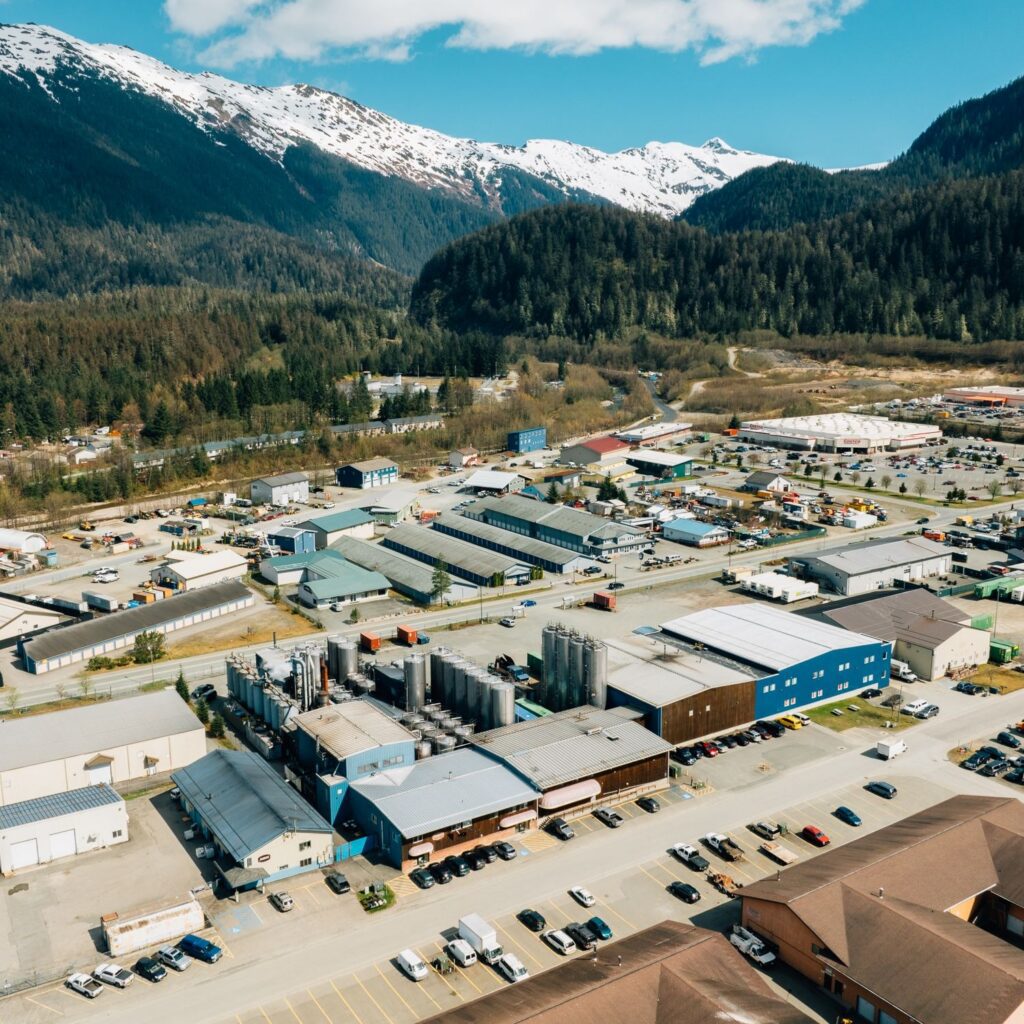
Photo Courtesy Alaskan Brewing Company
“Alaskan Brewing began with an inspiration from the past and a dream of creating uniquely Alaskan beers,” the company explains. The brewery has pulled on local traditions from the start. Because Juneau was a gold mining town, the co-founders stored early versions of its Alaskan Barley Wine in the tunnels of the Alaska-Juneau Gold Mine “as homage to the brewing practices of the Gold Rush.” When preparing to launch the brewery, Marcy discovered records and articles that listed the ingredients and the cold-fermentation brewing process used by Douglas City Brewing Co., which was active from 1899 to 1907. The Larsons’ version became the Alaskan Amber.
Meanwhile, Geoff was inspired by the Southeast Alaskan tradition of smoking salmon over alder hardwood trees. “If you walked down the streets of Juneau in 1907, what you smelled was smoke. In a town where smoke is everywhere, it’s probably in the beer. It wasn’t out of place,” he described to All About Beer Magazine. “There was a point when we thought, boy, it would be great to make a beer touching on the history of Alaska and the fact that to get these dark roasted malts, the old maltsters were having to really crank up the heat, invariably resulting in some smoke.” They worked with a friend and neighbor who operated a fish-smoking business to incorporate smoked malt into beers, such as the Smoked Porter, with the added benefit of serving as a preservative.
The artwork on many of the beers also portrays central aspects of Alaskan life. The Alaskan White Ale portrays a polar bear, which the company says “can be found traversing through the snow, ice, and open waters along the northern coastlines of Alaska… Alaskan White Ale toasts this extraordinary bear and its place at the top of the world.” The Husky IPA, meanwhile, “is inspired by some of the hardest working athletes that Alaska has to offer, the Husky,” which the company says “has been and still continues to be an integral part of the history and culture of Alaska.”
Alaskan Brewing also uses local Alaskan ingredients in its beer. “Our unique Alaskan ingredients allow us to tell a depth of stories about each product,” Marcy told Beverage Industry. The Juneau Icefield, which the company notes is “larger than the state of Rhode Island,” has 1,500 square miles of ice and glaciers and “is the source of water for all our brews.”
In Gustavus, Alaska, residents hand-harvest spruce tips from Sitka spruce trees at the beginning of every summer, a family event rooted in tradition, with the spruce tip serving as a traditional food source for Alaska’s indigenous cultures. “When Captain James Cook was looking for the Northwest Passage in 1778, he used local plants to eliminate scurvy. Up here, he used the new shoots of the spruce trees,” Marcy added to Market Watch Magazine. Alaskan Brewing buys more than 5,000 pounds of spruce tips to add floral flavors to beers like Winter Ale and to spruce-tip-infused hard seltzers. “The first rush of sap in the spruce is sweet like maple syrup,” Geoff noted.
Some beers in particular stand out. In 2020, for example, the company introduced the Fireweed Blonde into its Limited Release series, featuring fireweed honey, sourced from the fireweed blossoms, which, the company notes, “signal the summer season in Alaska. Fireweed is named for the dazzling blooms, but also for the fact that it is among the first plants to repopulate areas hit by wildfires that can impact much of the Alaskan wilderness. For that reason, fireweed has become a symbol for renewal in Alaska, and for the long summer days that this beer is made for.”
More recently, in 2024, Alaskan Brewing added WILDNESS to its year-round offerings. The company makes the beer “by working harmoniously with the rugged environment rather than against it,” using the cold Alaskan temperatures to its advantage in a cold fermentation process. “WILDNESS is for those who want a taste of adventure,” Chief Operating Officer Maxwell Rule described the beer, “giving seasoned Alaskan Brewing fans and beer lovers across the country a taste of the adventurous lifestyle of the Last Frontier.”
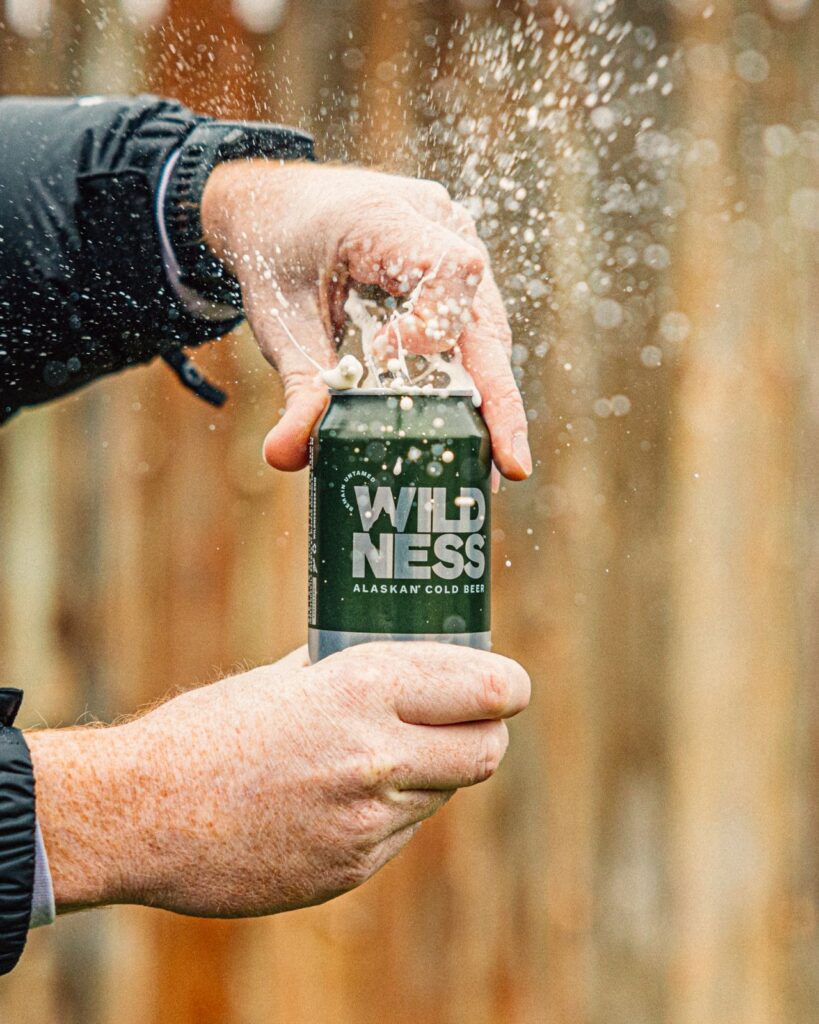
Photo Courtesy Alaskan Brewing Company
“At Alaskan Brewing Company, sustainability isn’t just a buzzword – it’s our mission,” the business writes. The ‘Beer Powered Beer’ process is the heart of it all. Through the closed-loop system, the brewery uses its own byproducts to power its operations. In 1998, for example, it launched a CO2 recovery system that captures and purifies more than 1 million pounds of carbon per year, adding it back into the beer rather than releasing it into the atmosphere. Alaskan Brewing was the first U.S. craft brewer to deploy such a system and added a second in 2001.
The carbon dioxide that it had been purchasing from other manufacturers in Seattle was “coming from burning fossil fuels or from CO2 wells,” explained plant manager Curtis Holmes, whereas it now sources its CO2 from the grain that captured it from the atmosphere during the growing process and was therefore “natural to begin with.” The company also saves on costs, as it has not purchased carbon dioxide in more than 18 years. “For most breweries, shipping carbon dioxide in and out in a liquid form is cheap and pretty easy. For us, it was very expensive,” Geoff reflected on Juneau’s inaccessibility. The first system paid for itself ahead of schedule in just three years.
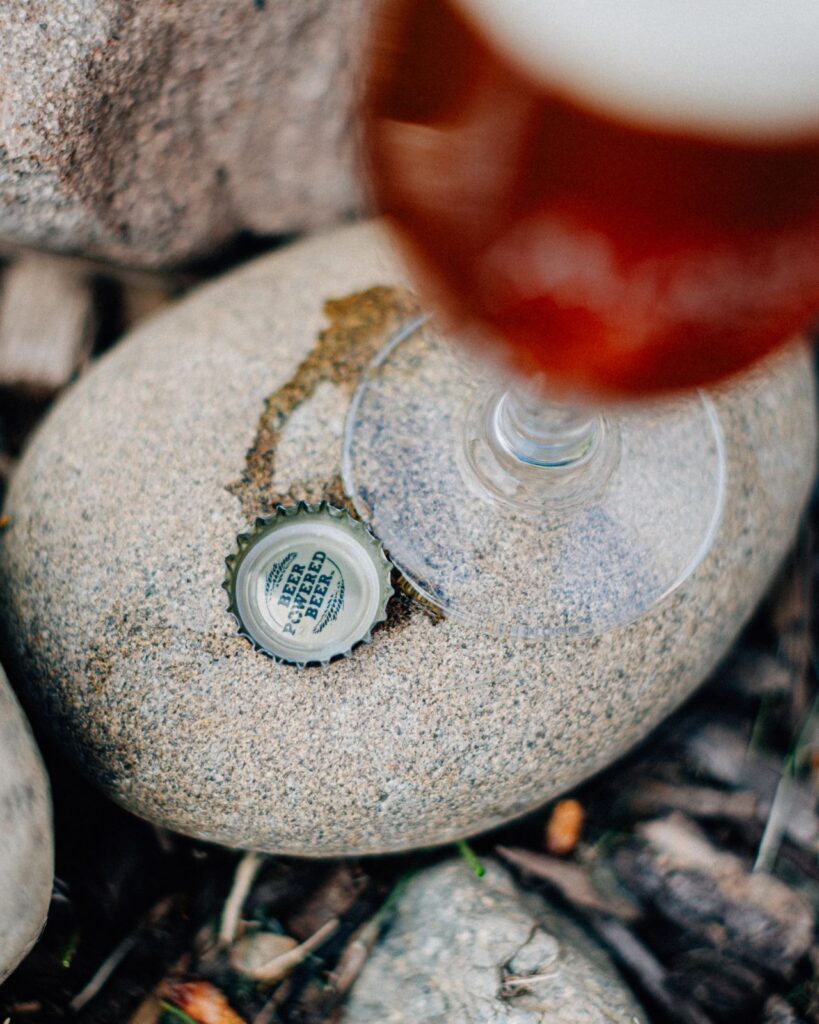
Photo Courtesy Alaskan Brewing Company
In 2008, Alaskan Brewing Company also became the first in the country to adopt Belgian mash filter-press technology, which reuses leftover malt grains. The machine applies pressure and cloth filters to make more beer with fewer inputs. Allowing for full malt utilization and increasing grain output by about 5% annually, it is “kind of like the espresso machine of beer making, instead of drip coffee,” Geoff described. “Since its introduction, we’ve saved millions of gallons of water,” the company says,” in addition to reducing its use of malt and hops. Every year, it saves over 1 million gallons of water.
In 2011, the brewery introduced a spent grain steam boiler. Now, the beer-making process is powered entirely by its spent grain, turning the byproduct into “a revolutionary fuel source.” Refusing to send the spent grain to a landfill, without any nearby farms in Juneau to use it as cattle feed, and with high costs and environmental impacts of shipping it to the lower 48 states, using the spent grain for energy proved an innovative alternative to traditional solutions deployed by other breweries. Plus, it addresses the fact that the beer production process is extremely energy intensive, as Brandon Smith told KTOO, “We have to boil it. We have to cool it down. We have to move heat from one place to another. It takes a tremendous amount of energy.”
The boiler has helped Alaskan Brewing to reduce its oil usage by over 65%. Smith estimated that at the time of adoption, it would translate into 150,000 gallons of oil saved per year, with the caveat that “we expect further gains in that percentage by creating other efficiencies in the operation. The eventual goal is to be completely oil-free.”
Geoff explained the circular nature of the company’s operations to Modern Farmer: “Because our spent grain is our fuel and is directly tied to the amount of beer we make, the amount of energy we need is directly matched by the amount of beer we produce, and the same with CO2. The systems are all in sync, and there’s no waste.” Thanks in large part to this technology, the company said in 2021, “As of today, our brewery operation is proudly carbon neutral, providing bold Alaskan brews up to 3,000 miles away.”
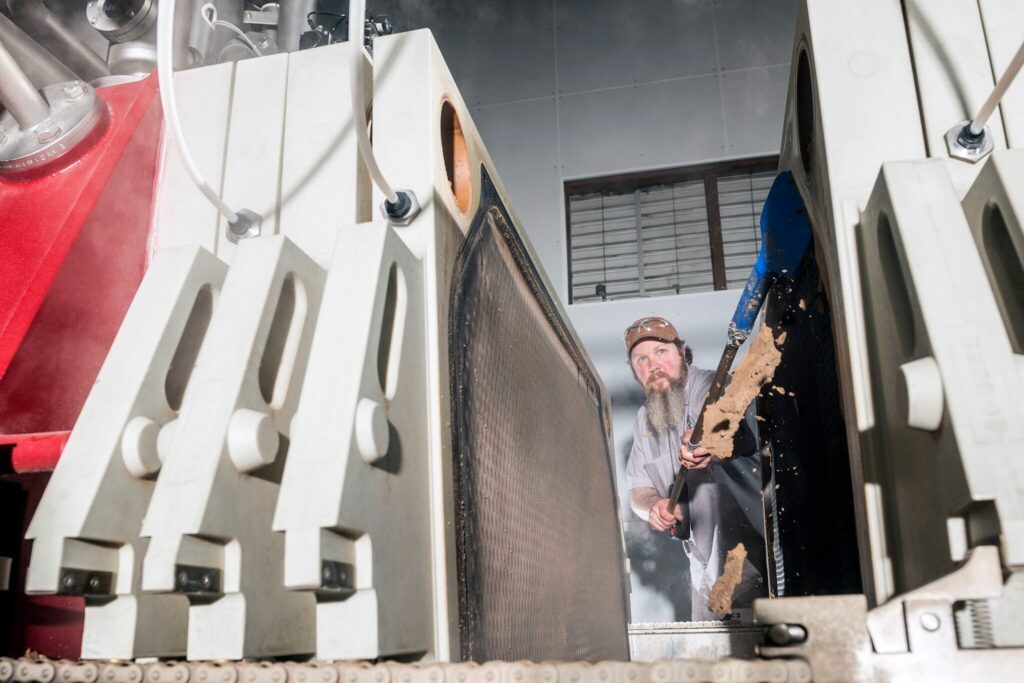
Photo Courtesy Alaskan Brewing Company
Finally, Alaskan Brewing recycles all plastic and aluminum waste. For example, it sends aluminum cans that do not pass inspection or are damaged during packaging to recycling partners in 200-pound bales. The company also recycles plastic wrap and ties used to seal any packaging it receives.
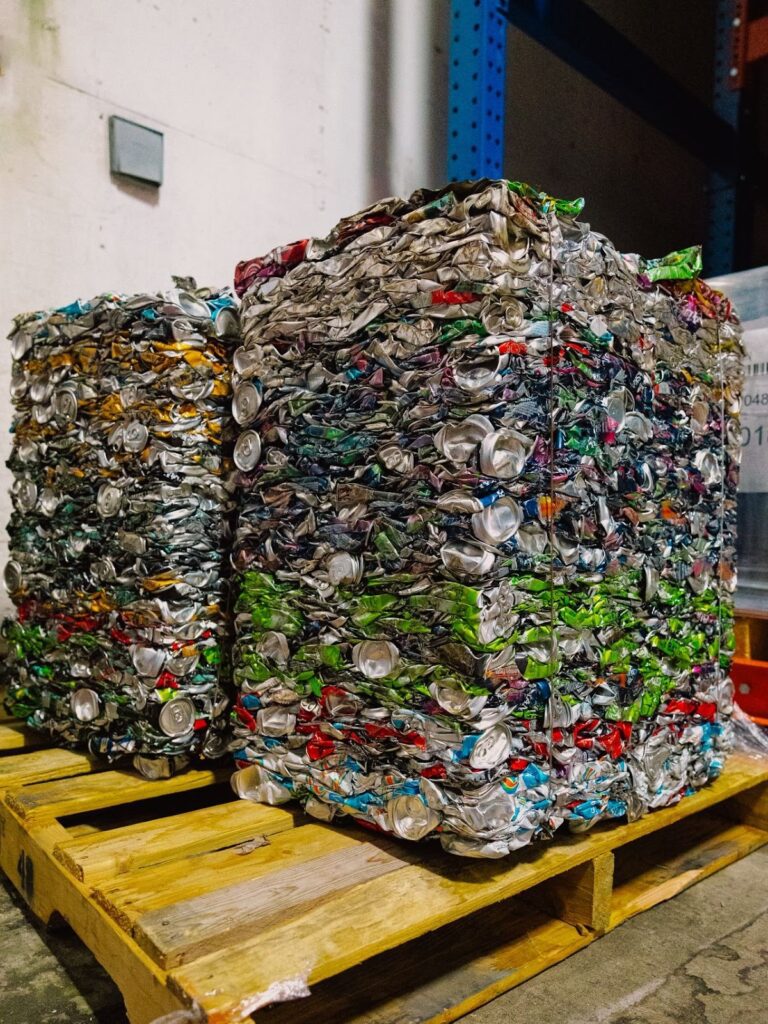
Photo Courtesy Alaskan Brewing Company
The brewery has long been focused on minimizing environmental impact and giving back to its community. In 2007, it launched the Coastal CODE (Clean Oceans Depend on Everyone) initiative. With funding generated from 1% of the proceeds from sales of its Icy Bay IPA, the initiative provides grants to nonprofits working to clean up beaches, lakes, and waterways. By 2022, Alaskan Brewing had provided over $350,000 to such organizations and helped remove over 1 million pounds of trash. Additionally, every year, Alaskan Brewing employees join coastal cleanup efforts. Suki Patterson, a maintenance manager who often partakes in these cleanups, explained, “I’ve been involved with Coastal CODE ever since I started 11 years ago. It’s important. If people really think about what it means — Clean Oceans Depend on Everyone — it’s really putting ownership and the onus on all of us. It really does depend on everyone.”
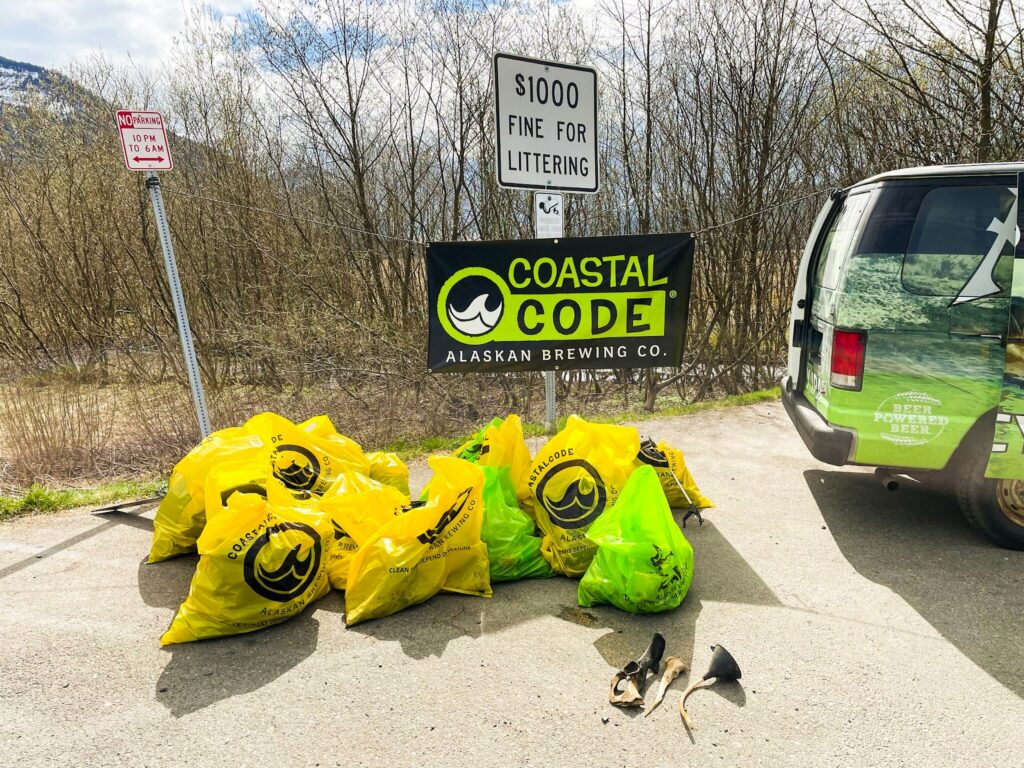
Photo Courtesy Alaskan Brewing Company