
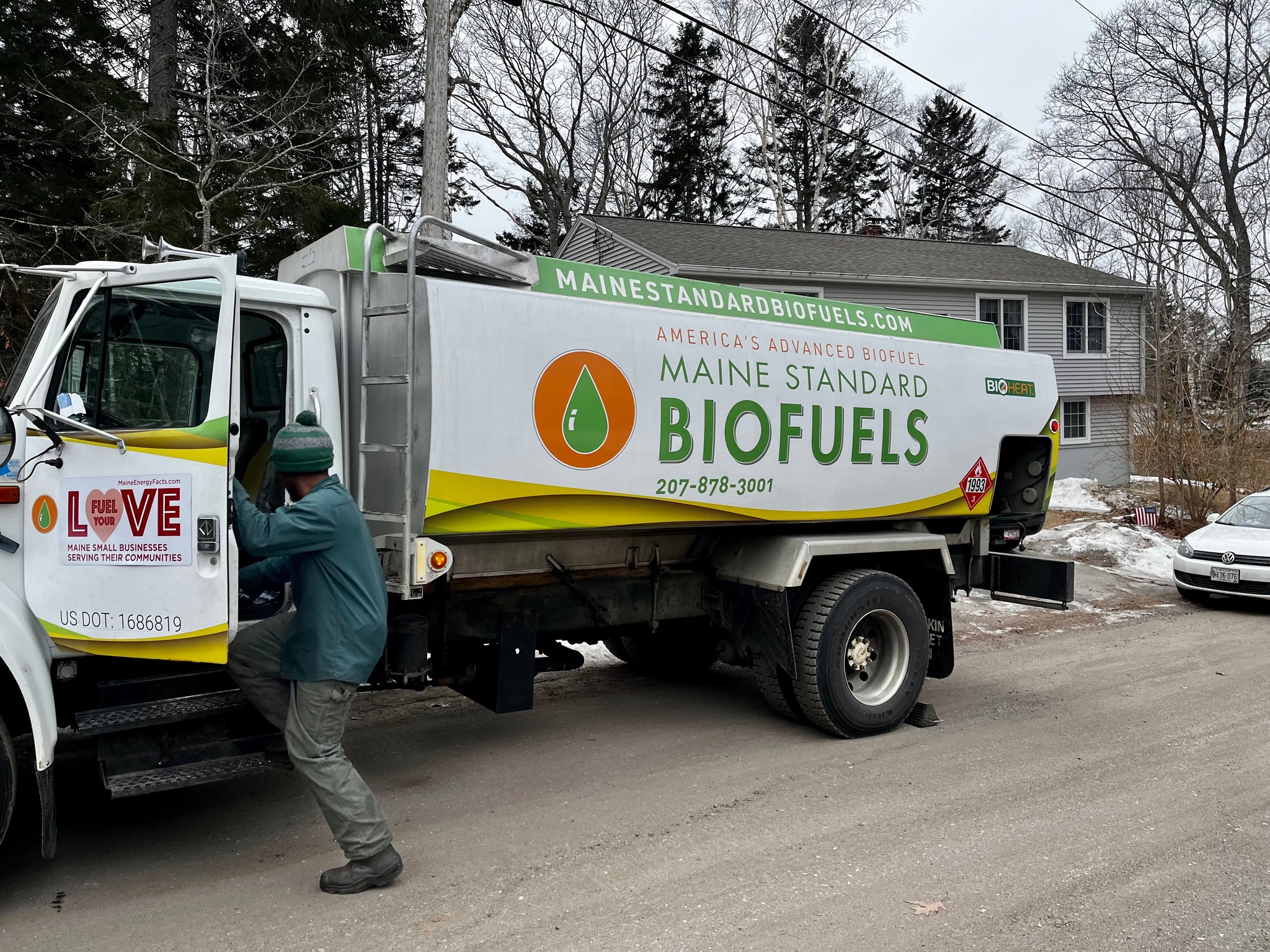
Maine Standard Biofuels is a biorefinery in Portland that recycles cooking oil into a variety of products: transportation fuel, home heating oil for warmth, and bio-based cleaning products. Claiming to be Maine’s “only full-service used cooking oil (UCO) collector,” the company gathers used cooking oil from more than 1,000 New England restaurants and food manufacturers. It aims to make the process as seamless as possible by providing custom-built containers with a small footprint and durable steel construction, with no attached monthly fees. The business promises to collect the oil promptly at scheduled times, though users can also drop off small amounts in a sealed container at the facility. Maine Standard Biofuels says that any amount of used cooking oil will suffice, and guarantees the product will never return to the food chain.
Instead, the company creates new bio-based products from old oil by chemically transforming it. The company produces biodiesel using a process called transesterification, in which it adds alcohol and a strong base to the collected cooking oil, producing a byproduct called glycerin. “We are left with fatty acid methyl esters (FAME), which is biodiesel,” the company explains.

Photo Courtesy Maine Standard Biofuels
Maine Standard Biofuels is the sole biodiesel manufacturer in Maine, and its B99.9 biodiesel is available at the pump Monday through Friday and can also be ordered in bulk. “Pretty much any diesel vehicle can use a biodiesel blend without modification,” the company notes, although “some vehicles can use a higher blend easier than others.” As one customer described their experience with the company, “The tractor runs just as well, if not better than, it does on conventional Diesel fuel alone. I appreciate their dedication to producing a renewable fuel for the people of Maine while providing the service of recycling waste cooking oil for Maine businesses.”
“Our mission is to support Maine-based organizations that are actively planning on transitioning their reliance on petroleum hydrocarbons to cleaner, greener alternatives,” Maine Standard Biofuels writes. Compared to petroleum diesel, biodiesel promises lower emissions. In fact, the Environmental Protection Agency says that biodiesel reduces particulate emissions by up to 47%, hydrocarbon emissions by 67%, and carbon emissions by up to 86%. Another customer, Bill Bennett, said, “It’s important for Oakhurst Dairy to partner with businesses that are committed to making an environmentally friendly fuel product from recycled material. Maine Standard Biofuels delivers.”
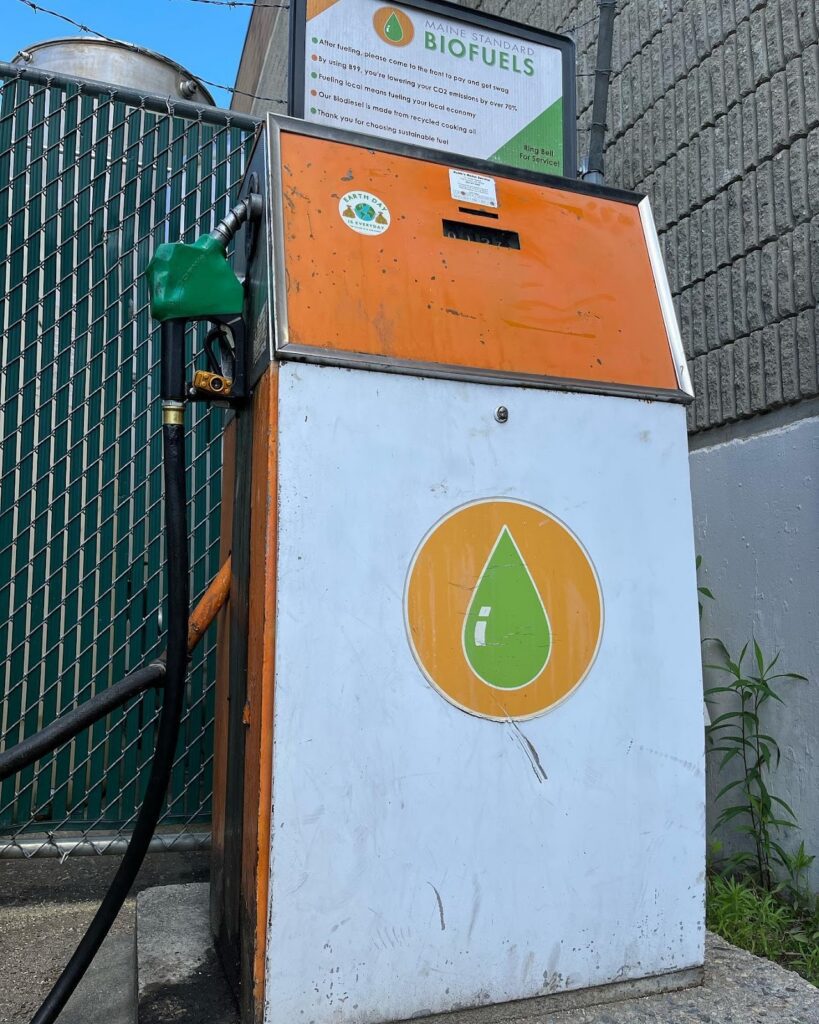
Photo Courtesy Maine Standard Biofuels
Among the Maine leaders that have adopted the company’s sustainable fuels are the Casco Bay Island Transit District, a ferry system that has sourced biodiesel from the company since 2014, and Hannaford Supermarkets, which has collected cooking oil from locations across New England and New York since 2015. From 2015 through 2021, Casco Bay Lines used more than 297,000 gallons of B99.9 biofuel, eliminating over five and a half million pounds of carbon emissions, equivalent to 31,059 trees planted and allowed to grow 10 years, 639 tons of waste recycled instead of landfilled, or 409 cars removed from the road for a year. During the same period, 74 Hannaford locations recycled 166,276 gallons of cooking oil, equivalent to planting 16,546 trees and letting them grow for 10 years, 340 tons of waste recycled instead of landfilled, or 218 cars removed from the road for a year.
Additionally, in 2021, the Maine Department of Transportation began using Maine Standard Biofuels’ biodiesel to fuel its diesel fleet in a pilot study that proved highly successful. Accordingly, the department expanded its sourcing of biodiesel blends to fifteen garages and of heating oil to eight locations in Southern Maine. “By continuing this partnership, the Maine DOT’s adoption of sustainably sourced fuel directly contributes to our state’s effort to ‘Lead By Example,’” Maine Standard Biofuels explains. “Recent economic and societal shifts have highlighted the need for changes to be made on a macro level, but we believe meaningful adoption on a local level will have a significant impact.”

Photo Courtesy Maine Standard Biofuels
Additionally, Maine Standard Biofuels invites customers to “enjoy greener, cleaner home heating oil,” a bioheat called Bio20 Heating Oil, which it manufactures and blends in Portland. The drop-in replacement for traditional heating oils like petroleum diesel and #2 heating oil is a high-performance blend of the company’s locally produced biodiesel and ultra-low-sulfur heating oil.
The business says it burns cleaner than traditional heating oils, specifying, “Bio20PLUS will burn up to 20% more efficiently.” The lower amount of sulfur content than the alternatives also translates into less maintenance. Maine Standard Biofuels touts the environmental benefits: “Less pollution means more of your fuel is being turned into heat. Plus, less pollution means less soot that needs to be removed from your heater.” The company adds, “The cleaner oil will actually reduce your carbon footprint and mean more money in your pocket!”
Maine Standard Biofuels promises that it “is dedicated to staying within market pricing,” will not cost more than conventional heating oil, and that it will not require any expensive upgrades. The company notes that it shows up when it is cold, providing “reliable heat, clear communication, and a more sustainable way to power your home,” because “heat matters most when winter doesn’t let up.” “We’ve been using Maine Standard Biofuels heating oil to heat our home for two years now,” customers Stacy and Craig Angell from Scarborough told the business. “The service is always timely when we need oil.”

Photo Courtesy Maine Standard Biofuels
Moreover, the company produces bio-based cleaning products through its sister company, Wicked Strong, using the glycerin byproduct generated by its induced chemical reaction. Wicked Strong recalled its origin story, “After one spill (and an unexpectedly spotless floor), the team realized that this upcycled material cut through grease and grime as well—or better—than the harsh chemical cleaners found on most shelves. That discovery sparked an idea: instead of throwing this by-product away, why not put it to good use?” Upcycling the glycerin, therefore, reduces waste. As the company explained its name, “In Maine, ‘wicked’ is more than just slang — it means something powerful, authentic, and undeniably good.”
Now, Wicked Strong comprises a line of U.S. Department of Agriculture (USDA)-certified, 100% bio-based cleaning products, including an all-purpose household cleaner, a floor and surface cleaner, a kitchen cleaner and degreaser, an oven and grill cleaner and degreaser, and a dish and pan low-foam detergent. The company makes these products by combining its biodiesel by-products with all-natural, plant-based ingredients. They are 100% biodegradeable, guaranteed to “break down naturally and quickly without causing harm to people, wildlife or the environment.” All products are therefore non-toxic, with no synthetic additives such as fragrances and dyes, and are free of bleach, phosphates, sulfates, and petroleum derivatives. Essentially, “every bottle helps reduce waste, protect waterways, and cut down on harmful chemicals in homes and businesses.” Plus, the business continuously reuses and refills the same Wicked Strong product buckets and ships all its products in recyclable packaging.

Photo Courtesy Maine Standard Biofuels
On top of all this, Maine Standard Biofuels maintains a green operation at its biorefinery in Portland. The recycling process is zero-waste, as it sends scraps to a biodigester to create compost and clean energy. The facility itself is renewable-powered, and the company’s fleet is biodiesel-powered. “Since our founding in 2006, we’ve embraced the power of localism and sustainability to help make New England a better place,” Maine Standard Biofuels described.
Plus, these companies have a positive local impact. By being New England-owned and operated, Maine Standard Biofuels notes, “Money and jobs stay within the local economy.” Collecting cooking oil locally and producing biofuel in Portland also means that the company is “keeping energy right here where it belongs!” Wicked Strong, meanwhile, proclaims that it is “proudly made in Maine, supporting a stronger, cleaner community.”
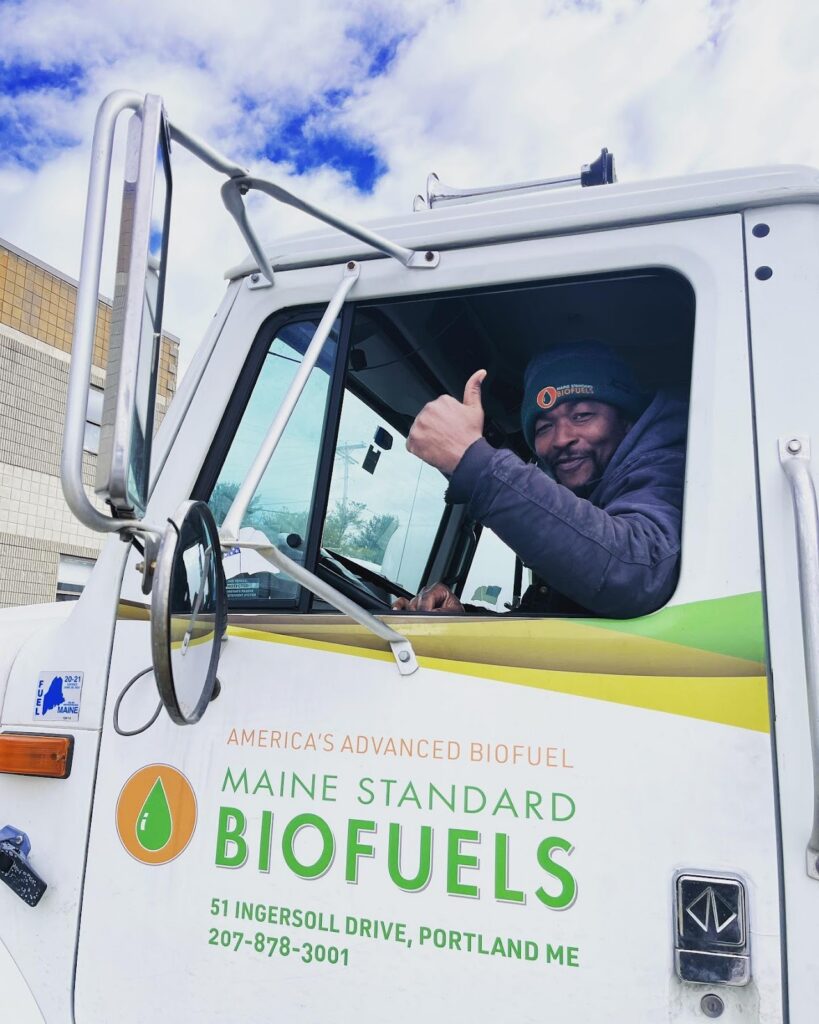
Photo Courtesy Maine Standard Biofuels