Carnival Corporation owns a portfolio of cruise lines that collectively aim to deliver “unforgettable happiness to our guests by providing extraordinary cruise vacations, while honoring the integrity of every ocean we sail, place we visit, and life we touch.” One commonality of five of its cruise lines, including Carnival Cruise Line, Cunard, Holland America Line, Princess Cruises, and Seabourn, is that they feature Alaska as a key destination. With 300 employees living in the state, the company describes, “Our operations in Alaska reflect our profound respect and care for the land, its natural resources and its people, while allowing us to share Alaska’s experience, scenery, culture and lifestyle with the most cruise guests each year.”
In pursuit of net-zero emissions by 2050, Carnival has been experimenting with cleaner fuels. After introducing Liquefied natural gas in 2018, the company also turned its attention to biofuels, which it estimates have lifecycle emissions up to 86% lower than marine gas oil. The company also touts that biofuels can be deployed in the engines of ships already in service without any infrastructure modifications.
After testing biofuels on two ships in 2022 and one ship in 2023, the company piloted biofuels on four ships in 2024, using both liquefied bio-methane and residual biofuel. In 2022, for example, Volendam from the Holland America Line became the first large-scale cruise ship to be powered fully by biofuel, after pilots tested both a blend of marine biofuel and 100% biofuel. In 2024, the company fueled one of the four engines on the Holland America Line’s Rotterdam with low-carbon-intensity oil derived from organic waste or residues, certified under the European Union Renewable Energy Directive. “We are very encouraged by the results of our next-generation biofuel tests,” said Gus Antorcha, president of Holland America Line.
Carnival is also working with a variety of partners, including the Alaskan port communities of Haines, Juneau, Sitka, and Skagway, on the Pacific Northwest to Alaska Green Corridor project, which aims to accelerate the adoption of zero-emission fuels and technologies along the maritime route.
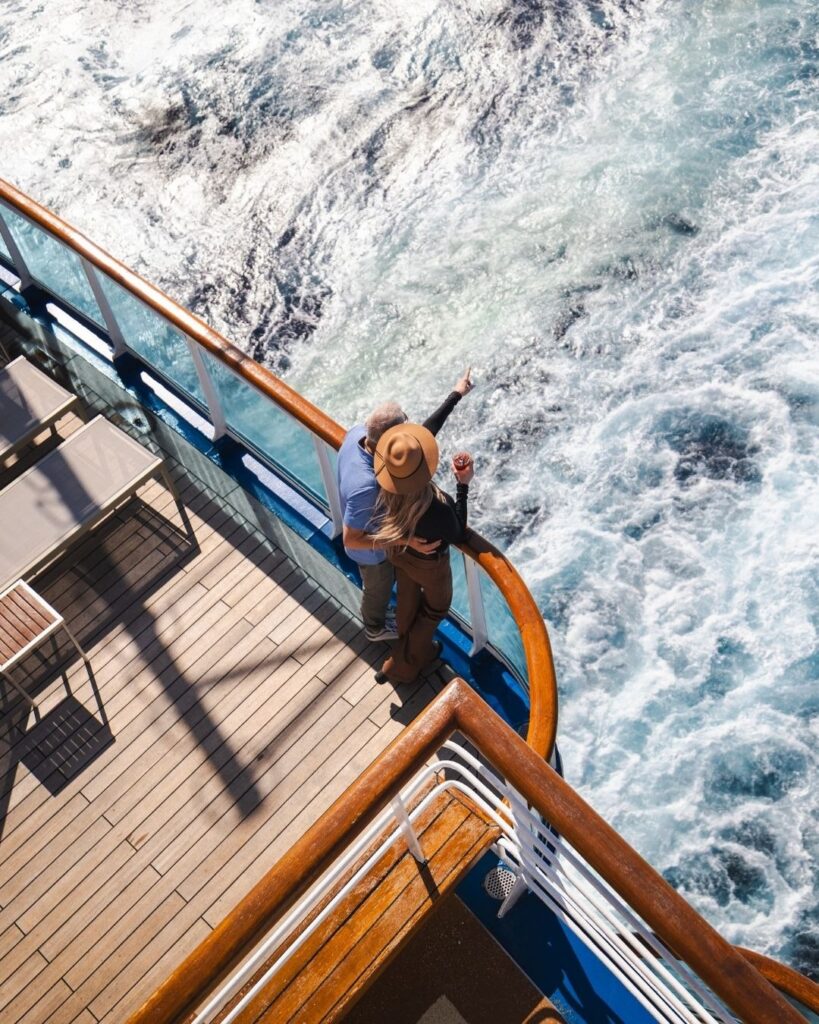
Photo Courtesy Princess Cruises
Moreover, Carnival is reducing the amount of fuel its ships use. Between 2020 and 2025, Carnival retired 29 older ships, and it estimates that the seven new ships scheduled to join its global fleet through 2033 will be at least 20% more efficient and will be paired with more fuel-efficient itineraries. New hull designs minimize drag, while 360-degree steerable propulsion units mean ships use up to 7% less fuel. The company has also invested in air lubrication systems that reduce friction as ships sail by covering the flat bottom of the hull with air bubbles, thereby reducing fuel use by about 5%. Likewise, Power Saver Packs reduce the energy required for onboard systems and services, reducing fuel use by another 5%, while technologies like LED lights and smart management systems further enhance energy efficiency. The company is also working on ways to reuse engine-generated heat to produce steam for energy and testing energy storage battery systems. Resulting fuel savings translate into cost savings, as well.
In ports, Carnival uses shore power by plugging into the local grid and, when possible, uses clean energy sources to power docked ships. More than 20 years ago, in 2001, Princess Cruises worked with the City and Borough of Juneau and Alaska Electric Light and Power Company to plug into shore power for the first time and use surplus hydroelectric power, becoming the first cruise line to do so.
According to the U.S. Environmental Protection Agency (EPA), using shore power can reduce emissions by up to 98%. “Using shoreside electricity to power our ships in port is an integral part of our global strategy to reduce GHG emissions and minimize our environmental footprint,” said Josh Weinstein, CEO of Carnival Corporation.
By investing in local equipment that enables its ships to connect to shore power and paying local power companies for the service, Carnival also generates revenue for the port region. It can also reduce energy costs for residents and businesses. The money Princess Cruises spends to tap into energy in Juneau is used either to offset diesel expenses or to offer rebates on electric bills. Between 2001 and 2021, Princess Cruises contributed $8.5 million to the Juneau community. Connie Hulbert, president and general manager at Alaska Electric Light and Power Company, reflected, “We are proud that our remote city, with our own isolated electric grid, is the first place in the world to use this innovative technology for passenger vessels, which has provided economic and environmental benefits to the community of Juneau.”
Next year, Holland America Line and Princess Cruises vessels will also be able to connect to shore power in Whittier, thanks to a $12 million project developed in collaboration with the State of Alaska and the Chugach Electric Association.
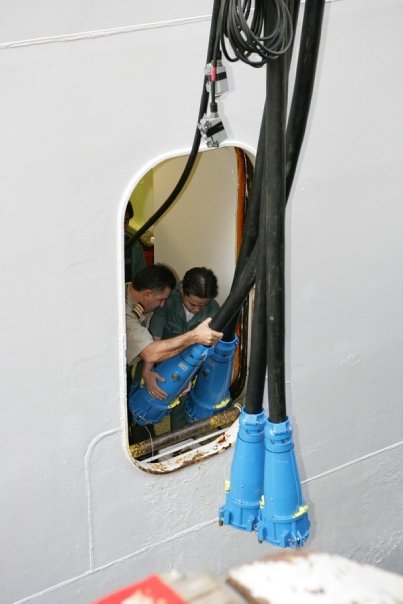
Photo Courtesy Princess Cruises
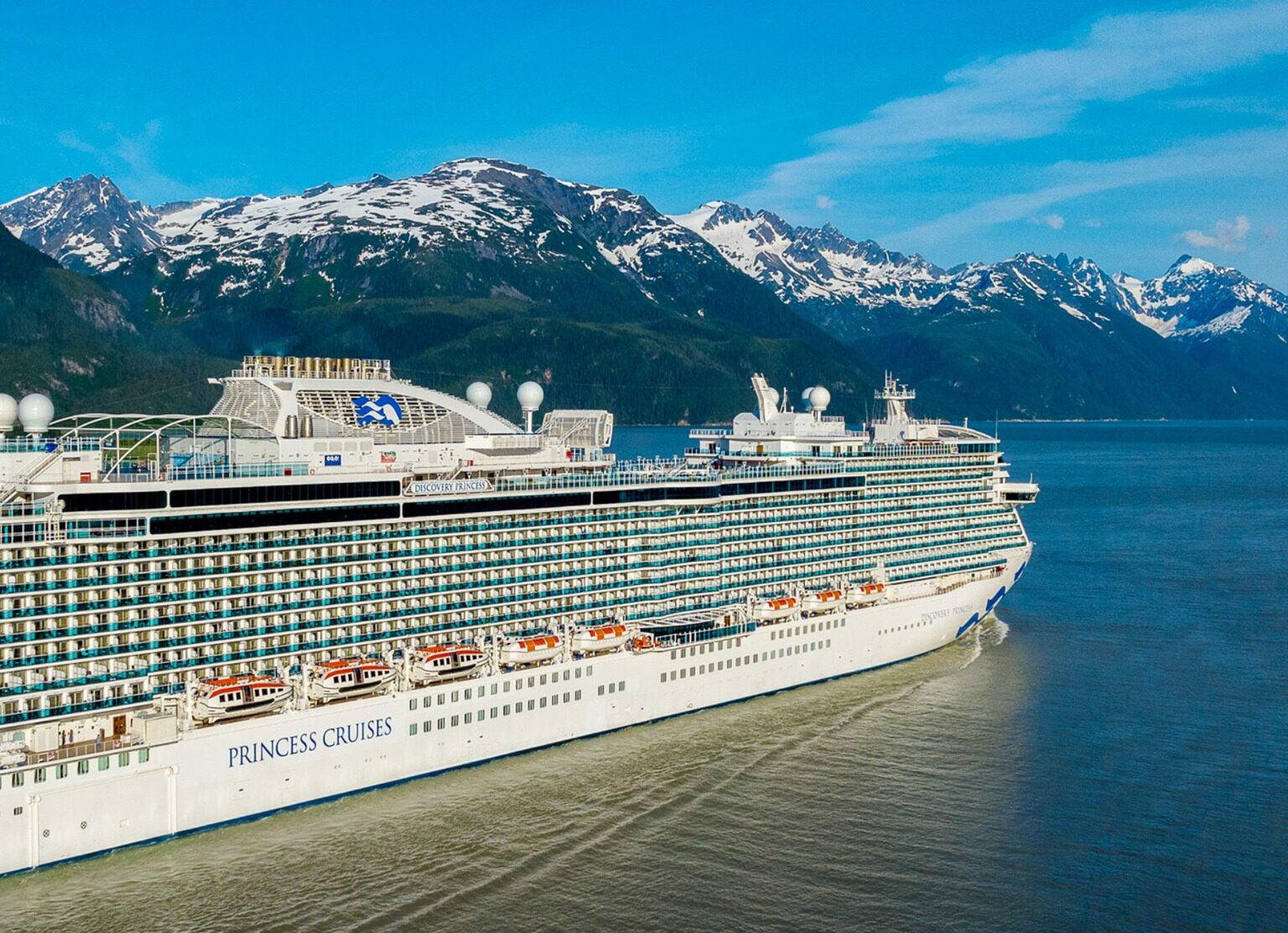
Carnival’s work on biofuels also extends into its operations on land. In 2018, Carnival Corporation began testing biodiesel fuel made with discarded cooking oil from Juneau restaurants to power its tour buses. When the restaurant industry temporarily shuttered for the Covid-19 pandemic, Carnival turned to used cooking oil from one of its own ships, the Discovery Princess, which frequently visits Alaskan destinations. In 2023, Holland America/Princess Alaska-Yukon Land Operations (Holland America Princess), Carnival’s land-based subsidiary in Alaska, partnered with a biofuel refiner in Juneau to turn this used cooking oil into fuel for its tour buses.
Bill Hagevig, a Juneau native and division manager for Holland America Princess, came up with the idea, which now results in Discovery Princess separating its cooking oil from other waste onboard, offloading it for conversion and testing, and ultimately sending it to power vehicles. Hagevig told Cruise Hive, “This is more about doing the right thing for Alaska than anything else. We have tour buses and vehicles that can accept biodiesel, and I am hopeful we can expand that program into each one.”
Holland America Princess is innovating in other ways as well. The company operates the biggest private fleet of electric and hybrid electric vehicles in the state. Plus, six double-decker buses in Juneau carry twice as many people but with only a minimal increase in fuel consumption. “We’re stewards of these landscapes first, transportation providers second, said transportation director Kathleen Ashton Keiner. “When you operate in North America’s last great frontier, protecting the environment isn’t optional—it’s our responsibility.”

Photo Courtesy Holland America/Princess Alaska-Yukon Land Operations