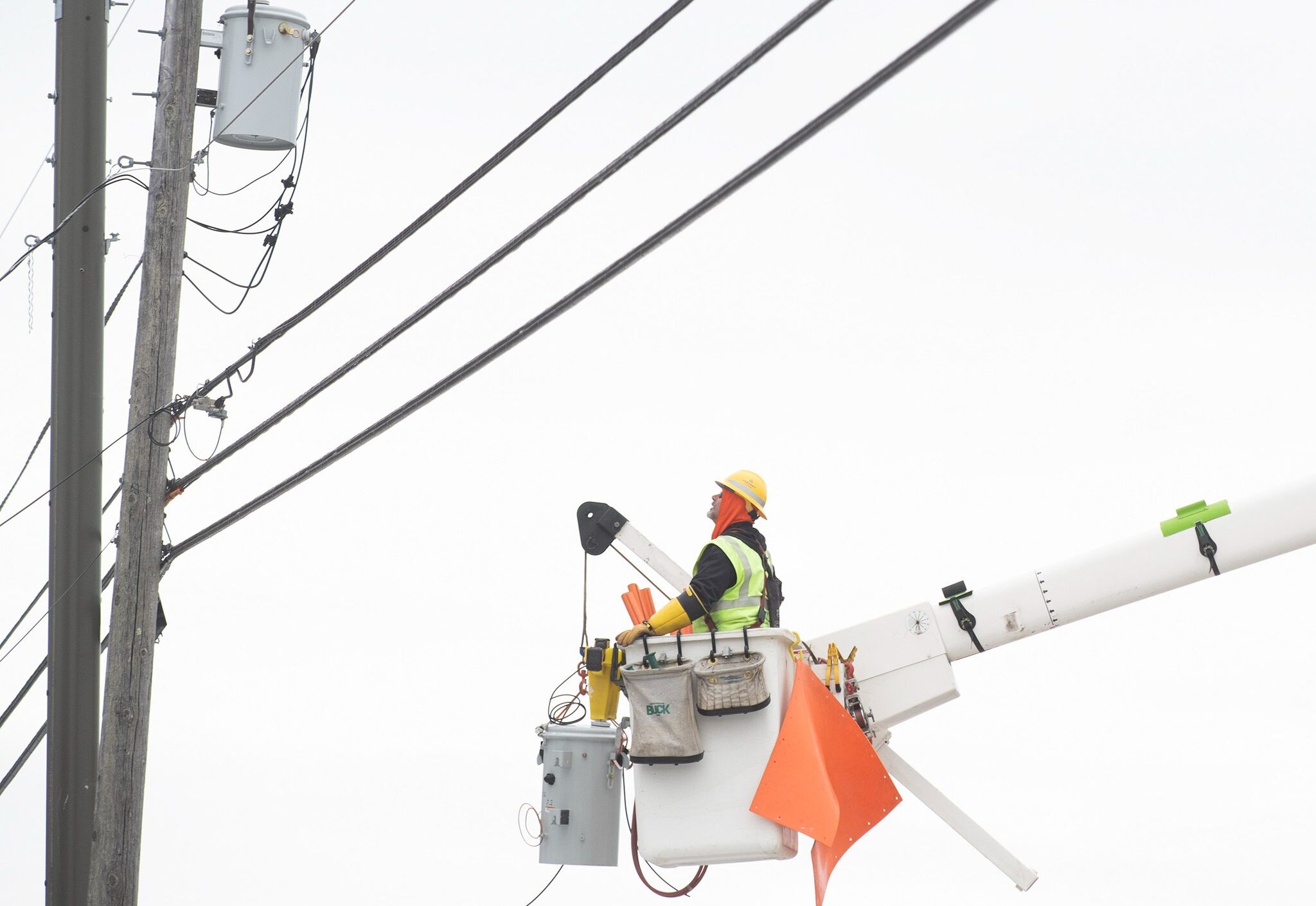
Bangor, Maine-based Versant Power is a transmission and distribution utility company providing electric service to the Bangor Hydro District and the Maine Public District. It is the state’s second-largest utility, with a service territory of over 10,000 square miles and more than 165,000 customers. Its system encompasses 1,275 miles of transmission lines, 6,400 miles of primary distribution lines, and 109 substations. Versant says that it “envisions a future electric grid that operates safely and reliably, enables a fully decarbonized energy supply, facilitates the deployment of significant distributed energy resources and beneficial electrification technologies, leverages cost-effective solutions, and does all this while maintaining affordability for our customers.”
The company continuously works to improve energy reliability and expand capacity. While it does not own any generation, the utility works with developers to connect clean energy projects to the grid. Versant believes that it “currently hosts the single highest penetration rate of renewable energy, as compared to system peak load (largely photovoltaic [PV] resources), of any utility in the United States,” with 367 megawatts interconnected to its distribution system. In 2024 alone, Versant interconnected 600 rooftop solar arrays of up to 25 kilowatts (kW) each, 5 mid-sized projects of up to 2 megawatts (MW) each, and 65 larger projects of up to 4.99 MW each, for a total of 218 MW of electricity. The company also claims that there is “significant potential” for grid-scale renewable development.
One example is Versant’s work over the past two years is to integrate the Downeast Wind project into its grid. Versant helped design and test a switching station as a connection point, upgraded 3.2 miles of the transmission line to support increased generation, and added protection and control enhancements at several switching stations and substations. Notably, the installation of a Static Synchronous Compensator (STATCOM) at the Tunk Lake Substation, which came online last May, benefits the local community of Sullivan by stabilizing voltage when clean energy generation fluctuates and helping the electrical system ride through faults. Versant thereby improved power reliability while ensuring work did not interfere with the region’s annual blueberry harvest or associated refrigeration and freezing processes that are so vital to their economy. As Downeast Wind, which is fully operational as of last summer, summarized, it “coexists with local agriculture while providing new revenue streams and economic opportunity for the surrounding area.”
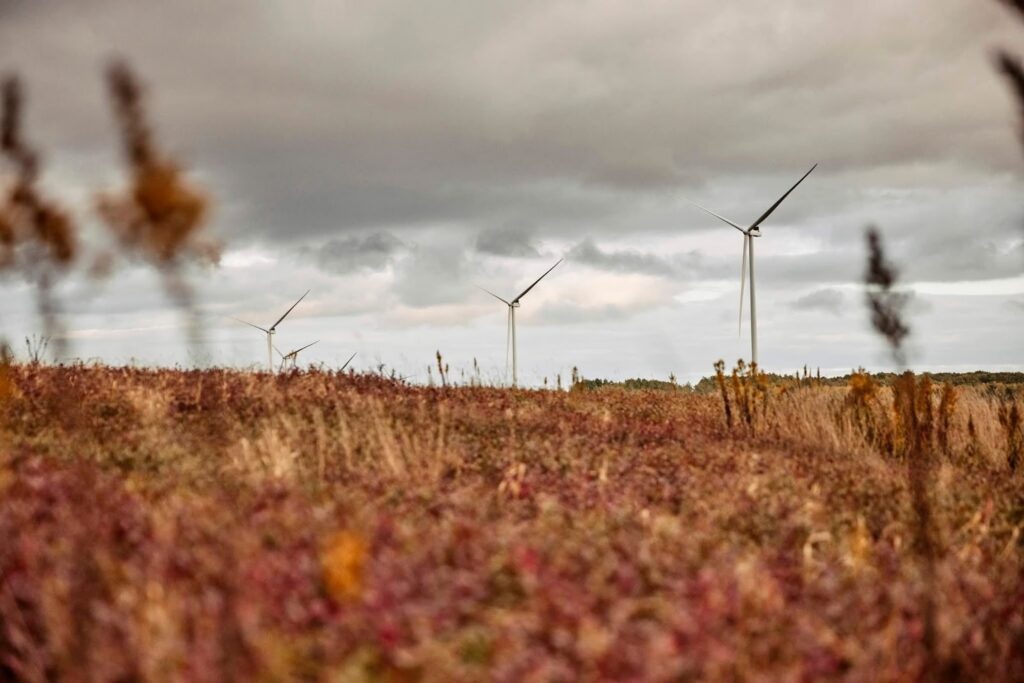
Photo Courtesy Downeast Wind
Versant also regularly upgrades systems and updates equipment to maintain asset health, prevent reliability degradation, and guarantee efficient operations. In 2024, the company replaced six miles of transmission line and equipment in Aroostook County between Van Buren and Hamlin after finding many of the sixty-year-old poles damaged, with cross-arms sagging or even grass growing in them. By installing 130 taller poles, each at 5,000 pounds and over 70 feet high, they support “heavier and more resilient cross arms and wire,” said Project Manager Sonny Sirois. The landowners get more than reliable energy, as the company explains, “Farmers benefit from increased land clearance for using large farm equipment. Crews leave the workspace better than they found it, replanting grass and improving access roads throughout the project.”
Also in 2024, Versant added new equipment, including a transformer, switchgear, and insulators, for the University of Maine (UMaine)’s Steam Plant substation, which provides heating for 90% of the campus. Kevin Worster, Versant’s Power Systems Technical Supervisor, said, “This work will improve service reliability to students, employees, and anyone who visits the UMaine Orono campus,” while Blaine Williams, UMaine’s facilities director, added that the upgrades “will be needed for future electrification efforts required to achieve climate change goals, such as adding more car chargers and heat pumps on campus.”
The company also ensures energy resilience and security by maintaining the electrical system, for example, by storm hardening and undergrounding, to continue delivering power 99.96% of the time. Versant is working to increase that percentage, even in the face of extreme weather conditions. Although it is the most forested state in the country, many of its trees have been weakened by persistent drought cycles. At the same time, “winter weather whiplash,” alternating between freezing conditions with snow and thawing with rain, has continued to batter the system. Dennis Fallon, executive director of the Utility Arborist Association, explained to Renewable Energy World, “Vegetation consistently lands in the top 5, if not higher, for outage codes. A well-funded vegetation program with experts who understand what’s happening on a local level and make local adjustments helps a utility improve reliability.”
Therefore, Versant runs a vegetation management program covering 2,000 miles of power lines. In 2024, the company expanded this program to include secondary lines connecting to homes and businesses. That year, Versant also replaced 23 miles of bare wire with covered wire, helping prevent outages if it comes into physical contact with tree branches. The company claimed, “Versant Power reached system reliability levels not seen in more than 15 years – thanks to ongoing system maintenance, smart investments, and fewer severe storms.”
Because Versant’s team of foresters and arborists is essential to its work, the utility partnered with Brewer High School to offer a summer forestry immersion program. Nine students participated in its first year in 2023, and that number jumped to seventeen by 2024. Through the program, students learn how to identify trees, manage forests, and operate heavy machinery and sawmills. “The students get to experience things they’d never get to be exposed to and see a range of careers in the forestry industry,” said outdoor education teacher Mark Savage. “They are also developing critical life and career skills that will help them be successful in any field they may choose,” added Steve Sloan, head of Versant’s vegetation management team.
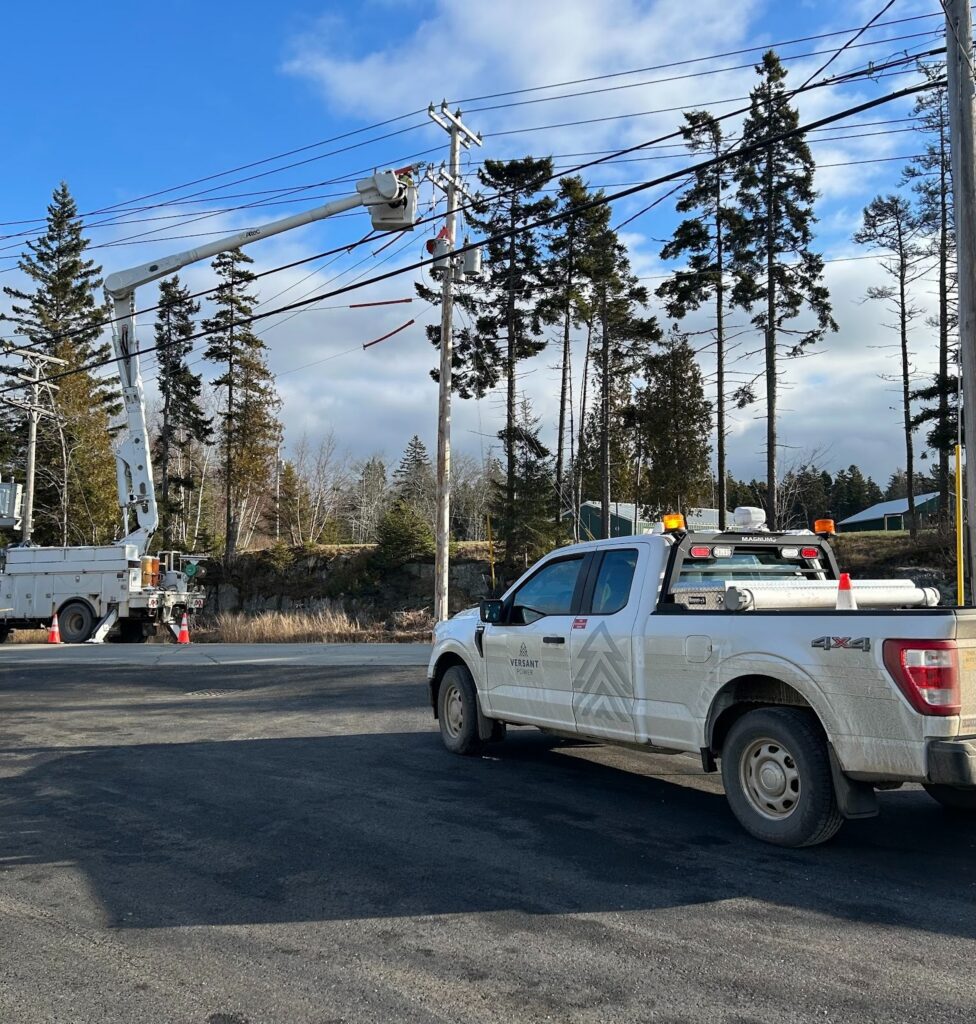
Photo Courtesy Versant Power
Through all of its work, Versant is also working to safeguard the environment. In addition to being heavily focused on grid and climate planning, the utility filed its first Integrated Grid Plan at the beginning of this year and is also training employees in skills such as spill prevention and bird management. The company provided such training to 415 employees in 2025 alone. Versant workers also went out and made a tangible impact last year. They achieved their lowest spill activity in seven years, safely disposed of 13,000 pieces of electronics like laptops and cellphones, and they installed six new osprey platforms, taller than the utility poles, because the birds want to nest at the highest point above the water, to protect the birds and prevent them from compromising energy reliability. The utility also operates osprey cams so the public can watch the beautiful animals. As the utility explained, “Protecting the environment isn’t separate from powering our communities — it’s essential.”
Perhaps most importantly, Versant is looking out for its customers. In its integrated grid plan, the utility recognizes that it “must balance the implementation of necessary grid upgrades with cost-effectiveness” and that it must continuously evaluate emerging technologies “to offset ratepayer costs.” Its Power Match program, first launched in December 2022, is one of its most impressive initiatives, providing electricity bill credits to low-income residents in its service area. President John Flynn explained, “Many customers within Versant Power’s service area do not qualify for low-income assistance based on income eligibility guidelines but still need help with utility bills. Power Match aimed to reduce this gap by providing bill credits to these ‘ALICE’ households who exceed income eligibility guidelines but still require assistance.” Last year, the company matched $200,000 in donations to the program, allowing it to provide $375 in credits per household to more than 800 customers.
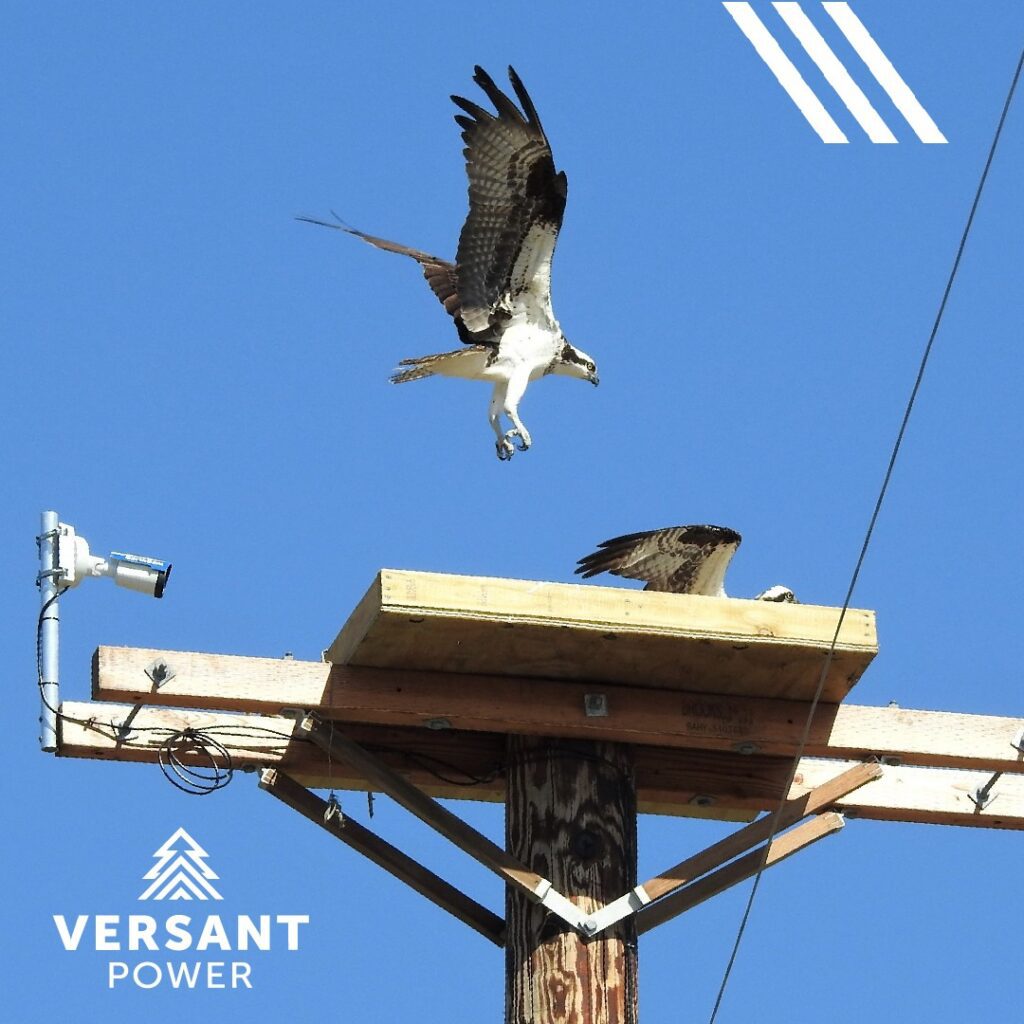
Photo Courtesy Versant Power