Mahmoud Ali spends long hours in a Utah State University lab testing different concrete mixtures. The work is anything but ordinary. Ali, a graduate student at the ASPIRE (Advancing Sustainability through Powered Infrastructure for Roadway Electrification) Engineering Research Center, is developing a concrete mix that can support embedded charging coils, withstand years of traffic and weather, and crack into fine hairlines rather than shatter. “While electrified roads may sound like a futuristic concept, their success depends heavily on the materials used to build them,” Ali said in a center profile of his research.
The futuristic concept is a road that charges your vehicle as you drive over it, with no plugs or cords and no waiting. It is being developed at ASPIRE, the National Science Foundation’s engineering research center for the electrification of transportation. Beyond charging roads, it is engaged in a variety of other research and development projects to “pave the way for widespread adoption of electrified transportation”. The center is helping lead the buildout of both the Utah Electrified Transportation Plan and the Wasatch Front Multimodal Corridor Electrification Plan. What began as a campus research project has attracted major public investment. After receiving a $25 million, five-year grant from the National Science Foundation in 2020, the Utah Legislature allocated $15 million to ASPIRE the following year. Altogether, ASPIRE has drawn more than $100 million in commitments.
The technology builds on a principle many use to charge their phones. “Just like with your cell phone, you just put it onto a pad,” ASPIRE Chief Strategy Officer James Campbell explained to KSL TV. A vehicle equipped with a receiver passes over charging coils embedded beneath the pavement where it “quickly gets a zap, so to speak,” Campbell said, providing enough power to propel it about a quarter mile before the next charging segment takes over. Tyler Munk, an ASPIRE civil engineer, said electrifying a road is similar to installing any other utility beneath it: rubber transmitter pads sit about six inches beneath the asphalt, while a coil in the vehicle converts the transferred energy into usable electricity. “Roadways in the future could become something much, much more than just asphalt that we drive on to get from A to B,” Munk said.
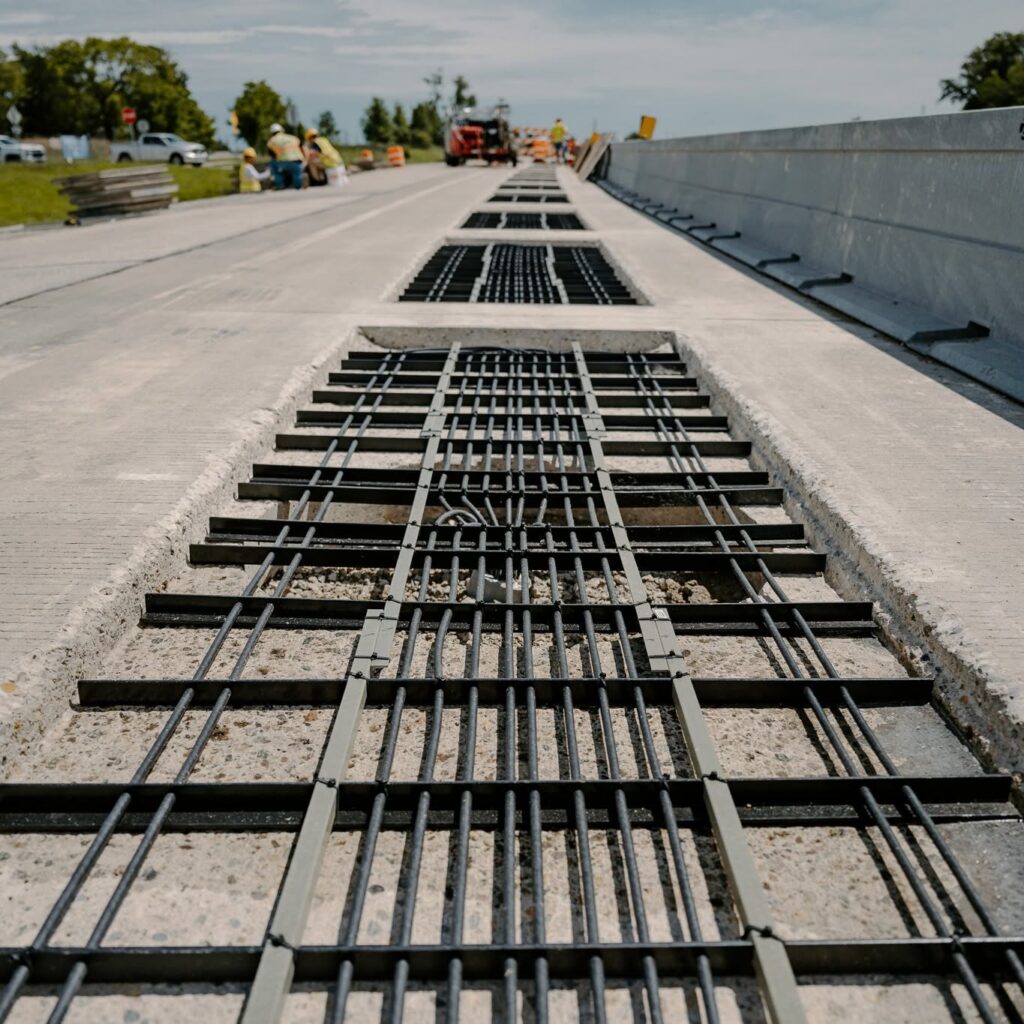
Photo Courtesy Aspire Research Center
That build-it-here instinct runs through the whole project. Utah State has spent more than a decade developing wireless charging technology. Researchers built the Aggie Bus, a 20-passenger shuttle powered through wireless charging and later spun the technology into WAVE. They also built the Electric Vehicle and Roadway facility, featuring a quarter-mile test track where industry partners, including Enrx, Electreon, Honda, and Purdue, test embedded charging systems under real driving conditions. The facility opened to the public for the first time last July.
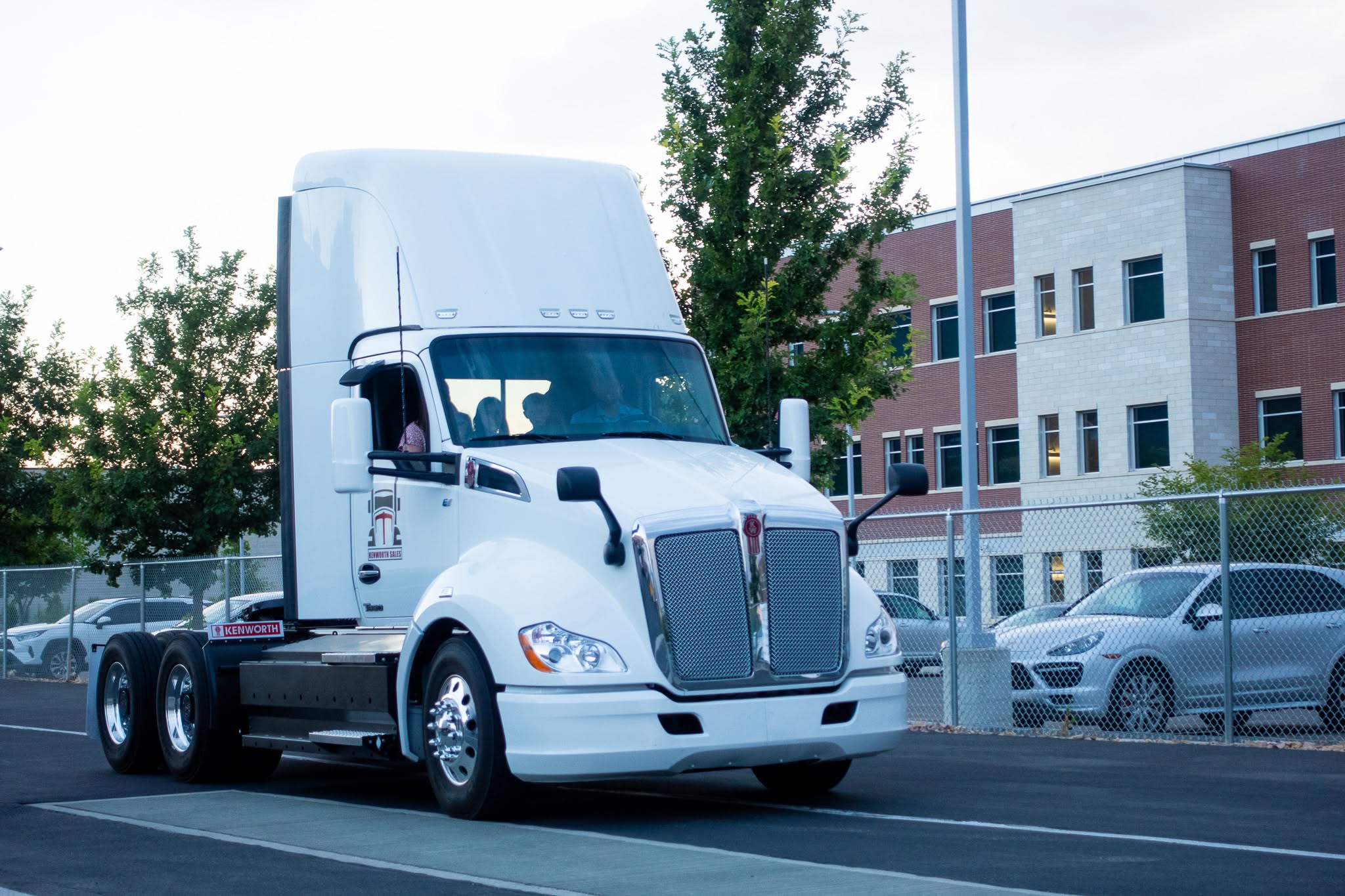
Freight is the technology’s first target. Heavy-duty trucks consume the most fuel, making them the biggest opportunity for electrification. A fully electrified quarter-mile of road operating at the Utah Inland Port in Salt Lake City is currently charging cars and trucks as they roll across it. Mona Smith, environmental and sustainability director at the Utah Inland Port, put the goal plainly: “to prove that fast charging solutions for heavy-duty battery electric vehicles are possible.” Salt Lake City engineer Mark Stephens elaborated, “ASPIRE’s technology and research efforts to wirelessly charge large transport vehicles in-transit that are capable of towing fully loaded trailers is nothing short of mind-blowing. Scaling this type of wireless charging technology to accommodate in-lane, in-transit charging of heavy-duty electrified vehicles is another step towards revolutionizing the trucking industry.”
To install the system, ASPIRE and Salt Lake City developed the first permitting process for dynamic wireless charging on a public road because no construction codes or design standards yet exist for the emerging technology. “Going through this city process is a significant reason we did this project,” Munk said, noting the team is “forging the frontier” and “establishing a pathway for future installs.”
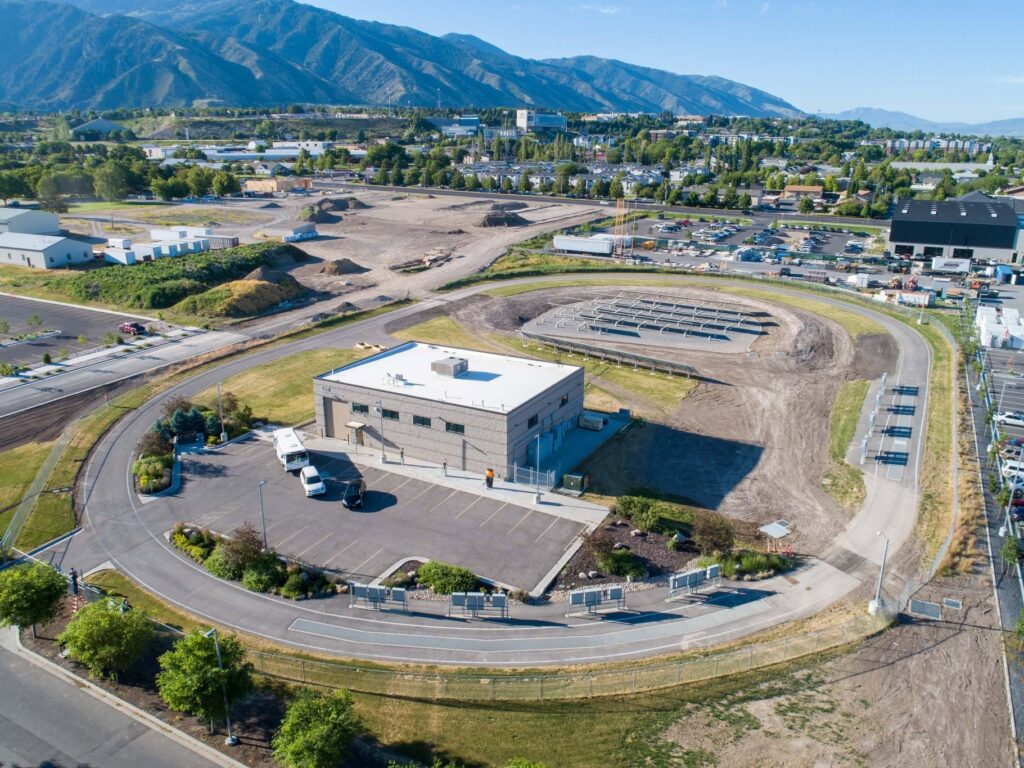
Photo Courtesy Aspire Research Center
“A battery-powered electric semi-truck with a 500-mile range would require batteries that weigh over 20,000 pounds and cost over $150,000,” wrote Regan Zane, Director of ASPIRE and a professor at Utah State. Charging while driving allows trucks to carry smaller batteries, reducing weight, cost, and downtime spent plugged into charging stations. Additionally, time spent parked while charging results in slower, more expensive deliveries.
Dynamic charging could also reduce the range anxiety that discourages many drivers from buying electric vehicles. Zane told the Salt Lake Tribune that alternating five miles of charging with 10 to 15 miles of conventional roadway could keep electric trucks moving continuously. The need is growing rapidly, as Zane wrote in 2023, because “while electric vehicles (EVs) represent just over 1% of all registered vehicles in Utah today, their annual growth rate now exceeds 50%, and estimates predict more than 500,000 EVs in the state by 2035.” Cleaner air and improved public health would be additional benefits.
“This work isn’t about theory — it’s about deploying practical, scalable solutions that benefit everyday Utahns,” Anca Matcovschi, ASPIRE’s chief communications and marketing officer, told KSL. “We’re talking about cleaner air, lower long-term transportation costs, and a more resilient energy future.” ASPIRE also highlighted significant economic impacts: “This project also aims to achieve electrification workforce development (EWD) with the goal of training a skilled workforce capable of developing and deploying electrified roadways.”
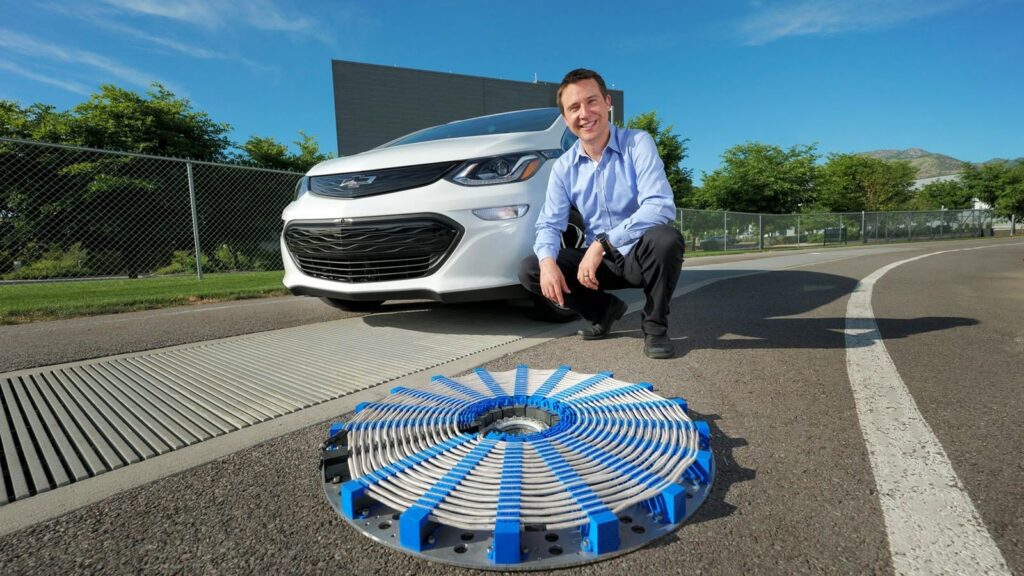
Photo Courtesy Aspire Research Center
For now, the frontier is being forged by students who get to point at a road and say they helped build it. Sally Vogel, a master’s student in electrical engineering, told KSL the work bridges theory and practice: “I learned the theory in class, but then I get to apply it here.” Mechanical engineering student MacKay Baugh expects to look back proudly knowing “my hands [are] in the middle of it.” Meanwhile, Ali is preparing his next concrete test, comparing conventional mixes with stronger engineered versions at different coil depths. “The significance of this work lies in its contribution to efficient and innovative transportation infrastructure” and in moving such technology “closer to practical implementation,” he said. The road of the future gets built one careful batch of concrete at a time.