In 2018, Luigi Resta and Christian Gardner founded Salt Lake City-based rPlus Energies as a subsidiary of the Gardner Group, a commercial real estate developer operating in Utah, Idaho, and Nevada. More niche than its parent company, rPlus Energies focuses specifically on developing, financing, building, owning, and operating large-scale energy generation and storage projects. To date, the company has more than 1.5 gigawatts (GW) of combined operational or under-construction capacity, including more than 1 million solar panels installed on operating assets.
“We believe the future of energy must be diverse and reliable,” the company wrote on its website, noting that it prioritizes solar and wind as the most vital resources but sees expanding opportunities for pumped storage hydropower and battery storage to help “create a more dispatchable and resilient energy mix.” All of these ‘proven technologies’ “offer the reliability needed to support today’s energy demands,” as energy expansion continues and the power needs of businesses, communities, utilities, and, of course, the grid, continue to grow. Not only are these projects dependable because their technologies have demonstrated success, but also because rPlus collaborates closely with partners to evaluate which solutions make the most sense for each particular region, essentially guaranteeing long-term value.
The company pointed out that as energy-intensive industries like data centers, mining, and manufacturing continue to expand, with a need for power that can come online quickly, “the private sector is taking the lead in shaping the future grid.” Private investment is speeding and scaling project development, financing, and construction, “ultimately supporting a more secure and resilient energy system.”
As Resta wrote in a 2022 opinion column, while this presents a period of immense change for the American West, there is also a significant opportunity. “The rural West — with its communities sprinkled across the mountains, deserts and areas in between — is positioned to have an outsized influence on our successful adaptation to this new energy and economic frontier; it will simply need to make smart use of its resources, just as it’s always done,” he explained. Resta pointed out that using the West’s solar, water, and wind resources is not so different than the mining, ranching, logging, and oil operations of the past. In fact, he claimed, “The American West can simultaneously sustain its proud heritage and blaze its own trail on the new energy frontier.”
Photo Courtesy rPlus Energies
rPlus is clearly leading this charge across the American West. In 2015, before launching rPlus, its leadership team commissioned Utah’s first utility-scale solar plant, the 80 MW Utah Red Hills Renewable Park, “more than doubling the state’s solar footprint at that time,” followed by the 80 MW Three Peaks Power solar plant in 2016, both in Iron County, Utah. rPlus Energies’ first officially developed project, however, was the 80 MW Graphite Solar project in Carbon County, Utah, for which it closed financing in 2020 and achieved commercial operations two years later, using 273,800 construction labor hours. “A lot of work, dedication, and collaboration has been made to get to this point. We are immensely proud that we can contribute to the continuation of the energy legacy that is Carbon County,” said rPlus President and CEO Luigi Resta.
In 2024, the company also saw its 200 MW Appaloosa Solar I project enter commercial operation, again in Iron County, creating about 250 construction jobs and using 318,141 construction labor hours. rPlus collaborated with many of the same partners on both projects, including manager Greenbacker Renewable Energy Company and construction company Sundt Construction. “Having collaborated on Graphite Solar, we entered this project with the confidence that our partners foster an environment of efficiency, execution, excellence, and trust. We are incredibly proud to reach this milestone as we contribute another significant project to Utah’s diverse energy landscape,” said Resta. Both Graphite Solar and Appaloosa Solar 1 sell clean power to Meta, helping the tech giant reach its clean energy and net-zero targets.
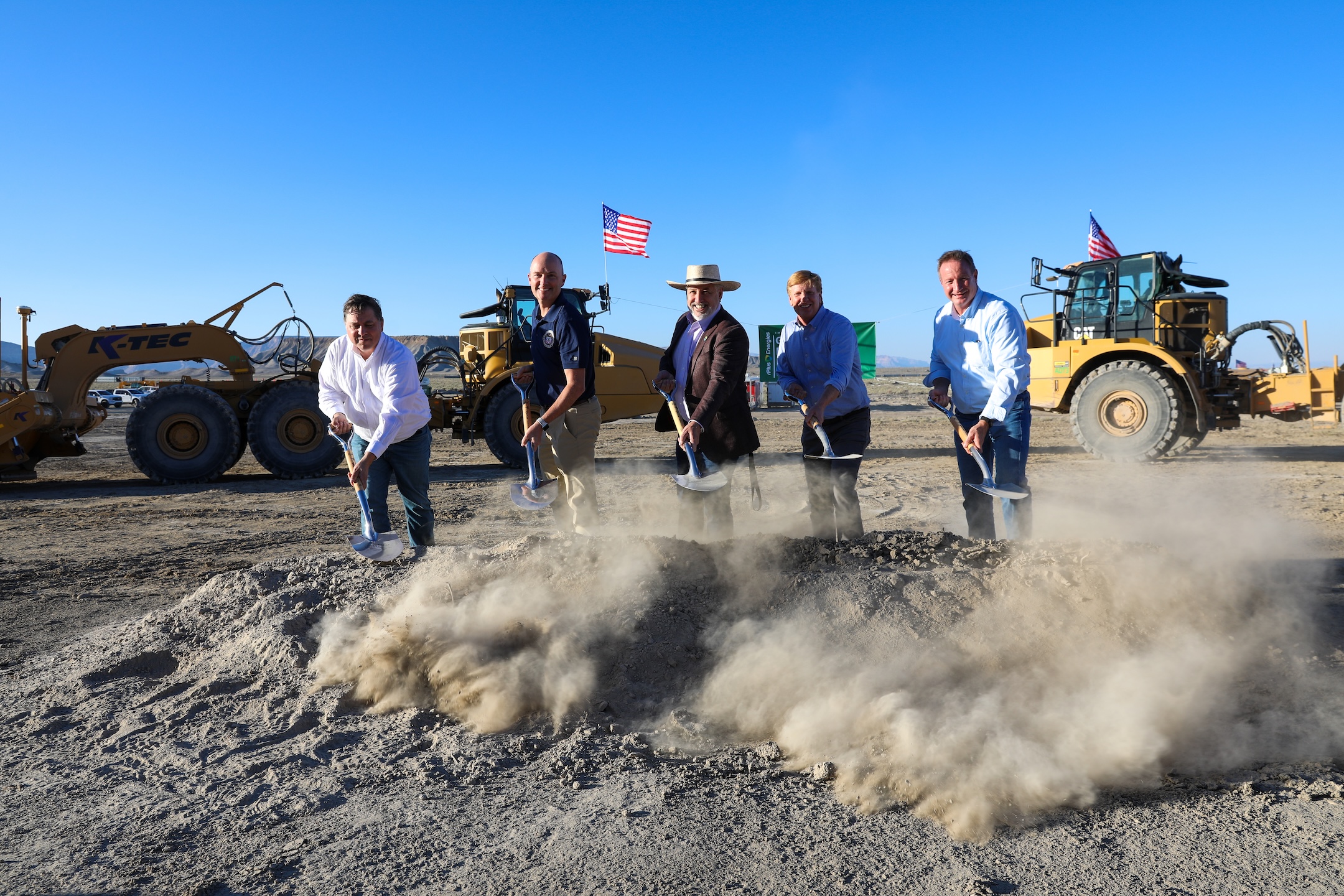
Additionally, the company is currently building the Green River Energy Center in Emery County, Utah, which will consist of 400 MW of solar paired with a 400 MW battery energy storage system (BESS). As of 2024, it was the largest planned solar-plus-storage facility in Utah and the seventh largest under development in the U.S., set to create approximately 500 construction jobs with the help of more than $1 billion in construction debt financing and an additional $500 million in tax equity financing announced last June. At the groundbreaking ceremony in September 2024, Utah Gov. Spencer Cox reflected, “This project is being built in rural Utah, by rural Utahns, and for all of Utah. When rural Utah thrives, the entire state prospers. Today, we’re not just breaking ground—we’re building a future of affordable, abundant energy in Utah.” The long-term employment and local tax revenue the project will generate for Emery County should not be underestimated, either, with expectations for $55 million in direct economic benefits over the next two decades.
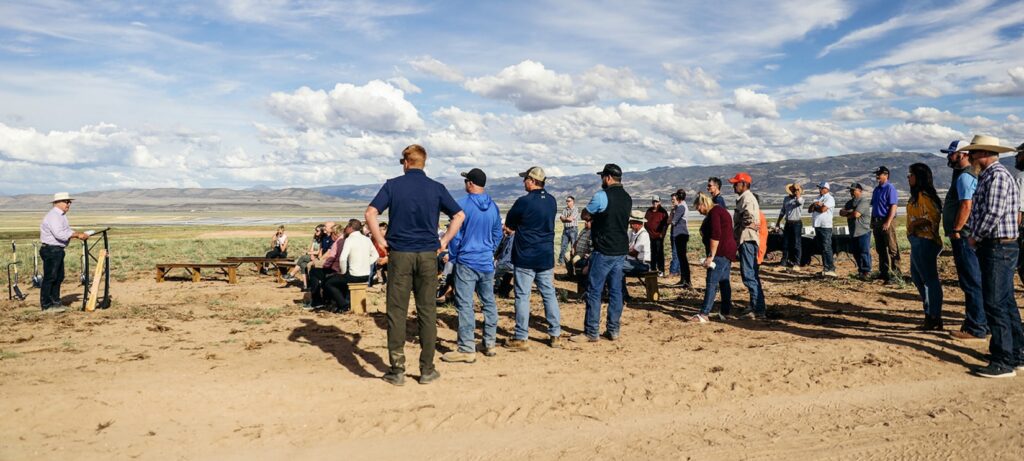
Photo Courtesy rPlus Energies
rPlus Energies is also dedicated “to building enduring, value-driven partnerships in the communities where it develops energy projects,” the company wrote. For example, through its Local First and Energy First Scholarship Programs, the company teams up with a regional college or university to establish a formal scholarship benefiting the local community whenever one of its projects reaches the construction stage. The company has provided more than $1 million in funding in Utah and Idaho through collaborations with institutions like Utah State University Eastern (USUE) and Southern Utah University (SUU).
Alongside construction of the Graphite Solar project in Carbon County, for example, the company launched its first Local First Scholarship with USUE, offering $75,000 to students in the first quarter of their degrees, who live in Carbon County and want to stay local after graduation. “We are very excited to kick off this first-of-its-kind scholarship and help the local community with increased job skills, allowing local students to stay in the community where they have grown up,” Resta described. Meanwhile, as construction of the Appaloosa Solar 1 project in Iron County was underway, the company partnered with SUU to offer a similar $120,000 scholarship. “The impact of this scholarship will be felt not only by the awarded students, but also the entire Iron County region as it encourages additional workforce and economic development opportunities in our community,” said SUU President Mindy Benson.
The $375,000 in scholarship funding accompanying the Green River Energy Center included not only another Local First Scholarship program at USUE for students from Emery or Carbon Counties, but also an Energy First Scholarship. This scholarship supports students pursuing energy-related education, such as in electrical work, heavy machinery operations, or welding. Resta explained, “As the energy sector grows, so has the need for the Energy First Scholarship, which encourages studies in fields essential to energy development. For places like Emery County and Carbon County, where energy production is part of the heritage, it’s a perfect match.”
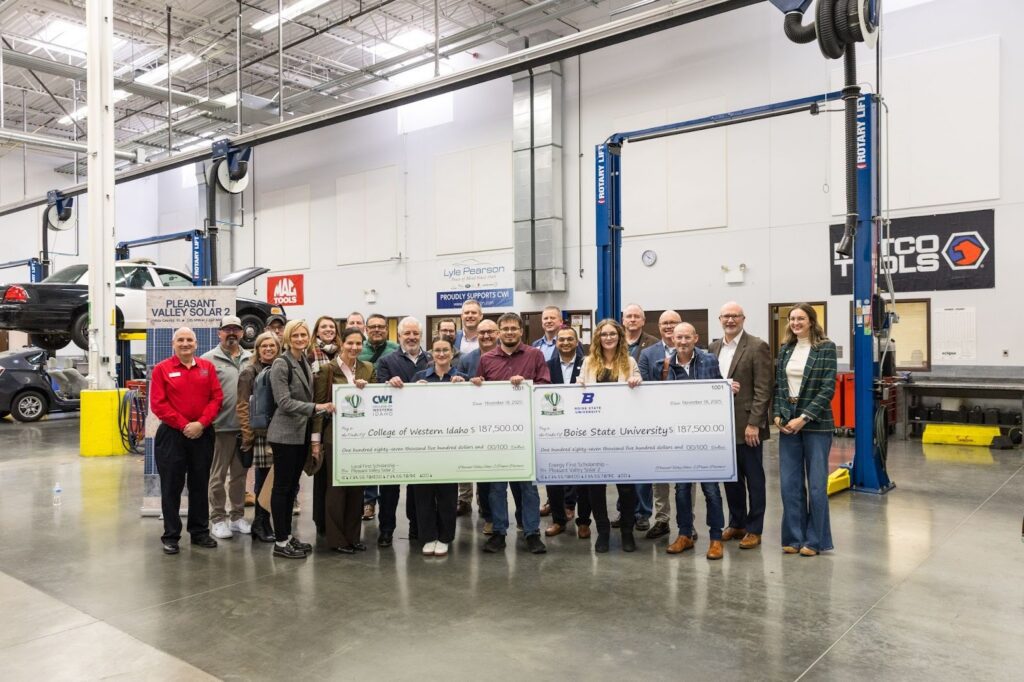
Photo Courtesy rPlus Energies