Providing energy services to about 1 million electric customers across Iowa and Wisconsin, Alliant Energy says it is dedicated to delivering energy solutions “safely, cost-effectively, efficiently and responsibly” to the customers and communities it serves.
Over the long-term horizon, Alliant plans to build out generation capacity that represents a balanced mix of resources, including solar, wind, hydropower, energy storage, natural gas, and coal. Adding a diverse mix with modernized infrastructure offers several advantages for the communities it serves, Alliant notes. “The Midwest is emerging as a hub for innovation, technology, and new opportunities. Across Iowa and Wisconsin, communities are growing. Reliable energy is one of the critical services making that growth possible,” the company wrote. By strengthening the grid, Alliant also lays the groundwork for fewer outages.
Additionally, as large-energy-use customers such as data centers continue to expand and use more energy, customers are concerned about rising electricity bills. In a commitment to its customers, Alliant declared, “You will not pay for new large-energy-user growth, and your reliability comes first.” As Alliant expands to serve more customers, the costs of maintaining infrastructure such as poles and wires are shared by more people, helping “keep rates stable and energy costs as low as possible for everyone.”
Moreover, by investing in local projects and infrastructure upgrades, Alliant strengthens local economies, creating skilled jobs, providing landowner payments to the people leasing land for the projects, and generating tax revenue that supports community services such as education and local infrastructure projects, like bridge and road development. Last year, Site Selector Magazine recognized Alliant for the seventh consecutive year as a top utility in economic development. In 2024, the company invested $3.9 billion in Iowa and Wisconsin, creating more than 2,400 new jobs. David de Leon, senior vice president of operations, wrote in an op-ed, “American-made clean energy is more than just a power source. It’s a cornerstone of local economic development and community resilience. Diversifying our energy mix and leveraging the benefits of renewable technologies reduces our reliance on imported power and enhances our energy security.”
Since 2022, Alliant has built 1,500 megawatts of solar energy in Iowa and Wisconsin. Project highlights include the 200 megawatt (MW) Pleasant Creek Solar Project, which Alliant brought fully online last year. Spanning about 1,100 acres, the company announced that it is the biggest solar site in the state and will generate enough power for at least 40,000 residences per year.
At the end of 2024, the company also launched the 150 MW Wever Solar Project in Lee County, powering about 30,000 residences annually, and the 50 MW Creston Solar Project in Union County, powering about 11,000 residences annually. These projects and more have contributed to the Midcontinent Independent System Operator (MISO) setting record-high solar energy generation, most recently with 14.5 GW in September.
“With over 326,000 hours worked and more than 420 peak craft, we proved that sustainability is about protecting both people and the planet,” reflected Jami Stone, construction project manager at Burns & McDonnell, which built the Wever and Creston projects. Mayuri Farlinger, president of Alliant Energy’s Iowa energy company, Interstate Power & Light Company, and vice president of energy delivery, added, “Our solar projects and energy system investments drive economic growth by attracting businesses to communities, creating jobs and boosting tax revenues.”
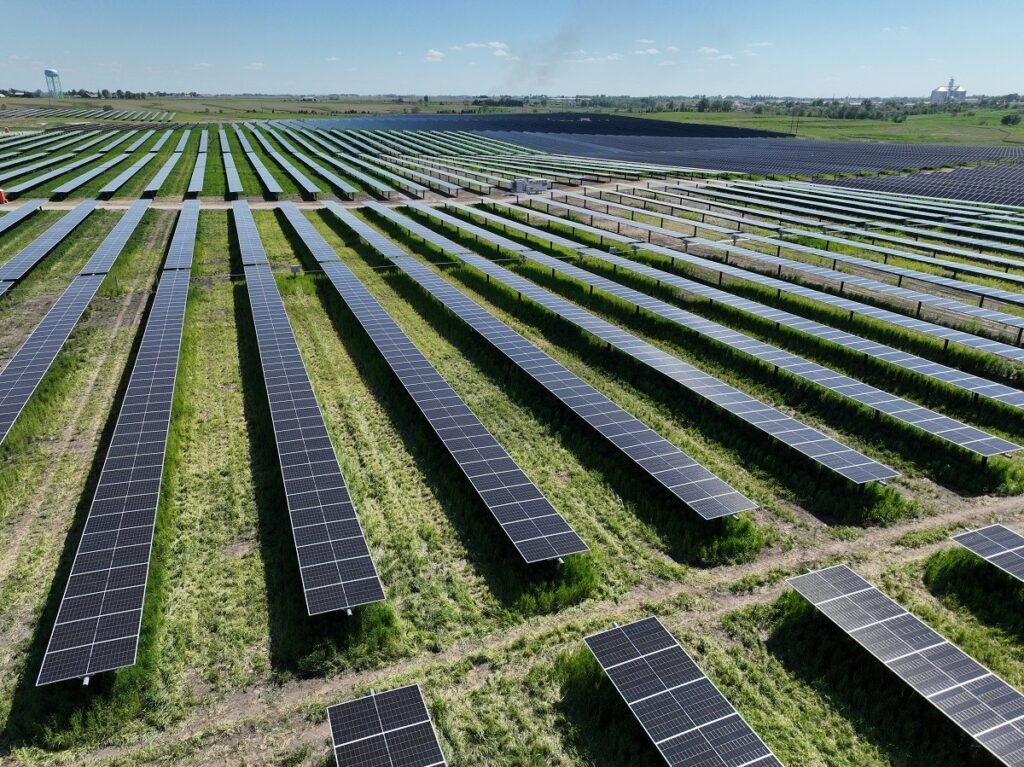
Photo Courtesy Alliant Energy
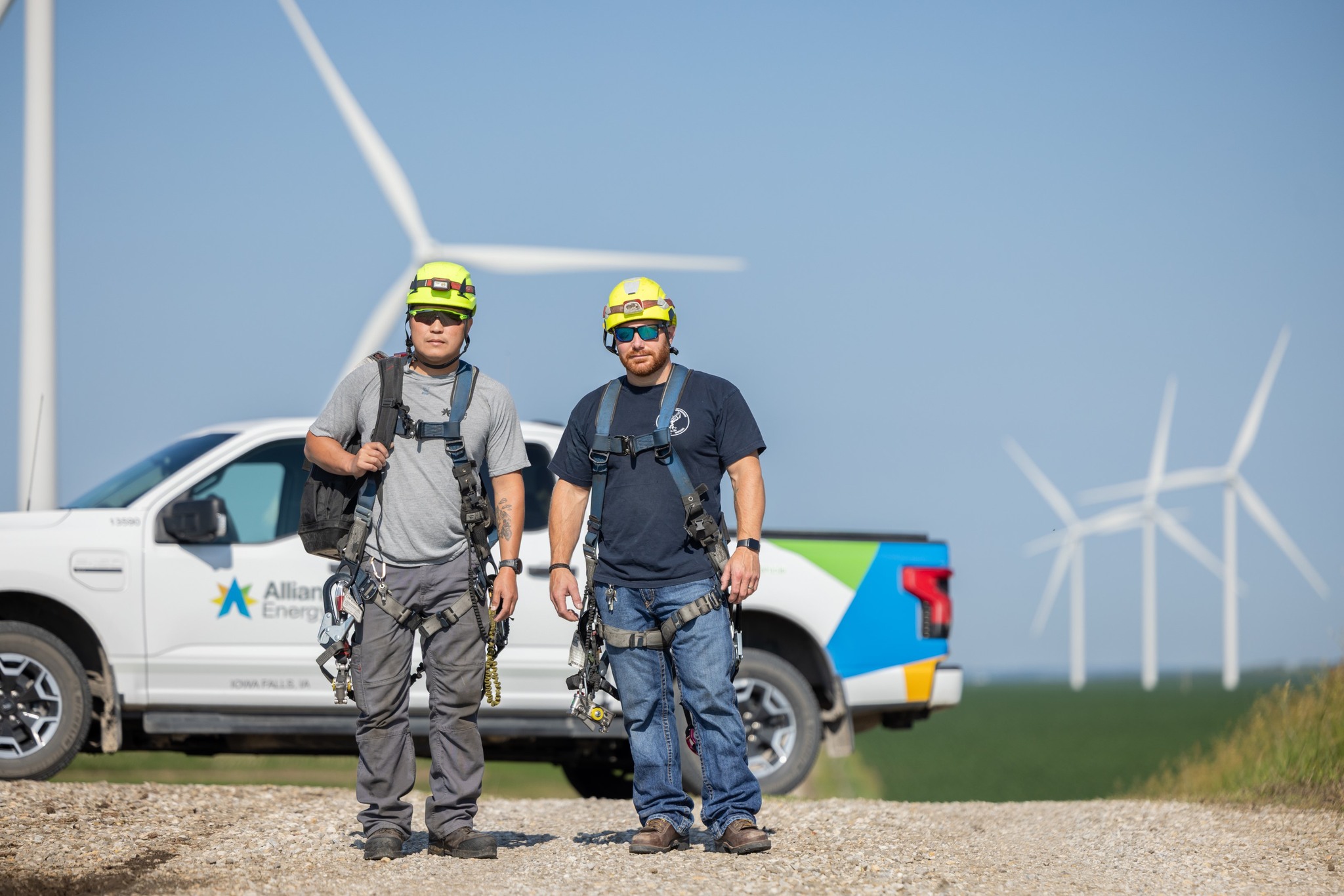
Alliant also owns and operates about 1,800 MW of wind energy resources, 1,300 MW of which are located in Iowa, and purchases more than 600 MW annually through long-term contracts. For example, multiple projects in Franklin County, Iowa, including the 200 MW Whispering Willow East Wind Farm, the 99 MW Franklin County Wind Farm, the 200 MW Wild Rose Wind Farm, the 200 MW Whispering Willow South Wind Farm, and the 200 MW Whispering Willow North Wind Farm, generate enough energy to power nearly 350,000 homes per year. Beyond the energy implications, the economic ones are huge. The Wild Rose Wind Farm is expected to generate $78 million in property tax revenue over two decades, while the Whispering Willow South Wind Farm is expected to generate $76 million. The Whispering Willow North Wind Farm, meanwhile, will generate $104 million in property tax revenue over the next 40 years, plus $44 million in landowner lease payments over the next 30 years.
In a filing with the Iowa Utilities Commission last summer, Alliant revealed plans to add up to 1,000 MW of wind generation in the state. Farlinger described, “This filing marks a significant step in our commitment to an all-of-the-above approach to energy generation. By expanding our wind energy portfolio, we’re reinforcing our ability to meet customer demand while delivering reliable and cost-effective energy for customers.”
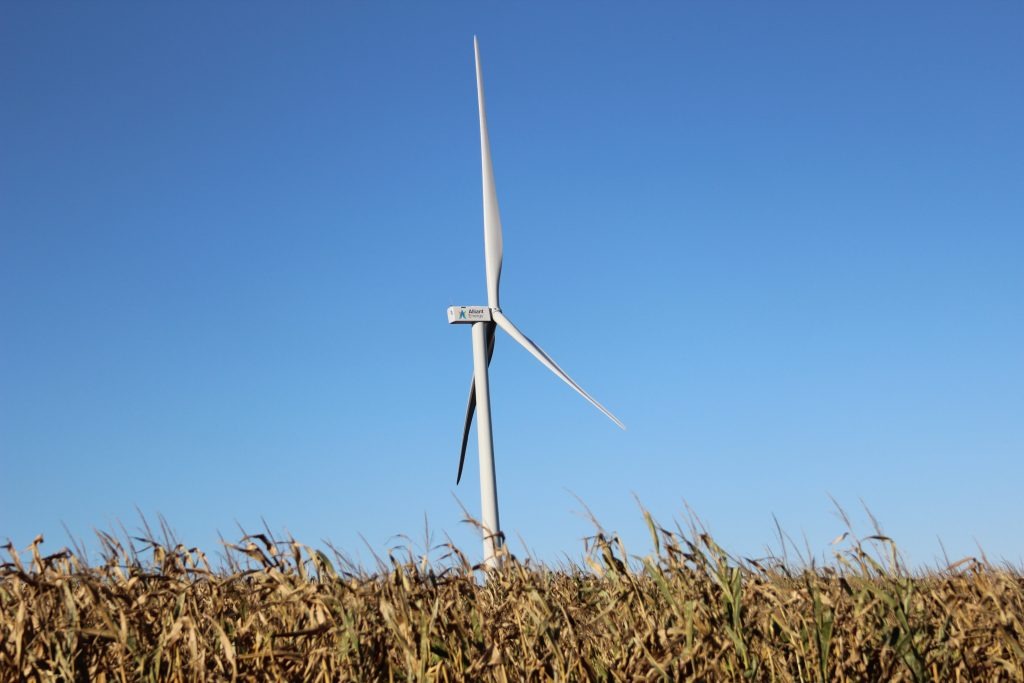
Photo Courtesy Alliant Energy
While energy storage is a newer component of Alliant’s strategy, the company currently operates projects with about 400 MW of capacity. After its first such project in Iowa became operational in Wellman in 2019, the Marshalltown Solar Garden became the location of “our first battery that’s directly connected to a utility-sized solar field” the following year. In 2021, with funding from the U.S. Department of Energy’s Office of Electricity and the Iowa Economic Development Authority, Alliant opened the 2.5 MW battery in Decorah to absorb excess energy generated by customers with residential solar systems and deploy it to the grid at peak times. In 2022, in Cedar Rapids, a 5 MW system doubled Alliant’s battery storage capacity in Iowa. Early this year, the company’s Wever battery energy storage system came online to capture excess energy generated by the Wever solar project. The company expects additional projects online this year, located at the Whispering Willow North Wind Farm in Franklin County, the Golden Plains Wind Farm in Kossuth County, and a former coal facility in Lansing.
Alliant described the importance of these projects: “When demand is low, we store excess electricity that’s generated and then release it to the grid when needed.” The technology, therefore, reduces the need for other power grid infrastructure upgrades, relieves grid load, and ensures the utility can meet demand, even in the face of climate events and power outages. By capturing energy to release at peak times, it also lowers energy costs. Dave Herkert, AVP of Strategic Projects at Alliant Energy, explained, “By storing excess energy and releasing it to the grid during times of need, battery storage plays a critical part of our long-term plan to expand capacity and maintain reliability while keeping customer bills as low as possible.”
As Governor Kim Reynolds described the Decorah project, energy storage will also “create jobs, spur local investment and serve as a model for America’s growing energy sector. Iowa will continue to harness the power of public-private partnership to further Iowa’s reputation as a leader in renewable energy production while also creating a more efficient and resilient electric grid.”
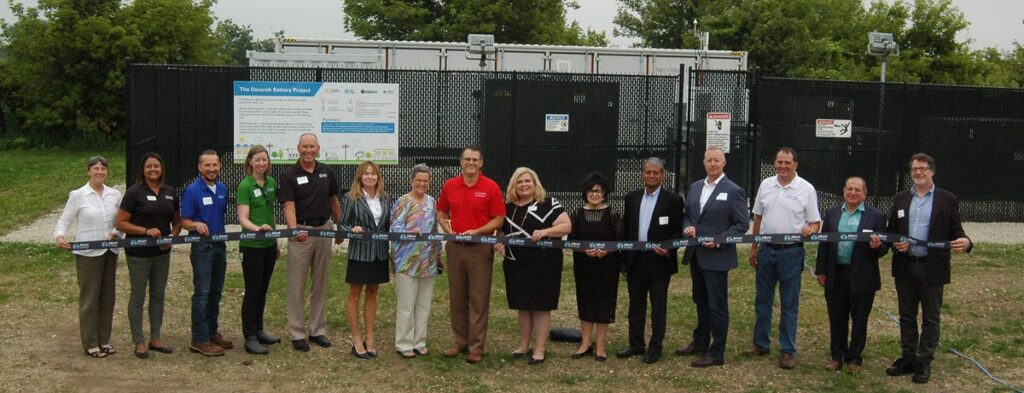
Photo Courtesy Alliant Energy
Beyond these larger generation projects, Alliant has also partnered with smaller communities and businesses to advance their energy and efficiency goals. Community solar projects, such as the fully subscribed 4.5 MW one in Cedar Rapids, provide customers with bill credits in exchange for the clean energy generated by their solar blocks. One subscriber, Joe Sharp, noted, “We were thrilled to learn we could also help family members reduce their energy bills, too. We chose to purchase additional solar blocks to donate to our three oldest children. Now, our family members will benefit from community solar.”
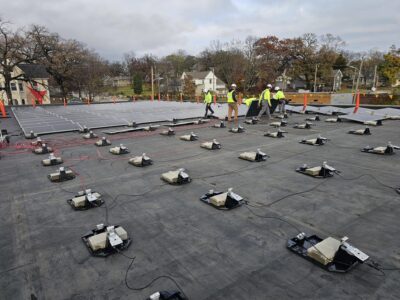
Through the Alliant Energy® Customer-Hosted Renewables program, these entities lease land or rooftop space for a solar or battery storage project in exchange for monthly lease payments and Renewable Energy Credits. The first partnership with a nonprofit, the Marshalltown YMCA-YWCA, developed a 500-kilowatt solar project with 1,000 panels. Grocery chain Hy-Vee opened a solar field in 2024 in Chariton, with an on-site apiary to study how native plants can promote bee colonies. Likewise, Iowa State University‘s agrivoltaics deployment on its research farm will demonstrate that such projects can operate at larger scales, with specialty crop growers already expressing interest. Professor Ajay Nair, chair of the Department of Horticulture, told the Iowa Capital Dispatch, “Now you’ve got dual use, you have an income from the lease and from the vegetables which you were already growing. So those growers are particularly interested.”
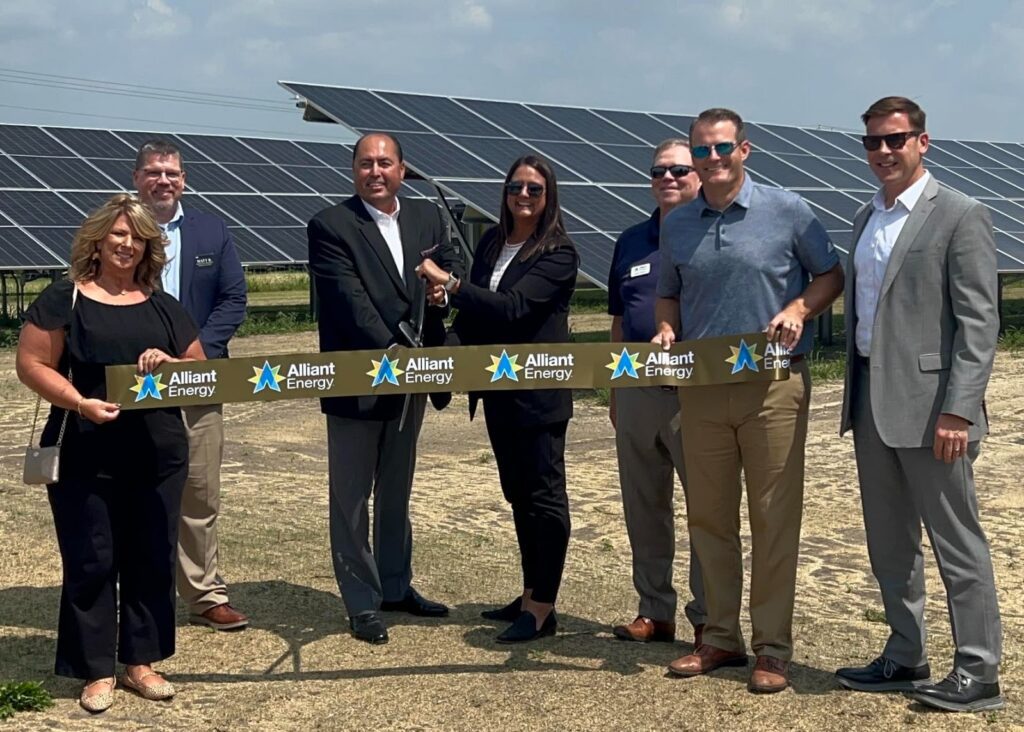
Photo Courtesy Lieutenant Governor Chris Cournoyer
Alliant Energy also has robust environmental goals, aiming to halt coal use by 2040 and achieve net-zero emissions in its utility operations by 2050. The company is also pursuing environmental goals through the Alliant Energy Foundation, which has invested over $78 million in local community organizations and initiatives since 1998. One of its giving programs, One Million Trees, aims to plant one tree for each of its one million customers by the end of the decade, equating to 500,000 tons of carbon sequestered annually. As of January, the organization had planted 627,644 trees since July 2021.