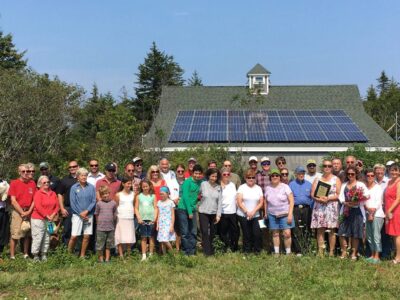
Galena is a small community in Alaska, about 270 miles from Fairbanks, with a population of about 400 to 500. More than 65% of these residents are Native Alaskan, as the area is home to the Louden Tribe. Inaccessible by road, the community relies on diesel delivered by barge along the Yukon River, making it even more expensive, especially with a need to burn nearly 400,000 gallons of diesel annually. As of 2023, Galena utility customers were paying about three times the rate paid by Golden Valley Electric Association customers and five times the rate paid by Chugach Electric Association customers. In fact, Eric Huntington and his family told the Associated Press they had spent about $7,000 to heat their cabin during extremely cold winters, which can drop to minus 50 degrees Fahrenheit, with a record low of minus 70 degrees reached in 1989. Brad Scotton, a member of the Galena City Council, recalled when diesel prices jumped from $1.64 to $4.58 per gallon over a few years. “It was really quite a shock to everybody’s system in terms of trying to operate with those elevated costs. So that really got the community assessing whether or not we could continue business as usual with that reliance,” he said.
Clean energy solutions are helping address these energy costs. In 2014, the City of Galena, the Galena City School District, and the Louden Tribal Council (LTC) launched Sustainable Energy for Galena, Alaska (SEGA) to search for diesel alternatives. They installed a biomass project at the former Galena Air Force Station in 2016, marking one of Alaska’s first large-scale projects of its kind, with help from an Alaska Energy Authority grant and loans from the Alaska Housing Finance Corporation and the Alaska Department of Environmental Conservation. SEGA harvests paper birch trees and shreds them into wood chips, providing heat for the Galena Interior Learning Academy, a tuition-free high school housed in the former Galena Air Force Station. The academy offers vocational training in industries such as aviation, automotive mechanics, carpentry, and welding.
On an annual basis, the project eliminates the need for about 100,000 gallons of diesel. According to district superintendent Jason R. Johnson, the resulting cost savings enable the Galena City School District to upgrade and maintain campus facilities and hire trade professionals. Plus, it creates local jobs. Scotton described, “What (the biomass plant) has done is stabilize (costs), and it’s created a local workforce and a job base that we never used to have. So it’s keeping the money that used to go outside within the community and providing pretty meaningful jobs for people.” By 2019, the project had generated $415,000 for the local economy.
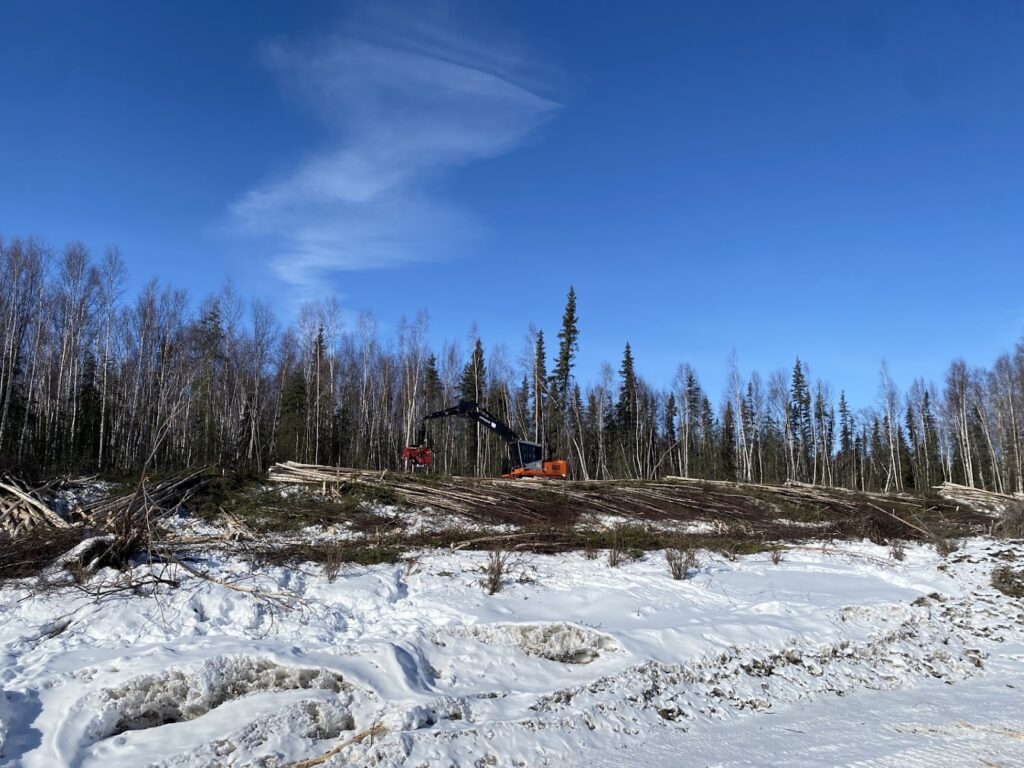
Photo Courtesy Sustainable Energy for Galena Alaska
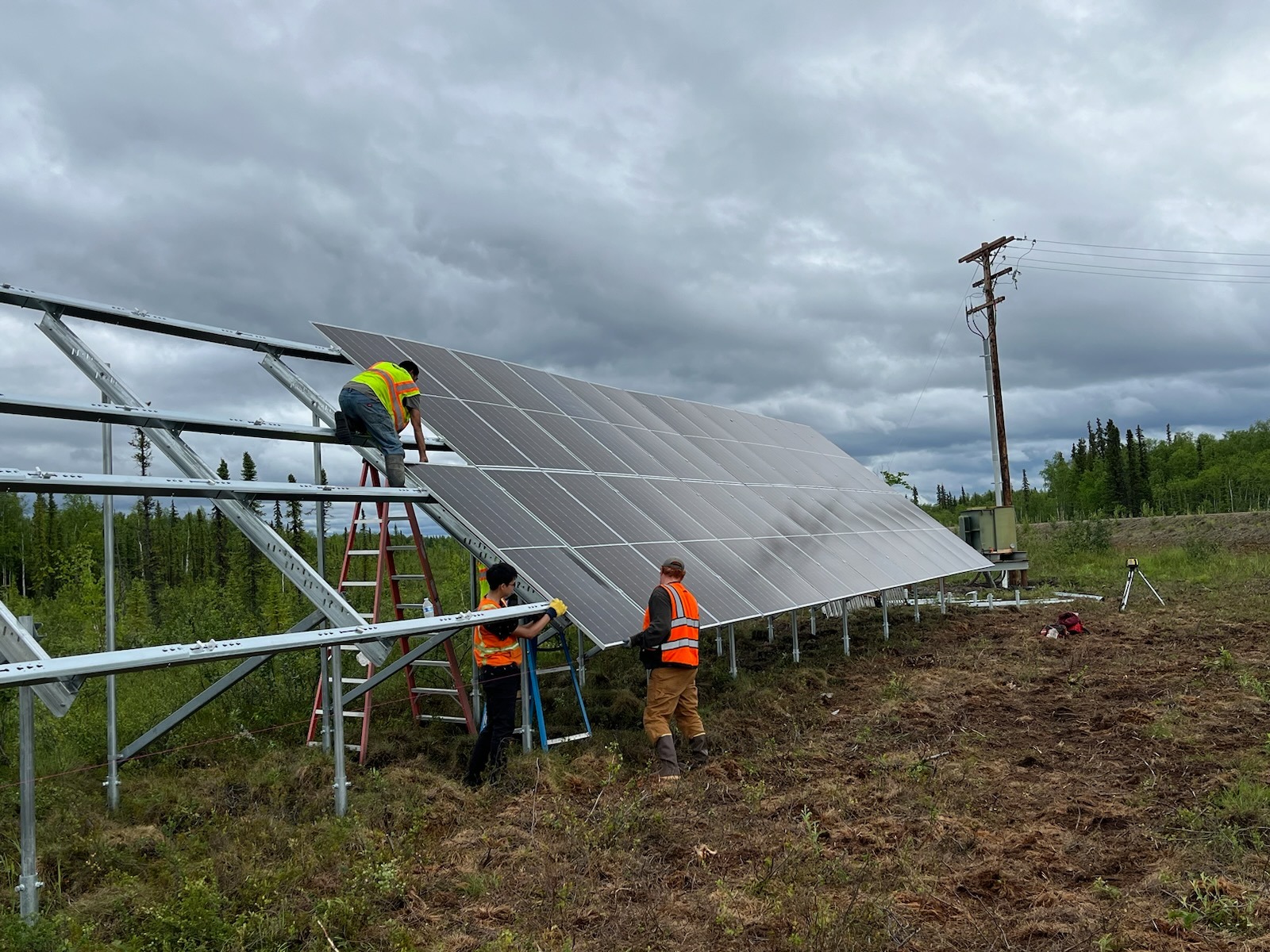
Galena has also expanded into solar. In 2023, a local contractor installed a 50-kilowatt solar array for the Louden Tribe, connected to a small grid run by the local utility company, with funding from GRID Alternatives’ Tribal Solar Accelerator Fund. “It’s definitely an exciting project for the community,” Louden Tribal Administrator Brooke Sanderson told KUAC. “The reduction in diesel fuel is hopefully going to be really huge for the city of Galena because that’s a major cost they have to incur every year.” Dave Messier, rural energy coordinator for the Tanana Chiefs Conference, explained that even though the project would not generate much energy during the winter, “during the summer, at least, we’ve got a ton of free energy that’s hitting the earth.”
That solar project served as a pilot to help de-risk a larger solar array. In the process, it provided technical and logistical insights, supported coordination among involved parties, spurred local solar workforce development, and established SEGA as an Independent Power Producer (IPP). The community expects the larger 1.5-megawatt solar farm, featuring 2270 bifacial panels, to fully power the community on sunny summer days. It will even generate excess energy for storage in a connected 1.2 megawatt-hour battery energy storage system. It is a complex project, the recipient of both federal and state awards.
Thanks to the solar facility, the local diesel power plant will operate for 800 to 1,000 fewer hours per year, saving nearly 100,000 gallons of fuel. The goal is to stabilize energy costs, with around $450,000 in savings reinvested in the community. Edwin Bifelt, founder and CEO of Alaska Native Renewable Industries, which has installed other solar projects in the state, reflected, “Solar PV is quickly becoming one of the lowest-cost options for energy or electricity generation in the world, and the same reflects in Alaska.”
Like the biomass project, the solar project also creates jobs. After graduating from the Galena Interior Learning Academy, Aaren Sommer, for example, helped install the solar project. He said the project is “going to reduce the diesel usage a whole bunch over at the power plant, which is going to help us out.” As Sanderson told KUAC, “The cost of living is so extremely high out in the villages that having some good-paying jobs and also improving the quality of life is definitely going to attract more people into staying where they grew up.”
Projects like these will also increase the small community’s energy resilience. For example, when a power outage at the local diesel power plant left residents without power in the dead of winter a few years ago, the pipes froze, resulting in more than two dozen homes without water for several days. The solar and battery project will ensure that even when the power goes out, residents still have access to electricity and heat. In the words of Tim Kalke, general manager of SEGA, “You’re dealing with life, health, and safety.” He added, “We’re just ensuring that our critical infrastructure has redundancy and protection built into it, so that every time there’s a power outage, it doesn’t turn into tens of thousands of dollars in repairs in its wake.”
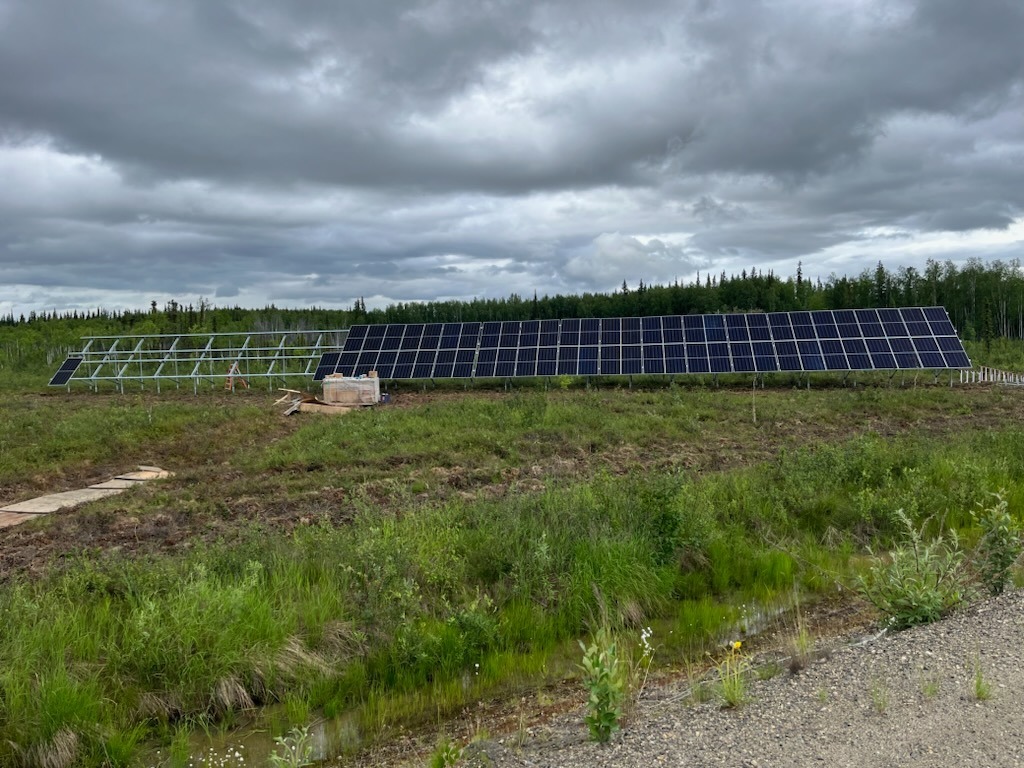
Photo Courtesy Tanana Chiefs Conference
In 2024, SEGA also partnered with the University of Alaska Fairbanks’ Alaska Center for Energy and Power (ACEP), with the assistance of a $9.5 million U.S. Department of Energy grant, to evaluate whether in-river hydrokinetic technologies could provide electricity during months without icy conditions. The five-year project is currently conducting fieldwork, permitting, and finalizing design before moving on to construction and testing in its fourth and fifth years. “What is special about this project is that we will work with the community throughout the process,” Principal Investigator Ben Loeffler noted, with feedback informing decisions like where the turbines should be located. “The big goal of this project is to see what a community can accomplish with its engagement and decision-making together with funds and technology expertise.”
Kalke added, “This is an exciting opportunity to better understand the challenges and barriers of harnessing energy from the Yukon River. Successful implementation can also serve as a form of economic development that contributes to the community’s well-being.” It could also lead to the implementation of similar projects in some of the more than 90 Alaskan communities with microgrids located near rivers.
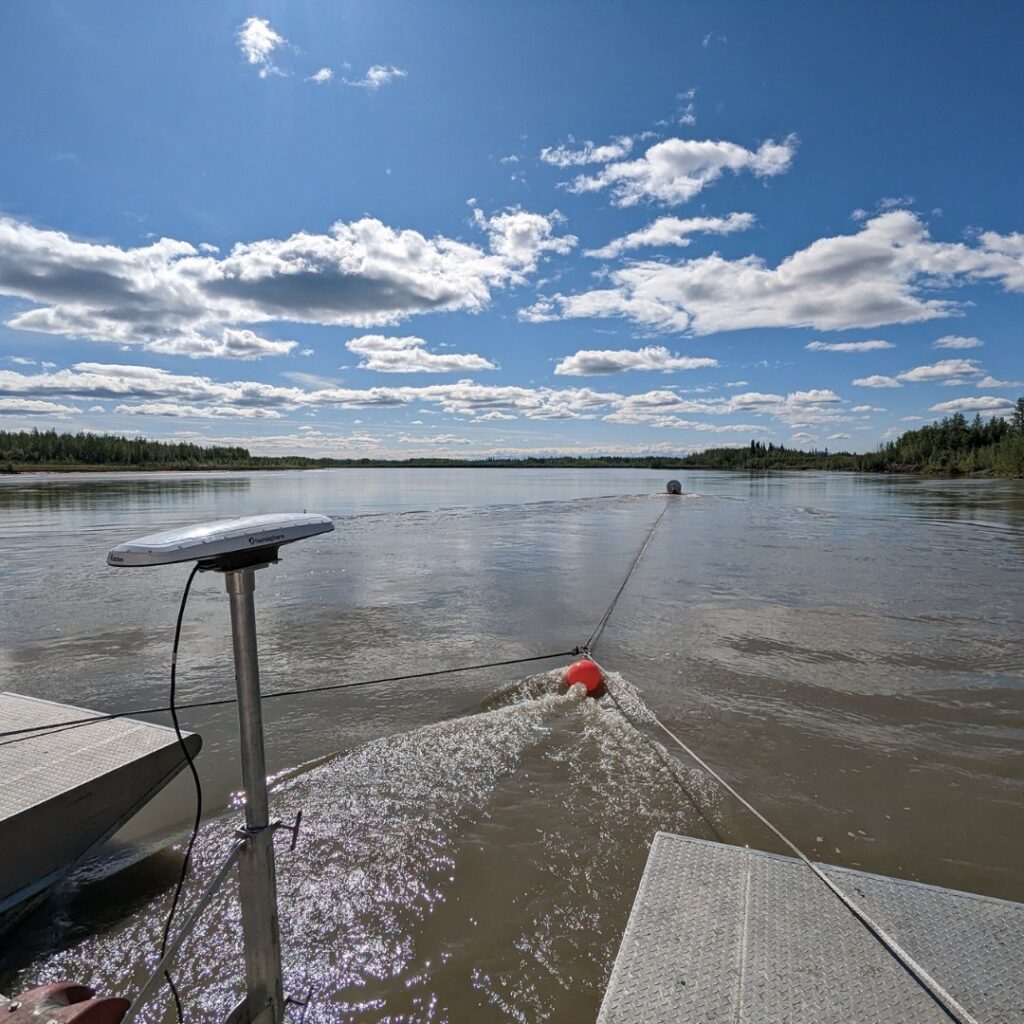
Photo Courtesy Ben Loeffler/ACEP
The Louden Tribe has also turned its attention to energy-efficient homes. By last June, eight families, including the Huntingtons, had moved into such new residences, according to the Associated Press. The Huntingtons, in particular, now benefit from 13-inch walls and 18 inches of insulation, some of the siding made from locally-collected wood, and a solar-compatible roof. More than six months after moving in, a 300-gallon diesel tank still contains unused fuel.
Additionally, with $700,000 in funding from the Alaska Housing Finance Corporation awarded in 2024, the Tribe invested in the Galena Collaborative Housing Project, which provides housing for teachers. “Teacher housing has been a problem in Galena since there has been a school. In rural Alaska, it’s complicated… The District loses a lot of good candidates because there just isn’t enough housing,” said Luis Echenique, grants director for the Louden Tribe. He elaborated, “Anecdotally, we see a correlation between the quality of a teacher’s performance and the quality of their housing. You can’t be a good teacher if you are worried your bathroom will be frozen until spring.” The new housing features include LED lights, bathroom fan timers, and low-flush toilets, helping tenants save money on energy costs.
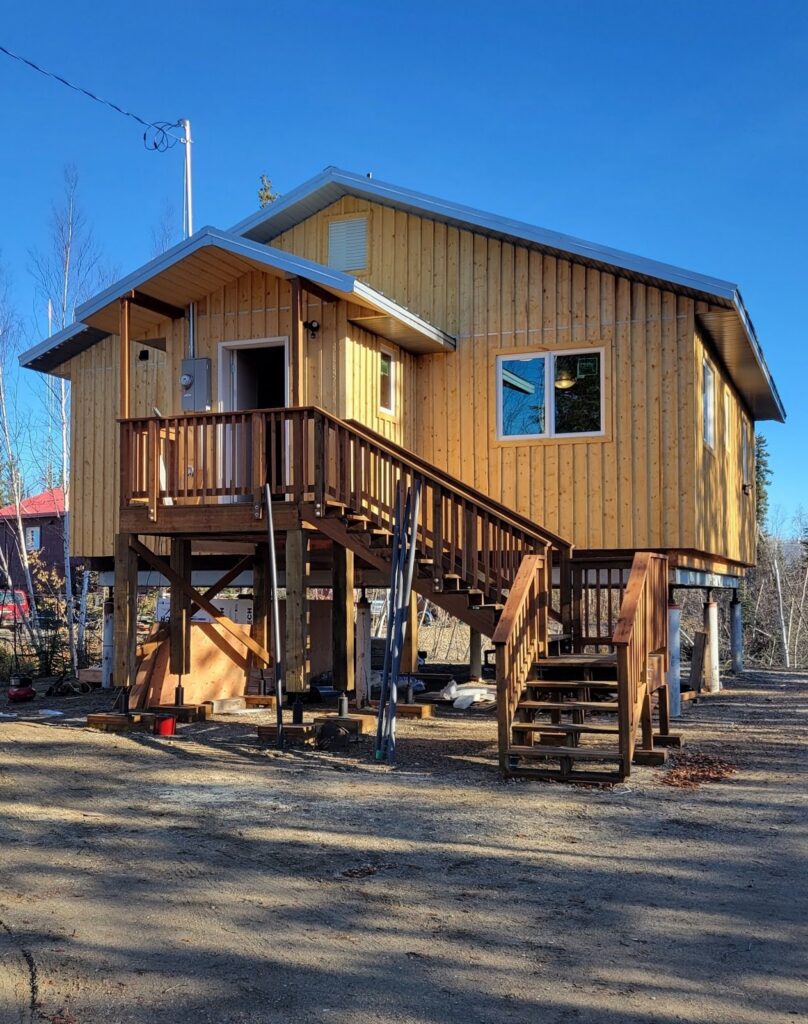
Photo Courtesy Louden Tribe
As Will Kramer, an applied mechanics instructor at Galena Interior Learning Academy, told the Associated Press, “We are just at the whim of whatever somebody else that wants to make all the money off of us is saying and doing. And being able to install and integrate these systems in these communities, it kind of gives the freedom back to the communities.”