
David Hill, executive vice president of energy at the Bipartisan Policy Center, led a panel discussion during National Clean Energy Week about how American energy products can compete in a global market.
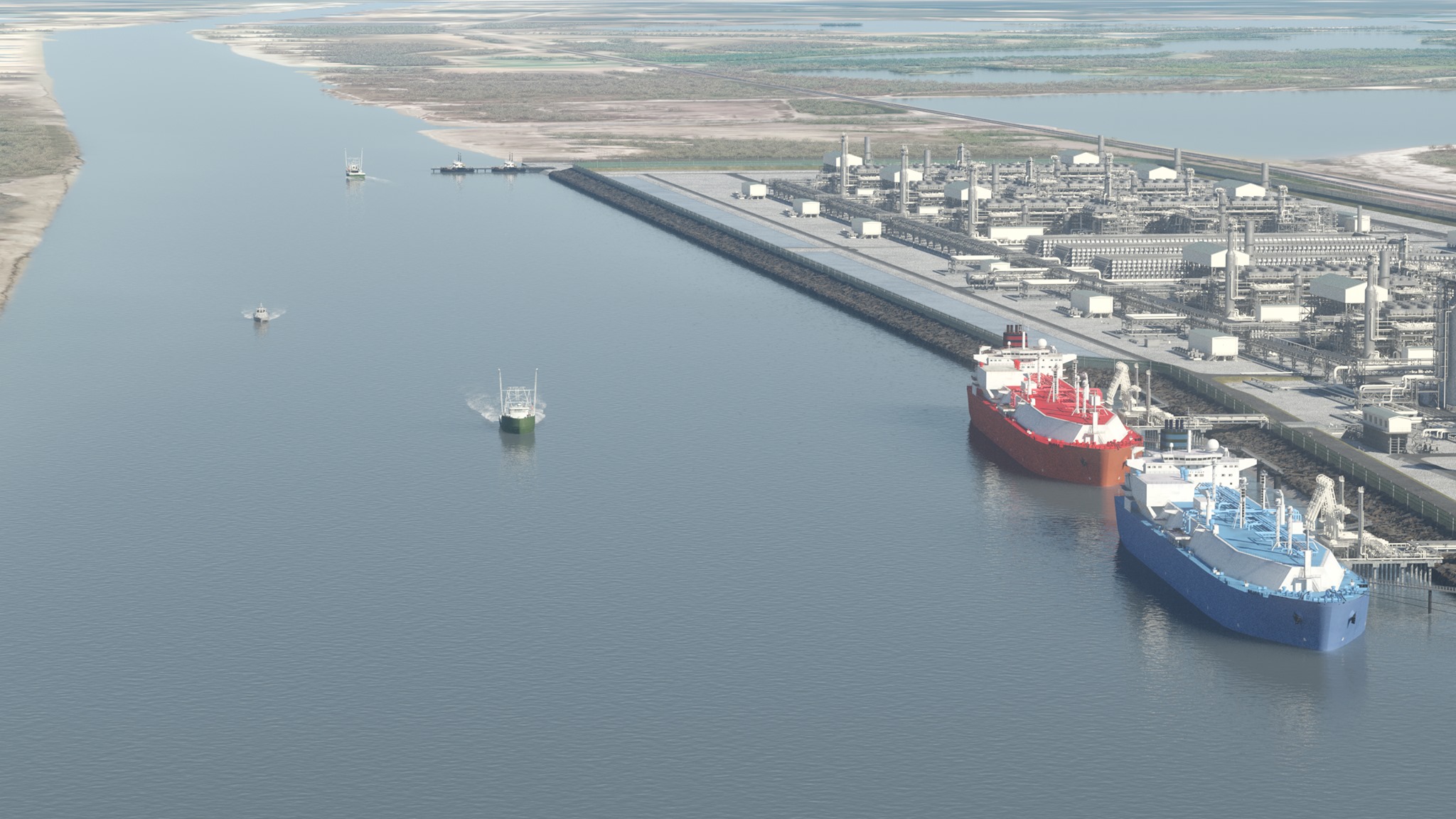
The conversation focused on liquified natural gas (LNG), or natural gas that has been cooled to a liquid state, which can reduce its volume to about 1/600th of its size as a gaseous methane molecule, making it transportable over long distances, particularly via shipping. Dan Byers, vice president of policy at the U.S. Chamber of Commerce’s Global Energy Institute, noted that on February 24, 2016, a tanker left Cheniere‘s Sabine Pass LNG terminal in Louisiana, marking the very first LNG export from the Lower 48 states. Since then, in less than a decade, the U.S. has become a leading exporter.
Filip Schittecatte, president of LNG market development at ExxonMobil Upstream Company, noted that the U.S. has a competitive advantage in transporting affordable natural gas produced in one area to demand centers worldwide. Plus, adding an LNG offtake market to the U.S.’s well-functioning domestic market was a smaller step to take than elsewhere in the world, where “there is not a lot of market locally, and so you really have to justify the entire investment in the upstream, as well as building the liquefaction unit, and then you’re in need of finding the customers to underpin the entire project.”
This will be particularly important for the U.S. on the road to mid-century: ExxonMobil estimates that by 2050, one-quarter of the entire world’s energy will come from natural gas, with 20% of that supplied through LNG, compared to just 12% through LNG today. Schittecatte said that this energy form has “a very strong growth prospect on a global level,” and the country’s ability to export it would “would actually, in our view, keep the U.S. proportional to the entire global market’s growth.” Over the past decade alone, according to Rob Jennings, vice president of natural gas markets at the American Petroleum Institute, global demand for LNG has increased by 60%, with the U.S. accounting for approximately one-quarter of both natural gas production and global LNG exports.
Over the past several years, this increasing demand has been driven by a growing focus on energy security. Referencing Russia’s invasion of Ukraine, Jennings explained, “A lot of countries took a look at their energy policies and realized that they may not have been thinking about energy security as much as they should have been.” Despite the U.S. taking the slot as the world’s number one natural gas producer, and there being an EU proposal on the table to phase out Russian imports completely, Byers claims they will not be able to do so unless U.S. LNG providers continue to come online: “These countries also want to have that optionality to have a trusted partner. And so really, in a way, the timing is just extremely fortuitous that our next wave of projects is coming along just as the geopolitics is heating up.”
At the end of the day, according to Jennings, the demand for LNG itself “sends an important signal to upstream producers like ExxonMobil that they still should be investing in upstream, and that midstream companies should still be investing in pipeline capacity, and that does help build that robust system… Our big, comprehensive, and well-built-out natural gas system that really underpins our energy security.”
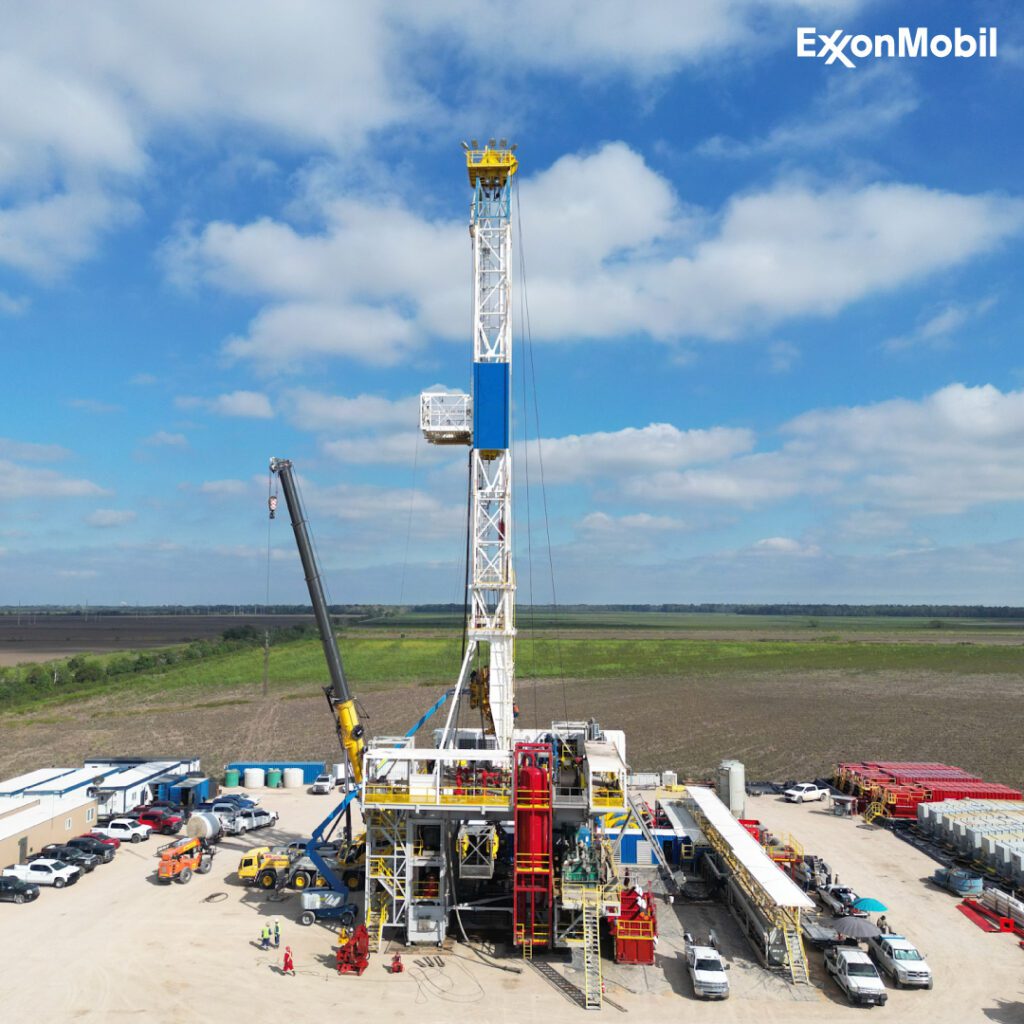
Photo Courtesy ExxonMobil
LNG demand is also being driven by the trend toward decarbonization, as natural gas burns about twice as clean as coal, providing a cleaner alternative. Since 2005, the U.S. power sector alone has reduced emissions by about 40%. Jennings stated that “the biggest driver of that was the switch from coal to natural gas. In the power sector, we used to burn a billion tons a year of coal. Today we burn half that… What the U.S. LNG fleet allows us to do is export that template for reducing emissions that has worked so dramatically well here in the U.S.” Schittecatte added that 70% of LNG demand comes from the Asia Pacific, where buyers have come together to start the Coalition for LNG Emission Abatement toward Net-zero (CLEAN) Initiative. The partnership, supported by the governments of Japan, the Republic of Korea, and Australia, sees the world’s largest demand center asking producers to provide information on their emission management and reduction efforts, allowing the U.S. to demonstrate its advantages.
Not only does natural gas offer a decarbonized resource for American trade, but the industry has increasingly recognized its value. Exxon has achieved more than a 60% reduction in the methane intensity of its operated assets since 2016. “I think it feels natural for us to do because it addresses both sides of the end equation,” explained Schittecatte. “It provides the energy we’d like to supply to market, and doing so by also addressing the emissions.” Jennings said this can be seen in the rest of this ecosystem, as well: “The broader industry has reduced the methane intensity of U.S. onshore oil and gas production 59% since 2015. And one of the most remarkable things about that is that’s not been regulatory driven. Those changes have been industry-driven. That’s what shareholders want.”
Moving forward, one of the challenges highlighted was the importance of the U.S. continuing to show its leadership in the sector. Jennings mentioned that when President Biden introduced an LNG permitting pause, “it injected a ton of uncertainty,” after LNG had been “almost a bipartisan exercise for the first eight years.” Meanwhile, Byers commented, “I think there’s a fairly good consensus that LNG exports do not raise emissions, and, in fact, they decrease emissions, but that’s something that’s still not going away, so we have to sort of be diligent, and you’ll see continued progress in addressing methane through the value chain.” Additionally, the country should only pursue goals that do not impede our reliability as a trading partner. Schittecatte said the idea of having LNG exports shipped by U.S.-built and -flagged vessels is an endeavor that would hinder the industry because it would have to start from scratch.