
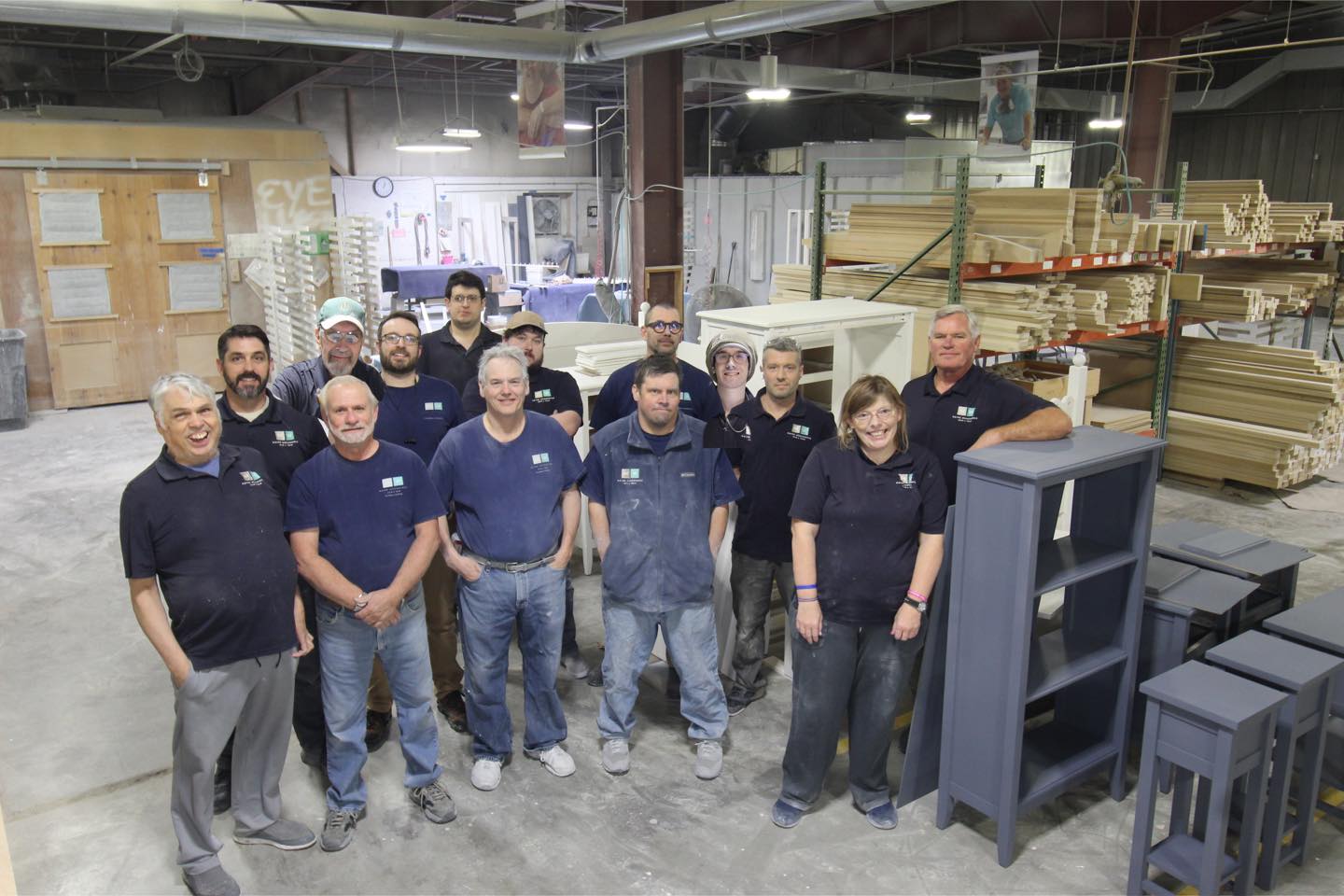
In 1967, Marcel and Lois Houle joined with other families whose children had disabilities to create the nonprofit Creative Works, then known as the York-Cumberland Association of Handicapped Persons, to expand educational opportunities. The nonprofit has since changed not just its name but also expanded its mission to focus on adults, supporting more than 500 Mainers with disabilities in obtaining housing, jobs, and skills. It has also grown to become “one of the largest employers in Maine,” the organization claims. In 1991, Creative Works founded Maine Woodworks as a social enterprise to provide meaningful employment for individuals with disabilities. The mission is particularly meaningful given the Maine Department of Labor’s findings that between 2012 and 2016, less than one-third of Mainers with a disability were employed, compared to an 80% rate among the rest of the state population.
Today, more than 40% of Maine Woodworks’ employees live with disabilities, and the company is continuing to “thoughtfully and intentionally create space for craftspeople with and without disabilities to share their talents and support themselves and their families.” There are no barriers or special stations separating people with and without disabilities. Any visitor to the showroom can see an inclusive space that features “new and rewarding ways for people with and without disabilities to work together,” helping change the way people think about disabilities in the workplace. Margaret Logan, marketing manager for Creative Works, reminisced on the journey, “Maine WoodWorks started out as a way to employ people, and along the way, it became a strong, viable business in an industry that is tough.”
The impact is significant for both employees and customers. One of the nine Houle children, Jim, reflected to Down East several years ago, when he was serving on the Board of Trustees, “There’s a full life in having a job where you can work for many years, get to know your coworkers and make friends, and bring a paycheck home.” Employee Tina Stevens mentioned the independence that her wage provides her: “I make money. I cash it. I can use it when I need it.” Bill King, who was lead assembler at the company for more than two decades, reflected to the Portland Press Herald about the connections he developed with colleagues living with disabilities: “There is a lot of respect here. It’s never felt like them and us. It’s all just us.” Children’s author Cynthia Lord, a customer from Brunswick who bought a hutch with glass doors, told Down East that “it highlights what the workers at Maine WoodWorks can do, and so much of the world focuses on what they can’t.”

Photo Courtesy Maine Woodworks
All furniture, including beds, dressers, and tables, is handmade in Maine. Although the work was originally conducted in the Lincoln Mill in Biddeford, employees now make one piece at a time in a 23,000-square-foot factory in Saco, with each piece built to order and customizable for colors, panel and leg styles, and knob type, meaning there is no stored stock. General manager Dave Gallati explained the process to WMTW, “An order will come in, we’ll send it to the floor, one craftsman will assemble it, then it will move through finishing, final assembly, wrapped up, shipped out the door.”
Maine Woodworks also sources from Maine whenever possible. “If we can’t get it in Maine, we try to get it as close to the shop as possible,” Gallati told Down East.
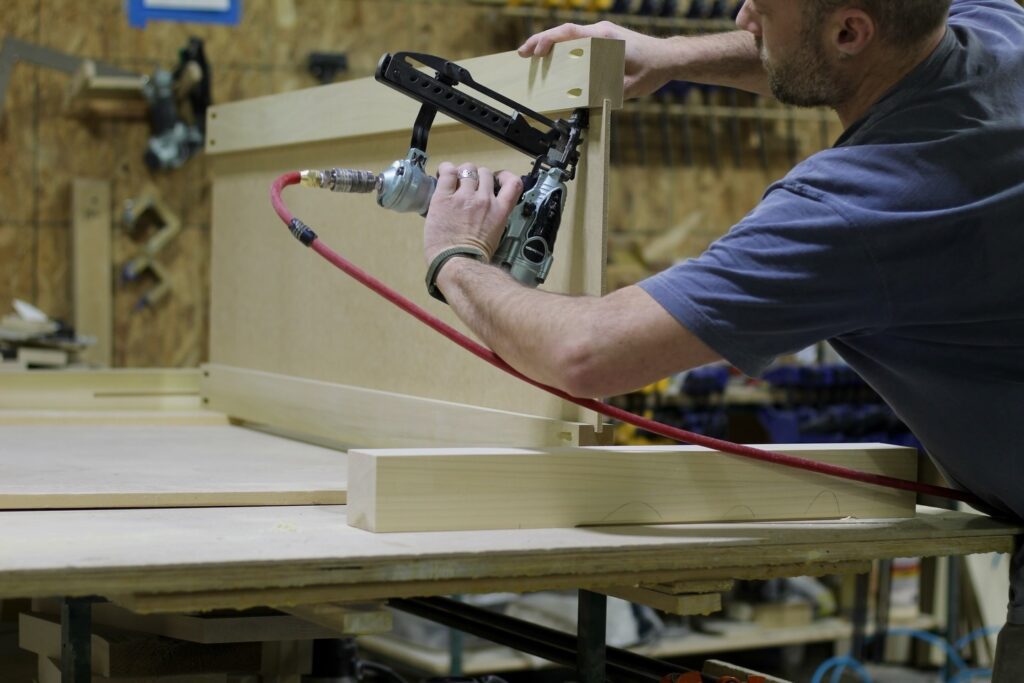
Photo Courtesy Maine Woodworks
The company was not profitable at first. It started by building unfinished pine furniture, but it faced challenges, including a small market and high shipping costs. “The unfinished pine churned along, but it was very difficult to make it work from a profitability standpoint,” Gallati told Down East. In the early 2000s, Gallati sold his woodworking business and relocated from Vermont to Maine to help the company transition to classic coastal styles such as Maine farmhouse and Maine cottage, inspired by Maine Cottage Furniture’s colorful offerings. He added to the Portland Press Herald, “We stuck out like a sore thumb because everything else was a natural wood. We had all these bright colors.”
Now, all of Maine Woodworks’ earnings from furniture sales go either to employee wages or to support Creative Works’ programming and mission. Plus, Maine Woodworks reinvests part of its profits to strengthen its workforce model, “showing just how effective and impactful this way of working can really be.”
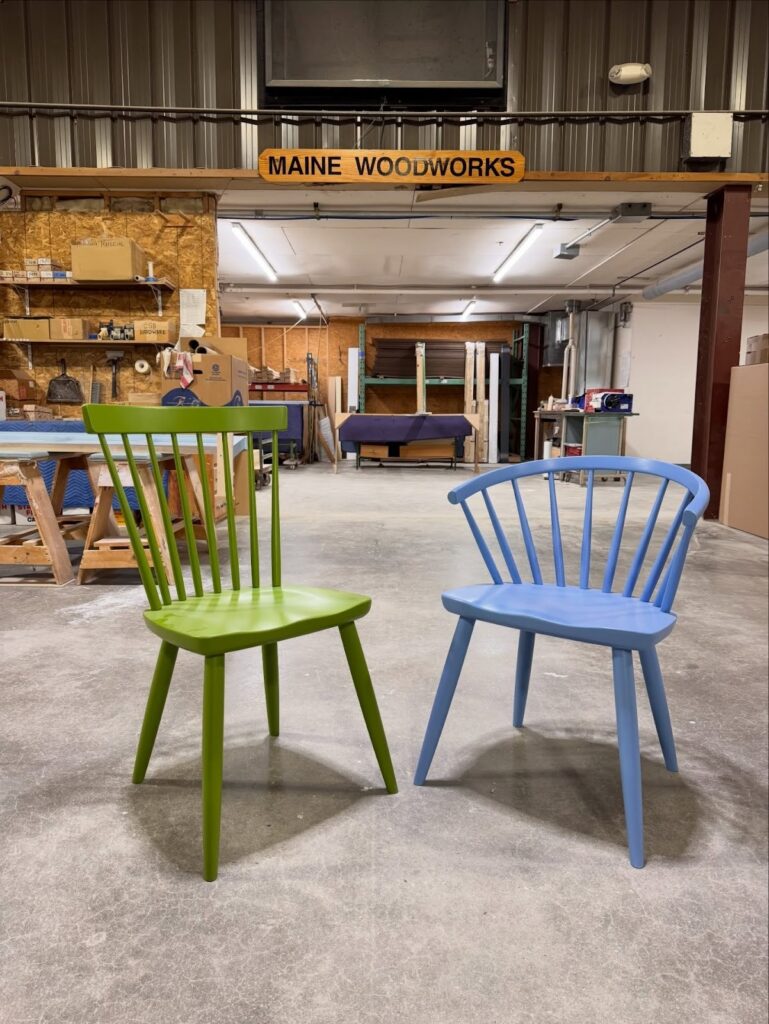
Photo Courtesy Maine Woodworks
Maine Woodworks also takes pride in being sustainable, using sustainably harvested, hardwoods certified by the Forest Stewardship Council and water-based finishes in colors inspired by Maine’s natural beauty. “A Maine-made furniture company should be good for Maine, and Maine Woodworks chooses to be a responsible steward of Maine’s natural resources,” the business explained.
“In purchasing Maine Woodworks furniture, you are investing in our people, in our social mission, and in breaking down barriers that limit opportunities for individuals with disabilities to lead productive and fully engaged lives,” Creative Systems summarized.
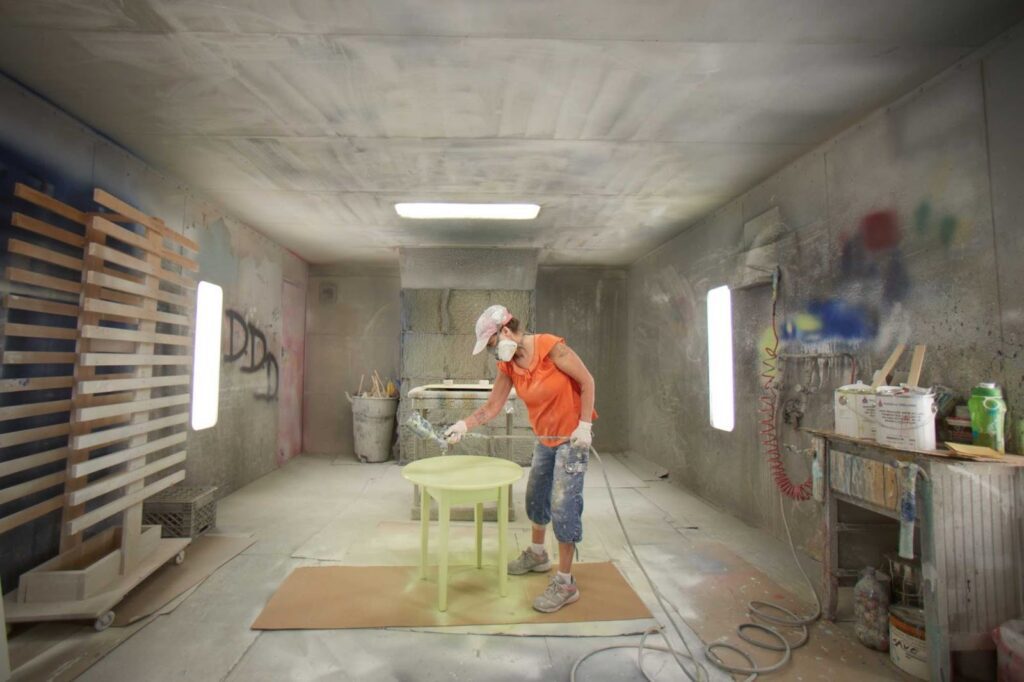
Photo Courtesy Maine Woodworks