
On June 10, in the woods behind a retail store and warehouse on Route 1 in Newcastle, Maine, a small group cut a ribbon that was not really a ribbon. Representatives from Coastal Rivers Conservation Trust and retailer Mexicali Blues snipped through a bundle of willow branches to open a new parking lot, trailhead, and spur trail into the Marsh River Bog Preserve. The old trailhead, tucked into a wet, tree-hemmed spot with room for just two or three cars, has been replaced by one in the flagship store’s own backyard.
The way in which the path was built reflects the values of the company that helped bring it to life. Mexicali Blues is a Maine-born retailer of clothing, jewelry, and home goods with six stores across the state and a solar-powered headquarters in Newcastle. To create the trail, the company granted Coastal Rivers a permanent right-of-way across its land, gave the land trust a $45,000 grant to build the spur trail, and opened a dedicated parking area for preserve visitors. Although the Kennebec Trail Company, a local firm owned by John Copeland, led the construction, Mexicali Blues staff members joined other volunteers in late October to help haul brush and remove trash. None of that is a marketing campaign. It is closer to a habit, one the business has kept for more than three decades.
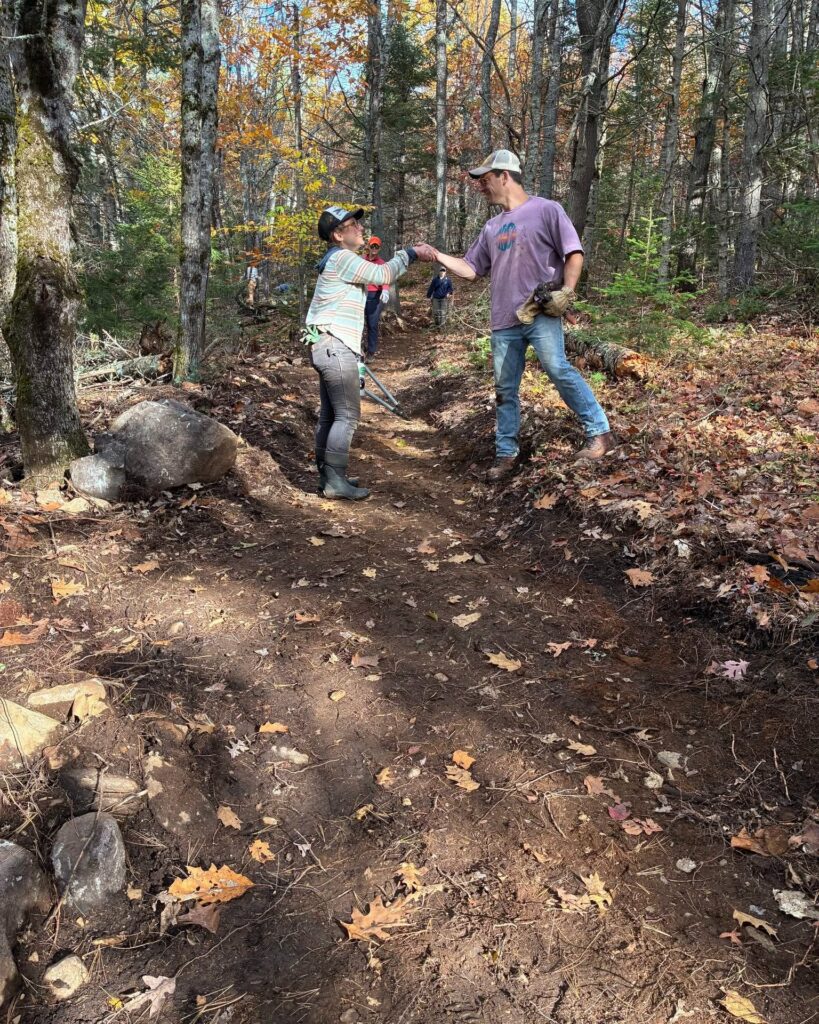
Photo Courtesy Mexicali Blues
Mexicali Blues started in 1988 as a single shop in Portland, stocked with imports including “a trove of funky, handmade clothes and accessories” that its co-owner, Pete Erskine, had gathered during a “post-college ramble through Mexico and Guatemala,” alongside a heavy dose of Grateful Dead merchandise. The store took its name from the Dead’s 1972 song “Mexicali Blues.”
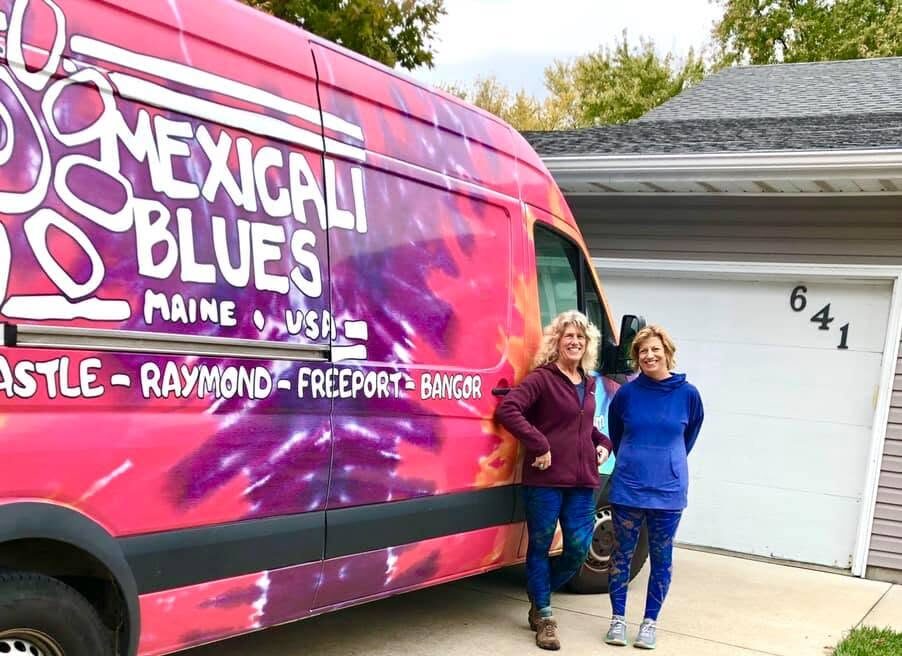
The single Portland shop slowly became a chain. Mexicali Blues added its Newcastle flagship in 1996, then grew to Raymond in 2004, Freeport in 2007, Bangor in 2011, and a sixth store in Kittery in 2024. Topher Mallory, who has served as chief executive for roughly two decades, has led the company through most of that expansion. The company employs about 70 people full-time, and more than 100 during the summer season.
Its own operations run in the same direction: In addition to selling environmentally friendly products made from materials such as hemp, its stores provide only 100% recycled bags and use biodegradable packing peanuts. The Mexicali Blues Replay program also enables customers to return used clothing at any Maine location and earn rewards for future purchases. Moreover, the Newcastle headquarters and the flagship store are both solar-powered, the company says. In fact, the 181 solar panels installed by ReVision Energy generate over 62,000 kWh, enough power for the Newcastle store, headquarters, and offices, and to offset some of the energy used by their other stores. Pete noted that everything else they were doing, including reducing, reusing, and recycling, pointed them in this direction: “Solar panels were a logical next step.” Kim added, “Sunlight is so precious in Maine this time of year, and I feel like we’re really making the most of it!”
That all aligns with Mexicali Blues’ S.M.I.L.E. Philosophy, with ‘S’ standing for “Spreading Good Vibes Globally.” Pete described, “We only buy from, work with, and sell to people who smile.” The company gives back, works with good people, uses good energy, and offers “groovy goods that make you feel good.”
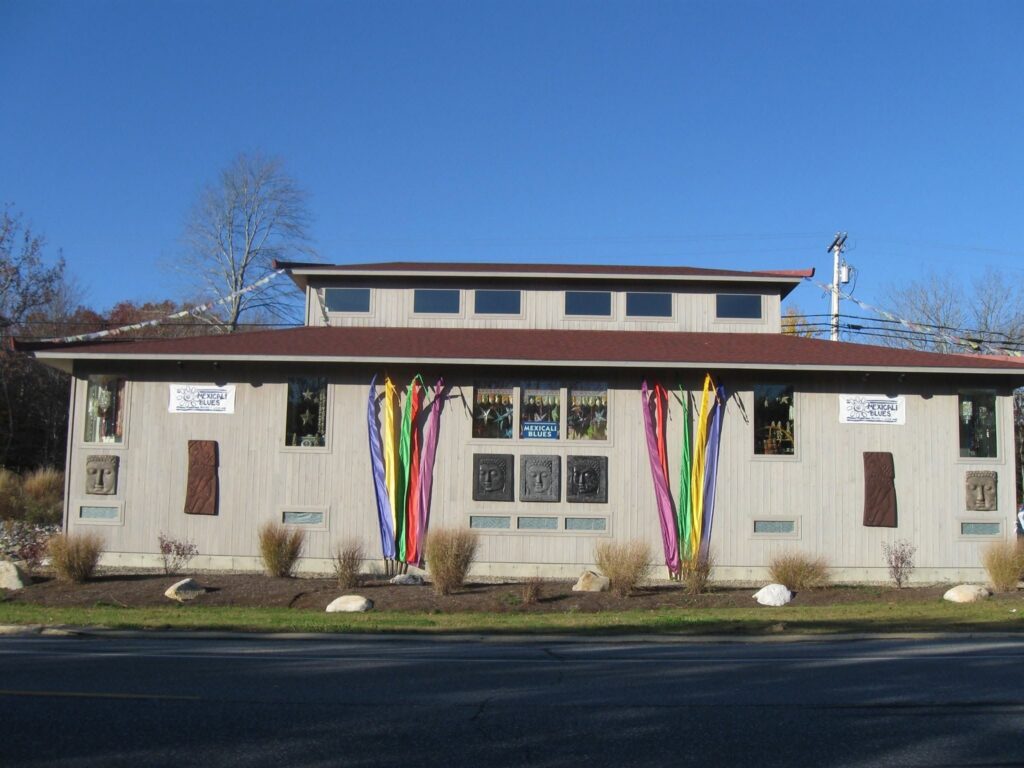
Photo Courtesy ReVision Energy
All of these products are made, not manufactured: the ‘M’ in S.M.I.L.E. Filled with “everything from colorful hand-dyed batiks and tie-dyes to alluring gemstone jewelry, bohemian skirts and tops, and Eastern-inspired décor,” it can all be traced back to makers who are proud of their work. With many of them made by hand, “the result is a product that is as unique as you are.”
The ‘I’ indicates that the company is inspired by community and culture. What sets the business apart is how much of its money it gives away and how formally it has committed to doing so. Mexicali Blues pledges 1% of every purchase, or 20% of profits, whichever is greater, to vetted causes, and reports having given more than $700,000 since 1988. Some of these organizations build homes in Guatemala, rebuild schools in Nepal, and provide safe environments for at-risk girls in Northern Thailand. One recent initiative saw the company sell a Mexicali Traveler Water Bottle made of sustainably harvested bamboo, with 100% of sales going to the dZi Foundation to help connect 125 homes, two community buildings, and a school in the Nepali village of Bokchamsido to a new water system. The project also already employed 64 women and 103 men from the area. “It’s those kinds of sustainable things we like to give to. If you give someone a pair of shoes, that’s great, but shoes wear out. We’d rather support things that help people gain skills through education. These people just want a chance,” Pete told the Lincoln County News.
Mexicali Blues is also a Certified B Corporation, the third-party standard for companies that account for their social and environmental impact, a status it reached in August 2024. On the B Impact Assessment, the company earned an overall score of 95.9, against a median of 50.9 for ordinary businesses that complete it, according to B Lab, the nonprofit behind the certification.
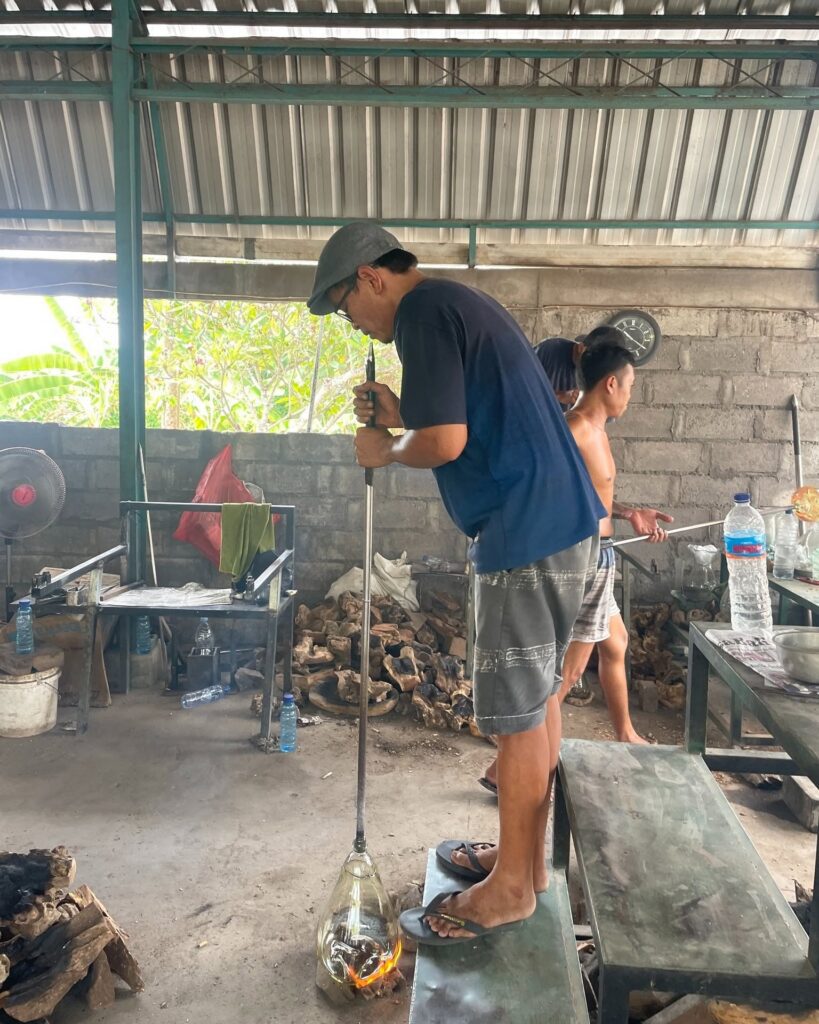
Photo Courtesy Mexicali Blues
However, it never loses sight of the fact that it is Lincoln County, Maine-based: the ‘L’ in S.M.I.L.E. is a “little local love story.” Mexicali Blues donates to local food banks, such as the Good Shepherd Food Bank of Maine, and contributes to local cleanups, such as at the Marsh River Bog Preserve. For Mallory, the appeal was partly that the woods sit at the office door. “Marsh River Bog Preserve is right in our backyard, and we are thrilled to help make it more accessible for our neighbors, our staff, and visitors to Newcastle,” he said at the trail opening. He added that seeing the two teams working the trail together “was a powerful reminder that when we invest in the places around us, we create something lasting and meaningful together.”
At the same time, the company supports other Maine businesses by sourcing staff meals from local restaurants or by sourcing many of its tie-dye t-shirts and Grateful Dead apparel from Artforms in Brunswick for the past two decades. “Mexicali Blues is bringing Maine to the world on its travels, and bringing little slices of the world back to Maine,” the company says. “Our travels and our website take us all over the world, but our stores and our hearts are back home in Maine.”
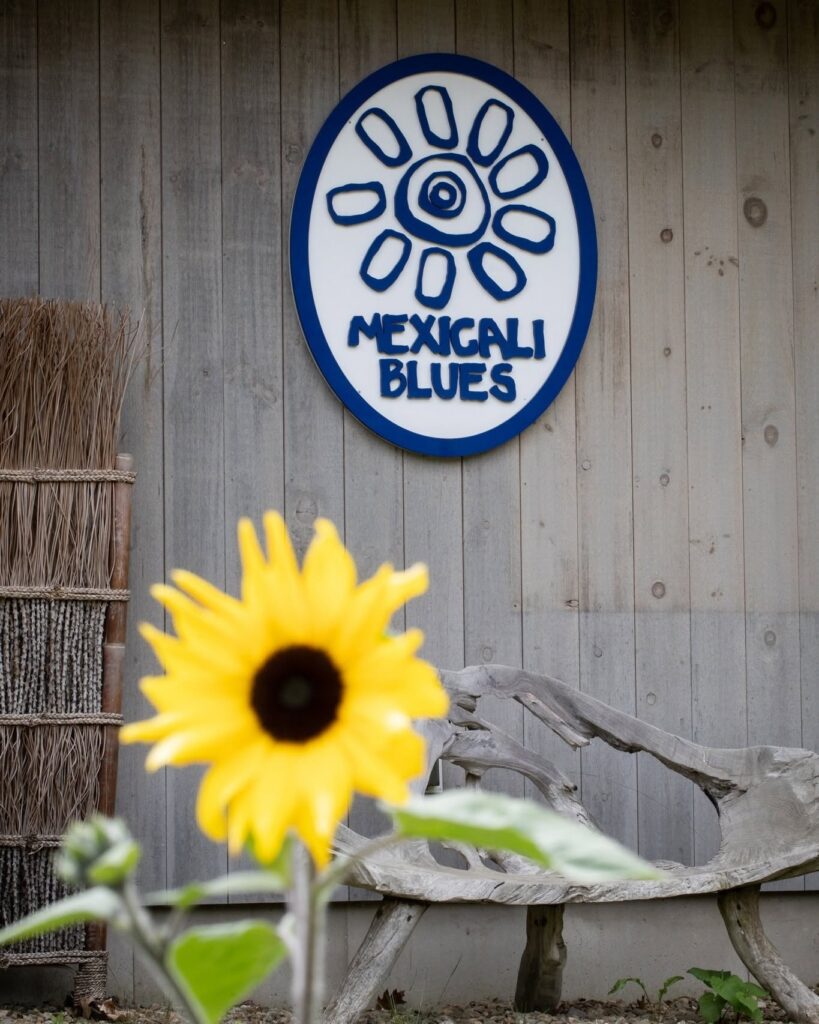
Photo Courtesy Mexicali Blues
Finally, the ‘E’ reflects the company’s ethical pricing policies. Mexicali Blues handpicks and imports goods from eight countries without middlemen and fairly compensates artisans, designers, and shippers throughout the supply chain. In fact, they travel to countries including Thailand, Indonesia, Guatemala, India, and Nepal for three to four months every year to “choose the styles of clothing we want, and we pick out the material we want to use for it,” Kim told the Lincoln County News. “We believe in responsibly importing eclectic goods that you won’t find anyplace else,” the company elaborates, with a mission to “ethically bring the wares of the world to our stores, empower the communities and cultures that create them, and share meaningful experiences with our customers.”
Thirty-eight years after a tie-dye shop opened in Portland, the B Corp celebrates international cultures and traditions, as well as the artisanal and recycled origins of its goods. It has a company culture based on celebration and respect, where the proof of the company’s values is a trail the public can now walk for free.
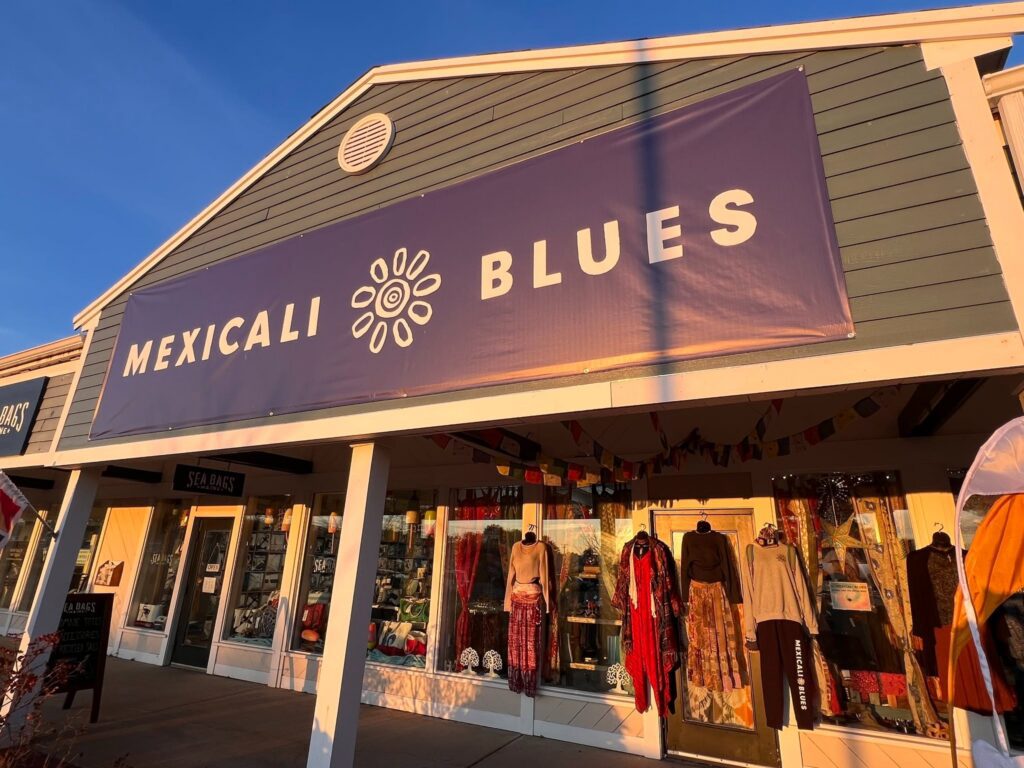
Photo Courtesy Mexicali Blues