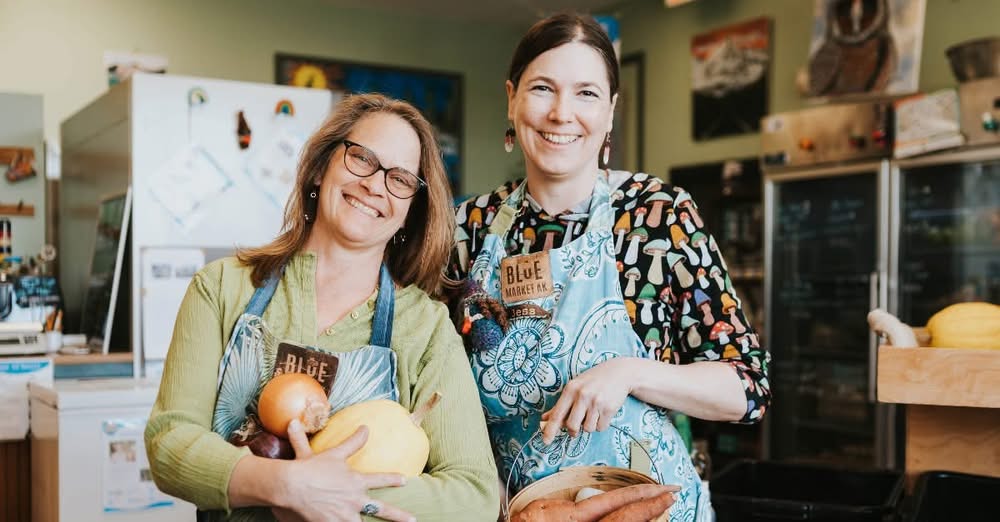
Jessica Johnson, a former attorney, used to spend her weekends driving across Anchorage in pursuit of a zero-waste lifestyle. From stopping at one location to fill her own jars to another for a jug of shampoo from a local producer, she drove around to multiple locations to fulfill her zero-waste goals. The effort was “frankly exhausting,” she wrote on her company’s website, and it sent her looking for one place where the products were already curated to be “unpackaged, sustainable, local, and ethical.” After she could not find one, she left her job in 2018 to build it.
By a different route, Jennifer Gordon arrived at the same idea from open water. She spent more than a year living aboard a sailboat with her family, traveling over 8,000 nautical miles along the coasts of the United States, Canada, and Mexico, and was concerned by the plastic she saw. Gordon remembered when her 17-year-old son told her “that he was not planning to ever have children because he didn’t see any point in bringing people into a toxic place where our natural world was collapsing before our very eyes, where citizens of the world don’t care about our environment.” A friend later challenged her to buy nothing packaged in single-use plastic for a month and photograph whatever she failed to avoid. She posted the challenge online, and friends and neighbors described similar thoughts and journeys. “Thus, the seed was planted,” she recalled.
Johnson and Gordon opened Blue Market AK in Anchorage’s Spenard neighborhood, marking what they call “Anchorage’s first neighborhood ‘unpackaged’ refill store.” It is a neighborhood grocer where most of the food and household goods arrive unpackaged, and customers fill containers they bring from home. The two founders met through a mutual acquaintance and built the business around local food, eliminating single-use plastic, and building community connections.
Opening the store in stages, Gordon and Johnson first launched in August 2019 as what Edible Alaska described as a “little blue market cart” at community farmers markets, ran a crowdfunding campaign, and held a soft opening of the Spenard storefront that November. The full grand opening was set for early 2020.
Then the pandemic arrived. Because it sells groceries, Blue Market AK could have stayed open under Anchorage’s hunker-down order. Still, the founders closed anyway and set up online ordering and curbside pickup before reopening in May. They essentially had to come up with a new business model without any warning, with even the most common of logistics in flux. Gordon recalled to Alaska Public Media, “We have, from the beginning, been really flexible. Even when we had this cart that we took around, this crazy cart that we took to the markets, we were changing all the time.” That flexibility came inherently baked into a business built by two women who had learned to hunt for zero-waste in a state where that was hard to find.
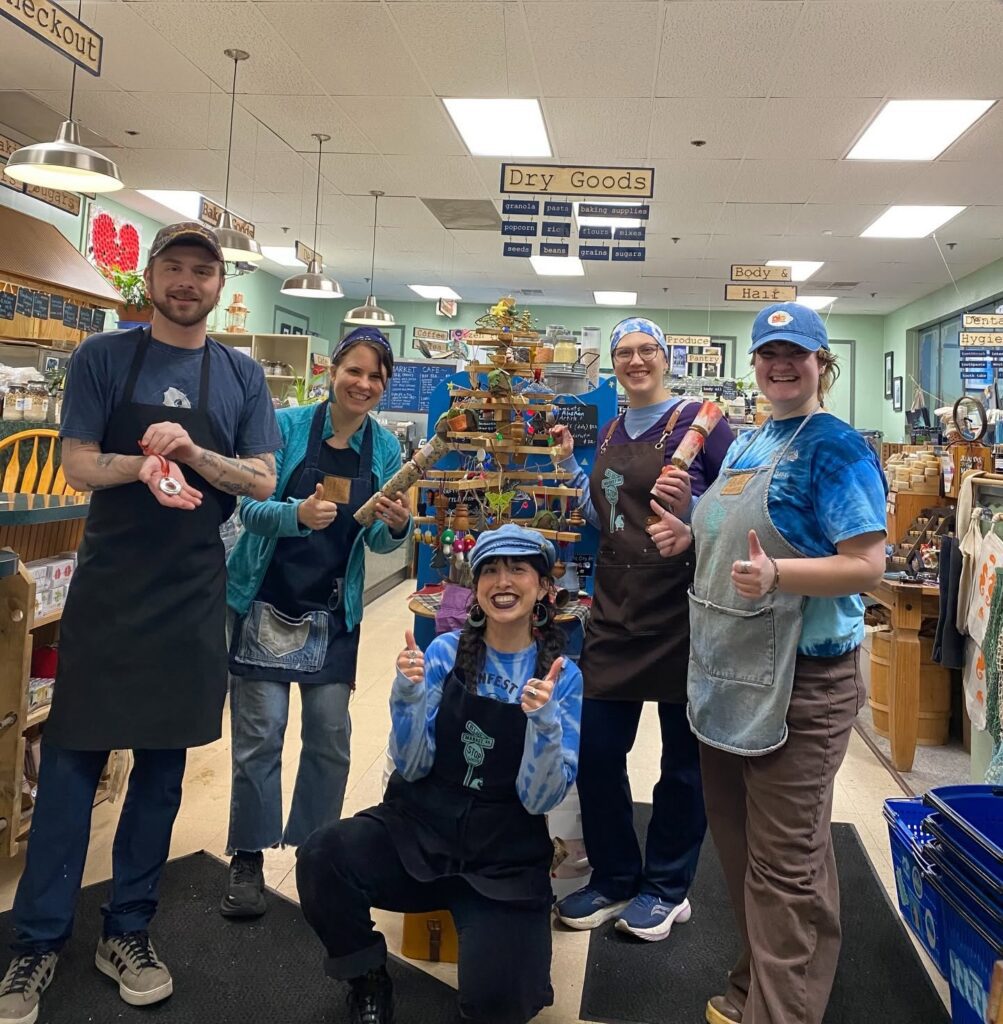
Photo Courtesy Blue Market AK
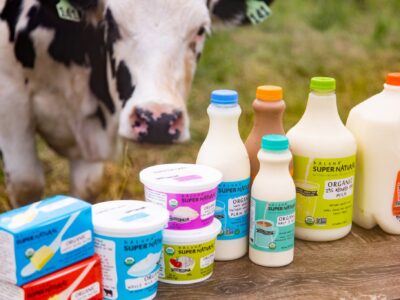
Shopping there is supposed to be easy. Customers weigh an empty jar or container and note its starting weight, then have it filled from the bulk bins of personal care products such as shampoo and soaps, household cleansers, cooking oils, and bulk foods. Those containers can be anything from an old school Golden Girls lunch box to a lace sack. A clerk subtracts the difference at the counter, as The Northern Light documented during a visit. Anyone who arrives empty-handed can borrow from a lending library of containers, and shoppers with too many clean jars at home can donate them. For items like milk from Alaska Range Dairy, which come in glass containers, the company charges $4 upon first purchase and discounts every time you return a clean, empty bottle, which Alaska Range Dairy can then reuse.
For those purchasing online, the company opts for environmentally friendly packaging materials, reuses shipping containers, and ships via barges instead of planes to reduce emissions, a distinction that matters in a state where freight shapes the price of everything.
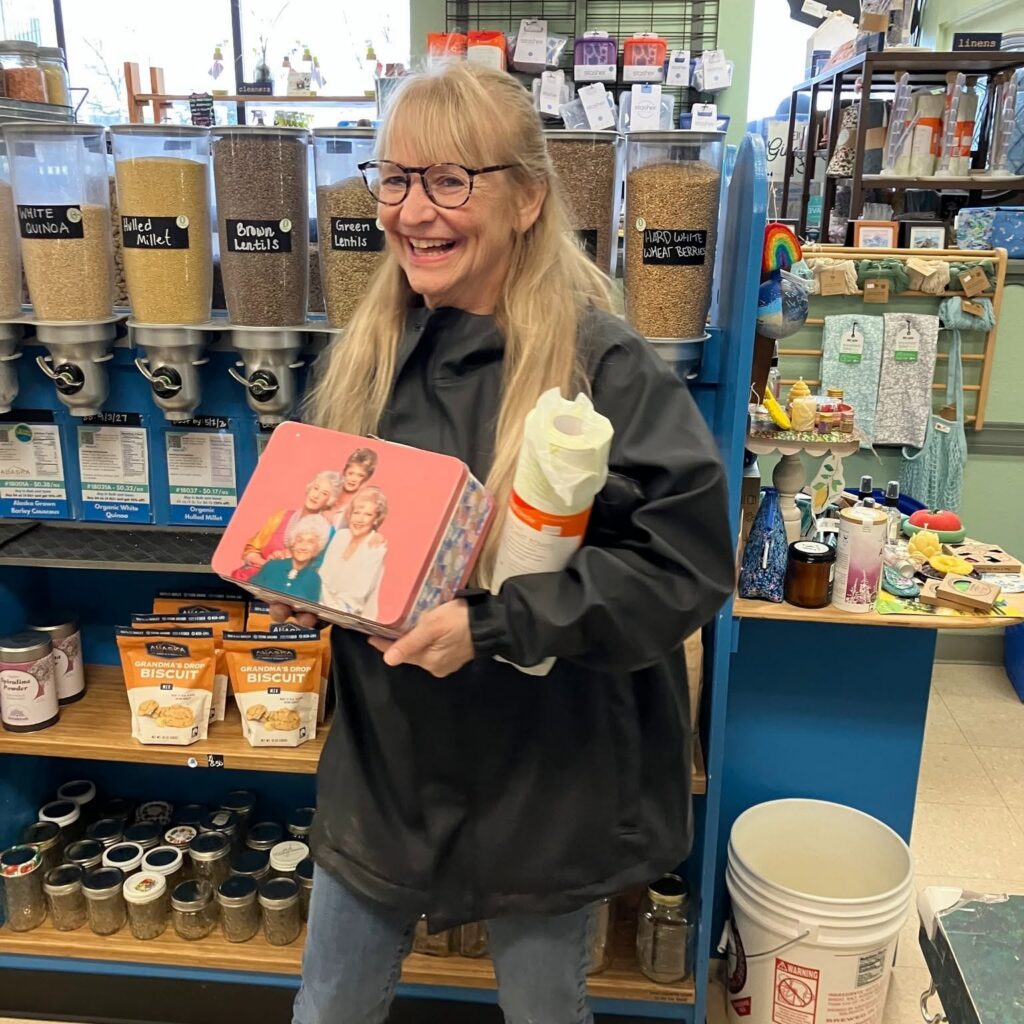
Photo Courtesy Blur Market AK
The selection is deliberately narrow. The store aims to counter what it calls shopping-overload anxiety by carrying fewer choices from vendors it knows. The products it does sell were selected to meet the needs of the local community. For those it’s missing, customers could request other products on a whiteboard just inside the entrance.
Some of those vendors package differently for the store than for anyone else. Bars from Denali Dreams, a soap maker a few blocks away on Spenard Road, normally reach shelves in paper wrappers; at Blue Market AK, they arrive bare, Edible Alaska reported. Suppliers have been willing to accommodate, the store notes on its website: “It never hurts to ask!” In fact, each of those vendors is vetted against the 6 Blue Market Standards for eco-friendliness of their products, environmental friendliness of shipping and packaging, local status and impact, and community and humanitarian elements. Each product is then transparently labeled and rated based on its sustainable, humanitarian, community-minded practices.
The impact speaks for itself. Between 2022 and 2025, Blue Market AK estimates it and its customers have prevented more than 178,649 pieces of garbage from reaching landfills, including 52,581 in 2025 alone. It is all in the company’s slogan: “Refill, Not Landfill.”
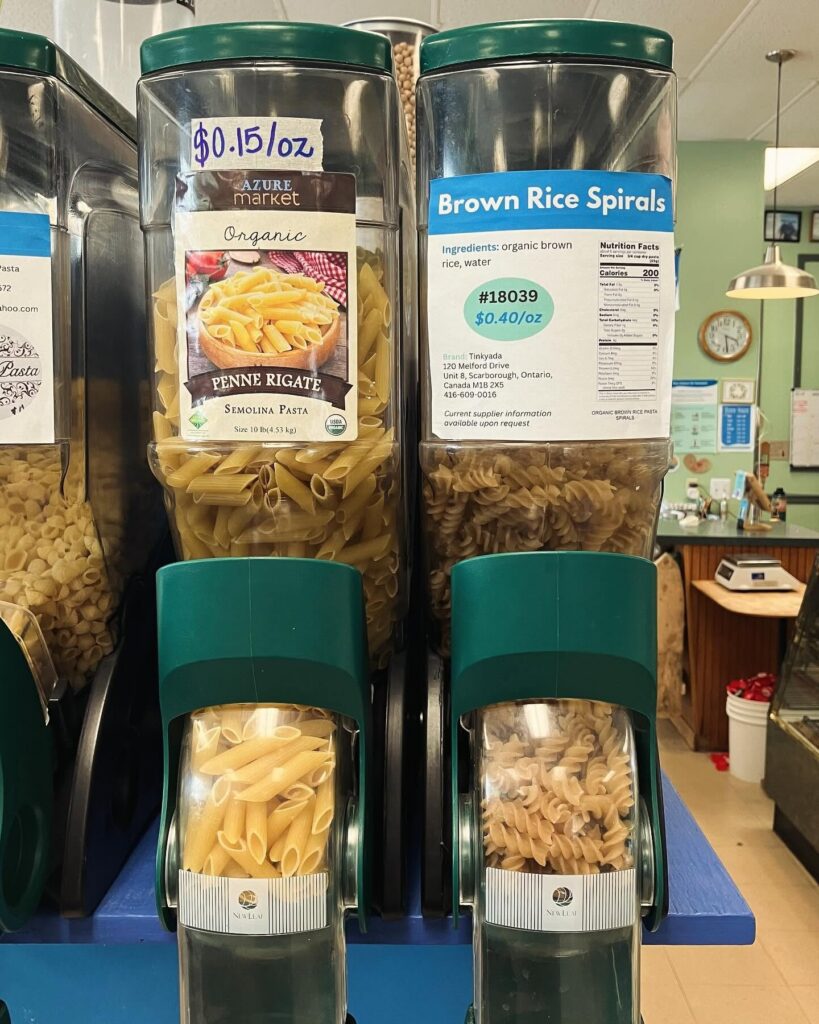
Photo Courtesy Blue Market AK
Blue Market says it features “locally-made and -grown products” and connects with small local businesses daily, while Johnson calls herself a “locavore.” Approximately 70% of the store’s vendors are Alaskan, 43% of all products are Alaska-made or -grown, and 54% are local. The roster runs from local farms and bakeries to soap makers and salt harvesters, like Alaska Salt Company.
That local focus earned formal recognition. The Alaska Division of Agriculture named Blue Market AK the winner of its 2023 Alaska Grown $5 Store Challenge, handing over a Golden Carrot award built from a three-foot carrot mounted on Alaska birch. The challenge asks shoppers to spend $5 a week on Alaska Grown products, and the division calculates that every Alaska household doing so would total roughly $66 million annually and result in enhanced food security. Blue Market AK took the prize during a three-year run when the award went to small independents, per Alaska Business Magazine. “Over the last four years, they have contributed to and made a real impact on the community, which is why they were the clear winners of this annual award,” said division director Bryan Scoresby.
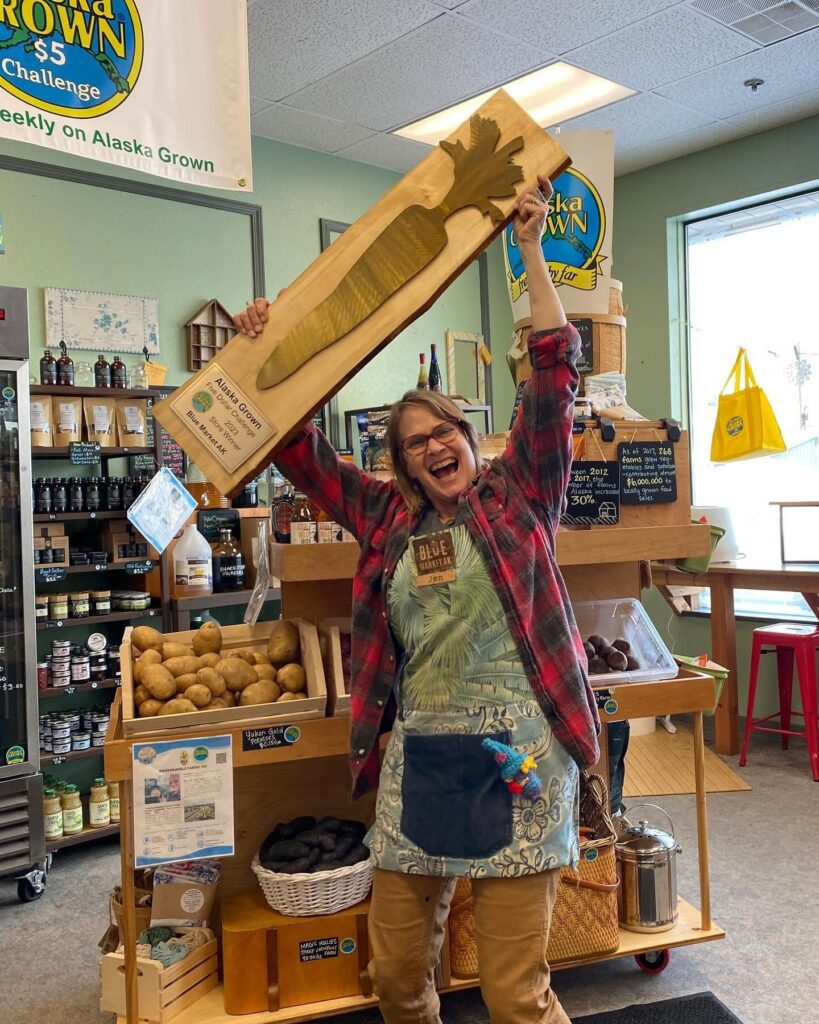
Photo Courtesy Blue Market AK
The giving is built into the register rather than left to good years, as the company considers itself a “community-centered social enterprise.” One percent of sales goes to local nonprofits working on food and sustainability. The giving recipient for the second quarter of 2026 was Paws for Purple Hearts, which provides canine therapy and service dog placement for active duty Service Members and Veterans with trauma-related conditions. Additionally, the store lends its floor to Alaskan makers for pop-up sales at no charge, such as Alaskan artist Anthony Henry, who brought his beleen carvings to the shop at the beginning of this year. It also opens Tuesday evenings for community workshops that it calls ‘Talk and Tinker.’

Photo Courtesy Blue Market AK
None of it came easily. Gordon and Johnson were the only two employees when the pandemic hit, which Gordon counted as luck, since there were no salaries to cover. By that first fall, the store had eight part-time employees, but Gordon was blunt with Alaska Public Media: “We are open. We are surviving.”
The results accumulated anyway. In its first year, according to Alaska Public Media, Blue Market AK sold enough shampoo and conditioner to keep nearly 700 plastic bottles out of the landfill. That is one product category, in one store, in one year. And that store is still open, six years later.
Neither founder has ever asked anyone to overhaul a household in a weekend. One of Gordon’s first steps was buying meat wrapped only in butcher paper instead of plastic. When asked how a shopper should start adopting zero-waste practices, Johnson offered three words to Edible Alaska: “Choose one thing.”