
On June 26, 2018, Ellsworth City Council Chairman Marc Blanchette backed his plug-in hybrid up to the city’s first publicly available Level 2 electric vehicle (EV) charger in downtown Merrill Park. His wife, Diane, took the first charge while city staff and the installation crew applauded.
That charger was a gift. A Climate to Thrive, an energy independence-focused nonprofit based on nearby Mount Desert Island, paid for the equipment and installation with a foundation grant. Host communities agreed to operate the stations and cover the electricity. Ellsworth Assistant Planner Steve Fuller told the Working Waterfront that the site worked because it was far from traffic yet close enough to downtown that drivers could turn their charging time into a short excursion.
By 2025, the free model cost the City of Ellsworth roughly $7,000 a year in electricity, and suggested donations had not covered it. The city’s donation page asked drivers to “please consider contributing $5 to $10 to the Ellsworth Beautification Fund.” During a July 21, 2025, City Council meeting, the city manager reported, “Unfortunately, there wasn’t a way to keep them because we weren’t generating enough revenue.”
Public Works staff first tried to convert the old chargers to paid use and found the change too complicated. The staff contacted ReVision Energy, a Maine clean energy contractor, and learned that grants were available to build something new.
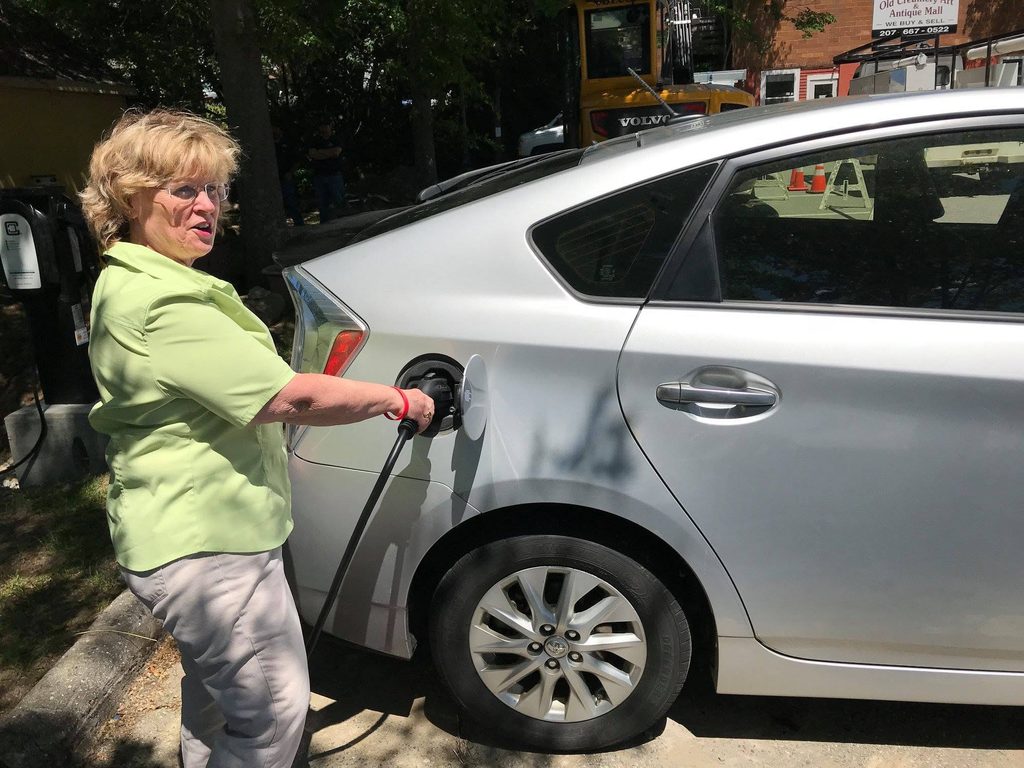
Photo Courtesy City of Ellsworth, Maine
City Manager Charlie Pearce, who described himself “as an EV owner myself,” made the case to councilors in business terms. In a September 2024 memo to the council, he wrote, “As EV charger use increases, the city will, in effect, be entering the ‘gas’ business, providing power for electric vehicles and profiting from each charge.”
To show the opportunity, Pearce pointed out in the memo that other Maine communities charged between 36 and 56 cents per kilowatt-hour, while the state’s average electricity rate was about 23 cents per kilowatt-hour. He elaborated, “EV sites often make 15-30% of each bill as additional revenue for the city. Multiply this across a growing number of EV users, and we generate a steady income stream, especially while the supply of EV chargers is low in the region.” Plus, as the city planned to expand its own fleet of electric vehicles, it could use this infrastructure itself, “further reducing our reliance on fossil fuels and lowering operating costs.”
Councilors approved the purchase in a 6-1 vote in November 2024. Councilor Nancy Smith said at the time, “When we went through the budget process, one of our goals was to identify additional revenue services to broaden our base so that we’re not as reliant on property taxes, and this does exactly that.”
The project cost $129,804. The State of Maine awarded the project a Charging and Fueling Infrastructure grant, and a federal tax credit was expected to cover another $38,941. Pearce told Fox Bangor that the city’s own cost came to about $10,000.
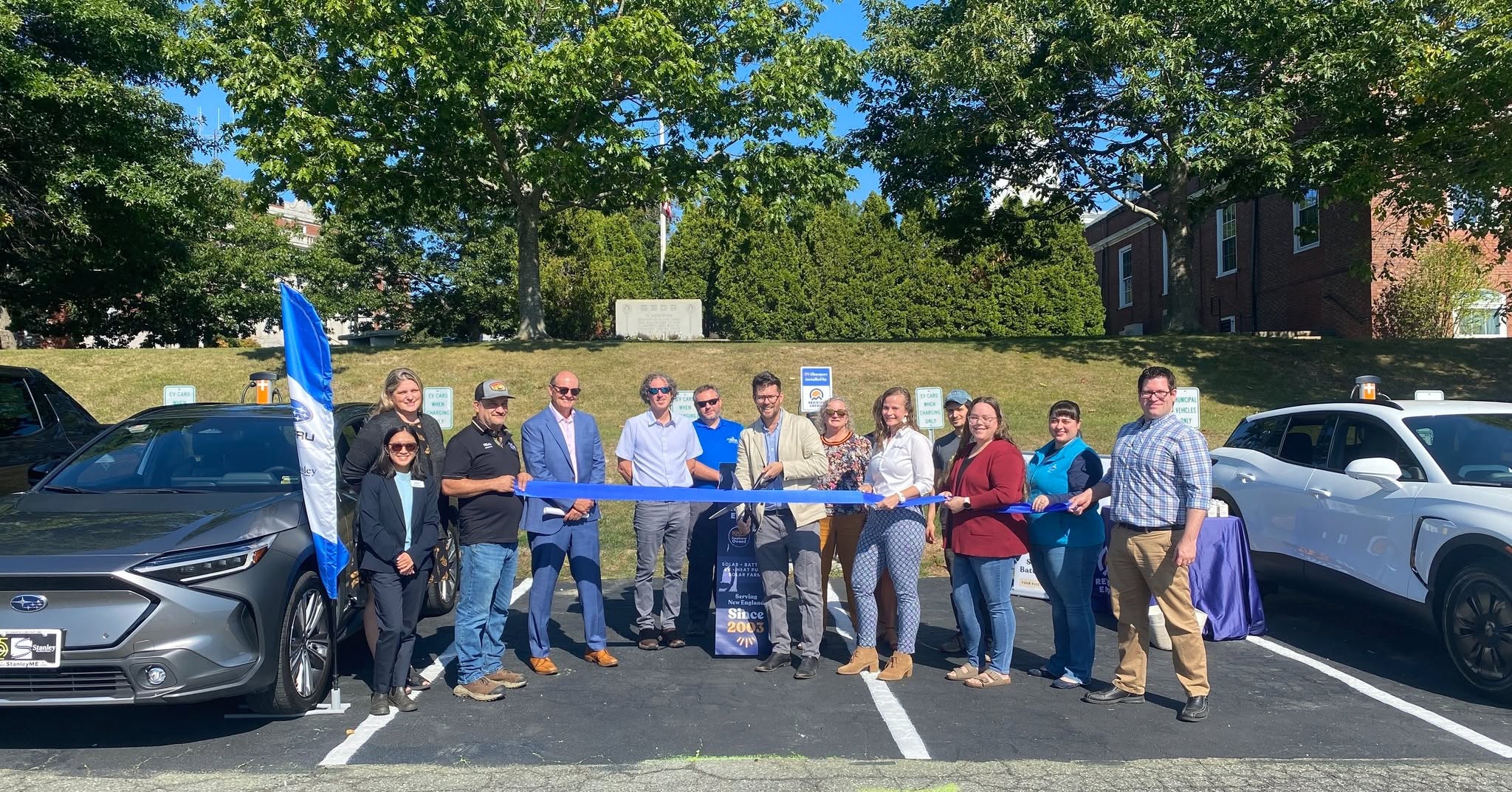
The work added eight ChargePoint Level 2 ports at City Hall, with two Americans with Disabilities Act-accessible spaces, two EV-only spaces, two spaces open to any vehicle, and two reserved for city vehicles. The city’s press release set the charging rate at 36 cents per kilowatt-hour, the low end of the range Pearce had cited.
By September 2025, the new chargers had quadrupled the city’s charging capacity and brought in $1,000, Pearce told the Ellsworth American. In the city’s announcement, he described the project as “quadrupling our charging capacity, eliminating the $7,000 annual cost of providing free charging, and instead creating a new revenue stream for the city.”
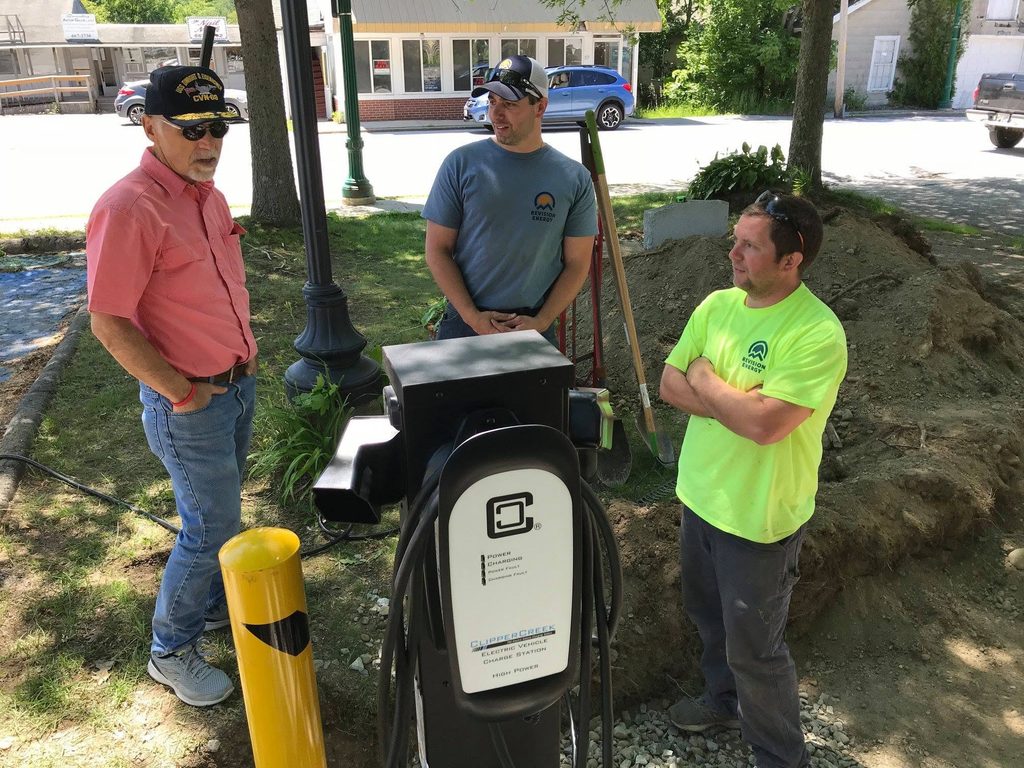
Photo Courtesy City of Ellsworth, Maine
The charging stations also benefit local businesses, Pearce described, as the system “draws more EV drivers into our downtown, where they can explore our businesses and restaurants while they charge.” In his memo, he wrote, “EV drivers often spend between 30 minutes to 2 hours waiting for their vehicles to charge, which presents a significant opportunity to encourage spending at our local businesses.”
The city also calls itself a gateway to Acadia National Park, and Pearce pointed to park visitors when he explained who would use the chargers. “They’re tourists that are coming from all over the country to visit Acadia. And they’ve got an EV,” he told Fox Bangor. With eight ports, he added, there is “almost always a spot available,” providing them flexibility to support “our local economy and one of the cutest downtowns there is in Maine.”
Research supports the downtown bet. A 2024 study by researchers from the Massachusetts Institute of Technology and partner institutions, published in Nature Communications, found that a new charging station raised annual spending at nearby California businesses by 1.4% in 2019 and 0.8% from January 2021 to June 2023. For businesses within 100 meters of a charger, the study measured increases of 2.7% and 3.2% over the same periods.
Barry Woods, ReVision’s senior director of eMobility, stressed at the opening that public chargers matter most in rural areas, where people travel farther for basic goods and services. “The public charger opportunity is fairly infrequent, but when you need it, you need it,” he said.
The city’s own fleet shows the same practical streak. Ellsworth leases two Nissan EVs for Code Enforcement and Public Works; the rest of its vehicles run on gas, and Pearce hopes to adopt more electric vehicles in the future.
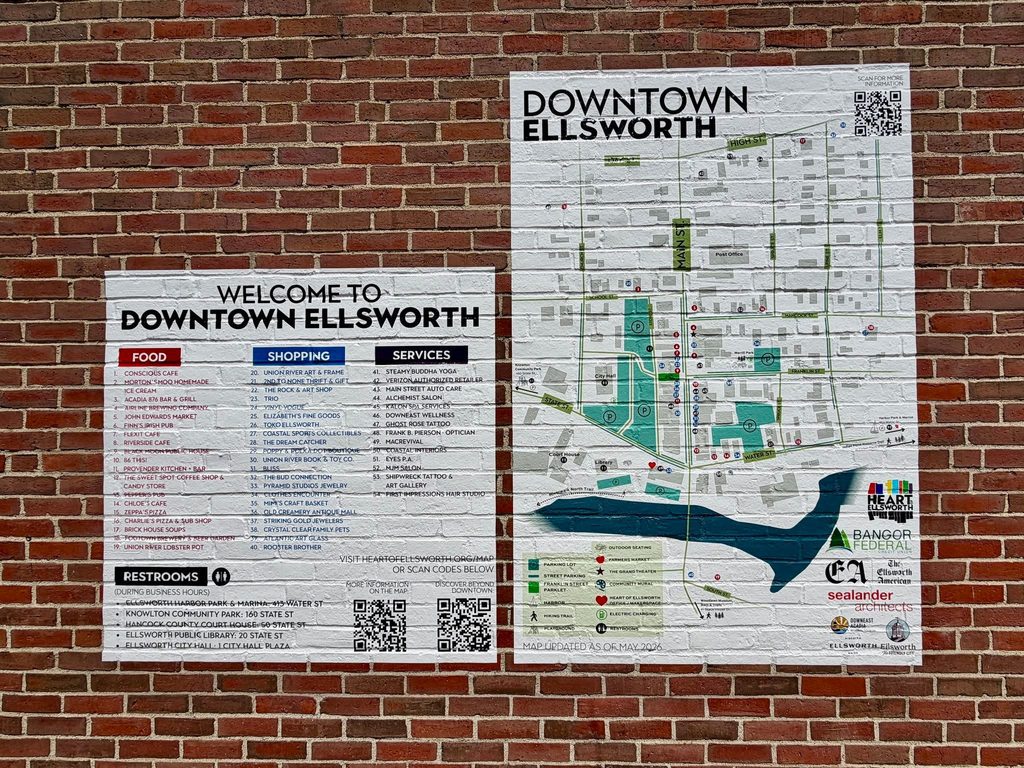
Photo Courtesy Heart of Ellsworth
Lily McVetty, a program manager at Efficiency Maine, said at the opening that Ellsworth’s decision would “set a great example for other municipalities.” Other Maine communities are rethinking free charging, too. South Portland announced in February 2026 that it is shifting its public charging to a pay-for-use model. Yarmouth charges fees meant only to cover electricity and maintenance, and the town says it will not earn revenue from them.
The same downtown logic has reached small towns. When the Dixfield Select Board approved a charger in December 2022, Town Manager Alicia Conn said charging stations would be “an opportunity to have visitors stay a little longer, spend more time and money at local businesses.”
Efficiency Maine counts more than 20,000 registered EVs and more than 650 public charging stations in the state. The agency will reimburse up to 80% of eligible costs, up to $200,000 per site, for new public Level 2 chargers at business, multifamily, and public properties, with proposals accepted until December 3, 2026, or until funding runs out, according to its updated request for proposals. The program draws on a $9.6 million budget from the same federal Charging and Fueling Infrastructure program that helped pay for Ellsworth’s chargers.
For Pearce, Ellsworth’s eight ports are a first step. When the council approved the project in November 2024, he said he planned to explore adding Level 3 fast chargers downtown, which charge batteries much faster and could bring in higher rates. “We’re just getting started here,” he said at the opening.
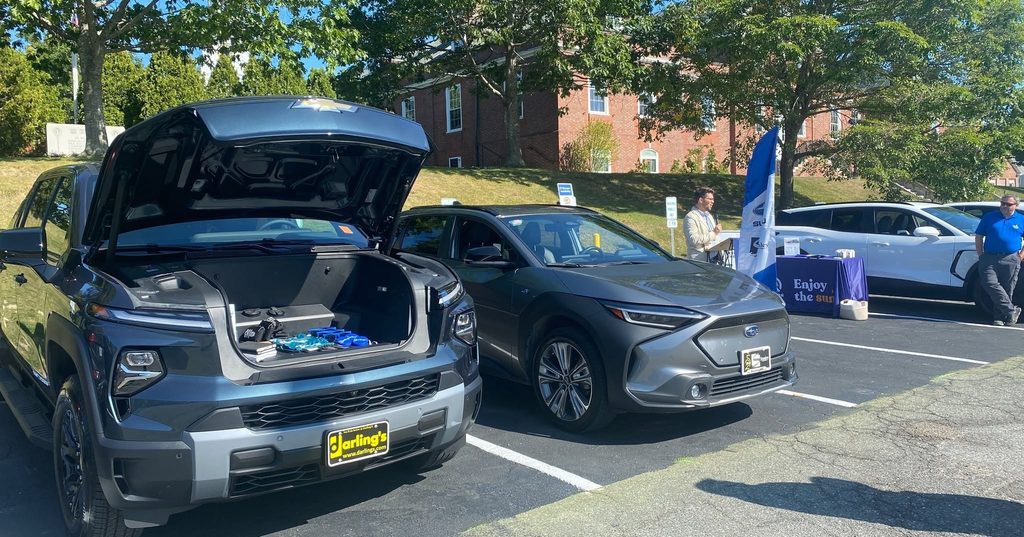
Photo Courtesy Heart of Ellsworth