
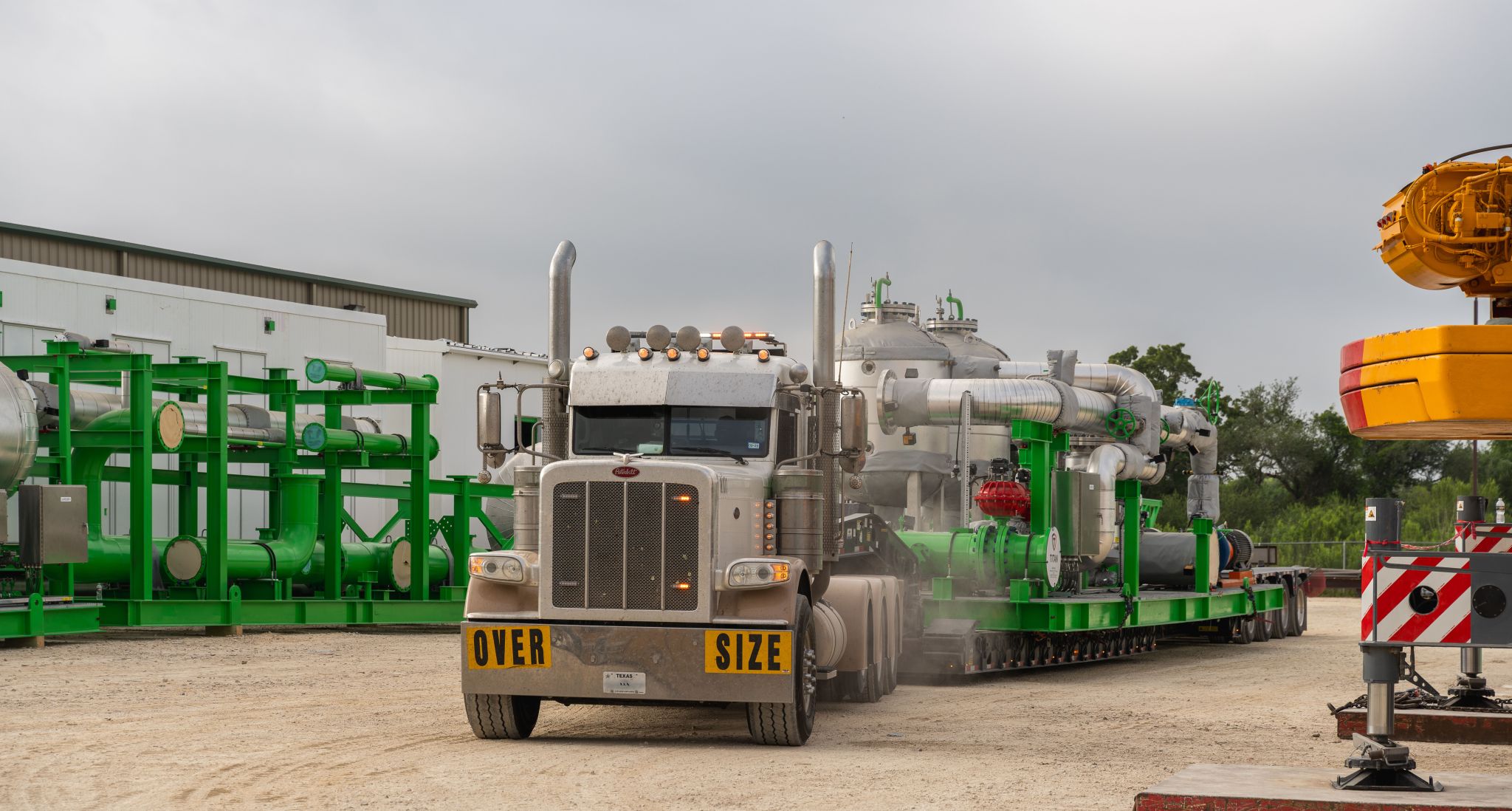
During National Clean Energy Week, Xan Fishman, vice president of the energy program at the Bipartisan Policy Center, led a panel discussion on the opportunities for American leadership in the global hydrogen market. North America, including both the U.S. and Canada, currently has hydrogen projects that are in development or operational, with approximately 2.4 million tons of annual production output.
Paul Wilkins, vice president for policy and government engagement at Electric Hydrogen, a manufacturer of electrolyzers that use electricity to split water molecules into hydrogen and oxygen, described how companies like his are innovating in this space. He said that Electric Hydrogen’s goal is to “make the lowest cost electrolyzer that can operate flexibly to run off the lowest cost electricity for the lowest cost hydrogen.” To make electrolyzers more efficient and durable, they are working to increase their density, allowing them to extract more hydrogen from each unit of capacity. Second, Electric Hydrogen produces the entire electrolyzer in their facilities to sell a “chemical plant in a box” to customers who save energy costs by not having to perform assembly in the field. Finally, the company achieves scale by selling only 100 MW electrolyzers. Electric Hydrogen is currently building its first plant, called HYPRPlant, to fabricate and assemble the electrolyzers in Texas.
Jessica Olson, head of Global Affairs at Topsoe, explained that her company is focused on making “chemical reactions happen in different, more efficient, lower-emitting ways.” Approximately one-third of global hydrogen production relies on its products, for example. With ammonia production representing the most significant use case for hydrogen, the U.S. has an opportunity to capture market share globally. Olson explained that the Clean Hydrogen Production Tax Credit (Section 45V) has already been a significant boon to the domestic industry.
For example, Exxon is planning what will be the world’s largest low-carbon hydrogen project in Baytown, Texas, while CF Industries has raised financing for an ammonia production facility that will also sequester carbon in Ascension Parish, Louisiana. CRES recently found that future blue hydrogen projects could yield $12 billion in annual GDP and more than 60,000 jobs. Section 45V offers a “huge advantage for projects that are in the pipeline, of which there are many.” Although Olson says, “it’s only in place for another two years and a handful of months,” it provides more policy certainty than there was before. Wilkins claimed, “I’d say the biggest barrier for the last couple of years has really been policy, but we’re starting to see some of that policy finally fall into place.”
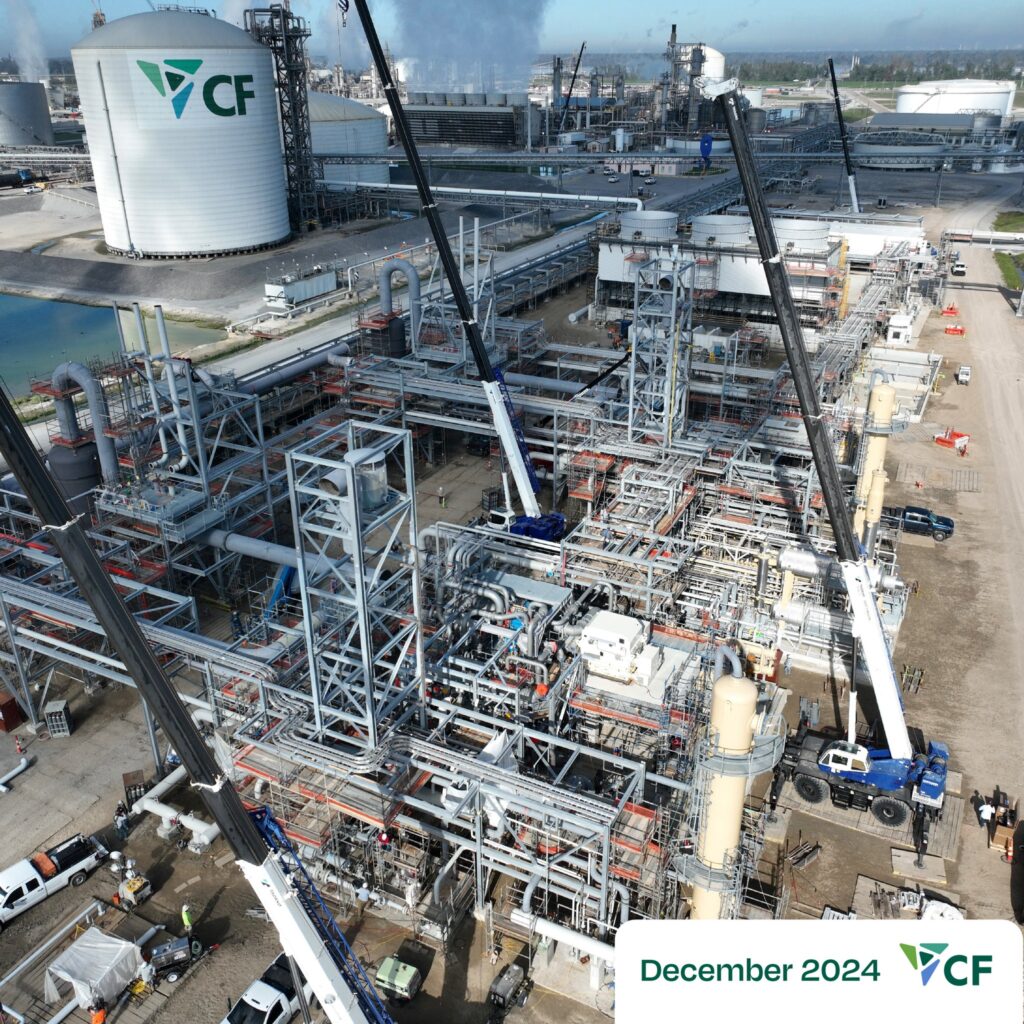
Photo Courtesy CF Industries
Shannon Angielski, president of Clean Hydrogen Future Coalition and principal at Van Ness Feldman, also expressed hope that Congress would extend Section 45V, as more projects are taking advantage of the newfound certainty to move to final investment decisions. “When those projects move, we’re going to have proof points to bring to Congress to say, look, this industry is growing. It is scaling in the U.S. We need this incentive to continue. So, I think the justification for the credit will become increasingly apparent as those projects move forward. That’ll help,” she expressed. Additionally, Olson noted that the critical incentives needed to launch an industry are not required forever. “If you look at the example of how China has scaled their green methanol industry – methanol being a derivative of hydrogen – they pumped a lot of incentives and subsidies into it, as they do. But now that green methanol is at scale, the supply chain is established, and they’re not subsidizing it anymore, and the cost of that green methanol is cheaper than gray methanol in North America… That’s what we need to do here.”
Angielski listed other policy considerations beyond Section 45V and its implementing legislation. She said a domestic driver of demand for low-carbon hydrogen, such as a national low-carbon product standard or fuel standard, would eventually be helpful, but is not yet the focus. In the meantime, permitting reform would be a significant win for the industry, as substantial infrastructure needs to be built, and “I think we’re going to see some things move forward, but those are more of the piecemeal things that target various aspects of this whole ecosystem,” she expressed. Currently, each state must grant permission for a hydrogen pipeline to pass through, so an interstate federal pipeline regulation could be beneficial. Angielski also suggested a categorical exclusion for hydrogen-related infrastructure from the National Environmental Policy Act (NEPA) as a possibility.
The U.S. could use hydrogen to its advantage on the international scale, where other countries are seeking cleaner fuels. In the words of Olson, “The United States has the capital, the infrastructure, and the talent to dominate this global market,” pointing to a Hydrogen Council report that found low-carbon hydrogen has already attracted $110 billion in committed capital across 500 projects. Wilkins said that somebody will supply that demand, and “China is moving aggressively to be that somebody. We need to build projects here so that we can get scale and keep ahead of them on the cost curve, because if we don’t, we won’t continue to be the number one producer of clean hydrogen for that long.” Angielski noted that the idea of getting in on this global commodity market was an essential piece of gathering support during the budget reconciliation discussions, so “if we have the policies and the tools that will enable U.S. industry to actually compete in that market, we’ll see the use cases here grow, as well.”
During his panel, Wilkins identified two significant opportunities in this landscape for the U.S.: the molecule export opportunity, given our abundant natural gas that can be utilized to produce low-carbon hydrogen cost-competitively, and the technology export opportunity, if we can serve as the vendor for primary electrolyzers or alternative catalysts. Olson added that long-term offtake agreements will be essential: “That long-term demand signal is critical in making sure that our U.S. projects get off the ground and can supply that demand.”