In 2018, Siemens and AES launched Fluence Energy, a joint energy storage product and software company. Today, Fluence has developed 273 energy storage projects across 48 markets and expanded into digital applications for renewables and storage.
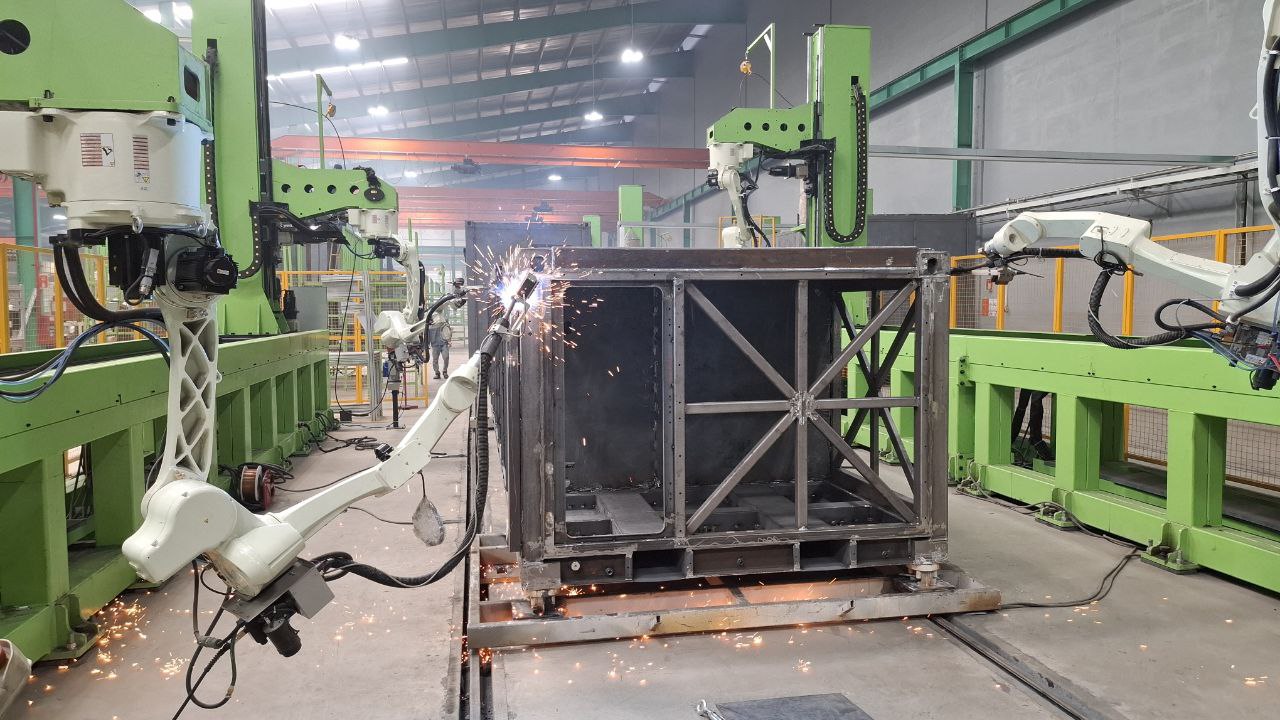
In 2022, Fluence announced that it had partnered with a contract manufacturer to open a new manufacturing plant in Utah. That September, the site began shipping out Fluence Cubes to be used in its products across the continent. Those products include the Gridstack, used by utilities, developers, and independent power producers to deploy efficient, cost-effective projects; the Smartstack, which offers greater density and a more intelligent platform; and Ultrastack, the highest-performance tier used by power grid operators for transmission infrastructure. The Utah facility was initially capable of producing 75 cubes per week, but eventually ramped up to 150 per week.
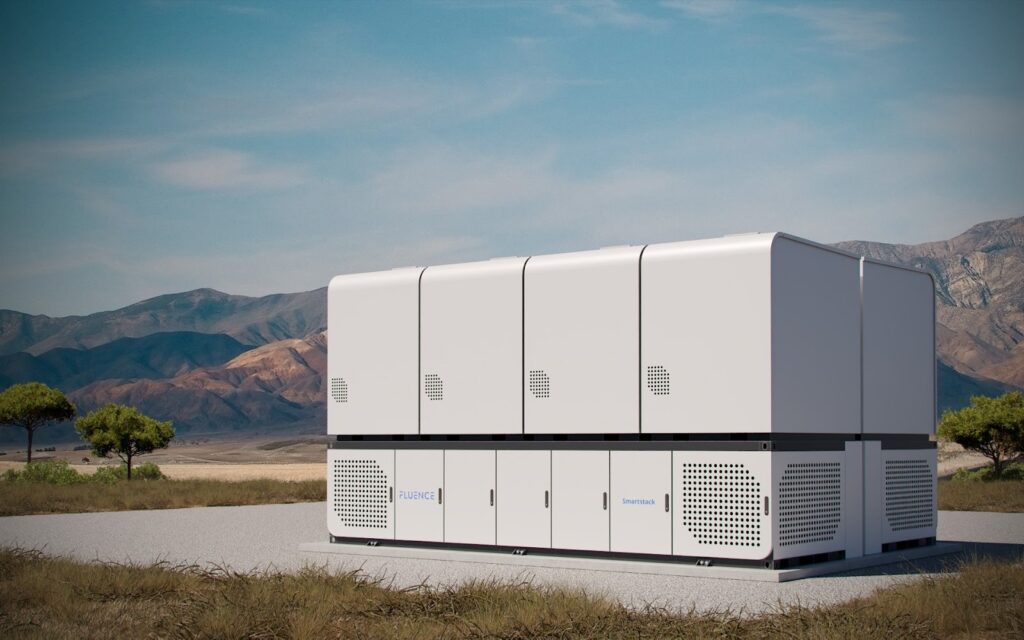
Photo Courtesy Fluence Energy
At the time of the 2022 announcement, Fluence’s production presence was heavily concentrated in Asia. In fact, the contracted manufacturing facility in Vietnam continues to provide fully built products for the Asia-Pacific and European markets. As Peter Silveira, then senior director of manufacturing, told Energy-Storage.news, although the Vietnam facility continued to produce the modular base units for American products, the Utah facility would provide final assembly, offering customization, configuration, and more options for local transportation and logistics companies.
The Utah plant is just one example of Fluence’s onshoring manufacturing operations to the U.S. The company also opened a spare parts hub in Utah, specifically chosen for its proximity to major storage markets. This site enables Fluence to provide better support for customers’ operations and projects, while customers avoid the overhead costs and land requirements associated with on-site storage. These spare parts hubs can ship a needed part or component within 24 hours, whereas it would take 2 weeks to arrive from Vietnam.
Also in August 2022, Fluence opened a product testing lab in Pennsylvania, one of only three such sites operated by the company. It was an essential addition to speed up the launch of new energy storage products, and was the first to offer testing at full system, or Core, scale. “Findings at the lab are expected to reduce commissioning times and yield early identification of issues, allowing resolutions to be implemented prior to deployment at customer sites,” the company noted in the press release.
Based on these new sites, it is evident that closer proximity to customers enables Fluence to better serve its customers in North America. As Carol Couch, former chief supply chain and manufacturing officer, explained in the press release, “The markets we serve have unique use cases, customer needs, and regulatory requirements, and these new facilities are an expansion of the ongoing regionalization of our operations.” It makes sense that these moves were mirrored by close competitors. For example, Oregon-headquartered Powin Energy, then ranked the fifth-largest battery energy storage system integrator, contracted with Celestica to produce its storage product at Celestica’s facility in Monterrey, Mexico, around the same time.
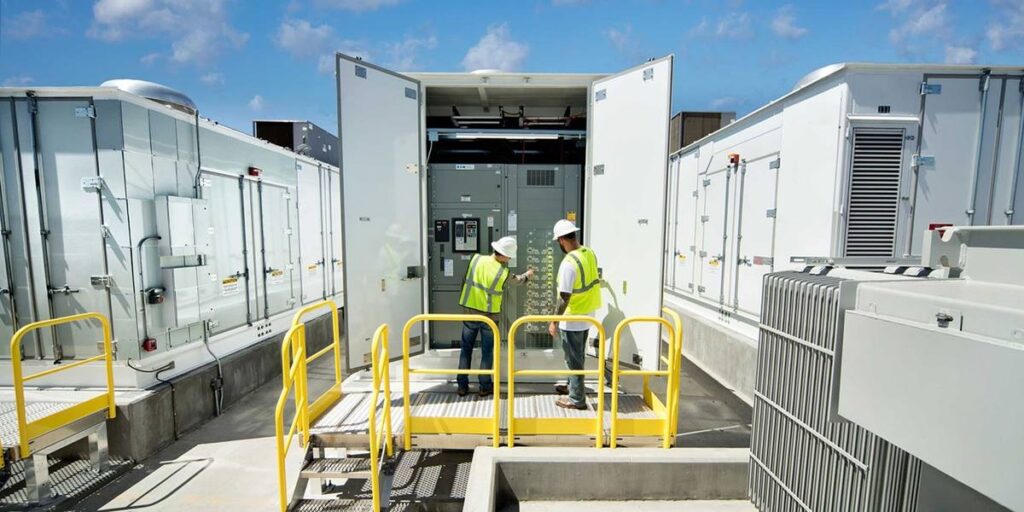
Photo Courtesy Fluence Energy
Two years later, in 2024, Fluence announced the production of battery modules in Utah, using battery cells from Smyrna, Tennessee, making the latter the first U.S. facility to produce LFP battery cells for utility-scale stationary energy storage. This mission to expand the use of domestically sourced components was prompted by the Inflation Reduction Act’s domestic content bonus tax credit and the growing demand for utility-scale storage. Fluence is also committed to onshoring the production of all major products and components of its energy storage systems to the U.S., with additional manufacturing added in Arizona and Texas. John Zahurancik, currently Chief Customer Success Officer, reflected, “We are moving quickly to deliver domestically manufactured energy storage solutions that meet our customers’ needs, reduce supply chain risks for projects, and support the nation’s energy independence.”
Fluence’s American facilities help the company avoid supply chain issues and control costs, thereby stabilizing costs for customers as well. In 2022, Couch elaborated, “At a time when the energy storage industry has seen increased supply chain disruptions, this production hub will be particularly important in strengthening business continuity and improving flexibility for meeting customer needs.” In 2024, domestic production of battery modules and cells enabled Fluence to respond to increases in tariffs on batteries sourced from China and prepare itself for future trade shifts.
Plus, domestic production enhances national security. “In addition to U.S. manufacturing, Fluence is committed to cybersecure products,” Fluence noted in the 2024 press release, with system software being developed solely in the U.S., Germany, and India.
The economic benefits should not be overlooked, either. The Salt River Project and Ørsted sourced all the enclosures for the Eleven Mile Solar Center, a development in Pinal County, Arizona, featuring 300 megawatts (MW) of solar and a 300 MW battery energy storage system, from Fluence’s Utah operations. That project represents a $1 billion investment that created more than 1,000 construction jobs and will generate about $80 million in tax revenue. It also boosted local energy reliability, with enough capacity to power 65,000 homes and store 1,200 megawatt-hours (MWh) daily. Eloy Mayor Micah Powell reacted, “This energy project is a first of its kind in our region and will have a huge impact on energy reliability for our local area.”
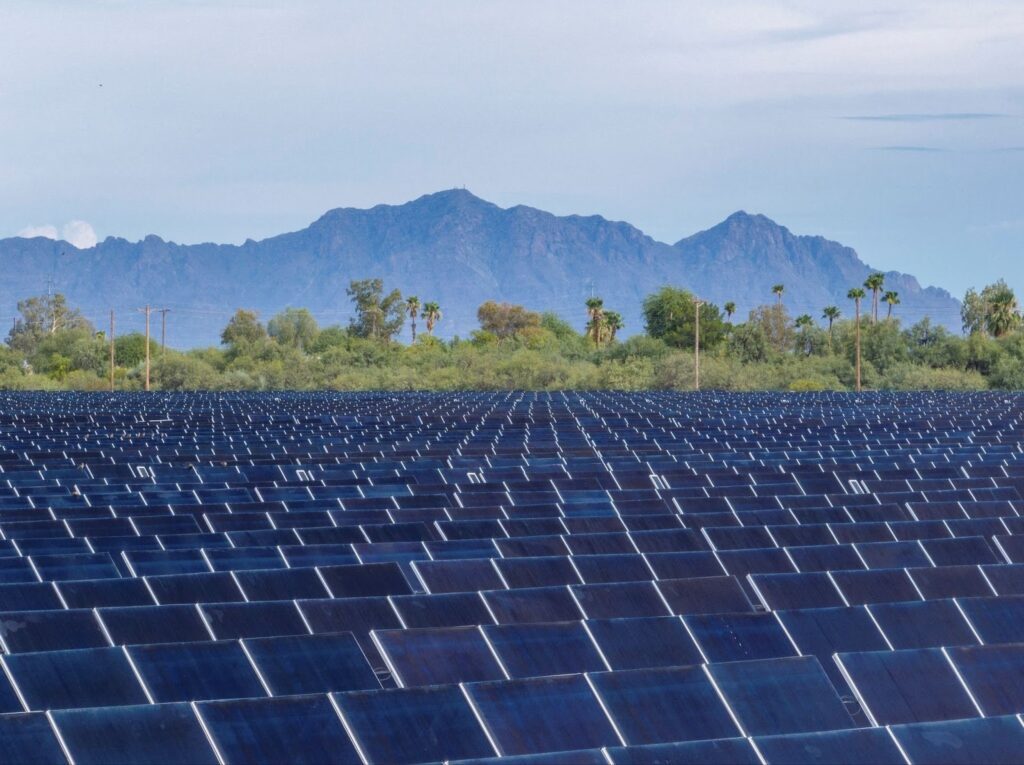
Photo Courtesy Salt River Project
Last year, U.S. Senator John Curtis (R-UT) visited Fluence’s Utah battery module plant. “In Utah, we’ve seen firsthand how smart policies—like energy tax credits—can drive innovation, strengthen our economy, and create real opportunity. I was pleased to visit Fluence’s energy storage operations at the manufacturing facility in Tooele County to see the value of these incentives in meeting both our energy production and economic development goals,” he reflected.
Although some of Fluence’s projects stalled last year due to policy uncertainty, CEO Julian Nebreda told Energy-Storage.news that those projects are once again advancing forward. Zahurancik looks toward the future with profound optimism: “This facility is building the future of energy storage right here in Utah, and we’re helping to build the foundation for the United States to once again be a leader in battery manufacturing.”
Video Courtesy Fluence Energy