
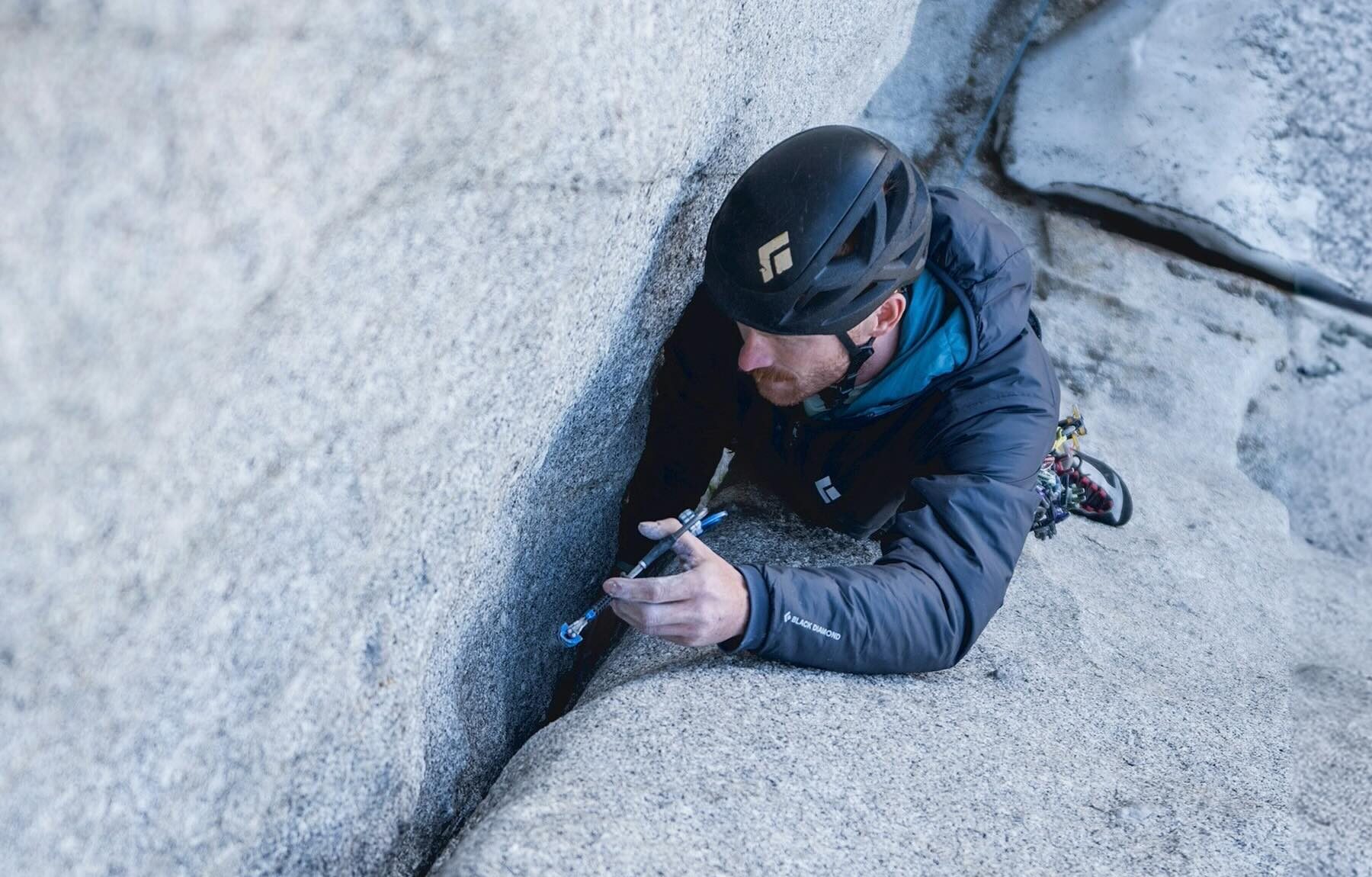
Located at the foot of the Wasatch Mountains in Salt Lake City, Black Diamond Equipment manufactures climbing, skiing, and trekking equipment for outdoor enthusiasts. It all started in 1972, when Yvon Chouinard and Tom Frost, co-founders of Black Diamond’s predecessor Chouinard Equipment, released their Clean Climbing Manifesto. It argued that climbing gear should be removable and not damage the rock, as the company described, “Crags around the world were becoming littered with fixed protection and pitons, which permanently scarred and altered the rock. As the popularity of climbing increased, this method started to pose a threat for the natural beauty and state of climbing areas all over the world.” In 1989, Chouinard employees Peter Metcalf and Maria Cranor bought the bankrupt company’s assets, changed its name, and moved its headquarters from California to Utah, with a goal “to be one with the sports we serve,” Metcalf said.
Metcalf grew up in New York City, where a Boy Scouts climbing trip to the Shawangunk Mountains “captured my imagination.” He soon became one of the youngest climbers to ascend the Kain Face of Canada’s Mt. Robson, and in 1980, he narrowly escaped death during his climb of the Southeast Spur of Mt. Hunter in Alaska’s Denali National Park. “Mt. Hunter was one of those experiences that I would trade nothing in my life not to have had, and I would trade nothing in my life to repeat,” he reflected. “I can say with confidence that there would be no Black Diamond had I not had that experience on Hunter.” Cranor, meanwhile, fell in love with climbing when her first husband introduced her to it in her early 20s. She remembered her first experience, “The minute I did it, that was like being electrocuted. It was so overwhelming just to feel the connection with doing the movement, and from then on, I was absolutely hooked.” In 1975, she became the first woman to climb Valhalla at Suicide Rock in California. She did so on her first attempt, earning her acceptance into an elite group of ‘Stonemasters.’
Video Courtesy Black Diamond Equipment
“From the beginning, we’ve always had a broader mandate than just building innovative climbing protection. We strive to protect what matters in a larger sense,” the company wrote in its 2024 impact report.
One of the company’s main priorities is to operate sustainably. Its strategy is, “simplify as much as possible, take only what you need, leave nothing behind, know that maximum effort is required for maximum success, and sometimes it takes more than one try.” By 2030, Black Diamond aims for a 50% reduction in both carbon intensity and waste. With 90% of its emissions coming from its factories, the company works with vendors that prioritize sustainable upgrades, as seen in the addition of solar power and rainwater collection initiatives by its Vietnamese apparel manufacturer, Tan De, and of on-site recycling at its Taiwanese hardgoods manufacturer, Fuko. At its own headquarters in Utah, Black Diamond purchases 180,000 kWh of wind power offsets annually and recycles extra cardboard and scrap metal. This year, it is launching a bike- or bus-to-work incentivization program for employees. Although wind power met 20% of its power needs by 2020, it is expanding its rooftop solar panel array to cover all of its energy needs before 2029.
Black Diamond also chooses materials that are better for the planet. Per their impact report, “Whenever possible, we’re making the extra effort to use materials such as recycled polyester, organic cotton, bamboo or cork products, and recycled aluminum,” with goals to source 50% of its materials from preferred sources by the end of the decade. By the end of 2024, the company made all apparel, backpacks, gloves, and footwear without any intentionally added per- and polyfluoroalkyl substances (PFAS), sourced all of its down from farms that are Responsible Down Standard-certified, ethically sourced all of its wool, and organically sourced nearly three-quarters of its cotton.
Black Diamond is also working to simplify its products to use 20% fewer components by 2030. For its trekking poles alone, since 2023, the company has reduced the number of styles from 26 to 18 (a 31% reduction), the number of unique accessories from 18 to 12 (a 33% reduction), and the number of unique spare parts from 125 to 58 (a 54% reduction). “That’s not a trim—that’s a significant shift toward a leaner, more focused, and less wasteful product ecosystem,” the company explained.
The business emphasizes improved product longevity because “the single most impactful way to improve sustainability is to make products that stand the test of time.” The Black Diamond ReRoute program aims “to ensure that less gear finds its way into landfills and instead embarks on a new adventure.” Repairs are key to the program, featuring a variety of ReRoute partners, such as Utah-based Gear Healer. Black Diamond also offers a spare-parts program and produces self-repair guides and videos to help customers perform DIY repairs.
The company additionally repurposes waste materials, such as retired webbing and scrap metal, into products like dog leashes and toiletry bags. Recycling is the final piece of the puzzle. More than half of the company’s polyester styles contain recycled content, and more than one-third of its gloves have fabrics with recycled content, while half its poles contain at least 30% pre-consumer recycled aluminum, certified by UL Solutions. “Replacing raw material with recycled material wherever possible plays a large role in shrinking that footprint,” noted Neil Fiske, president of Black Diamond. The company is also launching the first post-consumer aluminum recycling program for the outdoor industry, using old climbing carabiners to make new trekking pole components.
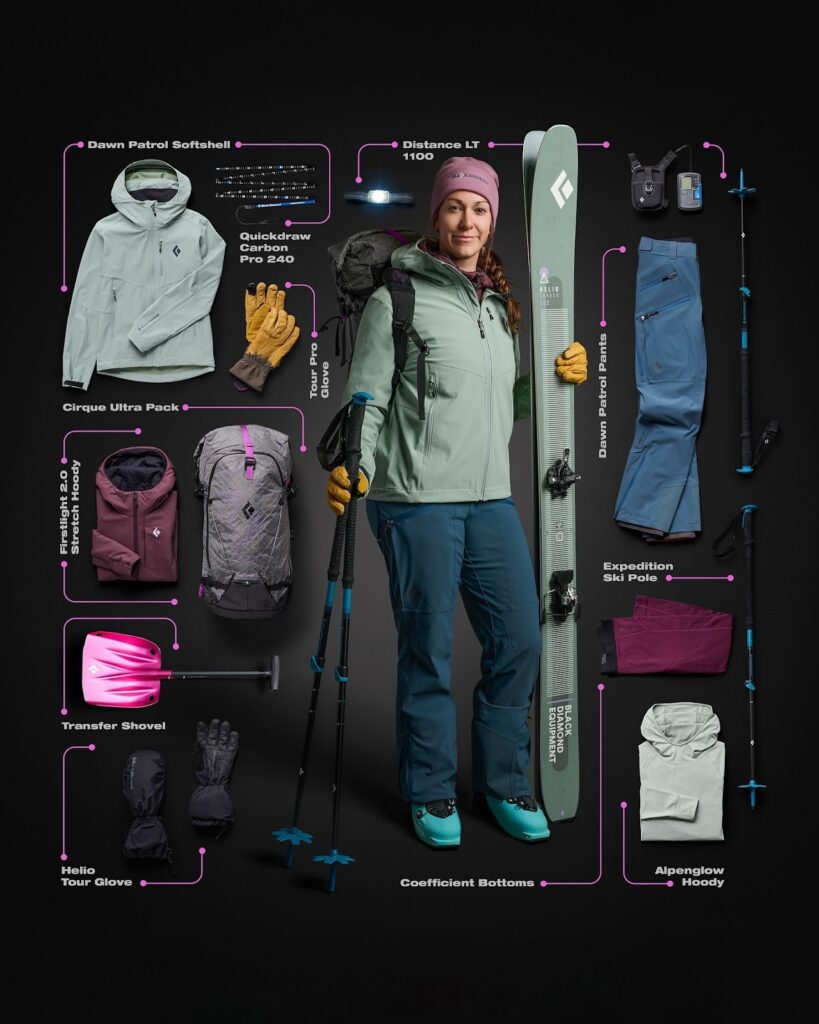
Photo Courtesy Black Diamond
Another of the company’s main priorities is to protect wild natural landscapes and public lands, which it says are “intrinsically connected to the life-defining pursuits of climbing, skiing, and mountain sports that Black Diamond was built to serve.” Beyond being a member of the business coalition Conservation Alliance, the company engages in extensive advocacy. Since 1991, Black Diamond has given over $1 million to the Access Fund and collaborated closely with it. Following new federal policies that would have prohibited all fixed anchors and affected over 50,000 climbing routes in 28 states, the Access Fund advanced the Protecting America’s Rock Climbing (PARC) Act, which allows climbing and the use of fixed anchors in wilderness areas and preserves the authority of land management agencies to regulate climbing. The bill passed at the end of the year, with support from Black Diamond in rallying climbers, writing letters to senators and representatives, and advocating on the Hill in Washington, D.C. Last year, it also joined the Brands for Public Lands Coalition that helped rally people to contact legislators and submit public comments opposing the One Big Beautiful Bill’s sale of public lands for industrial development, mining, and logging. The language was ultimately removed.
More locally, it worked with Save Our Canyons to build public awareness campaigns opposing the Utah Department of Transportation’s proposal to build the Little Cottonwood gondola, which it claims “endangers critical watershed, harms local wildlife, and removes access to, and in some cases completely destroys, established climbing areas.”
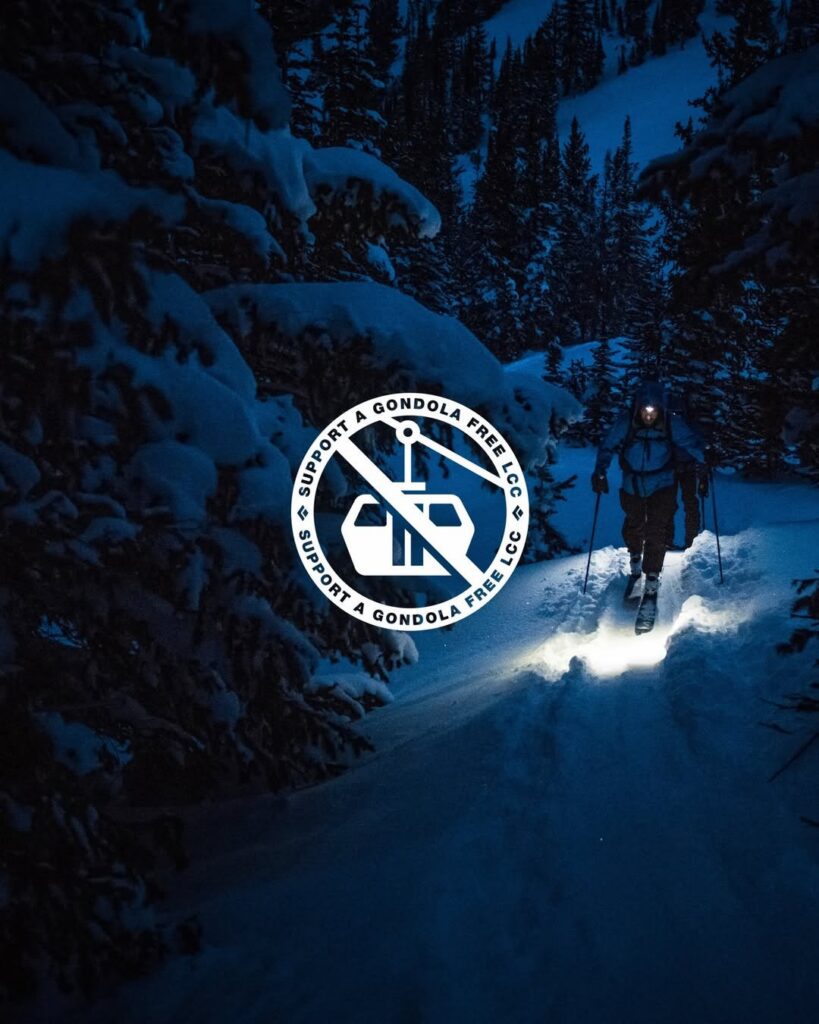
Photo Courtesy Black Diamond
Black Diamond Equipment also contributes to local economic development. In 2018, Black Diamond’s parent company, Clarus Corporation, announced a $40 million investment for an 8-year Utah expansion. It will also bring in $8.9 million in tax revenue for the state and create as many as 147 jobs, with wages exceeding 110% of the average in Salt Lake County. “Clarus Corporation is a bedrock partner and an anchor of Utah’s outdoor industry. We couldn’t be more pleased with their decision to expand in the state of Utah,” reacted Val Hale, executive director of the Governor’s Office of Economic Development (GOED).
Workforce development plays a huge role, with a particular emphasis on BIPOC communities. In collaboration with the American Mountain Guides Association (AMGA), Black Diamond has offered 55 scholarships since 2020, helping create 34 Single Pitch Instructor (SPI) Guides, five Apprentice Rock Guides, one Apprentice Alpine Guide, and one Apprentice Ski Guide. Additionally, the Elevate Scholarship, offered in partnership with the National Outdoor Leadership School (NOLS), provides course scholarships for the global wilderness school, enabling students to spend time in Alaska or the Rocky Mountains learning skills such as backpacking, climbing, and mountaineering. “We know that easy access to the outdoors is a privilege that not everyone shares, and the Elevate Scholarship exists to foster the future of the outdoor community by providing a pathway to wilderness education and leadership for those who may lack the means to arrive there on their own,” the company wrote.
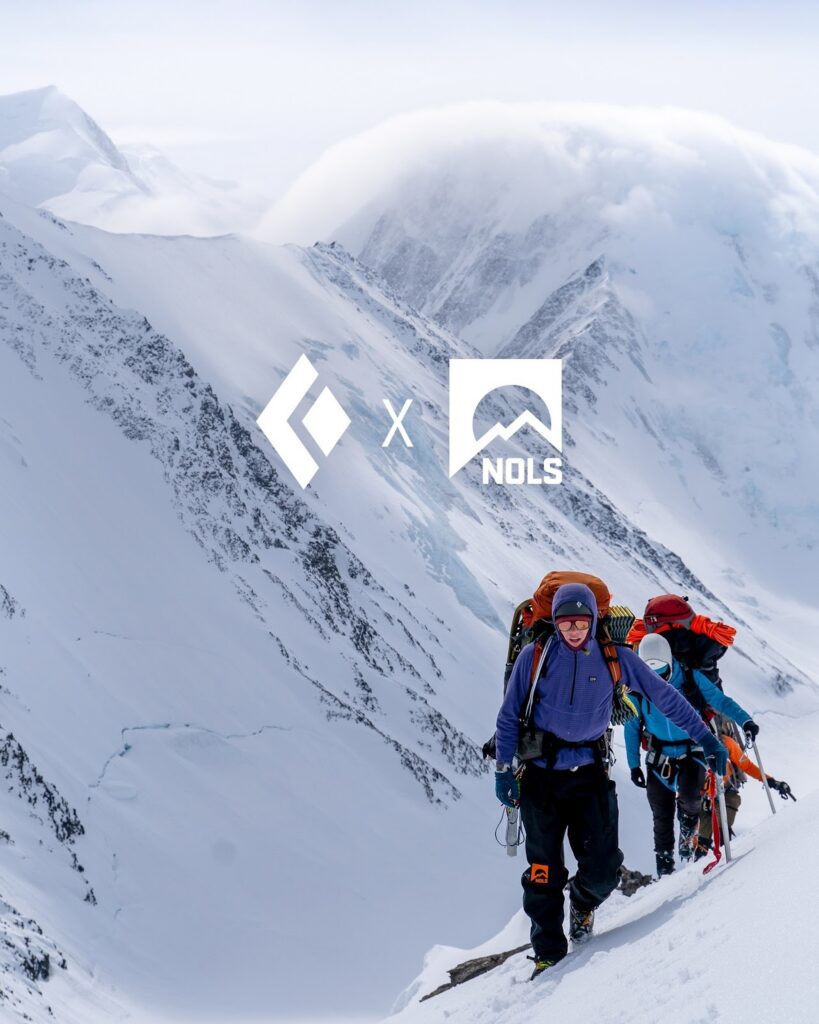
Photo Courtesy Black Diamond