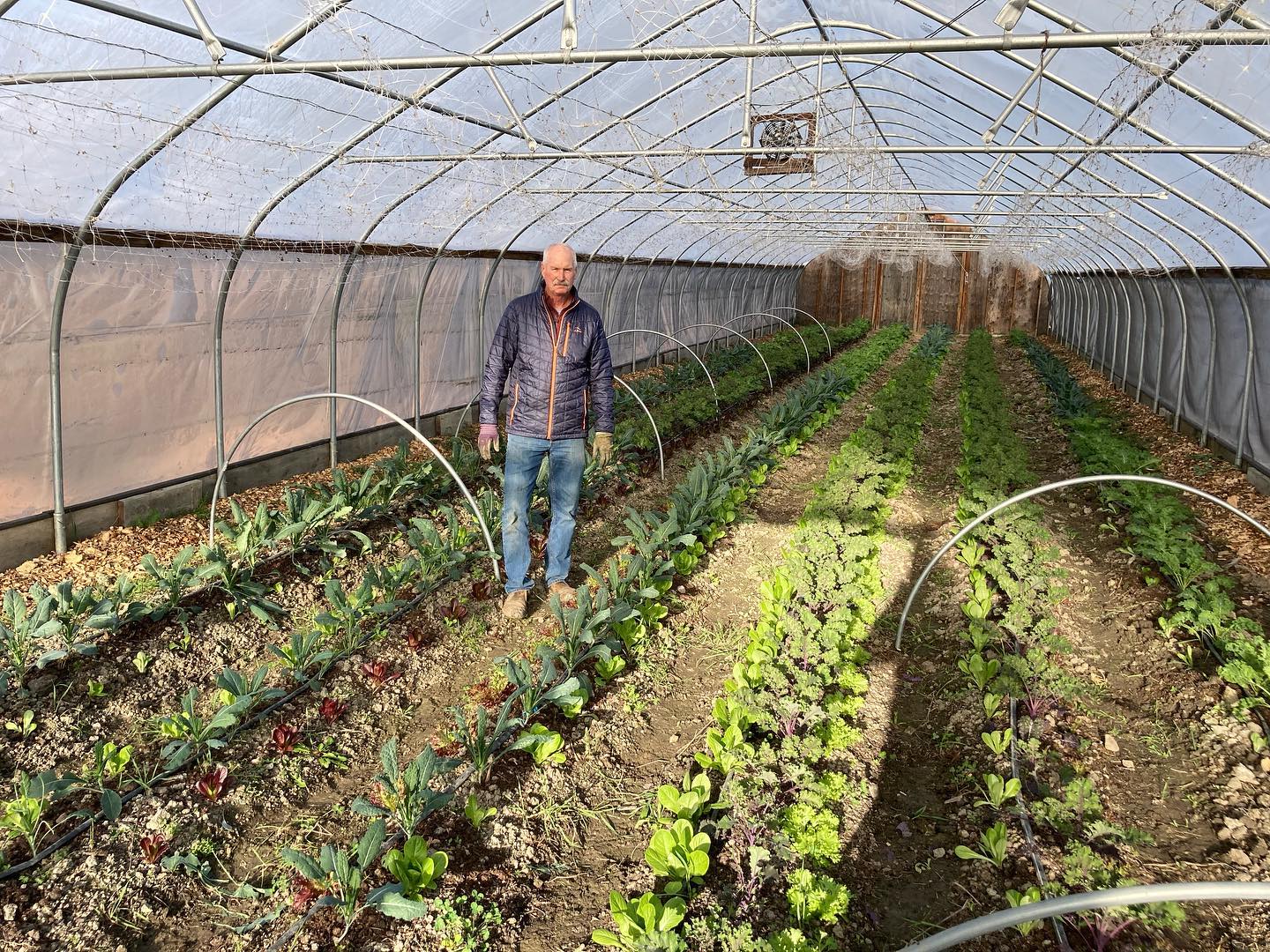
Gary Goodrich is in his early 70s and has spent the last decade running a 17-acre organic vegetable farm off Route 136 in Durham, Maine. Before that, he ran a Portland biotech company called Bioprocessing, Inc., focused on producing raw materials for testing and managing cancer, which he sold in 2012. Most retired biochemists would have stopped there. Goodrich instead built three high-tunnel greenhouses on leased land in Cumberland, began growing tomatoes, and, in 2019, purchased the Durham property and relocated to build Replenova Farm from scratch.
“We are striving to sustain the land, water, and air resources while feeding people locally through our farm market,” Goodrich explained of his sustainability goals. A red barn went up as a 40-by-60-foot structure with an attached, year-round farm store, two commercial kitchens, six high tunnel greenhouses, and enough space to run the wholesale and retail sides of the business together. Overall, the operation includes three refrigerators, a freezer, a walk-in cooler, two electric ovens, several induction burners, electric hot water and lighting, and ventilation for the greenhouses. Goodrich knew before the first stud went in that he wanted the roof to do something more than keep the rain off, and installing solar on the barn was a priority.
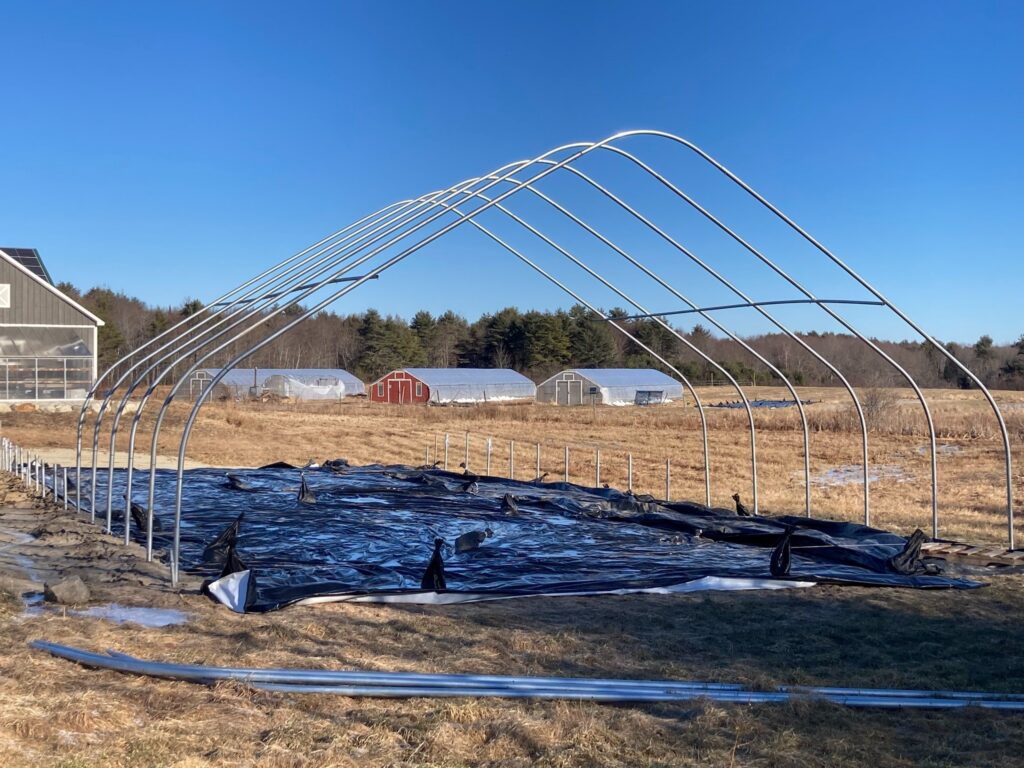
Photo Courtesy Replenova Farm
Additionally, Replenova is small in acres but heavy in electricity. Only the tractors burn diesel. Goodrich estimated the farm’s annual use at roughly 30,569 kilowatt-hours, about four times what a typical American home consumes.
To help cut costs, Goodrich called Maine Solar Solutions, a Freeport-based installer owned by Sam Zuckerman. Together, they designed a 23-kilowatt rooftop array of 59 panels for the new barn and helped Goodrich apply for a U.S. Department of Agriculture Rural Energy for America Program (REAP) grant to defray part of the cost. “Maine Solar Solutions assisted me with the entire application process as well. As a farmer, we are swamped, and they make the process easy,” Goodrich told the installer.
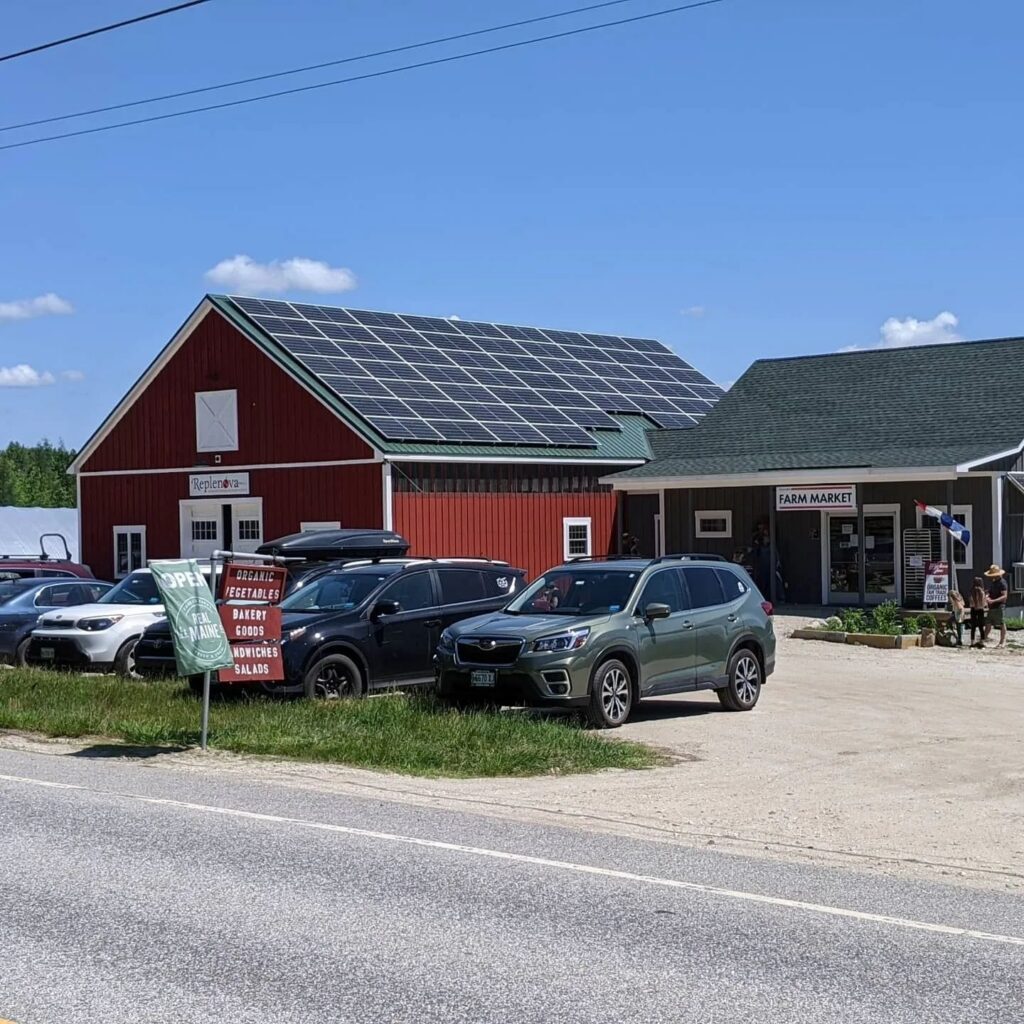
Photo Courtesy Replenova Farm
The system performed. According to a Maine Solar Solutions case study, the array produced 31,600 kilowatt-hours of electricity in its first full year of operation in 2020, which was slightly more than the projected annual need. The business then expected to add more refrigeration and heating in the future and to save excess energy for less sunny months.
The Maine Organic Farmer & Gardener reported in its spring 2025 profile that the array now supplies roughly 90 percent of the farm’s electricity, while the USDA says the panels “typically generate enough energy to power the full operation most of the year.” By 2024, the USDA confirmed that the project had recouped its full cost through energy savings, on a system Goodrich expects to keep running for 25 years or more with minimal maintenance. “The payback rate is insane! We saved so much on energy costs that this system paid for itself within a few years. From now on, it’s like money coming back to the business,” Goodrich reacted.
Additionally, over the first year of operation alone, the solar system reduced carbon emissions by 48,938 pounds compared to the previous year, the same effect as if it had planted 370 trees. Goodrich reflected, “If we can do projects like this to not only save money but help our environment and give back to our communities, just by taking advantage of something as abundant as the sun, then it’s worth looking into.”
Replenova is not an outlier. The Maine Department of Agriculture, Conservation and Forestry announced in July 2024 that USDA had invested approximately $231 million in 200 REAP projects across the state, with the average participating farm or rural small business expected to save around $25,000 a year in energy costs. In 2024, Goodrich and Maine Solar Solutions co-hosted an open house at the farm to walk other producers through the same calculation he had made five years earlier.
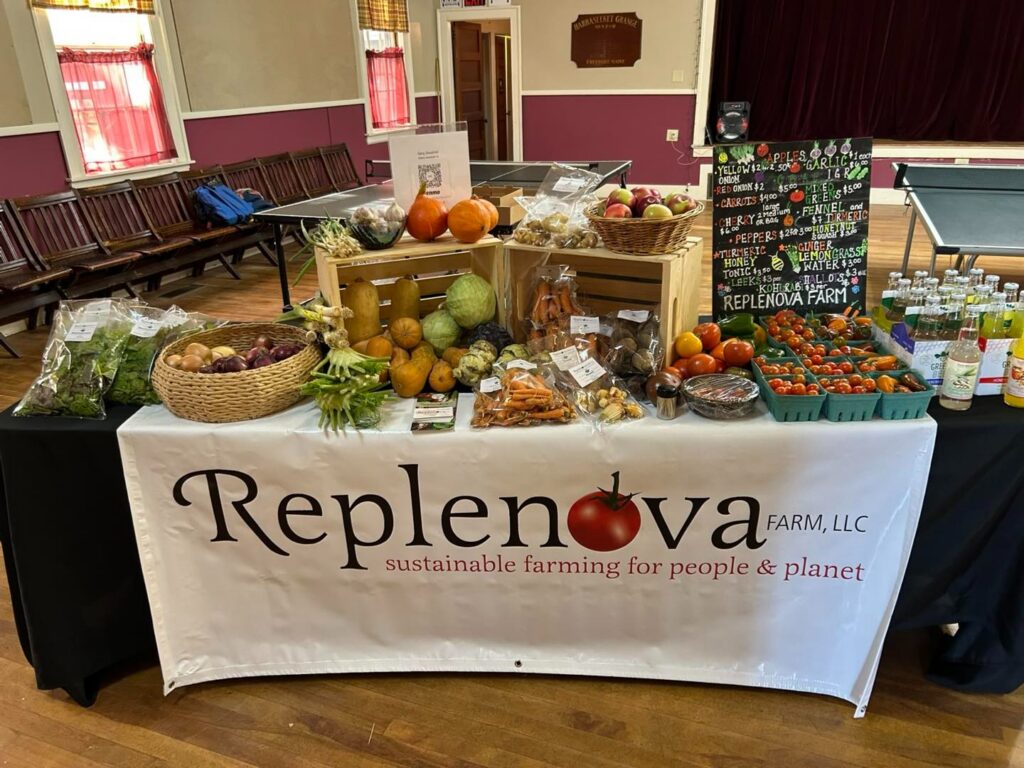
Photo Courtesy Replenova Farm